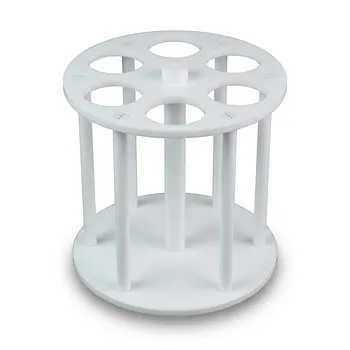
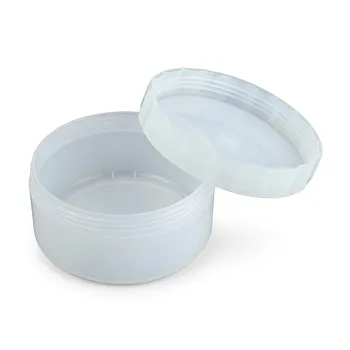
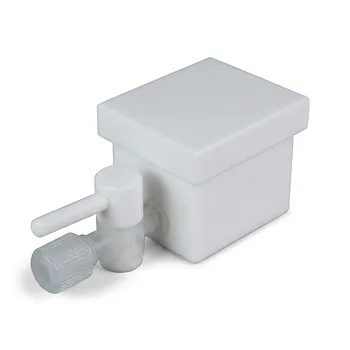
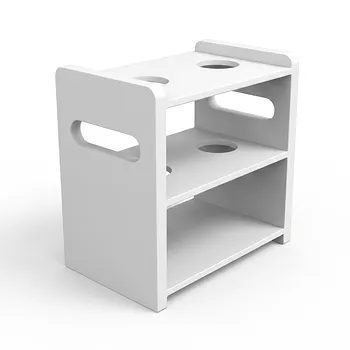
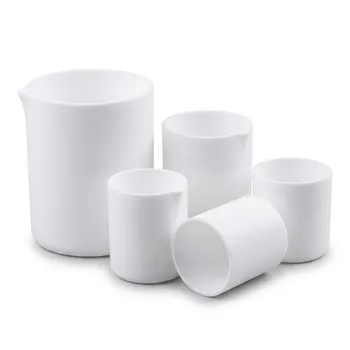
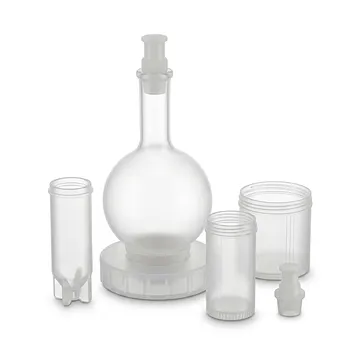
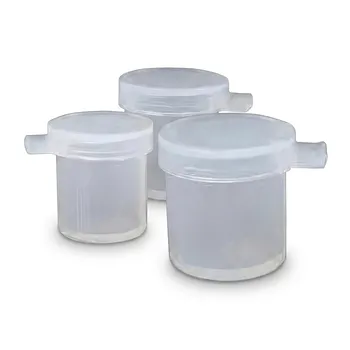
PTFE and PFA are selected for high-purity trace analysis because they protect sample integrity from both contamination and sample loss. Their extremely low surface energy minimizes liquid adhesion and retention, while their chemical inertness and very low extractables, leachables, and metal-ion background reduce contamination from the labware itself. This combination supports accurate recovery, reliable volumetric transfer, and reproducible results when samples are exposed to strong acids, solvents, or other aggressive reagents.
In trace analysis, the labware must contribute as little as possible to the measurement. PTFE and PFA do this by resisting chemical attack, minimizing adsorption and retention, and introducing exceptionally low levels of contamination.
Why Trace Analysis Demands Specialized Labware
The container can become part of the measurement
At ultra-trace concentrations, contaminants from a vessel wall can be comparable to the amount of analyte being measured. Metal ions, organic residues, or absorbed chemicals may raise the analytical blank and distort the result.
PTFE and PFA are used because their high purity and low leaching characteristics reduce this background contribution.
Sample recovery matters as much as sample purity
A small amount of analyte left behind in a tube, beaker, bottle, or fitting can produce a falsely low result. This is especially important when the available sample volume is small or the analyte concentration is near the detection limit.
The low surface energy of PTFE and PFA gives them non-stick and non-wetting behavior, reducing liquid retention on internal surfaces.
How PTFE and PFA Protect Sample Integrity
Low surface energy reduces adsorption and retention
Liquids generally spread less readily and adhere less strongly to these fluoropolymer surfaces. As a result, samples drain more completely from vessels and transfer components.
This supports maximum practical sample recovery, more complete volumetric delivery, and faster rinsing between operations.
Chemical inertness limits secondary contamination
PTFE and PFA resist degradation by a broad range of strong acids, bases, organic solvents, and other aggressive reagents. This is critical in acid digestion, ultra-trace sample preparation, and high-purity reagent storage.
Because the material is less likely to react with the contents, it reduces the risk that the container will release degradation products or alter the sample chemistry.
Low extractables and leachables protect analytical blanks
High-purity grades are chosen for their very low levels of extractable and leachable substances. Their low metal-ion background is particularly valuable in elemental analysis, where even minor contamination can affect accuracy.
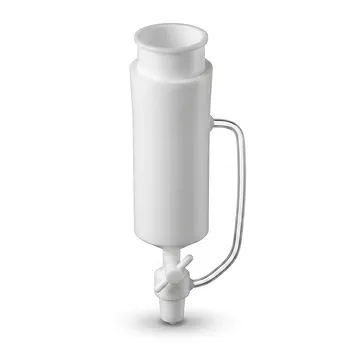
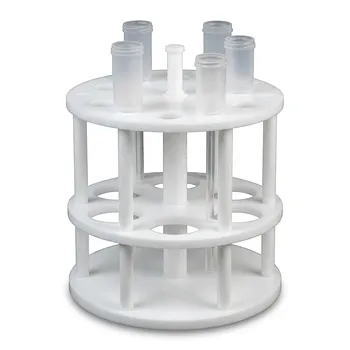
This makes PFA and PTFE suitable for beakers, digestion tubes, reagent bottles, centrifuge tubes, transfer fittings, tubing, valves, and other fluid-contact components.
Non-wetting surfaces simplify cleaning
Low adhesion allows residues to be removed more readily during rinsing and cleaning. This reduces the time required for preparation and helps limit carryover between samples.
Cleaning remains a controlled laboratory process, however. Low surface energy reduces retention; it does not eliminate the need for validated cleaning procedures.
Why Both PTFE and PFA Are Used
PFA supports high-purity molded labware
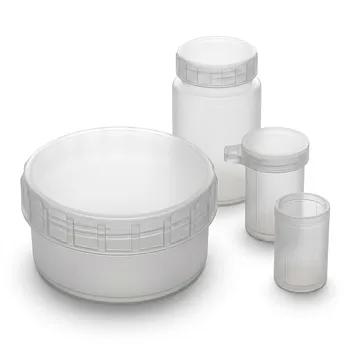
PFA is commonly selected for high-purity containers and fluid-handling components where chemical resistance, low contamination, and practical fabrication are all required. It is used in products such as reagent bottles, beakers, centrifuge tubes, digestion vessels, and tubing.
Its use is especially common when laboratories need complex molded shapes or visual access to the sample.
PTFE suits demanding contact and machined components
PTFE provides very strong chemical resistance and low surface adhesion. It is widely used for fittings, seals, machined parts, vessels, tubing components, and other applications where chemical compatibility and non-stick performance are central requirements.
The appropriate choice depends on the required shape, fabrication method, temperature range, mechanical demands, and purity specification.
The material choice is part of a contamination-control system
A fluoropolymer vessel alone cannot guarantee a reliable trace result. Purity grade, manufacturing controls, cleaning, packaging, handling, reagent quality, and procedural blanks all influence the final contamination level.
The material is valuable because it removes several major sources of error at the point where the sample contacts the laboratory hardware.
Understanding the Trade-offs
“Near-zero” contamination is not the same as zero contamination
PTFE and PFA can provide exceptionally low background levels, but no material should be assumed to contribute absolutely nothing under every condition. Trace-metal specifications, extractables data, and application-specific testing remain important.
Laboratories should verify the actual grade and supplier documentation against the required detection limits.
Chemical resistance still requires application review
These fluoropolymers resist nearly all common laboratory chemicals, but compatibility depends on the specific chemical, concentration, temperature, exposure time, and mechanical conditions. Aggressive environments should be assessed using manufacturer data and laboratory validation.
Temperature capability is also application-dependent; repeated thermal cycling, pressure, and mechanical loading may affect performance even when the polymer remains chemically stable.
Low adhesion does not prevent every form of carryover
Some analytes can interact with surfaces through mechanisms other than simple wetting, including chemical affinity or particulate contamination. A non-stick surface reduces one important retention mechanism but does not replace appropriate rinsing, blank controls, and handling discipline.
Cost and mechanical performance may limit use
High-purity fluoropolymer labware is generally more specialized and expensive than standard glass or commodity plasticware. PTFE and PFA may also have different stiffness, dimensional stability, transparency, and fabrication characteristics than alternative materials.
The correct decision balances contamination risk against the performance requirements and cost of the workflow.
Making the Right Choice for Your Goal
The best material decision begins with the dominant analytical risk in the procedure.
- If your primary focus is minimizing trace-metal contamination: Choose certified high-purity PTFE or PFA labware with documented low metal-ion background and suitable extractables data.
- If your primary focus is maximizing sample recovery: Use PTFE or PFA components with low surface energy to reduce wall retention, incomplete transfer, and analyte loss.
- If your primary focus is aggressive acid digestion or solvent handling: Select the fluoropolymer whose documented chemical and temperature compatibility matches the complete operating conditions.
- If your primary focus is repeatable fluid transfer: Use low-adhesion fluoropolymer tubing, fittings, vessels, or valves and validate the system with procedural blanks and recovery studies.
- If your primary focus is dependable cleaning between samples: Use the non-wetting surface to facilitate rinsing, while retaining a documented cleaning and contamination-control protocol.
For high-purity trace work, PTFE and PFA provide a strong foundation because they help keep the measured result attributable to the sample rather than to the labware.
Summary Table:
| Property | PTFE | PFA |
|---|---|---|
| Chemical Resistance | Excellent | Excellent |
| Low Extractables | Very Low | Very Low |
| Surface Energy | Low | Low |
| Applications | Machined parts, fittings, seals | Molded labware, vessels, tubing |
| Cost | Moderate | Higher |
| Clarity | Opaque | Semi-transparent |
Maximize the integrity of your trace analysis with KINTEK's high-purity PTFE and PFA labware.
Our products are crafted exclusively from performance fluoropolymers, ensuring minimal contamination and maximum sample recovery. From beakers and digestion vessels to custom machined components, we support your demanding applications.
Contact us today to discuss your requirements and discover how our expertise can enhance your lab's accuracy.
Related Products
- High Purity PFA Crucible and Corrosion Resistant PTFE Beaker for Trace Analysis and Custom Laboratory Applications
- Custom PTFE Constant Pressure Separatory Funnel Corrosion Resistant Low Background Labware for PFA Flasks
- Custom PFA Microcolumn Racks and PTFE Machined Low Background Corrosion Resistant Laboratory Fixtures
- PTFE PFA Vacuum Filtration System Corrosion Resistant Customizable Shatterproof Laboratory Device
- Corrosion Resistant PTFE Support with PFA Transparent Reaction Tank and High Purity PFA Sampling Tube for Trace Analysis
People Also Ask
- Why are high-purity vessels critical for BiFeO3 synthesis? Ensuring Phase Purity
- Why is the use of high-purity PFA or PTFE labware critical during TiO2 nanoparticle purification? Protect Sample Purity
- Why is high-purity PFA trace analysis labware used for MXene? Ensure Superior Material Integrity in Research
- Why is high-purity PFA trace analysis labware recommended for trace element detection? Achieve Gold Standard PPT Accuracy
- Why is high-purity PFA labware necessary for Znx@LS-2 zeolite ICP-OES analysis? Ensure Trace-Level Precision