PTFE and PFA are preferred because they combine exceptional chemical resistance with exceptionally low contamination potential. Their fully fluorinated carbon backbones resist strong acids, bases, oxidants, and organic solvents without requiring the plasticizers, antioxidants, or stabilizers commonly used in other polymers. They also have low metal-ion backgrounds, minimal surface adsorption, and high temperature capability—properties that protect ultra-trace measurements and high-purity fluids from container-derived errors.
Core takeaway: PTFE and PFA function as chemically stable, low-extractable barriers between the sample and the equipment. They do not eliminate every contamination risk, but they substantially reduce leaching, corrosion, adsorption, and degradation compared with many standard engineering plastics.
Why Standard Engineering Plastics Can Compromise Ultra-Trace Work
Additives can become contaminants
Many conventional plastics rely on additives to achieve flexibility, UV resistance, flame resistance, color, or long-term thermal stability. These additives can potentially migrate into samples, particularly when exposed to aggressive solvents, elevated temperatures, or extended contact times.
PTFE and PFA generally achieve their chemical and thermal performance intrinsically. Their fully fluorinated structures typically require no conventional plasticizers or stabilizer packages, reducing one important source of organic extractables and trace-metal background.
Chemical attack can create additional contamination
Nylon, ABS, polyacetal, PVC, polypropylene, and other engineering plastics can be suitable for moderate service, but strong acids, oxidants, solvents, or elevated temperatures may cause swelling, embrittlement, discoloration, cracking, or chemical decomposition.
When a component degrades, it can release polymer fragments, additives, absorbed chemicals, or metal-containing residues. In trace analysis, even a very small contribution can become significant relative to the analyte concentration.
Surface interactions can distort results
Container walls can adsorb analytes or release species into the sample. This is especially important when measuring very low concentrations, where loss to the vessel can be comparable to the amount being measured.
PTFE and PFA have low surface energy and low surface adsorption relative to many conventional materials. This helps preserve analyte recovery, although adsorption is not literally zero and depends on the analyte, solvent, surface condition, and contact time.
The Structural Advantage of Perfluorination
The carbon–fluorine bond protects the polymer
PTFE and PFA contain highly fluorinated polymer backbones. Fluorine atoms form a dense protective sheath around the carbon chain, while the strong carbon–fluorine bond resists chemical attack.
The bond energy is approximately 472 kJ/mol, or roughly 113–116 kcal/mol. This strong bonding contributes to the polymers’ resistance to oxidation, hydrolysis, solvent attack, and many other degradation mechanisms.
Fully fluorinated materials outperform partially fluorinated alternatives
PTFE and PFA are fully fluorinated, whereas materials such as PVDF, ETFE, and ECTFE retain hydrogen or other structural features that can make them less inert in particular chemical environments.
This does not make every fluoropolymer unsuitable for demanding service. It means that PTFE and PFA are generally selected when the application requires the highest level of chemical resistance and the lowest risk of extractables.
Why They Matter in Trace Analysis
They reduce metal-ion background
High-purity PTFE and PFA products can provide extremely low intrinsic metal backgrounds. This is valuable when analyzing trace levels of elements such as nickel, zinc, copper, or other metals.
By contrast, degraded plastics, contaminated fillers, processing residues, or corroding metal components can introduce background signals that obscure the true sample concentration.
They resist aggressive digestion chemistry
Microwave digestion and wet-chemical preparation may involve concentrated acids, strong oxidants, and elevated temperatures. PTFE and PFA vessels resist these conditions far better than many standard plastics.
This stability reduces the likelihood that the vessel will crack, swell, leach, or chemically react during sample preparation.
They minimize cross-contamination
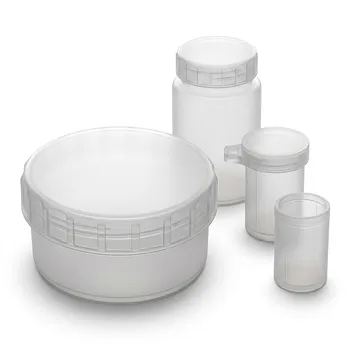
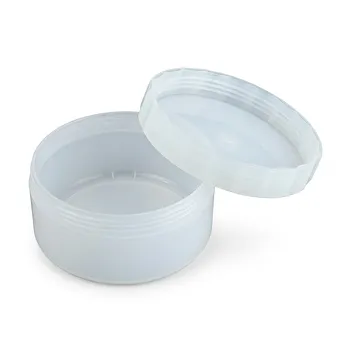
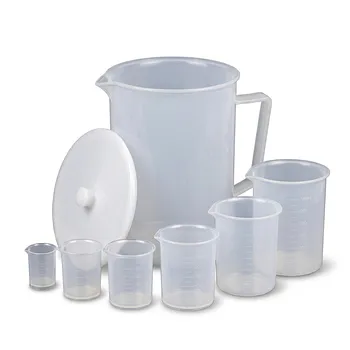
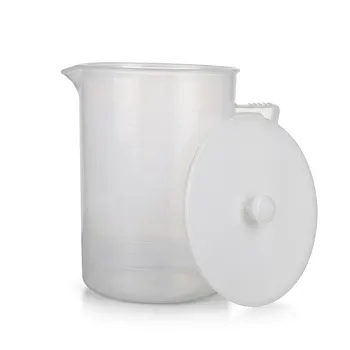
PFA and PTFE reagent bottles, beakers, tubing, fittings, valves, and digestion vessels provide chemically resistant contact surfaces. They are therefore useful when a fluid must remain chemically unchanged while moving through a system.
This is particularly important in semiconductor processing and analytical chemistry, where contamination from a wetted surface can affect an entire process or invalidate a measurement.
Why They Matter in High-Purity Fluid Handling
They protect fluid composition
In high-purity systems, the wetted material must not substantially release ions, organics, particles, or degraded polymer. PTFE and PFA are selected because they are insoluble in common solvents and resist nearly all ordinary laboratory acids and bases.
Their low extractables profile helps preserve reagent purity during storage, transfer, and processing.
They tolerate demanding temperature conditions
PTFE and PFA typically support continuous-use temperatures around 260°C, depending on grade, design, stress, and service conditions. This provides a substantially wider operating margin than many standard engineering plastics.
Temperature capability also matters during cleaning, digestion, sterilization, or heated chemical processing. The relevant limit is always the component’s rated service temperature—not simply the polymer’s nominal melting or decomposition temperature.
They extend component life
Chemical degradation can turn a fitting, valve, or tube into both a maintenance problem and a contamination source. PTFE and PFA resist the chemical attack that causes premature failure in less resistant materials.
Their durability can therefore reduce replacement frequency and help maintain a stable, repeatable fluid path.
PTFE and PFA Are Not Identical
PTFE offers exceptional inertness
PTFE is widely used for chemically aggressive environments because of its outstanding resistance to acids, bases, oxidants, and solvents. It is especially common in fabricated or machined laboratory vessels, seals, tubing, and other chemically exposed parts.
Its processing characteristics are more limited than those of melt-processable polymers, so component geometry and manufacturing method matter.
PFA adds melt-processability and purity-oriented designs
PFA retains the high chemical resistance associated with PTFE while being melt-processable. This makes it suitable for producing tubing, bottles, fittings, and complex components with consistent, smooth internal surfaces.
For high-purity fluid systems, PFA is often attractive when manufacturers need precise molded geometry, weldable components, or controlled flow paths without giving up high chemical resistance.
Understanding the Trade-offs
“Inert” does not mean contamination is impossible
PTFE and PFA are highly resistant materials, but contamination can still arise from manufacturing, machining, packaging, handling, cleaning, or an unsuitable grade. Fillers, pigments, lubricants, and processing residues can change the purity profile of a product.
For ultra-trace applications, specify virgin, high-purity, unfilled material where appropriate and verify cleaning and extractables requirements with the supplier.
Mechanical performance is not their strongest feature
Compared with some engineering plastics, PTFE has relatively low stiffness, high creep, and limited resistance to deformation under sustained load. PFA can be easier to process, but it is not automatically the best choice for every load-bearing or wear application.
Designers must account for pressure, temperature, clamping force, permeation, dimensional stability, and sealing behavior.
Permeation and handling still require attention
Chemical resistance does not guarantee zero permeation. Small molecules may diffuse through polymer walls under certain temperature, pressure, and exposure conditions.
Poorly cleaned components, scratched surfaces, dead legs, and incompatible elastomer seals can also undermine an otherwise high-purity PTFE or PFA system.
Cost and processing can be higher
Fluoropolymers generally cost more than common plastics and may require specialized fabrication, welding, machining, or quality control. That premium is justified when contamination or chemical failure is more expensive than the component itself.
For benign fluids and moderate temperatures, a standard engineering plastic may be technically adequate and more economical.
Making the Right Choice for Your Goal
Choose the material based on the chemical environment, temperature, contamination limit, mechanical load, and required qualification—not on chemical resistance alone.
- If your primary focus is ultra-trace analytical accuracy: Use high-purity, unfilled PTFE or PFA labware with validated cleaning procedures and low-background specifications.
- If your primary focus is high-purity fluid transfer: Prefer PFA or PTFE for wetted tubing, fittings, valves, and vessels, while evaluating seals, joints, and other non-fluoropolymer components separately.
- If your primary focus is aggressive acid or oxidant service: Select PTFE or PFA after checking the specific chemical, concentration, temperature, pressure, and exposure time.
- If your primary focus is cost and moderate-duty service: Consider a standard engineering plastic only after confirming that its additives, extractables, adsorption, and chemical compatibility meet the application’s limits.
- If your primary focus is reliable long-term performance: Qualify the complete assembly, because even an excellent fluoropolymer can be undermined by contaminated fabrication, unsuitable fillers, elastomers, or poor system design.
The right PTFE or PFA component does more than resist chemicals—it helps preserve the integrity of the sample, process fluid, and measurement itself.
Summary Table:
| Property | PTFE | PFA | Standard Engineering Plastics |
|---|---|---|---|
| Chemical Resistance | Excellent | Excellent | Moderate to good |
| Low Extractables | Very low | Very low | Higher due to additives |
| Temperature Range | Up to 260°C | Up to 260°C | Lower (typically <150°C) |
| Surface Adsorption | Low | Low | Higher |
| Processability | Difficult | Melt-processable | Easy |
| Typical Applications | Labware, seals, tubing | Tubing, fittings, bottles | General-purpose parts |
Ensure the highest purity in your lab with our PTFE and PFA products. From trace analysis labware to fluid handling components, we offer custom solutions for your specific needs. Contact us today to discuss how our high-performance fluoropolymers can enhance your results.
Related Products
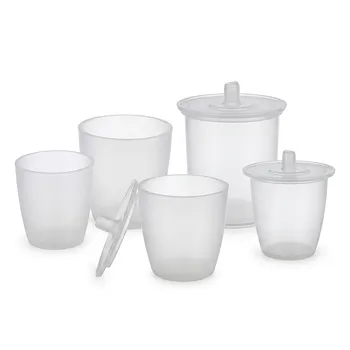
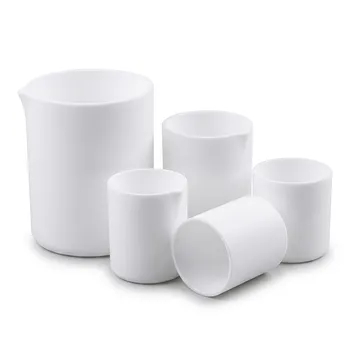
- High Purity PFA Crucible and Corrosion Resistant PTFE Beaker for Trace Analysis and Custom Laboratory Applications
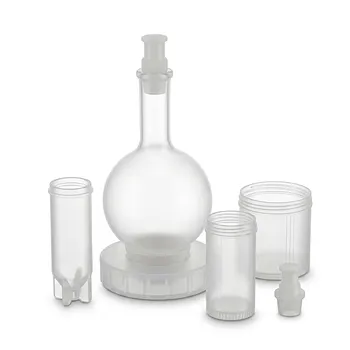
- Custom PTFE Constant Pressure Separatory Funnel Corrosion Resistant Low Background Labware for PFA Flasks
- PTFE PFA Vacuum Filtration System Corrosion Resistant Customizable Shatterproof Laboratory Device
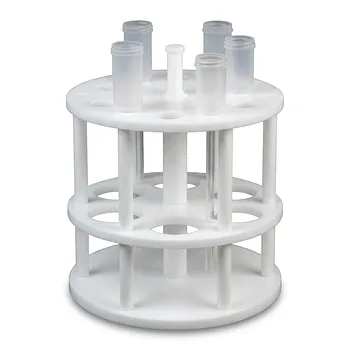
- Custom PFA Microcolumn Racks and PTFE Machined Low Background Corrosion Resistant Laboratory Fixtures
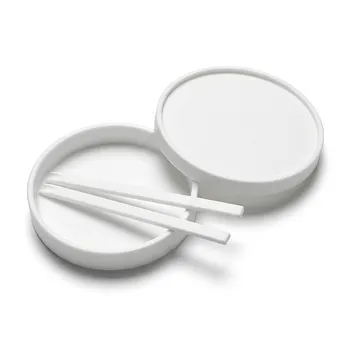
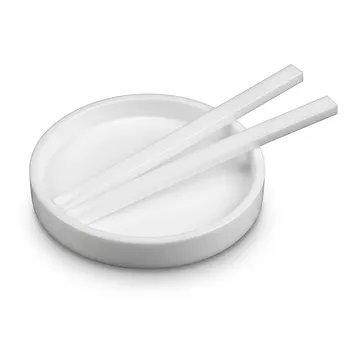
- Custom Polytetrafluoroethylene PTFE Petri Dishes 60mm Corrosion Resistant Low Background Labware
People Also Ask
- Why are high-purity vessels critical for BiFeO3 synthesis? Ensuring Phase Purity
- Why is the use of high-purity PFA or PTFE labware critical during TiO2 nanoparticle purification? Protect Sample Purity
- Why is high-purity PFA labware necessary for Znx@LS-2 zeolite ICP-OES analysis? Ensure Trace-Level Precision
- Why is high-purity PFA trace analysis labware used for MXene? Ensure Superior Material Integrity in Research
- What key material characteristics make PTFE and PFA suitable for high-purity laboratory labware, trace analysis containers, and medical microporous tubing? Discover the essential properties that ensure purity.