Jet milling is preferred because it minimizes contamination and heat during PTFE micronization. It uses high-velocity compressed-air or nitrogen jets to make PTFE particles collide with one another, rather than forcing them against metal hammers and screens. This makes it better suited to ultra-pure resins used in chemical digestion vessels and trace-analysis equipment, where even small amounts of metallic contamination can compromise results.
For ultra-pure PTFE, the milling process must preserve not only particle size, but also chemical cleanliness and material consistency. Jet milling avoids the main contamination and friction-heat sources associated with hammer milling.
Why Ultra-Pure PTFE Requires Specialized Milling
Trace analysis magnifies contamination risks
Chemical digestion and trace-metal analysis can measure extremely low concentrations. Consequently, contamination introduced during resin preparation may be mistaken for analyte, producing elevated blanks, false positives, or poor reproducibility.
PTFE is selected for these applications because of its chemical resistance and low extractables. That advantage can be undermined if the milling equipment introduces metallic wear particles.
Particle preparation affects the final component
Micronized PTFE must have suitable particle-size and morphology characteristics for the intended manufacturing process. Uncontrolled heat or mechanical abuse can change the powder’s flow behavior and morphology, affecting molding consistency and finished-part performance.
This is particularly important for digestion vessels, tubes, seals, and fluid-transfer components that must remain chemically clean and dimensionally reliable.
How Jet Milling Reduces Contamination
Particle-on-particle size reduction
In jet milling, compressed air or nitrogen accelerates PTFE particles through a grinding chamber. The particles reduce one another’s size through high-velocity collisions rather than being crushed primarily by metal tools.
Because the principal grinding mechanism is particle-on-particle impact, the process greatly reduces direct contact between the PTFE and internal mechanical components.
No rotating hammers or grinding screens
A hammer mill typically uses rotating metal bars, hammers, or similar mechanical elements, often working against a screen. Contact among the resin, hammers, chamber surfaces, and screen can create metallic tramp contamination through wear.
Jet mills eliminate the rotating hammers and grinding screens that represent the most direct sources of this type of contamination. The equipment still requires appropriate construction, cleaning, inspection, and maintenance, but its basic milling mechanism is better aligned with ultra-pure processing.
Cleaner processing for trace-metal applications
For resins destined for trace-analysis apparatus, contamination control is not a cosmetic benefit. It directly supports lower analytical blanks and greater confidence that detected metals originated from the sample rather than from processing.
The exact cleanliness level still depends on the mill design, materials of construction, gas quality, cleaning protocol, and process controls.
How Jet Milling Controls Heat
Lower frictional heating
Hammer milling relies on repeated mechanical impacts and contact with screens. These interactions generate frictional heat, especially when processing conditions, throughput, or residence time increase.
Jet milling uses gas-driven acceleration and particle collisions, avoiding much of the sliding and rubbing contact found in mechanical milling. This generally reduces heat generation during micronization.
Protecting PTFE powder characteristics
Excessive heat can alter particle morphology and influence the resin’s thermal behavior or processing response. Avoiding unnecessary heat helps maintain more consistent powder characteristics from batch to batch.
Jet milling does not mean the process is entirely heat-free. Compressed gas, impact energy, and operating conditions can still affect temperature, so temperature monitoring and suitable process parameters remain necessary.
Why This Matters in Digestion and Trace-Analysis Equipment
Supporting low-background chemical analysis
PTFE components used in digestion and trace-analysis systems are expected to resist aggressive reagents while contributing minimal extractable material. A cleaner starting resin supports that requirement.
The benefit is especially important in microwave digestion tubes, vessels, liners, and other components exposed directly to concentrated acids and heated sample solutions.
Preserving reliable molding behavior
Consistent particle size and morphology can improve powder handling and downstream processing. This helps manufacturers produce components with more predictable dimensions, surfaces, and sealing performance.
For applications requiring complex molded shapes, PFA may also be selected because it is melt-processible while retaining strong chemical resistance and low trace-metal extractables. Its melt-processing capability supports precise labware, molded threads, valves, fittings, and leak-tight seals.
Understanding the Trade-offs
Jet milling does not eliminate every contamination source
Although jet milling reduces metal-on-resin contact, contamination can still come from the mill chamber, gas supply, upstream handling, maintenance activities, packaging, or the surrounding environment.
Ultra-pure production therefore requires a complete contamination-control program, not merely a change in mill type.
Equipment and operating costs may be higher
Jet mills require compressed gas systems, suitable classification and collection equipment, and careful control of operating conditions. The process may be more demanding than conventional hammer milling in terms of energy use, setup, and validation.
Those costs must be evaluated against the consequences of contamination, rejected batches, and unreliable trace-analysis results.
Hammer milling can still suit less demanding applications
Hammer milling remains useful where metallic contamination and heat exposure are acceptable or can be controlled through equipment selection and post-processing. It is not inherently unsuitable for all PTFE powders.
The preference for jet milling is strongest when the resin is intended for ultra-clean chemical, analytical, semiconductor, or laboratory applications.
Making the Right Choice for Your Goal
Select the milling method based on the cleanliness, thermal sensitivity, and downstream processing requirements of the PTFE resin.
- If your primary focus is trace-metal cleanliness: Prefer jet milling, then validate equipment materials, gas purity, cleaning procedures, and analytical blanks.
- If your primary focus is minimizing thermal impact: Prefer jet milling with temperature monitoring and controlled gas and feed conditions.
- If your primary focus is low processing cost for a less demanding application: Consider hammer milling only when metallic wear and frictional heating are demonstrably acceptable.
- If your primary focus is complex, seamless molded labware: Evaluate PFA separately, since its melt-processibility can support precise shapes, threads, seals, and heavy-walled digestion vessels.
For ultra-pure PTFE, jet milling is preferred because it reduces the two risks most capable of undermining trace-analysis performance: metallic contamination and uncontrolled processing heat.
Summary Table:
| Aspect | Jet Milling | Hammer Milling |
|---|---|---|
| Grinding mechanism | Particle-on-particle collisions via gas jets | Rotating metal hammers against screens |
| Contamination risk | Low (minimal metal contact) | High (metal-on-resin contact) |
| Heat generation | Low (less friction) | High (frictional heat) |
| Suitability for ultra-pure PTFE | Excellent | Poor |
| Cost and complexity | Higher (gas systems, controls) | Lower |
Need ultra-pure PTFE components for your trace analysis? Trust KINTEK's high-performance fluoropolymer products. We specialize in PTFE and PFA labware, digestion vessels, and custom CNC machined parts, ensuring minimal contamination and reliable performance. Contact us today for a quote and see how we can meet your demanding requirements. Contact us!
Related Products
- Custom PTFE Filtration System Acid Resistant High Purity Semiconductor Grade Chemical Processing Filter
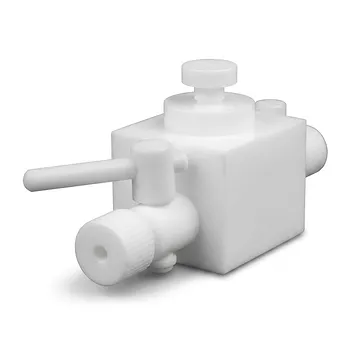
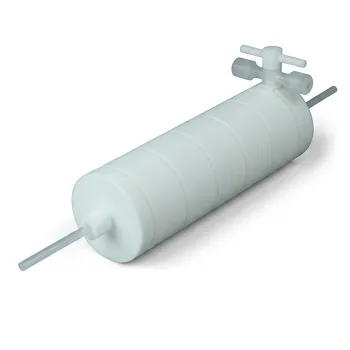
- PTFE Corrosion Resistant Filter with PFA Valve Connections and Integrated Sieve Plate
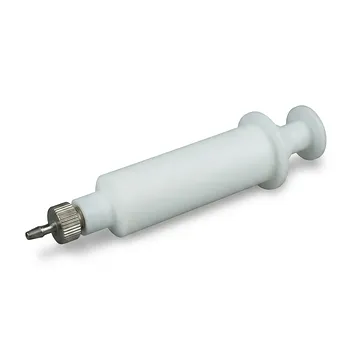
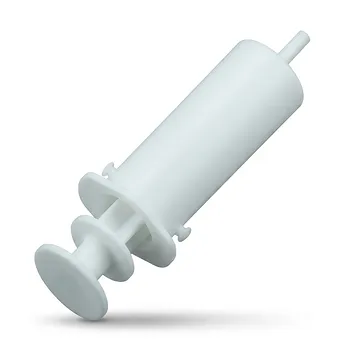
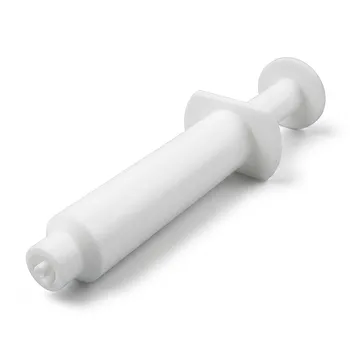
- High Temperature Chemical Resistant 50ml PTFE Syringe Customized Teflon Injector with Threaded Seal for Trace Analysis
- Custom PTFE Teflon Balls for Advanced Industrial Applications
- Custom PTFE Insulating Gaskets and Corrosion Resistant Fluoropolymer Seals for Industrial Electrical Applications
People Also Ask
- What makes PTFE filtration systems advantageous for industrial and scientific use? Unmatched Chemical & Thermal Stability
- What sizes and pore options are available for PTFE filters? Choose the Right Filter for Your Application
- What steps are involved in selecting the proper PTFE filter? A 4-Step Guide to Optimal Filtration
- How does the hydrophobicity of PTFE filters benefit their use? Ensure Uninterrupted Gas Flow and Solvent Filtration
- What temperature resistance do PTFE filters offer? Unmatched Thermal Stability from -200°C to +260°C