Platinum Foil serves as the indispensable counter electrode (CE) in PEC-SBPD performance testing, primarily functioning as the site for the reduction half-reaction. Its role is to complete the electrochemical circuit by receiving photogenerated carriers from the working electrode, ensuring that the measured photoelectric signals accurately reflect the properties of the light-sensitive material rather than the testing apparatus.
Core Takeaway: Platinum Foil acts as a chemically inert, highly catalytic "partner" to the working electrode, ensuring that the total current of the system is limited only by the photo-response of the active material (such as Mg-Ga2O3) and not by charge transfer bottlenecks at the counter electrode.
Facilitating the Charge Transfer Process
Completing the Electrical Circuit
In a photoelectrochemical self-powered photodetector (PEC-SBPD) system, a continuous flow of charge is required to measure performance. The Platinum Foil acts as the terminal that accepts photogenerated electrons or holes (depending on the system configuration) that have traveled through the external circuit.
Driving the Reduction Half-Reaction
While the working electrode handles the photo-excitation, the Platinum Foil facilitates the necessary reduction half-reaction within the electrolyte. Because platinum has high electrocatalytic activity, it allows these chemical reactions to occur with minimal energy loss.
Minimizing Interface Resistance
One of the most critical roles of the foil is to reduce charge transfer resistance at the electrode-electrolyte interface. By providing an efficient path for charge movement, it ensures that the electrochemical impedance of the counter electrode does not interfere with the device's true performance metrics.
Ensuring Measurement Accuracy and Integrity
Maintaining Chemical Inertness
Platinum is selected for its extreme chemical stability, particularly in harsh environments like strong alkaline (KOH) electrolytes. It remains inert, meaning it does not undergo parasitic redox reactions or produce unwanted "peaks" that could be mistaken for the signal of the material being tested.
Preventing Polarization Effects
To get an accurate reading, the reaction rate at the counter electrode must be significantly higher than at the working electrode. The use of Platinum Foil (or mesh) provides a high effective surface area, which prevents polarization—a phenomenon where the counter electrode becomes a bottleneck and artificially limits the measured current.
Isolating the Active Material Signal
Because the Platinum Foil does not dissolve or release metal impurities, the testing environment remains pure. This ensures that every microampere of current recorded is derived exclusively from the faradaic processes or photo-responses of the light-sensitive material, such as Mg-Ga2O3 or ZnSe composites.
Understanding the Trade-offs
The Cost of High-Purity Materials
While Platinum is the "gold standard" for accuracy, it is an expensive precious metal. For large-scale industrial applications or routine screening, the high cost of high-purity foil can be a significant budgetary factor compared to carbon-based alternatives.
Potential for Catalytic Over-Activity
In some specific sensitive assays, the high catalytic activity of platinum for hydrogen evolution can sometimes mask subtle secondary reactions. Researchers must ensure that the high overpotential for certain gases doesn't inadvertently influence the local pH or concentration at the working electrode surface during long-term stability tests.
How to Apply This to Your Testing Setup
Making the Right Choice for Your Goal
- If your primary focus is Maximum Measurement Precision: Use high-purity Platinum Foil to ensure that all measured impedance and current data are a direct reflection of your active photo-sensitive material.
- If your primary focus is Testing in Strong Alkalines: Platinum is the ideal choice due to its ability to remain chemically inert and prevent the leaching of impurities into the electrolyte.
- If your primary focus is High-Current Photo-responses: Consider using a Platinum Mesh instead of a solid foil to further increase the surface area and eliminate any risk of counter-electrode polarization.
By utilizing Platinum Foil as a counter electrode, you eliminate experimental variables, ensuring your PEC-SBPD data is both reproducible and technically sound.
Summary Table:
| Function/Role | Impact on Performance Testing | Key Property Involved |
|---|---|---|
| Circuit Completion | Receives photogenerated carriers to ensure continuous charge flow. | High Electrical Conductivity |
| Reduction Site | Facilitates the half-reaction with minimal energy loss. | High Electrocatalytic Activity |
| Signal Integrity | Prevents parasitic reactions that cause measurement "noise." | Chemical Inertness |
| Impedance Control | Minimizes interface resistance to ensure true material response. | Low Charge Transfer Resistance |
| Durability | Maintains stability in harsh alkaline electrolytes (e.g., KOH). | Corrosion Resistance |
Elevate Your Electrochemical Research with KINTEK
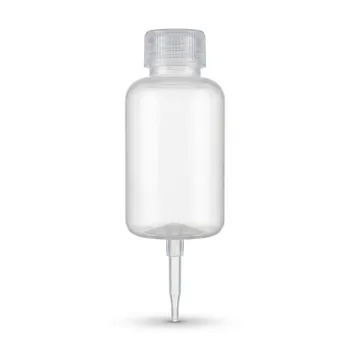
Precise PEC-SBPD testing requires a contamination-free environment and reliable components. KINTEK specializes in high-performance fluoropolymer solutions designed to safeguard your most sensitive experiments. From everyday basic labware like PTFE beakers, stirring bars, and PFA reagent bottles to complex custom-machined electrochemical cells, hydrothermal synthesis liners, and microwave digestion vessels, we provide the ultimate chemical resistance for your lab.
Whether you need standard consumables—such as tubing, fittings, valves, and filters—or bespoke CNC-fabricated laboratory setups, KINTEK’s exclusive focus on high-purity PTFE and PFA ensures your research remains free from impurities.
Ready to optimize your testing setup? Contact KINTEK today to discuss how our high-performance materials can enhance your laboratory's accuracy and efficiency!
References
- Xin Zhou, Heping Zeng. Mg‐doped α‐Ga<sub>2</sub>O<sub>3</sub> Nanorods for the Construction of Photoelectrochemical‐Type Self‐Powered Solar Blind UV Photodetectors and Underwater Imaging Application. DOI: 10.1002/advs.202413074
This article is also based on technical information from Kintek Knowledge Base .
Related Products
- Customizable PTFE Scrapers and Shovels for Demanding Applications
- Custom PTFE Petri Dish 200mm High Purity Corrosion Resistant Low Background Laboratory Ware
- High Purity PFA Coiled Tubing Custom PTFE Machining PFA Welding and Precision Bending Solutions
- Custom PTFE Multi Layer Filtration Plates Corrosion Resistant Low Background Lab Grade Filter Assemblies
- Custom PTFE Petri Dishes Corrosion Resistant High Purity Low Background Labware
People Also Ask
- Why are PTFE shovels considered cost-effective? Maximize ROI with Superior Durability
- How does the durability of PTFE shovels compare to plastic shovels? Discover the Superior Choice for Harsh Conditions
- What are the key properties that make PTFE shovels ideal for laboratory use? Ensure Sample Integrity with Chemically Inert Tools
- What are the advantages of PTFE shovels in terms of chemical resistance? Unmatched Inertness for Handling Corrosives
- What are some specific applications of PTFE shovels in the laboratory? Ensure Sample Purity and Safety