Polytetrafluoroethylene (PTFE) molds serve as the primary containment and shaping dies for the precision assembly of all-solid-state battery (ASSB) components. They provide a chemically inert, non-stick environment for compacting reactive powder materials into dense, multi-layered cell stacks. By enabling high-pressure uniaxial or isostatic pressing without material adhesion or metallic contamination, these molds ensure the low interfacial resistance necessary for efficient ion transport.
PTFE molds are critical enabling tools in ASSB fabrication because they solve the dual challenge of high-pressure densification and chemical compatibility. Their inherent lubricity and electrical insulation allow for the creation of stable, high-purity solid-solid interfaces that are fundamental to electrochemical performance.
The Functional Mechanics of PTFE in ASSB Assembly
High-Pressure Powder Compaction
PTFE molds function as specialized cavities that hold loose powders, slurries, or composite mixtures during the critical compaction phase. They facilitate uniaxial or isostatic pressing at pressures ranging from 10 to 100 MPa to transform powders into dense pellets or films. This process is essential for reducing the porosity of the solid electrolyte and active materials, directly improving the energy density of the cell.
Establishing Intimate Solid-Solid Interfaces
The primary hurdle in ASSB assembly is ensuring that the electrode and solid electrolyte particles maintain "intimate contact." PTFE molds support the layering of these materials, allowing high pressure to be transmitted evenly across the stack without introducing shear stresses. This results in uniform layer thicknesses, often maintained within a few micrometers, which minimizes grain-boundary resistance.
Precision Demolding and Geometric Integrity
Because PTFE has an exceptionally low coefficient of friction (0.05–0.10), it prevents powders from adhering to the mold walls. This non-stick performance is vital during the demolding process, as it allows for the removal of fragile solid-state stacks without causing mechanical cracks or surface delamination. The mold ensures the final battery component retains a precise geometry for accurate electrochemical testing.
Material Properties and Their Impact on Cell Quality
Chemical Inertness and Purity
Sulfide-based and lithium-metal materials used in ASSBs are highly reactive and sensitive to contamination. The strong carbon-fluorine bonds in PTFE provide extreme chemical stability, ensuring the mold does not react with or contaminate the battery materials. Unlike metal molds, PTFE eliminates the risk of introducing metallic ions that could lead to internal short circuits or side reactions.
Electrical and Thermal Insulation
With a high electrical resistivity of approximately 10¹⁸ Ω·cm, PTFE acts as a perfect insulator during assembly and testing. This allows researchers to perform in-situ electrochemical measurements without the mold interfering with signal transmission. Furthermore, its thermal stability from –200 °C to +260 °C allows for processing across a wide range of laboratory conditions.
Understanding the Trade-offs
Mechanical Compliance vs. Rigidity
While PTFE is rigid enough for laboratory-scale forming, it is softer than traditional hardened steel molds. Under extreme, sustained pressures, PTFE can undergo mechanical creep or deformation, which may affect the dimensional tolerances of the battery stack over repeated uses. Users must monitor the mold for signs of wear or warping to ensure experimental reproducibility.
Scalability and Processing Limits
PTFE molds are ideal for laboratory- and pilot-scale research but face challenges in high-throughput industrial manufacturing. The sintering process required to fabricate these molds (360 °C to 380 °C) results in high-quality tooling, but the cycle time for manual powder loading and pressing is generally too slow for mass production.
How to Apply This to Your Project
When integrating PTFE molds into your battery assembly workflow, consider your specific material requirements and testing goals.
- If your primary focus is sulfide-based electrolytes: Use PTFE molds to prevent chemical degradation and ensure the non-stick removal of these moisture-sensitive materials.
- If your primary focus is high-pressure densification: Ensure your PTFE mold is housed within a secondary support sleeve to prevent mold expansion and maintain precise uniaxial pressure.
- If your primary focus is interfacial resistance studies: Leverage the mold's insulating properties to perform impedance spectroscopy while the stack remains under active compression.
Utilizing PTFE molds correctly allows for the creation of high-performance solid-state batteries with the structural integrity required for definitive electrochemical analysis.
Summary Table:
| Feature | Role in ASSB Assembly | Key Benefit |
|---|---|---|
| High-Pressure Compaction | Facilitates uniaxial/isostatic pressing (10-100 MPa) | Reduces porosity and increases energy density |
| Non-Stick Surface | Low friction coefficient (0.05–0.10) for easy release | Prevents cracks and delamination during demolding |
| Chemical Inertness | Carbon-fluorine bonds resist reactive sulfides/lithium | Ensures high purity and eliminates metallic contamination |
| Electrical Insulation | High resistivity (~10¹⁸ Ω·cm) | Enables in-situ electrochemical testing without interference |
| Thermal Stability | Operates from –200 °C to +260 °C | Supports various laboratory and processing conditions |
Elevate Your Battery Research with KINTEK Precision
Achieving the perfect solid-solid interface requires tools that match the sophistication of your chemistry. KINTEK specializes in high-performance fluoropolymer solutions tailored for the most demanding energy storage applications. From specialized battery testing fixtures and electrode accessories to custom-machined PTFE molds, we provide the hardware necessary for breakthrough ASSB performance.
Our expertise extends beyond standard supplies. We offer end-to-end custom CNC fabrication for complex, non-standard parts, alongside our comprehensive range of PFA and PTFE labware—including high-purity trace analysis instruments, fluid transfer components, and reaction apparatus like hydrothermal synthesis liners.
Ready to optimize your assembly process with bespoke laboratory setups?
Contact KINTEK today to discuss your project requirements!
Related Products
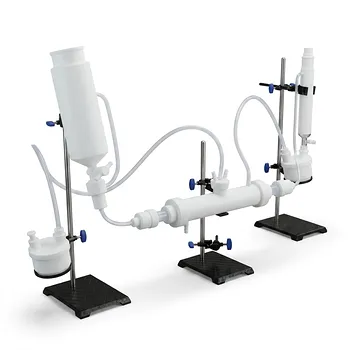
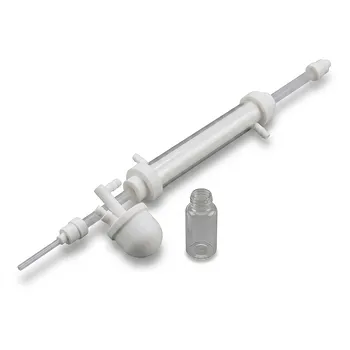
- Custom Polytetrafluoroethylene PTFE Constant Pressure Dropping Funnel Corrosion Resistant Fluid Control Assembly with Conversion Stopper Compatibility
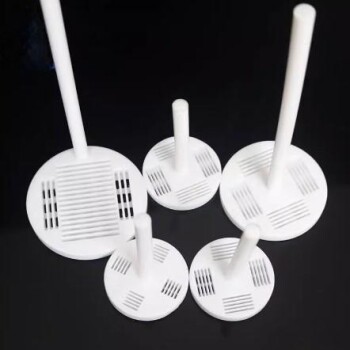
- Custom Machined Molded PTFE Teflon Parts Manufacturer for Laboratory ITO FTO Conductive Glass Cleaning Flower Basket
- Custom PTFE Constant Pressure Separatory Funnel Corrosion Resistant Low Background Labware for PFA Flasks
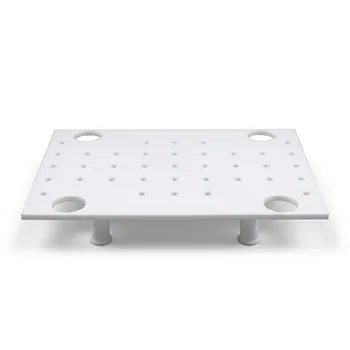
- PTFE Anti Scald Heat Insulation Sleeve Hot Plate Support Feet Laboratory Benchtop Protection Customizable Thermal Barrier
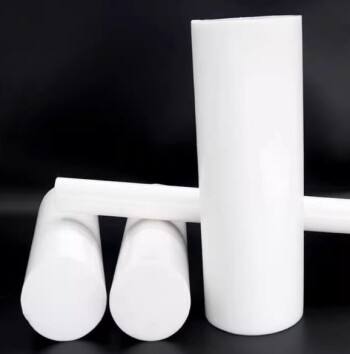
- Customizable PTFE Rods for Advanced Industrial Applications
People Also Ask
- What advantages do custom PTFE parts offer for industrial efficiency? Boost Uptime & Cut Costs
- What industries use custom PTFE parts and for what purposes? Solve Critical Challenges with High-Performance Materials
- What design considerations are important for custom PTFE parts? Design for Performance & Reliability
- What industries benefit most from custom PTFE parts? Solve Extreme Environment Challenges
- Why are PTFE valves used in food and beverage processing equipment? Ensure Purity, Safety, and Easy Cleaning