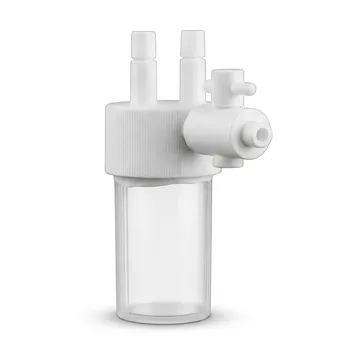
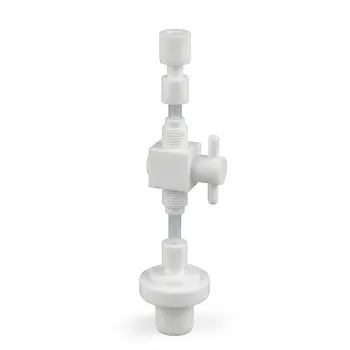
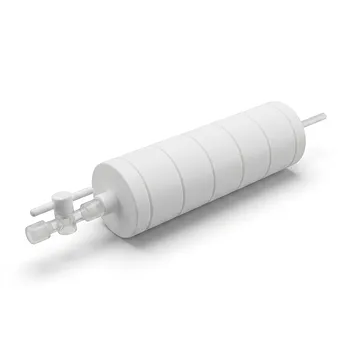
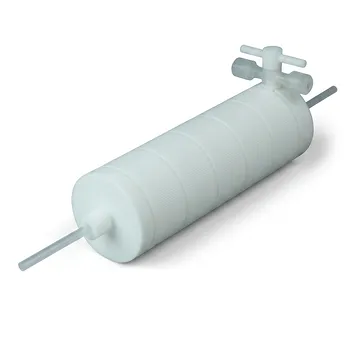
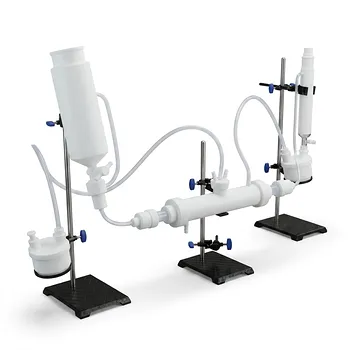
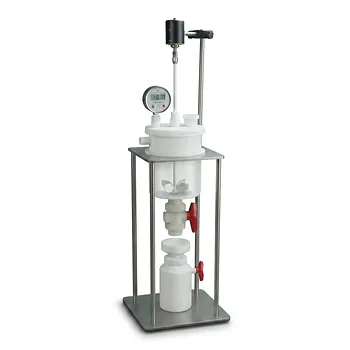
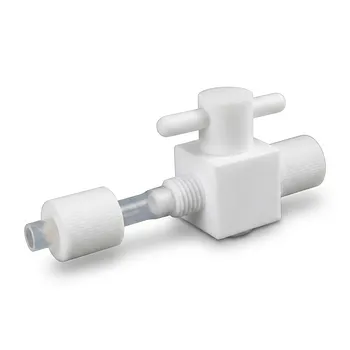
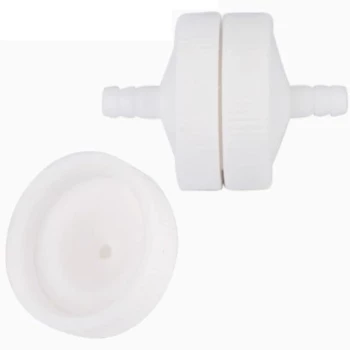
PTFE valves serve as the definitive barrier against contamination in high-stakes fluid handling. They ensure product purity by utilizing chemically inert, non-leaching wetted surfaces that prevent the introduction of extractables or leachables into the process stream. This inherent stability, combined with a non-stick surface that facilitates rigorous sterilization, ensures that sensitive pharmaceutical compounds and biological media remain untainted throughout the production lifecycle.
Core Takeaway: PTFE valves provide an "invisible" interface for fluid transfer, ensuring that no chemical interaction or particulate shedding occurs between the valve material and the process media, even under extreme sterilization conditions.
The Chemical Foundation of Purity
Eliminating Extractables and Leachables
In pharmaceutical manufacturing, the primary risk to purity is the migration of chemicals from equipment into the drug product. PTFE is a high-purity polymer that produces zero extractables or leachables, meaning it does not shed molecules into the fluid stream. This allows manufacturers to comply with stringent USP Class VI and FDA standards without fear of chemical interference.
Absolute Chemical Inertness
The molecular structure of PTFE is exceptionally stable, making it non-reactive with aggressive drug compounds or sensitive biological reagents. This inertness ensures that the valve does not catalyze unwanted chemical reactions or alter the pH of the media. Because the material is non-toxic, any incidental debris—though rare—is considered biologically inconsequential.
Compatibility with Aggressive Media
PTFE valves are engineered to withstand the harshest chemical environments, including concentrated acids and organic solvents. This resistance prevents material degradation that could lead to structural failure or the release of contaminants. It ensures the valve maintains its structural integrity across a wide range of pharmaceutical applications, from API dosing to chemical injection.
Physical Design for Sterile Environments
Surface Tension and Hydrophobicity
The hydrophobic and non-stick properties of PTFE are critical for preventing "carry-over" between batches. Because fluids do not adhere to the surface, the valves facilitate complete drainage of the system. This reduces the "hold-up volume" where stagnant media could otherwise become a breeding ground for bacteria.
Resistance to Microbial Growth
The ultra-smooth surface of PTFE components, such as bellows and diaphragms, prevents the buildup of particulates. By eliminating microscopic pits and crevices, the material resists microbial adhesion and biofilm formation. This is essential for maintaining a sterile environment in biotechnology applications where even minor bacterial growth can ruin an entire batch.
Reliability in High-Purity Transfer
PTFE diaphragm valves are specifically designed for high-purity liquid transfer due to their low friction and low surface adhesion. These features contribute to a high cycle life, reducing the frequency of maintenance. Fewer maintenance interventions mean the sterile boundary of the system is breached less often, further protecting product purity.
Operational Integrity in CIP and SIP Cycles
Withstanding Thermal and Chemical Stress
To maintain sterility, pharmaceutical systems undergo Clean-in-Place (CIP) and Sterilize-in-Place (SIP) cycles. PTFE maintains its mechanical strength while exposed to steam, hot water, and aggressive cleaning chemicals. It can survive extreme temperatures and pressures that would cause lesser plastics to warp or degrade.
Facilitating Efficient Sterilization
Because PTFE is resistant to nearly all cleaning agents, operators can use the most effective sterilization protocols without damaging the valve. The material's smooth, non-porous surface ensures that cleaning agents can reach every part of the wetted area. This efficiency minimizes the time required for cleaning while maximizing the certainty of decontamination.
Understanding the Trade-offs
Mechanical Considerations
While PTFE is chemically superior, it is a "soft" plastic and can be subject to mechanical wear or "creep" under constant high pressure. Users must ensure that valve designs, such as PTFE-lined or diaphragm configurations, are properly supported by robust outer housings. Selecting the correct grade of PTFE is vital, as medical-grade applications require specific certifications that industrial grades may not possess.
Cost and Thermal Expansion
The initial investment for PTFE valves is often higher than for standard elastomers or lower-grade plastics. Additionally, PTFE has a different rate of thermal expansion than the metal bodies it may be paired with. If not properly engineered, extreme temperature swings during SIP cycles can lead to seal issues, though high-quality engineered polymer solutions are designed to mitigate this risk.
How to Apply This to Your Project
Making the Right Choice for Your Goal
- If your primary focus is Regulatory Compliance: Select only PTFE valves that are explicitly certified as USP Class VI and FDA approved to ensure zero-leachable performance.
- If your primary focus is Minimizing Cross-Contamination: Prioritize valves with high-polished PTFE surfaces and minimal internal dead-space to facilitate total drainage during CIP.
- If your primary focus is Long-Term Durability: Opt for PTFE diaphragm valves, which offer high cycle life and low friction, reducing the risk of particulate shedding from mechanical wear.
- If your primary focus is Extreme Processing Conditions: Verify that the specific PTFE grade is rated for the peak temperatures and pressures of your SIP cycles to avoid material deformation.
By leveraging the inert and non-stick nature of PTFE, you create a process environment that prioritizes the chemical and biological integrity of the final product.
Summary Table:
| Feature | Purity Benefit | Operational Value |
|---|---|---|
| Chemical Inertness | Zero extractables or leachables | Guarantees USP Class VI and FDA compliance |
| Non-Stick Surface | Prevents biofilm and microbial growth | Facilitates complete drainage and easy cleaning |
| Thermal Stability | Withstands high-temperature steam | Maintains structural integrity during SIP cycles |
| Hydrophobicity | Eliminates "carry-over" between batches | Reduces hold-up volume and contamination risk |
Secure Your Process Purity with KINTEK
Ensure absolute integrity in your pharmaceutical and biotech workflows with KINTEK’s comprehensive range of high-performance fluoropolymer solutions. Beyond high-purity PTFE valves, tubing, and fittings, we manufacture virtually all imaginable laboratory supplies—from everyday basic labware like beakers, bottles, and centrifuge tubes to advanced hydrothermal synthesis liners and electrochemical cells.
By leveraging our end-to-end custom CNC fabrication, KINTEK delivers everything from complex non-standard machined parts to high-volume orders of sample prep tools, filtration components, and high-purity trace analysis instruments. We maintain an exclusive focus on high-performance materials to ensure your sensitive media remains untainted.
Ready to eliminate contamination risks? Contact KINTEK today to discover how our bespoke laboratory setups and fluoropolymer expertise can enhance your research and production efficiency.
Related Products
- Corrosion Resistant PTFE Polytetrafluoroethylene Valve and Customizable Laboratory Fluid Dispensing Faucet for Aggressive Chemical Handling in Industrial Storage Tanks and Plastic Drums
- High Corrosion Resistant PTFE Faucet Polytetrafluoroethylene Valve for Chemical Storage Drums and Fluid Transfer Systems Customizable Industrial Grade
- High Purity PTFE Faucet Corrosion Resistant Polytetrafluoroethylene Drum Valve Customizable Lab Chemical Fluid Control
- Custom PTFE Valve 2-Way 3-Way Corrosion Resistant Low Background Virgin Fluoropolymer Industrial Fluid Control
- Corrosion Resistant PTFE Valves Customizable 2 Way 3 Way 4 Way High Temperature Teflon Fluid Control Solutions
People Also Ask
- How do PTFE valves and components support high-purity liquid transfer? Ensure Product Integrity with Inert Materials
- What industries commonly use PTFE valves and components? Essential for Chemical & Purity Applications
- What specific advantages do PTFE valves offer? Unmatched Corrosion Resistance for Industrial Chemical Handling
- What are the key properties of PTFE valves? Ensure Purity, Safety, and Reliability in Demanding Processes
- What is the typical operating temperature and pressure range for PTFE valves? Key Specs for Optimal Performance