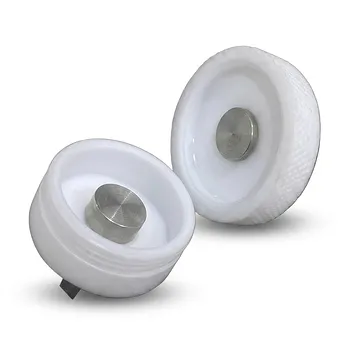
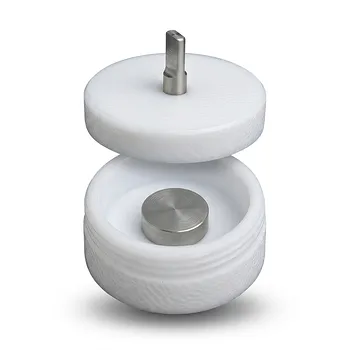
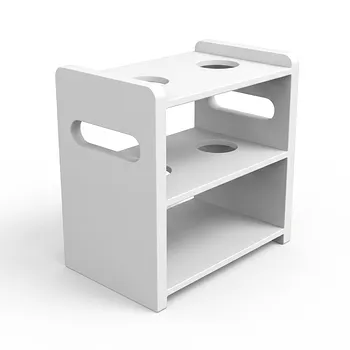
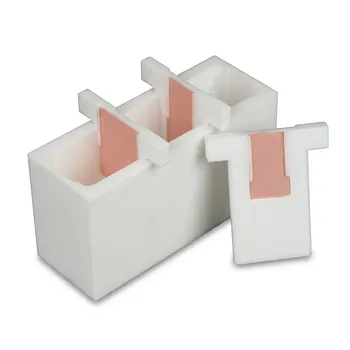
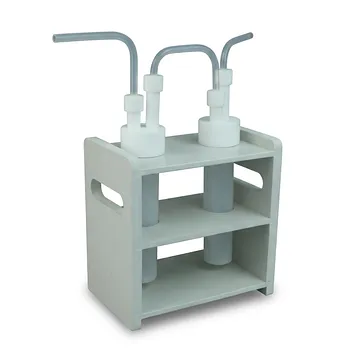
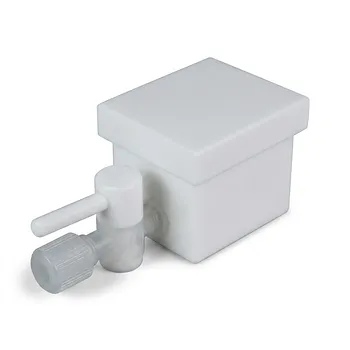
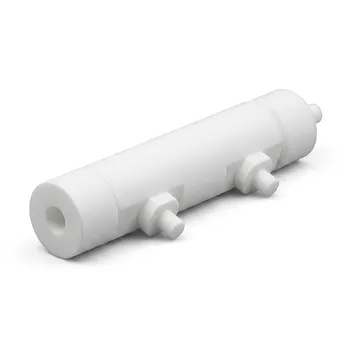
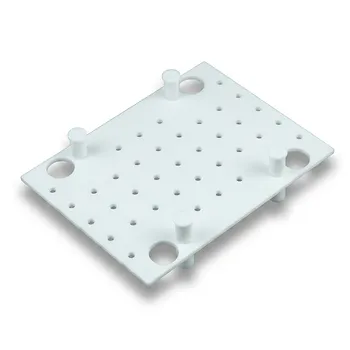
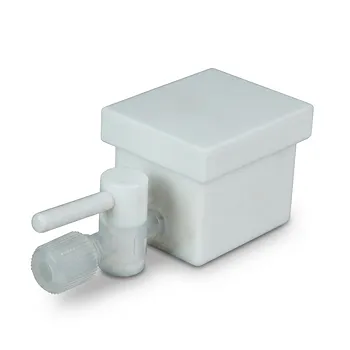
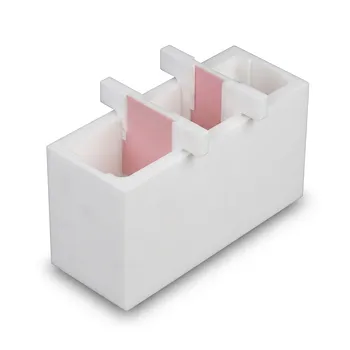
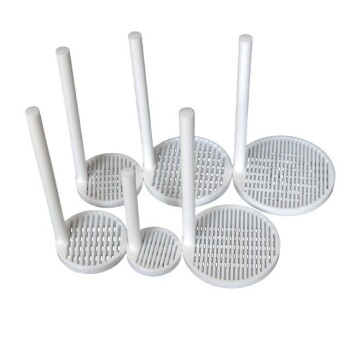
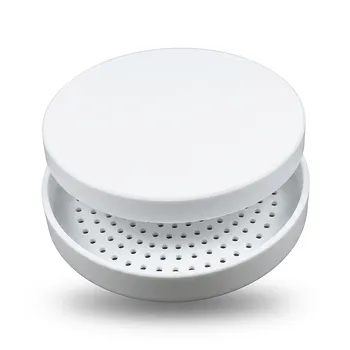
High-precision PTFE components are integrated into battery testing fixtures primarily to provide a chemically inert and electrically isolated environment that ensures the integrity of electrochemical data. These components secure electrode materials in precise positions, prevent internal short circuits, and resist degradation from aggressive electrolytes. By maintaining structural stability and low-friction interfaces, they allow for consistent electrical contact and mechanical durability across repeated charge-discharge cycles.
The core purpose of using PTFE in battery fixtures is to eliminate environmental variables—such as parasitic currents, corrosion, or mechanical deformation—that would otherwise compromise the accuracy and reproducibility of battery performance metrics.
Ensuring Electrical and Chemical Integrity
Preventing Parasitic Currents and Short Circuits
PTFE acts as a superior electrical insulator, which is critical for preventing short circuits between the anode and cathode during testing. By isolating the electrode materials, these components eliminate parasitic currents that could skew the measurement of a battery's true capacity or efficiency.
Resistance to Aggressive Electrolyte Corrosion
Modern battery chemistries often utilize highly acidic or reactive electrolytes that can degrade standard materials. PTFE’s carbon-fluorine backbone provides universal resistance to solvents, acids, and oxidizers, ensuring the fixture does not contaminate the sample or lose structural integrity over time.
Maintaining Chemical Purity
In sensitive laboratory environments, even trace amounts of leached material can alter electrochemical results. PTFE's chemical inertness ensures that no impurities are introduced into the battery system, allowing researchers to validate the performance of the active materials alone.
Physical Precision and Mechanical Stability
Dimensional Stability Across Temperature Ranges
Battery testing often involves thermal cycling, which can cause materials to expand or contract. High-precision PTFE components maintain their dimensional stability, ensuring that tight tolerances and electrode alignments are preserved even as temperatures fluctuate during rigorous testing.
Low Friction for Sample Protection
The low friction coefficient of PTFE is vital when assembling delicate components or compacting powders. It reduces the risk of mechanical damage to thin foils or membranes and simplifies the cleaning process, which is essential for maintaining a sterile and repeatable testing environment.
Consistent Electrical Contact
To obtain reliable data, a fixture must provide uniform physical pressure across the electrode assembly. PTFE components help distribute this force evenly, ensuring optimal contact between the catalyst layers, gas diffusion layers, and current collectors without deforming the materials.
Applications in Specialized Battery Architectures
Solid-State Battery Compaction
In the development of all-solid-state batteries (ASSBs), PTFE molds serve as containment dies for high-pressure powder compaction. They allow for the formation of dense, uniform pellets or layered cell stacks while ensuring that the mold itself does not bond to or react with the solid electrolyte.
Sealing and Leak Prevention
For flow batteries and fuel cells, PTFE gaskets provide a reliable sealing environment that prevents internal leaks and external seepage. This containment is critical for maintaining the stable pressure and humidity levels required for the experimental validation of the Membrane Electrode Assembly (MEA).
Understanding the Trade-offs
Resistance to Mechanical Creep
While PTFE is stable, it is susceptible to "cold flow" or creep under sustained high pressure over long periods. Engineers must account for this by designing fixtures that support the PTFE components or by using glass-filled variants if extreme structural rigidity is required at high loads.
Thermal Conductivity Limitations
PTFE is an excellent insulator, not just electrically but also thermally. This low thermal conductivity means it may not dissipate heat as quickly as metallic components, which must be considered when testing high-power cells that generate significant internal heat.
How to Apply This to Your Project
Selecting the Right Fixture Design
- If your primary focus is solid-state electrolyte research: Utilize PTFE multi-cavity molds to ensure high-pressure compaction without sample contamination or adhesion.
- If your primary focus is long-term cycle life testing: Prioritize high-precision PTFE sleeves and gaskets to maintain a corrosion-resistant environment that survives hundreds of electrolyte-exposed cycles.
- If your primary focus is fuel cell or flow battery performance: Implement integrated PTFE flow fields to accurately guide reactant gases while ensuring a leak-proof sealing environment.
High-precision PTFE components transform a standard fixture into a definitive scientific instrument by isolating the electrochemical reaction from all external mechanical and chemical interference.
Summary Table:
| Key Feature | Benefit in Battery Testing | Impact on Research Data |
|---|---|---|
| Chemical Inertness | Resists aggressive electrolytes | Prevents contamination and corrosion |
| Electrical Isolation | High dielectric strength | Eliminates parasitic currents and short circuits |
| Low Friction | Non-stick surface | Protects delicate foils and simplifies cleaning |
| Dimensional Stability | Maintains tight tolerances | Ensures consistent electrode alignment |
| Thermal Resistance | Stability across temperature ranges | Reliable performance during thermal cycling |
Elevate Your Electrochemical Research with KINTEK Precision
Maximize the accuracy and reproducibility of your battery performance metrics with KINTEK’s high-performance fluoropolymer solutions. Whether you require high-precision PTFE components for battery testing fixtures or high-purity trace analysis instruments, our products are designed to eliminate environmental variables and ensure absolute data integrity.
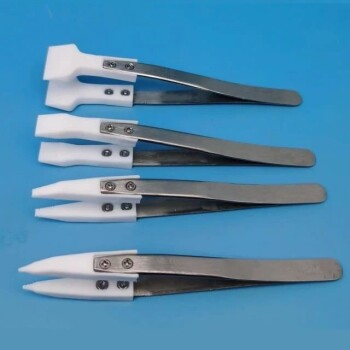
From everyday basic labware (beakers, crucibles, reagent bottles) and fluid transfer components (tubing, valves) to advanced reaction apparatus like custom electrochemical cells and hydrothermal synthesis liners, KINTEK manufactures virtually every laboratory supply imaginable from PTFE and PFA.
Why partner with KINTEK?
- Custom CNC Fabrication: We deliver complex, non-standard machined parts tailored to your specific research needs.
- End-to-End Solutions: From sample prep tools to high-volume consumables (O-rings, gaskets, septa), we support your entire workflow.
- Specialized Expertise: Our absolute focus on high-performance fluoropolymers ensures your equipment survives the most aggressive chemical environments.
Ready to optimize your laboratory setup with bespoke fluoropolymer components? Contact our experts today to discuss your project and discover how KINTEK can bring precision to your research.
References
- Pusit Pookmanee, Thipsuda Pookmanee. Green Hydrothermal Synthesis of Dual‐Phase Submicron Cu <sub>2</sub> O‐CuO Particles Using Corn Husk Extract for Enhanced Antibacterial Applications. DOI: 10.1002/slct.202502184
This article is also based on technical information from Kintek Knowledge Base .
Related Products
- Corrosion Resistant PTFE Coin Cell Battery Testing Clamps and Acid Proof Custom Fluoropolymer Battery Fixtures
- Acid Resistant PTFE Button Cell Battery Test Fixture Customizable Machining High Purity Electrochemical Testing Clamp
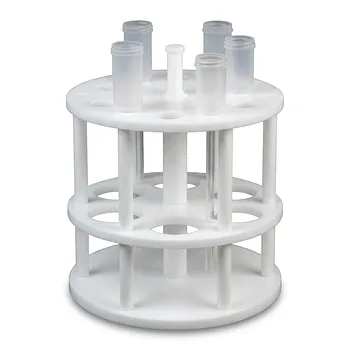
- Custom PFA Microcolumn Racks and PTFE Machined Low Background Corrosion Resistant Laboratory Fixtures
- Custom PTFE Parts Manufacturer for Teflon Containers and Components
- Custom PTFE Test Tubes Corrosion Resistant Low Background Fluoropolymer Labware 50ml 30ml
People Also Ask
- What is the thermal operating range for PTFE battery clamps in electrochemical research? Stability from -200°C to +260°C
- What are the primary functions and material compositions of PTFE battery clamps? Ensure Precision & Chemical Resistance
- How do coin cell testing fixtures evaluate ZIF-derived LCO cycling stability? Ensure Battery Research Precision
- What are the electrical insulation and signal integrity advantages of using PTFE battery clamps? Ensure Data Accuracy
- How does the chemical inertness of PTFE benefit laboratory-scale battery testing? Ensure high-purity research results.