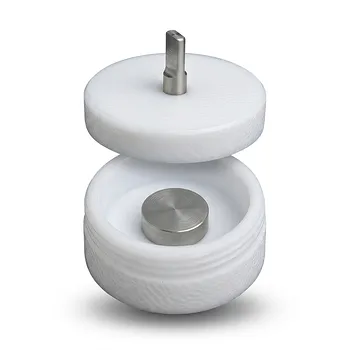
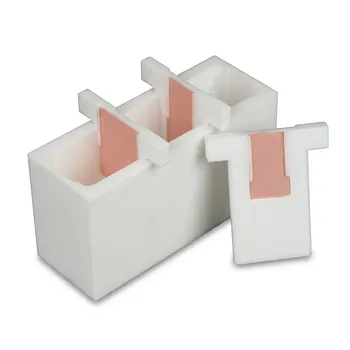
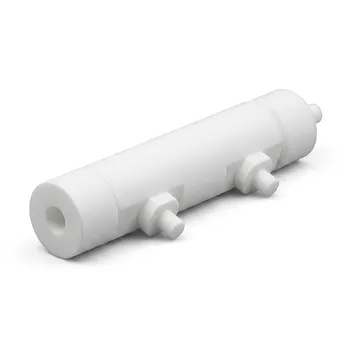
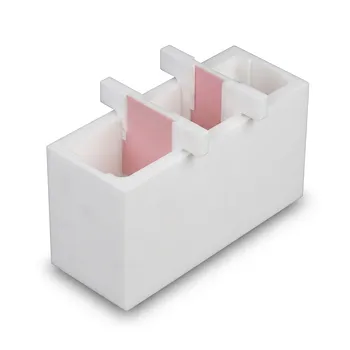
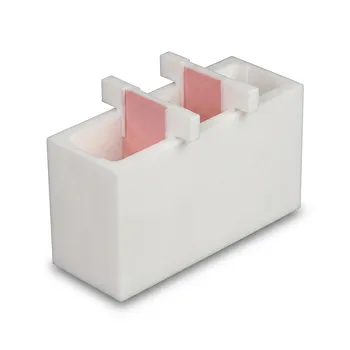
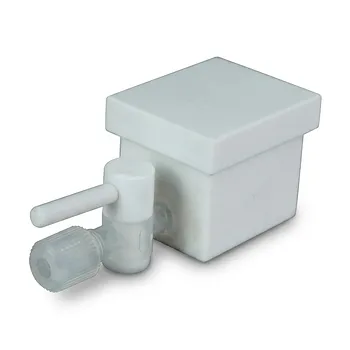
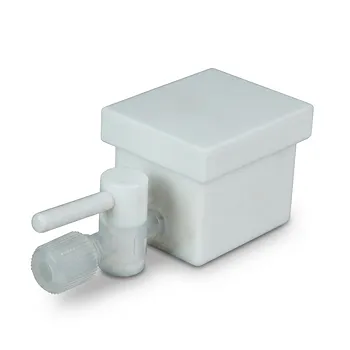
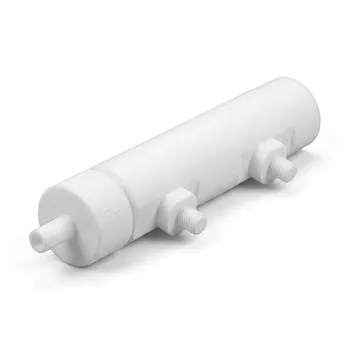
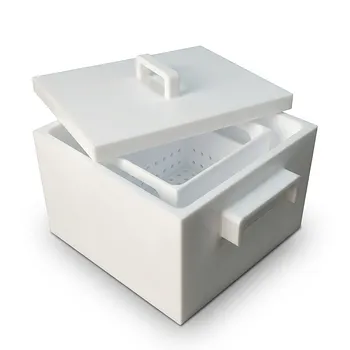
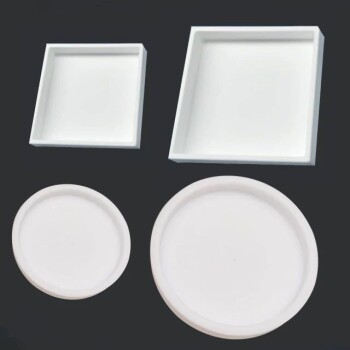
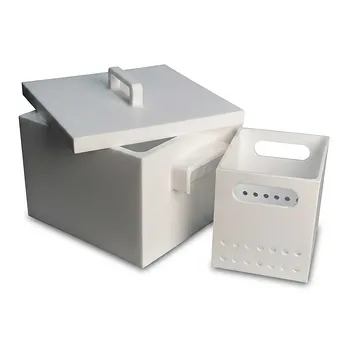
A PTFE battery mold is a high-precision forming tool designed to facilitate the assembly and compaction of experimental battery cells, particularly all-solid-state batteries (ASSBs). In laboratory research, its primary function is to serve as a chemically inert and electrically insulating cavity for pressing electrode materials and solid electrolytes into dense, uniform pellets or layered stacks under high pressure.
The PTFE battery mold acts as an essential containment die that enables the fabrication of high-performance battery components by providing a non-reactive environment for high-pressure material compaction. Its unique combination of electrical insulation and chemical resistance ensures that researchers can create dense, multi-layered cell stacks without electrical shorting or material contamination.
The Role of PTFE in Solid-State Battery Assembly
Enabling High-Pressure Compaction
The mold serves as a robust cavity to hold loose powders, slurries, or composite mixtures during the high-pressure compaction process. This pressure is necessary to transform raw materials into dense, uniform pellets or films, which are critical for the functionality of solid-state systems.
Ensuring Optimal Interfacial Contact
By containing the materials during pressing, the mold ensures that the interfaces between the solid electrolyte and the cathode/anode active materials are seamless. Maximizing this contact area is vital for reducing internal resistance and improving the ionic conductivity of the battery.
Maintaining Chemical and Electrical Purity
PTFE is naturally chemically inert, meaning it will not react with aggressive battery chemistries, such as lithium- or sodium-based systems. Furthermore, its status as an electrical insulator prevents accidental short circuits during the assembly and initial testing phases.
Key Technical Applications in Research
Fabrication of Multi-Layered Cell Stacks
Advanced mold designs often include alignment features that allow researchers to stack sequential layers of battery components. This capability is essential for creating multi-layered cells where the anode, electrolyte, and cathode must be perfectly centered to function correctly.
Precise Material Shaping for Consistency
Using CNC-machined solid PTFE stock, these molds provide high dimensional stability for creating standardized pellets, typically ranging from 10mm to 20mm in diameter. This standardization allows researchers to produce repeatable results across multiple experiments and batch cycles.
Integration with Testing Fixtures
Many PTFE molds feature integrated threads or grooves designed to hold current collectors or electrode holders in place. This allows the mold to transition from a fabrication tool to a testing fixture, maintaining the mechanical integrity of the cell during electrochemical analysis.
Understanding the Trade-offs
Creep and Mechanical Deformation
While PTFE is excellent for insulation, it is a relatively soft plastic that is susceptible to mechanical creep under sustained high pressure. Researchers must maintain wall thicknesses between 5mm and 10mm to balance the tool's rigidity with its tendency to slowly deform over time.
Thermal Limitation Constraints
PTFE has a specific operating window and begins to lose structural integrity as it approaches its sintering temperature of 360–380 °C. For experiments requiring extreme heat during the pressing or cycling phase, the mold's dimensional stability may be compromised compared to metallic alternatives.
Pressure Maximums
Because PTFE is not as hard as stainless steel or tungsten carbide, there is a limit to the compaction force it can withstand before the internal diameter of the mold expands. This expansion can lead to "flashing," where powder escapes between the plunger and the mold wall, resulting in inconsistent pellet density.
Making the Right Choice for Your Research
How to Apply This to Your Project
- If your primary focus is All-Solid-State Battery (ASSB) assembly: Utilize a multi-layer stacking mold to ensure precise alignment and optimal contact between powders.
- If your primary focus is preventing contamination: Choose high-purity PTFE molds over metal dies to eliminate the risk of metallic ion leaching into your active materials.
- If your primary focus is high-throughput testing: Invest in CNC-machined molds with integrated current collector grooves to streamline the transition from fabrication to electrochemical cycling.
- If your primary focus is extreme pressure compaction: Consider a hybrid approach where a PTFE liner is used within a steel sleeve to provide both chemical inertness and mechanical strength.
The PTFE battery mold remains a foundational tool in energy research, bridging the gap between raw material synthesis and functional electrochemical device testing.
Summary Table:
| Feature | Research Benefit | Key Applications |
|---|---|---|
| Chemical Inertness | Prevents material contamination & reaction | Lithium and sodium-based battery systems |
| Electrical Insulation | Eliminates risk of short circuits | In-situ assembly and electrochemical testing |
| High-Pressure Cavity | Ensures dense, uniform material compaction | Solid electrolyte and electrode pelletizing |
| CNC-Machined Stability | Provides high dimensional consistency | Standardized pellet fabrication (10mm-20mm) |
| Integrated Design | Seamless transition to testing fixtures | Multi-layered cell stack alignment & analysis |
Optimize Your Battery Research with KINTEK’s Precision Fluoropolymer Solutions
Achieve unmatched purity and performance in your laboratory with KINTEK’s specialized PTFE and PFA manufacturing. From everyday basic labware like beakers, crucibles, and reagent bottles to advanced tools like high-precision PTFE battery molds and testing fixtures, we provide the critical components your research demands.
Whether you need standard consumables—such as stirring bars, tubing, and filters—or complex, bespoke CNC-machined parts like electrochemical cells, microwave digestion vessels, and microchannel reactors, KINTEK is your ultimate partner. Our absolute focus on high-performance fluoropolymers ensures your experiments are free from contamination and mechanical failure.
Ready to elevate your lab’s capabilities? Contact us today to discuss your custom requirements or high-volume orders!
Related Products
- Acid Resistant PTFE Button Cell Battery Test Fixture Customizable Machining High Purity Electrochemical Testing Clamp
- Corrosion Resistant PTFE Small Reaction Bottle One Piece Molded Teflon Sample Storage Tank
- Custom Machined PTFE Conical Sample Cell Corrosion Resistant Triangular Fluoropolymer Container for Trace Analysis
- White PTFE Electrolytic Cell with Movable Slider and Insulated Lid for Fluorine Corrosion Resistance
- Custom PTFE Electrolytic Cell Corrosion Resistant Low Background Reaction Vessel with Inlet Outlet Ports
People Also Ask
- How does the chemical inertness of PTFE benefit laboratory-scale battery testing? Ensure high-purity research results.
- In what ways do PTFE battery testing fixtures enhance laboratory throughput and reliability? Maximize Research Efficiency
- In what industrial manufacturing contexts are PTFE battery clamps or fixtures utilized? Optimize Battery Production.
- What is the thermal operating range for PTFE battery clamps in electrochemical research? Stability from -200°C to +260°C
- What are the primary functions and material compositions of PTFE battery clamps? Ensure Precision & Chemical Resistance