The key difference is resin morphology: suspension polymerization produces relatively large granular PTFE particles, while emulsion polymerization produces fine particles that can be supplied as powder or an aqueous dispersion. As a result, suspension-grade PTFE is primarily used for compression molding and machining, whereas emulsion-grade PTFE is used for paste extrusion, coatings, impregnation, and other thin or surface-based products.
Suspension polymerization creates a solid, granular resin for bulk shapes; emulsion polymerization creates fine powder or liquid dispersion for thin-wall products and coatings. The polymerization route therefore determines not only particle size, but also the practical manufacturing methods and end-use applications available.
How the Two Polymerization Processes Differ
Suspension polymerization uses vigorous agitation
In suspension polymerization, tetrafluoroethylene (TFE) reacts in water under vigorous agitation, typically with little or no surfactant. The growing PTFE precipitates from the aqueous phase and forms larger polymer particles or reactor beads.
The resulting material is commonly referred to as granular PTFE resin. It is subsequently classified, milled, or otherwise prepared for molding operations.
Emulsion polymerization stabilizes very fine particles
Emulsion, often called dispersion polymerization in PTFE production, uses water, relatively mild agitation, and surfactants to stabilize extremely small PTFE particles.
The polymer forms a stable aqueous dispersion, often called PTFE latex. The dispersion may be used directly, or it may be coagulated and dried to produce fine-powder PTFE.
Historically, fluorinated surfactants such as APFO/PFOA salts were used in this process. Modern production increasingly uses alternative, compliant surfactant systems because of environmental persistence and contamination concerns.
Why Particle Morphology Determines Processing
Granular resin supports bulk forming
Suspension-grade particles are large enough to be handled as molding powder. They can be compacted into preforms and then sintered into blocks, rods, billets, tubes, and other solid shapes.
These preforms can also be CNC machined into precise components. This is especially important because PTFE is not generally processed like a conventional thermoplastic through ordinary melt extrusion.
Fine powder enables paste extrusion
Emulsion-derived fine powder can be blended with a processing or extrusion aid and shaped through paste extrusion.
This process is suited to thin-walled products, including flexible tubing, pipe liners, wire insulation, and other geometries that would be difficult to produce from granular molding resin.
Dispersion supports coatings and impregnation
Aqueous PTFE dispersion can be applied to a substrate and then dried and sintered to create a continuous fluoropolymer coating.
It is also used to impregnate porous materials, fabrics, fibers, and other structures where PTFE must be distributed through or bonded to a supporting material.
How the Resin Type Influences End-Use Applications
Suspension-grade PTFE: solid laboratory and industrial components
Granular PTFE is the preferred starting material for compression-molded and machined parts.
Typical applications include:
- Blocks, rods, billets, and thick-walled shapes
- Valve bodies, seats, and seals
- Chemical vessels and digestion vessels
- Beakers, fittings, and fluid-handling components
- Custom laboratory apparatus
- Structural parts requiring bulk chemical resistance
The process is well suited to components that need dimensional mass, relatively uniform density, and the ability to be machined into complex shapes.
Emulsion fine powder: tubing and thin-wall products
Fine-powder PTFE is selected when the product must be formed by paste extrusion.
Typical applications include:
- Flexible fluid-transfer tubing
- Thin-wall tubing and liners
- Small-diameter channels
- Wire and cable insulation
- Certain porous or expanded PTFE products
The fine-powder morphology is important because it allows the resin to undergo the shear and consolidation behavior required during paste extrusion.
Emulsion dispersion: coatings and impregnated materials
PTFE dispersion is used when the polymer must be deposited onto or into another material rather than formed as a standalone bulk article.
Typical applications include:
- Low-friction and nonstick coatings
- Chemical-resistant surface layers
- Coated fabrics and fibers
- Impregnated porous structures
- Specialized filtration or membrane-related products
These applications take advantage of PTFE’s surface properties without requiring a thick molded PTFE body.
What Both Routes Have in Common
The polymer’s core chemical properties remain PTFE properties
Both routes produce PTFE with the characteristic combination of:
- Exceptional chemical resistance
- Very low friction
- High service-temperature capability
- Electrical insulating performance
- Low surface energy
- Nonstick behavior
The polymerization route does not fundamentally change PTFE into a different chemical family. It primarily changes the particle size, morphology, handling characteristics, and processing options.
Manufacturing history still affects final performance
The final component’s performance depends on more than the polymerization route. Compaction pressure, sintering conditions, porosity, machining, fillers, and post-treatment can all influence density, dimensional stability, wear, and mechanical behavior.
Resin selection must therefore be matched to the complete manufacturing process, not chosen solely by the desired chemical resistance.
Understanding the Trade-offs
Granular PTFE is unsuitable for every geometry
Suspension-grade resin is excellent for molded stock and machining, but it is not the natural choice for very thin, flexible, or continuously extruded products.
Trying to use a bulk-molding grade for paste-extruded tubing can produce poor processing behavior or an unsuitable product structure.
Fine powder is not a general-purpose molding replacement
Emulsion-derived fine powder is designed for paste extrusion and related processes. It does not automatically provide the same compaction and preform behavior as granular molding resin.
Using the wrong powder morphology can lead to defects, inconsistent density, dimensional problems, or inadequate mechanical reliability.
Surfactant history matters in high-purity applications
Emulsion polymerization requires stabilizing agents, and residual processing chemicals may be relevant in applications involving trace analysis, sensitive chemical measurements, or stringent extractables requirements.
This does not mean every emulsion-grade product is unsuitable. It means buyers should verify the manufacturer’s current surfactant chemistry, purification controls, extractables data, and compliance documentation rather than relying only on the word “PTFE.”
Particle shape can influence part uniformity
Granular resins may differ in particle shape and aspect ratio. More near-spherical particles can compact with relatively uniform orientation, while elongated or fibrous particles may create directional behavior during pressing.
For precision laboratory components, the resin’s morphology, molding record, density, and machining quality can be as important as the nominal PTFE grade.
Making the Right Choice for Your Goal
Select the polymerization route based on the product form and manufacturing process you actually need.
- If your primary focus is molded blocks, rods, vessels, or machined laboratory parts: Choose a suspension-polymerized granular PTFE grade designed for compression molding and subsequent machining.
- If your primary focus is flexible tubing, thin-wall liners, or continuous extruded products: Choose an emulsion-derived fine powder formulated for paste extrusion.
- If your primary focus is a low-friction or chemical-resistant surface: Choose an aqueous PTFE dispersion intended for coating or impregnation.
- If your primary focus is trace analysis or ultra-high-purity service: Confirm surfactant history, extractables, contamination controls, and the supplier’s compliance documentation before selecting the resin or finished component.
The right PTFE resin is the one whose particle morphology and processing route match the required finished form, purity level, and performance conditions.
Summary Table:
| Polymerization Type | Resin Form | Particle Size | Typical Processing | Common Applications |
|---|---|---|---|---|
| Suspension | Granular | Large | Compression molding, machining | Blocks, rods, valves, custom lab parts |
| Emulsion (powder) | Fine powder | Small | Paste extrusion | Tubing, wire insulation, thin-wall products |
| Emulsion (dispersion) | Aqueous dispersion | Very small | Coating, impregnation | Non-stick coatings, coated fabrics, membranes |
Get Expert Guidance on Choosing the Right PTFE Resin
At KINTEK, we specialize in high-performance fluoropolymers, offering a comprehensive range of PTFE and PFA products. Whether you need granular PTFE for machined labware, fine powder for tubing, or dispersion for coatings, our experts can help you select the ideal material for your application. We provide end-to-end custom machining and fabrication, ensuring precision and quality.
Why Choose KINTEK?
- Broad Product Range: From beakers and digestion vessels to tubing, fittings, and custom electrochemical cells.
- Custom Solutions: CNC machining capabilities for complex, non-standard parts and high-volume orders.
- Quality Assurance: Rigorous purity controls and compliance documentation for sensitive applications.
Contact us today to discuss your requirements and get the right PTFE solution for your lab or industry. Contact KINTEK now!
Related Products
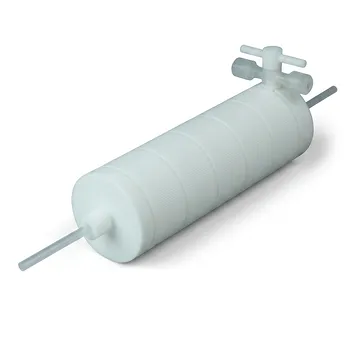
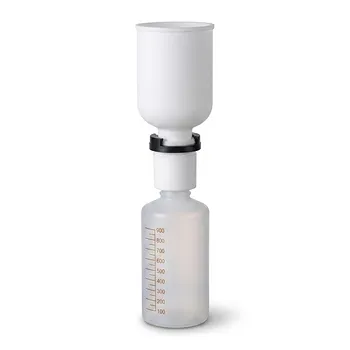
- Custom PTFE Filtration System Acid Resistant High Purity Semiconductor Grade Chemical Processing Filter
- PTFE Corrosion Resistant Filter with PFA Valve Connections and Integrated Sieve Plate
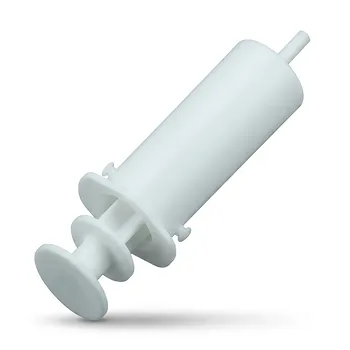
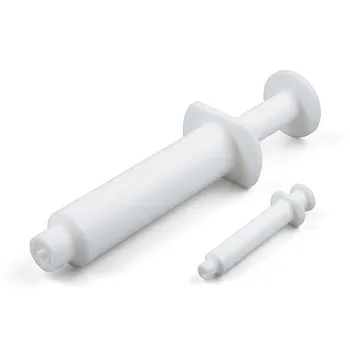
- High Temperature Chemical Resistant 50ml PTFE Syringe Customized Teflon Injector with Threaded Seal for Trace Analysis
- Custom PTFE Teflon Balls for Advanced Industrial Applications
- Custom PTFE Insulating Gaskets and Corrosion Resistant Fluoropolymer Seals for Industrial Electrical Applications
People Also Ask
- What makes PTFE filtration systems advantageous for industrial and scientific use? Unmatched Chemical & Thermal Stability
- What sizes and pore options are available for PTFE filters? Choose the Right Filter for Your Application
- What steps are involved in selecting the proper PTFE filter? A 4-Step Guide to Optimal Filtration
- How does the hydrophobicity of PTFE filters benefit their use? Ensure Uninterrupted Gas Flow and Solvent Filtration
- What temperature resistance do PTFE filters offer? Unmatched Thermal Stability from -200°C to +260°C