The key difference is processability, not merely particle size. Granular PTFE from suspension polymerization is designed to compact into dense billets, rods, or other stock shapes that can be sintered and machined into rigid parts such as valve bodies. Fine-powder PTFE from dispersion polymerization is designed to mix with a lubricant, fibrillate under shear, and form continuously through paste extrusion into flexible fluid-transfer tubing.
Choose granular PTFE when the product must become a dense, machinable shape; choose fine-powder PTFE when it must be formed continuously into thin-walled, flexible tubing. The resin’s particle structure determines which forming method can produce a sound, dimensionally stable component.
Why the Two PTFE Resins Behave Differently
Granular PTFE is a molding and machining resin
Suspension polymerization produces relatively coarse, free-flowing PTFE particles. These particles compact effectively under pressure and can be consolidated into solid stock shapes.
After sintering, the stock can be cut, drilled, turned, or CNC machined. This makes granular resin suitable for rigid valve bodies, custom fittings, blocks, thick-walled tubes, and laboratory vessels.
Fine-powder PTFE is an extrusion resin
Dispersion or emulsion polymerization produces much finer PTFE particles. After coagulation and drying, the powder is engineered for paste processing rather than ordinary dry compaction.
When blended with a suitable liquid processing aid, fine powder develops a coherent structure through shear-induced fibrillation. The fibrillated paste can be pushed through a die and converted into continuous tubing or other thin products.
The particles determine the forming route
Granular PTFE is primarily shaped by compaction followed by sintering. Fine powder is shaped by paste extrusion, processing-aid removal, and sintering.
These are not interchangeable process routes. A resin optimized for one method may produce poor consolidation, defects, or unacceptable dimensions when forced through the other.
Manufacturing Fluid Transfer Lines with Fine Powder PTFE
Paste preparation creates an extrudable material
Fine-powder PTFE is blended with a liquid processing aid, typically a hydrocarbon lubricant, to produce a paste with the required flow and compaction behavior.
The lubricant allows the powder to pass through the extrusion tooling while the PTFE particles fibrillate and form a continuous, coherent tube wall.
Paste extrusion creates the tube geometry
The paste is compacted and forced through a die and mandrel arrangement. The die establishes the outside diameter, while the mandrel forms the bore.
This method is well suited to continuous thin-walled tubing, flexible hoses, liners, and sealing tapes because the product is formed directly along its length rather than machined from a solid block.
Reduction ratio is a critical resin-selection parameter
For fine-powder grades, the reduction ratio—the relationship between the extruder barrel cross-section and the extrudate cross-section—is an important selection metric.
The grade must tolerate the intended level of compaction and shear while maintaining a uniform, defect-free tube wall. A mismatch can cause cracking, voids, surface defects, or inconsistent dimensions.
Drying and sintering complete the structure
After extrusion, the processing aid must be removed before the PTFE is sintered. Controlled heating consolidates the fibrillated structure and establishes the final mechanical and chemical properties.
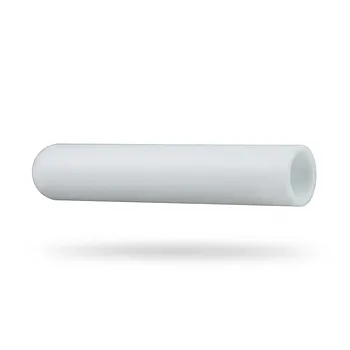
The result is a continuous fluoropolymer line with a smooth bore and the flexibility associated with thin-wall construction.
Manufacturing Machined Valve Bodies with Granular PTFE
The resin is first converted into solid stock
Granular PTFE is placed into a mold and compacted, commonly by compression molding. The compact is then heated above PTFE’s melting range so the particles fuse into a dense solid.
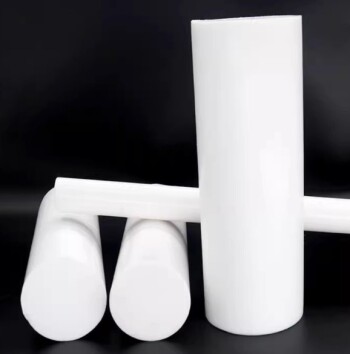
Depending on the required geometry, the material may be molded as a billet, block, rod, sheet, or thick-walled tube.
Sintered stock provides a stable machining blank
Once cooled, the consolidated stock provides the dimensional mass and rigidity needed for machining. It can be sawed, turned, drilled, milled, and bored to create valve passages, seats, threads, and connection features.
This is the appropriate route for machined valve bodies and complex fittings where dimensional control and structural integrity depend on a substantial solid section.
Machining provides geometric freedom
A molded blank can be machined into geometries that would be difficult to produce directly by extrusion, including intersecting ports, stepped bores, recesses, and custom sealing surfaces.
The method is particularly valuable for low-volume or custom components because the tooling forms a simple stock shape while the final geometry is created by CNC operations.
How the Product Requirement Dictates Resin Choice
Fluid transfer lines require continuity and flexibility
Tubing must be produced in a continuous length with a controlled bore and wall thickness. It must also tolerate bending without the heavy wall and machining waste associated with a solid PTFE blank.
Fine powder and paste extrusion address those requirements directly.
Valve bodies require rigidity and machinability
A valve body must retain its shape around ports, seats, threads, and sealing interfaces. It is generally a relatively thick, three-dimensional component rather than a constant cross-section.
Granular PTFE provides a dense stock form that can be machined into those features with predictable structural support.
Geometry is the practical dividing line
Constant or continuously varying tube profiles favor paste extrusion. Complex, localized, three-dimensional geometries favor molding and machining.
The distinction is therefore not simply “fine powder for small parts” and “granular resin for large parts.” It is primarily a match between resin morphology, forming behavior, and final geometry.
Understanding the Trade-offs
Paste extrusion is efficient but process-sensitive
Fine-powder extrusion can produce long, continuous lengths efficiently, but the process requires careful control of powder grade, lubricant content, compaction, extrusion conditions, drying, and sintering.
Poor control may produce nonuniform walls, residual lubricant, voids, or dimensional variation.
Machining offers flexibility but generates waste
Granular PTFE stock can support highly customized valve geometries, but machining removes material and therefore produces more scrap than a near-net-shape process.
It also requires additional operations, tooling, inspection, and compensation for PTFE’s dimensional behavior.
Thick and thin products have different performance priorities
A machined valve body benefits from wall thickness, rigidity, and dimensional stability. A fluid line benefits from continuous consolidation, controlled flexibility, and a uniform internal passage.
Attempting to use the same resin and process for both products usually sacrifices one or more of those performance requirements.
“Dispersion” and “fine powder” should not be treated as identical products
Aqueous PTFE dispersions are generally used for coatings or impregnation. Fine powder is the coagulated, dried form specifically prepared for paste extrusion.
The broader polymerization family may be similar, but the commercial product form and intended processing route matter.
Making the Right Choice for Your Goal
Select the resin and manufacturing route according to the component’s geometry and performance requirements:
- If your primary focus is flexible fluid-transfer lines: Use a fine-powder PTFE grade selected for paste extrusion, with an appropriate reduction ratio, followed by lubricant removal and sintering.
- If your primary focus is machined valve bodies: Use granular PTFE, compression-mold or otherwise consolidate it into dense stock, then sinter and CNC machine the required ports, bores, seats, and external features.
- If your primary focus is continuous tubing production: Optimize the fine-powder formulation and extrusion conditions for uniform wall thickness, bore quality, and defect-free consolidation.
- If your primary focus is custom rigid components: Choose granular resin because it provides a substantial, machinable blank and supports complex three-dimensional geometries.
The correct PTFE resin is the one whose particle structure naturally supports the manufacturing process required by the final component.
Summary Table:
| Resin Type | Polymerization | Particle Size | Typical Forming Method | Applications |
|---|---|---|---|---|
| Granular PTFE | Suspension | Coarse, free-flowing | Compression molding + sintering + machining | Valve bodies, fittings, blocks, thick-walled tubes |
| Fine-Powder PTFE | Dispersion/Emulsion | Fine, coagulated | Paste extrusion + drying + sintering | Tubing, hoses, liners, sealing tapes |
Ready to choose the right PTFE for your project? At KINTEK, we specialize in high-performance fluoropolymers, offering a comprehensive range of PTFE and PFA labware and custom machined parts. Whether you need precision valve bodies from granular resin or flexible fluid lines from fine powder, our expert team can provide the right solution. Contact us today to discuss your requirements and benefit from our end-to-end CNC machining capabilities for custom parts and high-volume orders. Get in touch with our specialists and let's optimize your lab's performance!
Related Products
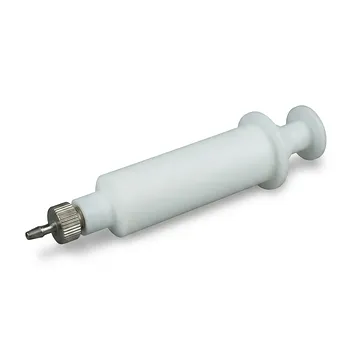
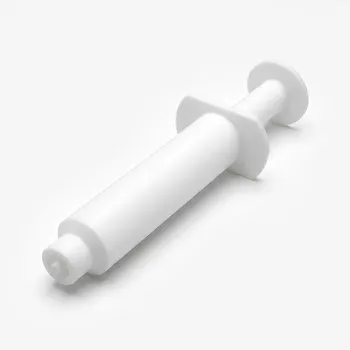
- High Temperature Chemical Resistant 50ml PTFE Syringe Customized Teflon Injector with Threaded Seal for Trace Analysis
- Custom PTFE Corrosion Resistant White Syringe with Threaded Luer Connector Compatibility
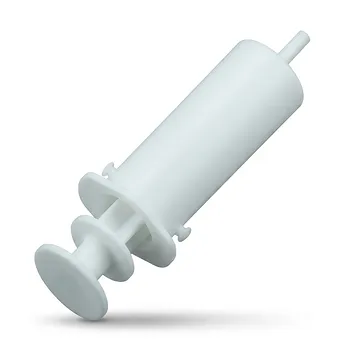
- High Purity Laboratory Grade PTFE Syringe Chemical Resistant Fluoropolymer Injector for Trace Analysis
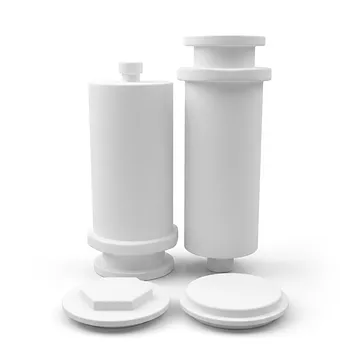
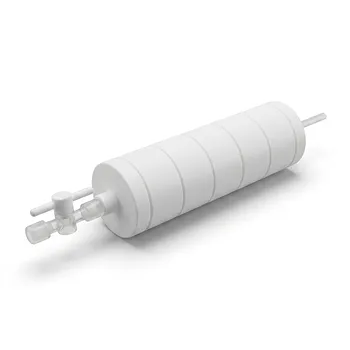
- Custom PTFE Filtration System Acid Resistant High Purity Semiconductor Grade Chemical Processing Filter
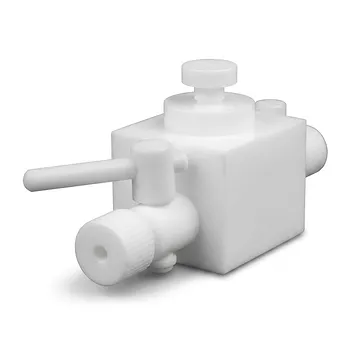
- PTFE Corrosion Resistant Filter with PFA Valve Connections and Integrated Sieve Plate
People Also Ask
- In what medical devices is PTFE commonly used? Essential Components for Safety and Reliability
- Is PTFE approved for food contact applications? Ensuring Food Safety with Compliant PTFE
- How does PTFE's flexibility affect its performance? Unlock Durability and Sealing Power
- Why is PTFE highly resistant to chemicals? Unmatched Inertness for Demanding Applications
- What is notable about the coefficient of friction of PTFE? Achieve Unmatched Low-Friction Performance