Premature fibrillation is uncontrolled shear damage to PTFE fine-powder particles before the intended forming process. When PTFE is handled above its approximately 19°C crystalline transition, its polymer chains can slip more readily under friction or mechanical shear. The resulting damaged particle structure can increase extrusion pressure, disrupt paste processing, and produce defects in high-purity tubing and fluid components.
Temperature control below 19°C preserves the original particulate structure of PTFE fine powder. This prevents fibrillation from occurring during storage, transportation, and handling, while allowing controlled fibrillation to develop later during processing and provide the green strength required for forming.
What Premature Fibrillation Means
Fibrillation Is Normally a Controlled Processing Step
PTFE fine powders contain polymer chains associated with crystalline regions. During paste extrusion, carefully applied shear separates some chains from those regions and forms a network of fine fibrils.
This controlled fibrillation gives an unfused PTFE preform green strength, allowing it to retain its shape before sintering or other thermal treatment.
Premature Fibrillation Happens Before Fabrication
Premature fibrillation occurs when friction, agitation, compression, or other handling forces damage the particles before extrusion. Instead of remaining discrete and consistent, particles develop unwanted fibrillar structures or agglomerated regions.
This damage is effectively irreversible at the particle level. The resin may still appear usable, but its processing behavior and final performance can be compromised.
Why the Particulate Structure Matters
Paste extrusion depends on predictable particle behavior, lubricant distribution, flow, and controlled deformation. Once the powder has been mechanically abused, it may no longer respond uniformly to the intended extrusion conditions.
The result can include excessively high extrusion pressures, inconsistent flow, and poor physical properties in the finished component.
Why the 19°C Threshold Is Critical
PTFE Changes Its Crystalline Structure
PTFE homopolymer fine powder undergoes a significant crystalline phase transition at approximately 19°C (66°F). Below this point, the particles are more resistant to shear-induced fibrillation during normal handling.
Above the transition, the material becomes more susceptible to chain movement and slipping when particles experience friction or mechanical contact.
Temperature Increases Shear Sensitivity
Temperature alone does not create every handling defect. The critical problem is the combination of a temperature above the transition and mechanical forces such as particle-to-particle friction, agitation, impact, or compression.
At that point, relatively modest handling stresses can initiate unwanted fibrillation before the resin reaches the extrusion process.
Cooling Preserves Processing Consistency
Maintaining the resin below 19°C keeps the powder in a more shear-resistant state during storage, shipment, and preparation. This helps preserve its original morphology until fibrillation is intentionally introduced under controlled manufacturing conditions.
The temperature requirement is therefore a material-protection measure, not simply a general refrigeration preference.
Why High-Purity Components Require Strict Control
Defects Can Become Functional Failures
High-purity tubing, fittings, and fluid-handling components must maintain continuous, defect-free polymer structure. Irregularly fibrillated resin can create weak or nonuniform regions during forming.
In service, those regions may contribute to leakage, reduced mechanical strength, or failure under operating pressure.
Cleanliness and Reliability Depend on Consistent Processing
High-purity components are often used where contamination control, dimensional consistency, and pressure integrity are important. Unpredictable resin flow or extrusion behavior makes it more difficult to maintain those requirements from batch to batch.
Preserving the powder structure supports stable processing and more repeatable component quality.
Damage Is Difficult to Correct Later
Once particles have been prematurely fibrillated or agglomerated, later processing cannot reliably restore the original powder morphology. Adjusting extrusion pressure or changing lubricant conditions may compensate for symptoms, but it does not eliminate the underlying material damage.
Preventing the damage before processing is therefore more reliable than attempting to correct it during extrusion.
Understanding the Trade-offs
Refrigerated Handling Adds Operational Requirements
Maintaining temperatures below 19°C requires appropriate storage, transportation, and receiving controls. Facilities may need temperature monitoring, refrigerated shipment, and procedures that limit the resin's exposure during material transfer.
These controls add cost and handling complexity, but they protect a resin whose processing behavior depends strongly on its physical history.
Colder Is Not the Only Requirement
Lower temperature improves resistance to handling-induced fibrillation, but it does not make rough handling acceptable. Impact, excessive agitation, friction, and other mechanical abuse can still damage the powder.
Temperature control must therefore be combined with gentle handling practices and appropriate equipment.
The Limit Should Be Treated as a Process Boundary
The 19°C value describes a critical transition for PTFE homopolymer fine powders, but actual manufacturing specifications may impose a lower operating limit to provide a practical safety margin. The applicable resin specification and validated process controls should govern the exact storage and handling range.
The essential principle remains unchanged: keep the resin below its transition temperature before processing and avoid unnecessary shear.
How to Apply This to Your Process
The following controls connect temperature management to the intended manufacturing outcome:
- If your primary focus is material consistency: Store and transport PTFE fine powder below 19°C, with documented temperature monitoring throughout the supply chain.
- If your primary focus is extrusion performance: Use gentle handling and avoid friction, agitation, impacts, and compression that could prematurely fibrillate the particles.
- If your primary focus is high-purity component reliability: Preserve the resin's original particulate morphology so controlled fibrillation occurs during paste extrusion rather than during storage or preparation.
- If your primary focus is process validation: Treat 19°C as a critical material-control boundary and define lower operating limits, exposure times, and handling procedures in the manufacturing specification.
Keeping PTFE fine powder below 19°C until processing preserves the material's ability to fibrillate in a controlled way and supports reliable high-purity components.
Summary Table:
| Factor | Impact |
|---|---|
| Premature fibrillation | Uncontrolled shear damage to PTFE particles before processing |
| Temperature >19°C | Increases susceptibility to shear-induced fibrillation during handling |
| Temperature <19°C | Preserves particle structure until controlled fibrillation during extrusion |
| High-purity components | Require defect-free polymer structure to prevent leaks and failures |
| Handling practices | Gentle handling essential even at low temperatures |
Ensure your high-purity PTFE components are manufactured to the highest standards. Trust KINTEK's expertise in PTFE/PFA fabrication, from custom parts to full assemblies. Contact us today to discuss your requirements and benefit from our superior materials and precision processing. Contact us now.
Related Products
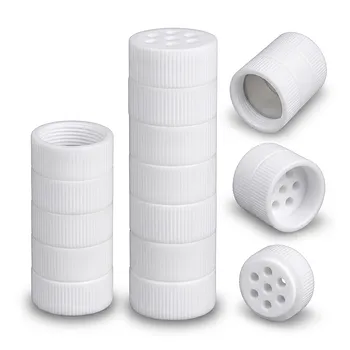
- High Temperature Resistant PTFE Solid Sampler Corrosion Resistant Non Leaching Reusable Biopharmaceutical White Powder Sampling Device
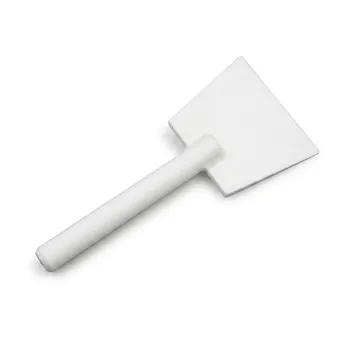
- Corrosion Resistant PTFE Sampling Spoon for High Purity Solid Powder Reagent Handling and Laboratory Chemical Transfer
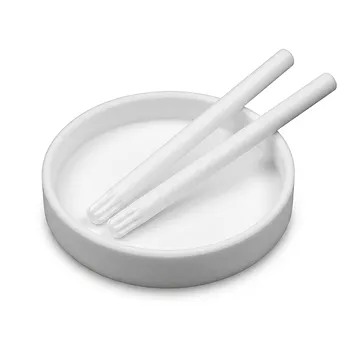
- PTFE Dispersion Disk Food Cosmetic Grade Non Stick Corrosion Resistant Large Stirring Paddle Customizable Impeller
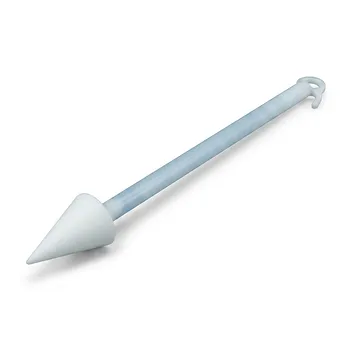
- PTFE Chemical Solvent Sampling Spoon
- Corrosion Resistant PTFE Multi Layer Sieve with Threaded Connections for Bio Chemical Laboratory Extraction and Customizable Mesh Size
People Also Ask
- How does PTFE's electrical insulation property benefit electronic components? Ensure Reliability and Signal Integrity
- What process steps and conditions are critical during coagulation and drying of aqueous PTFE dispersions to ensure powder quality? Master key parameters for reliable downstream processing.
- What mechanisms govern the binderless agglomeration of PTFE powders during raw material preparation? Key Forces and Process Insights
- What surface chemical species and binding energy signatures are detected on PTFE fluoropolymer sample holders during XPS analysis? Key insights for accurate calcium detection.
- What are the mechanical and safety advantages of using PTFE apparatus in a laboratory? Enhance Safety & Durability