The most useful functional fillers for PTFE resins are glass fiber, graphite, carbon-based fillers, powdered metals such as bronze, and molybdenum disulfide. These additives reduce PTFE's tendency to wear, creep, and cold-flow under load while allowing manufacturers to tailor conductivity, dimensional stability, and friction behavior. The best choice depends on whether the machined component primarily faces sliding wear, compressive loading, heat, or electrical requirements.
Filled PTFE is selected when virgin PTFE's chemical resistance and low friction are not enough. Glass fiber generally improves strength and dimensional stability, while graphite, carbon, bronze, and molybdenum disulfide target wear, friction, conductivity, or load-bearing performance.
Why Fill PTFE for Machined Components?
Virgin PTFE Has Mechanical Limitations
Unfilled PTFE provides excellent chemical resistance, high-temperature capability, and a very low coefficient of friction. However, it is relatively soft and susceptible to creep and cold flow when exposed to continuous pressure or mechanical loading.
Sliding contact can also produce a high wear rate in virgin PTFE. This can limit service life in seals, wear rings, valve seats, pump components, and other custom-machined parts.
Fillers Change the Resin's Functional Behavior
A functional filler acts as a reinforcing or performance-modifying phase within the PTFE matrix. Depending on the filler, it can improve abrasion resistance, compressive strength, dimensional stability, thermal conductivity, or electrical conductivity.
Fillers are commonly incorporated through intimate powder mixing or dispersion co-coagulation before the resin is processed into stock shapes for CNC machining.
Which Fillers Improve PTFE Performance?
Glass Fiber for Strength and Dimensional Stability
Glass fiber is one of the most common PTFE fillers for mechanically loaded parts. It improves compressive strength, wear resistance, creep resistance, and dimensional stability.
Glass-filled PTFE is well suited to load-bearing seals, structural fixtures, valve seats, and components that must retain their shape under pressure. Its reinforcing effect helps reduce deformation during continuous service.
Graphite for Sliding Wear and Friction Control
Graphite reduces wear and friction during dynamic sliding while also increasing thermal conductivity. It is useful where a component must move repeatedly against a mating surface without rapidly losing material.
Graphite-filled PTFE is often considered for dynamic gaskets, wear rings, seals, and pump components. It preserves much of PTFE's low-friction behavior while improving resistance to sliding wear.
Carbon Black and Carbon Fillers for Wear and Conductivity
Carbon black and other carbon-based fillers can improve wear resistance, stiffness, creep resistance, and electrical conductivity. They are useful when the component needs a combination of mechanical reinforcement and controlled electrical behavior.
Carbon-filled grades may be appropriate for wear-prone seals, bearings, and components exposed to friction or electrostatic requirements. The exact performance depends on the carbon type, particle structure, and concentration.
Bronze and Other Powdered Metals for Load-Bearing Service
Bronze and other powdered metals can substantially improve PTFE's compressive performance, wear resistance, and thermal conductivity. Bronze-filled PTFE is commonly considered for high-load sliding applications where heat must be dissipated from the contact zone.
Metal-filled grades can be useful for bearings, wear rings, seals, and pump components. Their suitability must be evaluated against the chemical environment because the metal phase may be less chemically resistant than the PTFE matrix.
Molybdenum Disulfide for Lubricity and Wear Reduction
Molybdenum disulfide, often called MoS2, is used to improve lubricity and wear behavior. It can be blended with PTFE alone or used with other fillers when the application requires additional friction and load-management performance.
MoS2 is particularly relevant to sliding components where reduced friction and improved wear resistance are more important than electrical conductivity. Its value depends on the operating temperature, counterface, load, and surrounding environment.
Glass Beads for Stability
Glass beads can increase stiffness and dimensional stability without serving exactly the same reinforcing role as glass fibers. They may be considered when a component needs improved shape retention and controlled mechanical behavior.
The choice between glass fiber and glass beads depends on the required balance of strength, wear performance, machinability, and dimensional control.
How Filler Selection Should Match the Application
For Continuous Sliding Friction
Graphite, carbon, MoS2, or combinations of these fillers are strong candidates for dynamic seals, wear rings, and pump components. They are selected to reduce material loss while maintaining PTFE's inherently low-friction behavior.
The mating surface must also be considered. Some fillers can increase abrasive wear against the counterface, depending on particle morphology, concentration, and operating conditions.
For Sustained Compressive Loading
Glass fiber and bronze are commonly considered when creep resistance, compressive strength, and dimensional stability are the primary requirements. These properties are important for valve seats, load-bearing seals, and structural fixtures.
The design should still account for PTFE's temperature-dependent deformation. A filled grade reduces creep but does not eliminate the need for appropriate clearances, support, and load limits.
For Heat Dissipation
Graphite and powdered metals improve thermal conductivity relative to unfilled PTFE. This can help components manage heat generated by friction or conduct heat away from a loaded contact area.
Improved conductivity does not automatically make a component suitable for every high-temperature application. The filler, PTFE grade, operating temperature, and thermal cycling conditions must be evaluated together.
For Electrical Conductivity
Carbon black, carbon fillers, graphite, and certain powdered metals can provide controlled electrical conductivity. This can be useful where static charge dissipation or a defined electrical response is required.
Electrical performance depends strongly on filler concentration and distribution. The selected compound should be specified by its required conductivity range rather than by filler name alone.
Understanding the Trade-offs
Fillers Can Reduce Chemical Compatibility
Virgin PTFE provides exceptional chemical resistance, but a filler may react with or be attacked by the service environment. This is especially relevant to powdered metals and other fillers that do not share PTFE's full chemical resistance.
Evaluate the complete compound, not only the PTFE matrix, against the chemicals, temperature, pressure, and exposure time expected in service.
Fillers Can Affect the Mating Surface
A filled compound may have much better wear resistance while becoming more abrasive to the opposing component. Glass fiber and some hard particulate fillers require particular attention to counterface hardness, surface finish, and lubrication.
The lowest wear rate for the PTFE part is not always the same as the lowest total system wear.
More Filler Is Not Always Better
Increasing filler content can improve one property while reducing another, such as elongation, machinability, friction behavior, or chemical resistance. Excessive filler can also make a compound more brittle or difficult to machine cleanly.
The correct formulation is therefore an application-specific compromise rather than a simple maximization of filler content.
Machining Behavior Changes
Filled PTFE stock shapes can machine differently from virgin PTFE. Reinforcing fibers and abrasive particles may affect tool wear, surface finish, edge quality, and dimensional control.
The material supplier's recommended machining practices should be followed, particularly for tight-tolerance seals and thin-walled components.
Making the Right Choice for Your Goal
Select the filler based on the dominant failure mode and the requirements of the complete mechanical assembly.
- If your primary focus is sliding wear: Choose a graphite-, carbon-, or MoS2-modified PTFE grade, then verify its effect on the mating surface.
- If your primary focus is compressive strength and creep resistance: Consider glass fiber or bronze-filled PTFE for improved load-bearing and dimensional stability.
- If your primary focus is heat dissipation: Evaluate graphite- or powdered-metal-filled grades for higher thermal conductivity.
- If your primary focus is electrical behavior: Consider carbon black, carbon, graphite, or metal-filled PTFE with a specified conductivity range.
- If your primary focus is chemical compatibility: Start with the service environment and confirm that the selected filler is compatible, rather than assuming the entire compound matches virgin PTFE.
The right filled PTFE formulation preserves PTFE's chemical resistance and low friction while adding the mechanical and functional properties required by the machined component.
Summary Table:
| Filler Type | Key Benefits | Best For |
|---|---|---|
| Glass Fiber | Improved strength, creep resistance, dimensional stability | Load-bearing seals, valve seats, structural parts |
| Graphite | Low friction, reduced wear, thermal conductivity | Dynamic seals, wear rings, pump components |
| Carbon (black/fiber) | Wear resistance, stiffness, electrical conductivity | Bearings, static dissipative parts |
| Bronze/Powdered Metals | Compressive strength, thermal conductivity, load-bearing | High-load bearings, wear rings, heat dissipation |
| Molybdenum Disulfide (MoS2) | Enhanced lubricity, wear reduction | Sliding components, low-friction applications |
Ready to enhance your PTFE components? Contact KINTEK today for expert guidance on selecting the right filled PTFE for your application. Our high-performance fluoropolymer products, including PTFE and PFA labware, are backed by end-to-end CNC machining capabilities to meet your custom needs. Get in touch to discuss your requirements and discover how we can improve your component's performance.
Related Products
- Custom Graphite Filled PTFE Rods for Advanced Industrial Applications
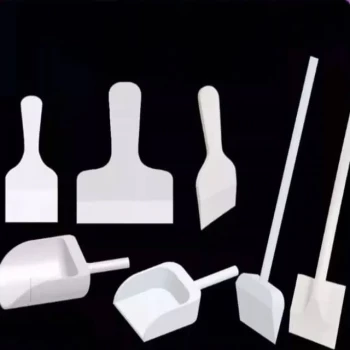
- Customizable PTFE Scrapers and Shovels for Demanding Applications
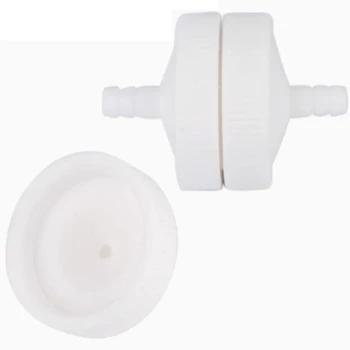
- Customizable PTFE Seals Filter Holders for Versatile Applications
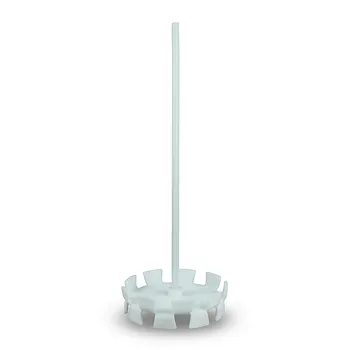
- Corrosion Resistant PTFE Dispersing Disc and High Temperature Propeller Stirring Paddle for Laboratory Chemical Mixing
- Customizable 22ml PTFE Cup Deep Layer Sampler and Corrosion Resistant Cylinder with Handle
People Also Ask
- What property does graphite filler provide to PTFE? Achieve Superior Self-Lubrication and Low Friction
- How does graphite-filled PTFE perform? A Guide to Superior Self-Lubricating Components
- What are the advantages of Polytetrafluoroethylene (PTFE) with Graphite Fill? Enhance Wear and Friction Performance
- How do graphite fillers enhance PTFE? Achieve Superior Self-Lubrication and Wear Resistance
- How is graphite filler typically used in PTFE? Enhance Wear Resistance & Self-Lubrication