Polytetrafluoroethylene (PTFE) is the preferred material for battery manufacturing molds because it offers a rare combination of extreme chemical inertness and a near-zero coefficient of friction. Its ability to remain stable under aggressive chemical exposure and wide temperature fluctuations—ranging from -200 °C to +260 °C—prevents material contamination and ensures easy part release. These properties, coupled with its high electrical resistivity, make it essential for handling the reactive and sensitive components found in modern battery chemistries.
PTFE’s primary value in battery production lies in its "chemical invisibility" and physical slipperiness. It provides a stable, non-reactive interface that survives high-pressure processing and thermal sintering without bonding to or contaminating the battery’s active materials.
Chemical and Thermal Integrity
Extreme Chemical Inertness
The foundation of PTFE’s performance is its strong carbon-fluorine bonds, which create a shield against chemical attacks. In battery manufacturing, where molds are exposed to highly reactive electrolytes, acids, and oxidizers, PTFE will not react or degrade. This prevents impurities from leaching into the battery components, which is critical for maintaining the electrochemical performance of the cell.
Broad Thermal Operating Window
PTFE maintains its mechanical integrity across an expansive temperature range, from cryogenic levels up to a continuous service temperature of 260 °C. While the material has a melting point near 327 °C, it remains functional and dimensionally stable enough to facilitate in-mold processes like particle sintering or polymer electrolyte flow. This thermal resilience allows manufacturers to perform post-annealing steps directly within the mold.
Surface Performance and Electrical Safety
Exceptional Non-Stick Characteristics
With a coefficient of friction as low as 0.05 to 0.10, PTFE is one of the slipperiest solids known to engineering. This non-stick nature ensures that battery components can be removed from molds without damage or the need for external release agents that could contaminate the chemistry. The non-wetting surface also prevents the buildup of residue, significantly reducing maintenance downtime and cleaning requirements.
Superior Dielectric Properties
PTFE acts as a highly effective insulator, featuring an electrical resistivity of approximately 10¹⁸ Ω·cm and a low dielectric constant of 2.1. These properties are vital during the processing of conductive battery materials, as they eliminate the risk of electrical shorts within the mold. The material’s dielectric stability ensures that electrical characteristics remain consistent even when subjected to high-pressure environments.
Understanding the Trade-offs
Material Softness and Creep
While PTFE is chemically robust, it is a relatively soft polymer compared to metallic mold materials. Under high pressure or continuous mechanical stress, PTFE is susceptible to "creep" or cold flow, where the material slowly deforms over time. This necessitates careful mold design, often involving reinforcements or specialized processing strategies to maintain tight dimensional tolerances over long production cycles.
Challenges in Machining and Thermal Expansion
PTFE has a high coefficient of thermal expansion and low thermal conductivity, which can make high-precision machining difficult. Changes in ambient temperature during the fabrication of the mold itself can lead to dimensional inaccuracies if not managed by an expert. Furthermore, its non-stick nature means that PTFE cannot be easily bonded to other materials, often requiring mechanical fastening rather than adhesives.
How to Apply PTFE in Your Manufacturing Process
To maximize the benefits of PTFE molds in battery production, you should align the material grade with your specific environmental stressors.
- If your primary focus is high-temperature sintering: Ensure your process remains below the 260 °C continuous limit to avoid material softening while utilizing PTFE’s high melting point for safety margins.
- If your primary focus is preventing contamination: Leverage PTFE’s chemical inertness by choosing high-purity virgin grades that lack additives which might leach into sensitive electrolytes.
- If your primary focus is high-volume mechanical precision: Consider using reinforced PTFE compounds or hybrid mold designs to counteract the material's natural tendency toward cold flow and deformation under load.
By understanding these properties, you can effectively utilize PTFE to create a clean, safe, and highly efficient molding environment for advanced battery technologies.
Summary Table:
| Property | Value / Range | Benefit for Battery Manufacturing |
|---|---|---|
| Chemical Stability | Extreme Inertness | Prevents electrolyte reaction and contamination |
| Operating Temp | -200°C to +260°C | Supports sintering and thermal processing |
| Friction Coeff. | 0.05 – 0.10 | Ensures easy part release without additives |
| Electrical Resistivity | ~10¹⁸ Ω·cm | Eliminates the risk of electrical shorts |
| Dielectric Constant | 2.1 | Maintains consistent electrical characteristics |
Elevate Your Battery Manufacturing with KINTEK’s Fluoropolymer Expertise
High-performance battery production demands materials that offer absolute purity and mechanical reliability. KINTEK specializes in high-performance fluoropolymers, providing everything from standard labware—like beakers, crucibles, and reagent bottles—to specialized battery testing fixtures and custom-machined molds.
Our Value to Your Laboratory and Production Line:
- Comprehensive Supply: We offer a vast range of PTFE and PFA products, including fluid transfer components (tubing, valves, fittings), sample prep tools (filters, pipettes, spatulas), and advanced reaction apparatus like electrochemical cells and microwave digestion vessels.
- Precision Customization: Backed by end-to-end custom CNC fabrication, we deliver complex, non-standard parts and bespoke laboratory setups tailored to your exact specifications.
- Unmatched Material Focus: Our exclusive focus on fluoropolymers ensures your components resist aggressive electrolytes and prevent contamination at every stage.
Ready to optimize your manufacturing process? Contact KINTEK today to discuss your high-volume orders or custom engineering needs!
Related Products
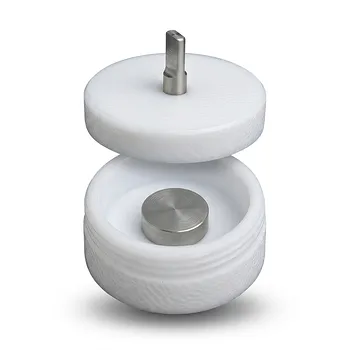
- Acid Resistant PTFE Button Cell Battery Test Fixture Customizable Machining High Purity Electrochemical Testing Clamp
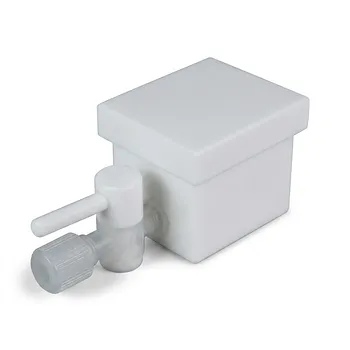
- Custom PTFE Laboratory Apparatus Corrosion Resistant Low Background Reaction Cells Precision CNC Fabrication
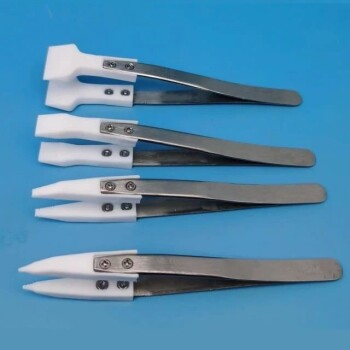
- Custom PTFE Parts Manufacturer for Teflon Parts and PTFE Tweezers
- Custom PTFE Parts Manufacturer for Teflon Containers and Components
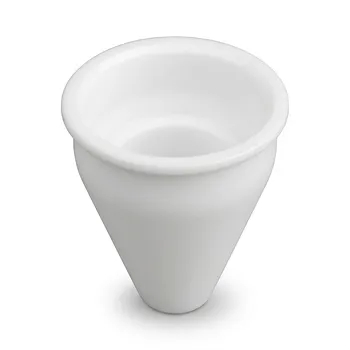
- Custom Machined PTFE Conical Sample Cell Corrosion Resistant Triangular Fluoropolymer Container for Trace Analysis
People Also Ask
- In what ways do PTFE battery testing fixtures enhance laboratory throughput and reliability? Maximize Research Efficiency
- How does the chemical inertness of PTFE benefit laboratory-scale battery testing? Ensure high-purity research results.
- In what industrial manufacturing contexts are PTFE battery clamps or fixtures utilized? Optimize Battery Production.
- What is the thermal operating range for PTFE battery clamps in electrochemical research? Stability from -200°C to +260°C
- What are the primary functions and material compositions of PTFE battery clamps? Ensure Precision & Chemical Resistance