Knowledge PTFE battery mold What are the common design configurations and fabrication methods for PTFE battery molds? Expert Solutions for ASSB R&D
Author avatar

Tech Team · Kintek

Updated 3 weeks ago

What are the common design configurations and fabrication methods for PTFE battery molds? Expert Solutions for ASSB R&D


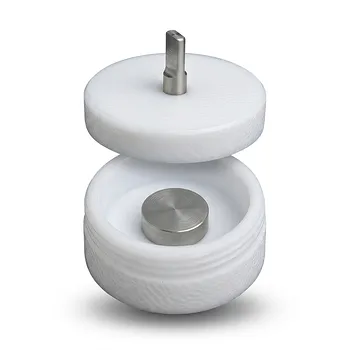
PTFE battery molds are primarily fabricated through CNC machining of solid stock or high-pressure compression molding followed by sintering. Common design configurations include simple cylindrical pellet dies, multi-layer stacking molds with precision alignment features, and specialized housings with integrated threads or grooves for current collectors. These molds are engineered specifically for laboratory and pilot-scale assembly, particularly for all-solid-state batteries (ASSBs).

PTFE battery molds provide a chemically inert, low-friction environment for high-pressure component compaction. While they offer excellent dimensional stability for small-scale prototypes, their design must account for the material's inherent tendency to creep under sustained mechanical stress.

Primary Fabrication Methods for PTFE Molds

Precision CNC Machining

The most common method for producing custom battery molds is CNC machining from semi-finished PTFE shapes like rods or plates. Because PTFE does not melt like traditional thermoplastics, it cannot be injection molded and must be cut using standard mechanical tooling. This approach allows for high precision and the creation of complex features like internal threads or alignment grooves.

Compression Molding and Sintering

Molds can also be produced by cold-pressing granular or fine PTFE powder under pressures of 10 to 100 MPa. Following initial shaping, the component is sintered at temperatures between 360 °C and 380 °C to fuse the particles into a rigid, solid mass. This method is often used to create the initial semi-finished blocks that are later machined to final specifications.

Material Preparation and Synthesis

The raw PTFE used for these molds is produced via suspension or dispersion polymerization of tetrafluoroethylene (TFE) gas. Suspension polymerization typically results in solid grains that are processed into pellets for molding. Dispersion polymerization produces a fine paste or powder, which is ideal for high-density components requiring uniform material properties.

Common Design Configurations

Cylindrical Dies for Pelletization

The most basic configuration is a simple cylindrical die, typically ranging from 10 to 20 mm in diameter. These dies are used to form dense pellets from loose powders or slurries of active materials and solid electrolytes. The low-friction surface of the PTFE ensures that the compressed pellet can be ejected without fracturing or sticking to the mold walls.

Multi-Layer Stacking Molds

For more complex cell architectures, molds are designed with alignment features to facilitate the sequential layering of anodes, electrolytes, and cathodes. These configurations ensure that each layer is perfectly centered, which is critical for maintaining uniform ion transport across interfaces. These molds are essential for developing multi-layer all-solid-state battery (ASSB) prototypes.

Integrated Current Collector Designs

Advanced mold designs incorporate internal threads or precision grooves to accommodate current collectors directly within the assembly. This allows researchers to maintain mechanical pressure on the cell stack while establishing electrical connections. Such designs often feature a modular approach, where different sections of the mold can be swapped to change the cell thickness or diameter.

Structural Engineering Requirements

Optimizing Wall Thickness

To ensure the mold remains rigid during high-pressure compaction, wall thicknesses are generally maintained between 5 mm and 10 mm. This thickness provides the necessary structural integrity to resist deformation while keeping the mold compact enough for lab-scale equipment. Thinner walls may lead to dimensional inaccuracies, while excessively thick walls can make the mold cumbersome to handle.

Managing Viscoelastic Creep

PTFE is a polymer that exhibits viscoelastic creep, meaning it can slowly deform under sustained mechanical loads. Consequently, pure PTFE molds are best suited for short-cycle operations rather than long-term storage under high pressure. Engineers must account for this behavior by designing components that can be easily recalibrated or replaced if dimensional tolerances shift over time.

Understanding the Trade-offs

Pressure Limitations and Hybrid Designs

While PTFE is suitable for standard laboratory work up to approximately 200 MPa, it may fail or deform excessively at the extreme pressures required for some solid-state systems. In these cases, a hybrid design is necessary, featuring a thin PTFE liner inside a reinforced metal sleeve. This combines the chemical inertness of PTFE with the mechanical strength of steel.

Scalability Constraints

PTFE molds are highly effective for small-to-medium formats like coin cells or pouch-cell prototypes but are rarely used in high-volume industrial production. The manual nature of the assembly and the material's mechanical limitations make it difficult to scale these designs for automated manufacturing. They remain a specialized tool for the research and development phase.

Making the Right Choice for Your Goal

How to Apply This to Your Project

  • If your primary focus is high-pressure compaction (>200 MPa): Use a hybrid design consisting of a PTFE inner liner housed within a high-strength stainless steel sleeve.
  • If your primary focus is rapid prototyping of new materials: Choose CNC-machined molds from solid PTFE stock to allow for quick design iterations and custom geometries.
  • If your primary focus is multi-layer solid-state batteries: Opt for stacking molds with integrated alignment pins to ensure precise interfacial contact between layers.
  • If your primary focus is minimizing contamination: Ensure the mold is fabricated from high-purity sintered PTFE to prevent leaching or chemical interference during testing.

By matching the fabrication method and design configuration to your specific pressure and layering requirements, you can ensure both the accuracy and longevity of your battery assembly process.

Summary Table:

Aspect Details
Fabrication Methods CNC Machining, Compression Molding & Sintering
Design Types Cylindrical Dies, Multi-Layer Stacking Molds, Integrated Housings
Material Benefits Chemical Inertness, Low Friction, Dimensional Stability
Pressure Rating Standard up to 200 MPa (Hybrid designs for >200 MPa)
Best Use Case All-Solid-State Battery (ASSB) Prototyping & Pelletization

Elevate Your Research with KINTEK’s Precision Fluoropolymer Solutions

Looking for high-performance labware tailored to your specific research needs? KINTEK specializes in the expert manufacture of high-purity PTFE and PFA laboratory supplies. Whether you require everyday essentials like beakers, measuring cylinders, and reagent bottles, or advanced research tools such as custom-machined battery molds, electrochemical cells, and hydrothermal synthesis liners, we have you covered.

Our end-to-end custom CNC fabrication allows us to deliver everything from complex, non-standard components and bespoke laboratory setups to high-volume orders. We focus exclusively on high-performance materials to ensure your lab processes are efficient and contamination-free. From tubing and valves to filtration tools and reaction apparatus, KINTEK provides the reliability your data demands.

Ready to optimize your battery assembly or lab workflow? Contact us today to discuss your custom requirements!

Related Products

People Also Ask

Related Products

Acid Resistant PTFE Button Cell Battery Test Fixture Customizable Machining High Purity Electrochemical Testing Clamp

Acid Resistant PTFE Button Cell Battery Test Fixture Customizable Machining High Purity Electrochemical Testing Clamp

High-purity PTFE button cell testing fixtures provide exceptional acid resistance and electrical insulation for precise electrochemical analysis. These customizable clamps eliminate stray currents and prevent electrolyte corrosion during rigorous battery research and development processes in demanding labs.

Corrosion Resistant PTFE Small Reaction Bottle One Piece Molded Teflon Sample Storage Tank

Corrosion Resistant PTFE Small Reaction Bottle One Piece Molded Teflon Sample Storage Tank

High-performance corrosion resistant PTFE small reaction bottles offer exceptional chemical inertness and thermal stability for demanding laboratory environments. Featuring one-piece molded construction and customizable dimensions, these Teflon storage tanks ensure leak-proof containment and maximum purity for trace analysis applications.

Custom Machined PTFE Conical Sample Cell Corrosion Resistant Triangular Fluoropolymer Container for Trace Analysis

Custom Machined PTFE Conical Sample Cell Corrosion Resistant Triangular Fluoropolymer Container for Trace Analysis

Discover high-purity custom PTFE conical sample cells and triangular containers. Engineered for trace analysis, these corrosion-resistant fluoropolymer components feature low background interference and precision CNC fabrication to meet your specific laboratory requirements and demanding industrial chemical processing needs.

White PTFE Electrolytic Cell with Movable Slider and Insulated Lid for Fluorine Corrosion Resistance

White PTFE Electrolytic Cell with Movable Slider and Insulated Lid for Fluorine Corrosion Resistance

Engineered for extreme chemical resistance this customizable PTFE electrolytic cell features a movable slider and superior insulation ideal for fluorine rich environments ensuring high purity results in semiconductor and electrochemical research applications and advanced manufacturing.

Corrosion Resistant PTFE Electrochemical Cell for New Energy Research Inert Insulating Customizable Lab Reaction Vessel

Corrosion Resistant PTFE Electrochemical Cell for New Energy Research Inert Insulating Customizable Lab Reaction Vessel

Professional PTFE electrochemical cell designed for new energy research featuring exceptional chemical inertness and corrosion resistance. Available in 400ml and 1000ml capacities with full customization for advanced battery testing and high-purity trace analysis delivering reliable industrial performance and extreme durability.

Custom PTFE Electrolytic Cell Corrosion Resistant Low Background Reaction Vessel with Inlet Outlet Ports

Custom PTFE Electrolytic Cell Corrosion Resistant Low Background Reaction Vessel with Inlet Outlet Ports

Discover professional high-purity custom PTFE electrolytic cells designed for precision electrochemical analysis. Featuring extreme corrosion resistance and low background interference, these reaction vessels offer customizable inlet/outlet ports for seamless integration into demanding industrial or laboratory fluid systems.

Square PTFE Electrochemical Cell for Silicon Wafer Processing and Hydrofluoric Acid Resistance in Semiconductor and New Energy Research

Square PTFE Electrochemical Cell for Silicon Wafer Processing and Hydrofluoric Acid Resistance in Semiconductor and New Energy Research

This high-purity PTFE square electrochemical cell offers exceptional hydrofluoric acid resistance for silicon wafer processing in semiconductor and new energy sectors, featuring fully customizable dimensions and rigorous bespoke engineering to meet specific demanding laboratory research and industrial production requirements.

Corrosion Resistant PTFE Evaporation Cell Electrophoresis Tank 400ml Flame Retardant Insulated Reaction Vessel Customizable

Corrosion Resistant PTFE Evaporation Cell Electrophoresis Tank 400ml Flame Retardant Insulated Reaction Vessel Customizable

This high-purity PTFE reaction vessel offers exceptional chemical resistance and thermal stability for demanding lab applications. Featuring a 400ml capacity and flame-retardant insulation, it provides a customizable, durable solution for precision evaporation and electrophoresis processes in industrial environments.

Custom PTFE Sleeves and Hollow Rods for Advanced Applications

Custom PTFE Sleeves and Hollow Rods for Advanced Applications

High-performance PTFE hollow rods & sleeves for chemical resistance, thermal stability, and low friction. Custom sizes available. Contact KINTEK today!

Custom PTFE Corrosion Resistant Insulating Electrophoresis Reaction Cell with Septum and Valves for Low Background Trace Analysis

Custom PTFE Corrosion Resistant Insulating Electrophoresis Reaction Cell with Septum and Valves for Low Background Trace Analysis

Optimize trace analysis with our custom PTFE corrosion-resistant reaction cells. Featuring insulating electrophoresis designs with integrated septums and valves, these high-purity systems ensure low background and zero metal precipitation for demanding industrial laboratory and chemical research applications today.

Customizable PTFE Scrapers and Shovels for Demanding Applications

Customizable PTFE Scrapers and Shovels for Demanding Applications

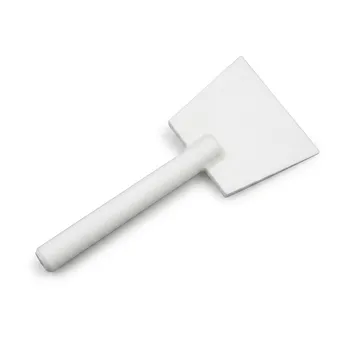
High-purity PTFE scrapers & shovels for labs, semiconductor & chemical industries. Chemical-resistant, non-stick, durable tools for precise material handling. Custom solutions available.

High Purity Custom PTFE Reaction Cell Electrolytic Tank for Semiconductor and Polysilicon Industrial Applications

High Purity Custom PTFE Reaction Cell Electrolytic Tank for Semiconductor and Polysilicon Industrial Applications

Discover custom PTFE reaction cells and electrolytic tanks designed for semiconductor and polysilicon manufacturing. These corrosion-resistant units ensure high purity in trace analysis and chemical processing, offering unmatched durability and thermal stability for demanding laboratory and industrial applications.

Customizable 22ml PTFE Cup Deep Layer Sampler and Corrosion Resistant Cylinder with Handle

Customizable 22ml PTFE Cup Deep Layer Sampler and Corrosion Resistant Cylinder with Handle

This high-purity PTFE sampler and deep-layer cylinder offers ultimate corrosion resistance for demanding industrial environments. Fully customizable to meet specific laboratory or field sampling requirements, this robust system ensures precise and contaminant-free fluid collection in harsh chemical processes.

Custom PTFE Petri Dishes Corrosion Resistant High Purity Low Background Labware

Custom PTFE Petri Dishes Corrosion Resistant High Purity Low Background Labware

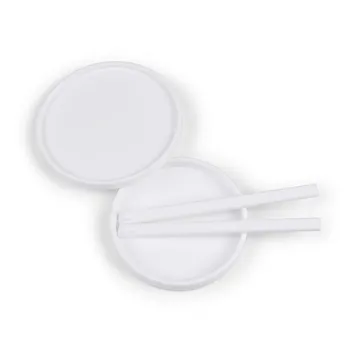
High-purity custom PTFE petri dishes designed for trace analysis and membrane casting. These vessels offer exceptional chemical resistance, zero leaching, and a non-stick surface, ensuring the highest integrity for sensitive laboratory processes and demanding industrial applications.

Custom PTFE Rectangular Tank Semiconductor Cleaning Acid Bath Corrosion Resistant Fluoropolymer Filtration Vessel

Custom PTFE Rectangular Tank Semiconductor Cleaning Acid Bath Corrosion Resistant Fluoropolymer Filtration Vessel

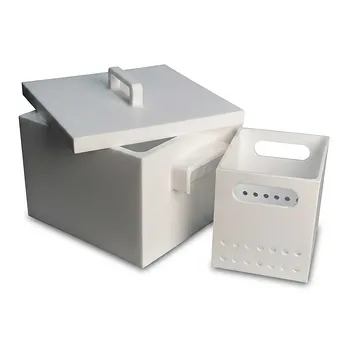
Custom PTFE rectangular tanks for semiconductor cleaning and acid soaking applications. Engineered from high-purity fluoropolymers, these corrosion-resistant filtration vessels offer exceptional chemical stability and bespoke CNC fabrication to meet your laboratory's specific industrial requirements and exact dimensional needs.

Custom PTFE Parts Manufacturer for Teflon Containers and Components

Custom PTFE Parts Manufacturer for Teflon Containers and Components

High-precision PTFE containers for labs & industry. Chemical-resistant, customizable sizes. Ideal for semiconductor, medical & lab applications. Get a quote!

Corrosion Resistant PTFE Laboratory Material Scoop for Biopharmaceutical Use Non Stick Easy Clean Fluoropolymer Shovel

Corrosion Resistant PTFE Laboratory Material Scoop for Biopharmaceutical Use Non Stick Easy Clean Fluoropolymer Shovel

Optimize your biopharmaceutical and laboratory workflows with our premium, corrosion-resistant PTFE material scoops. These non-stick, easy-clean shovels offer superior chemical inertness, antistatic properties, and biocompatibility, ensuring contamination-free material handling for demanding industrial and research environments worldwide.

Custom PTFE Petri Dish 30mm Corrosion Resistant Low Background Non Leaching Laboratory Ware

Custom PTFE Petri Dish 30mm Corrosion Resistant Low Background Non Leaching Laboratory Ware

High-purity custom PTFE petri dish with 30mm diameter features exceptional corrosion resistance and low background levels. Ideal for trace analysis and membrane casting, this non-leaching labware ensures contamination-free results across global laboratory facilities.

Custom PTFE Square Tank Semiconductor Soaking Cleaning Acid Resistant Fluoropolymer Filtration Vessel

Custom PTFE Square Tank Semiconductor Soaking Cleaning Acid Resistant Fluoropolymer Filtration Vessel

Maximize efficiency in semiconductor fabrication with our custom PTFE square tanks, engineered for superior acid resistance and trace analysis purity. These high-performance fluoropolymer vessels ensure contaminant-free soaking and reliable chemical handling for demanding laboratory and industrial processes today.

Corrosion Resistant PTFE Small Reagent Bottle Non Stick Biopharmaceutical Sample Storage Vessel Easy Clean Teflon Container

Corrosion Resistant PTFE Small Reagent Bottle Non Stick Biopharmaceutical Sample Storage Vessel Easy Clean Teflon Container

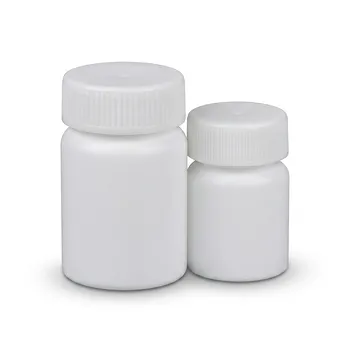
This high-purity PTFE reagent bottle offers exceptional chemical resistance and non-stick surfaces for biopharmaceutical storage. Engineered for leak-free performance and easy cleaning, it supports customizable dimensions for demanding laboratory and industrial fluid handling applications.


Leave Your Message