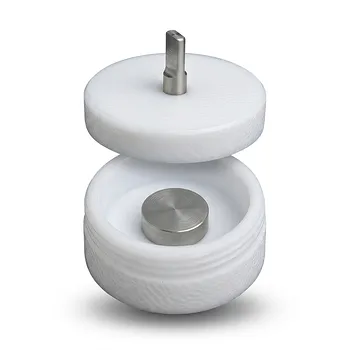
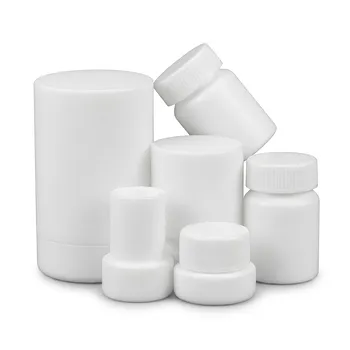
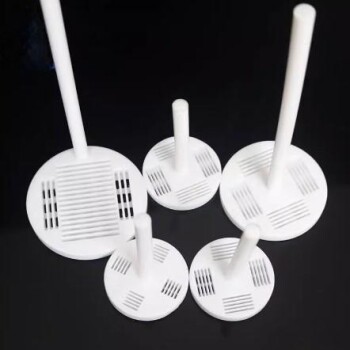
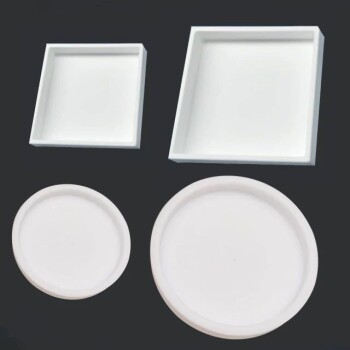
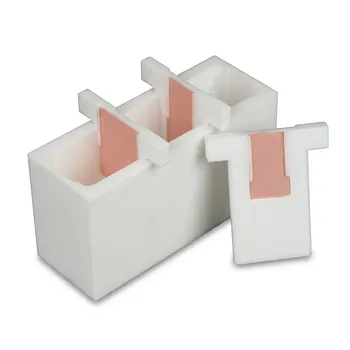
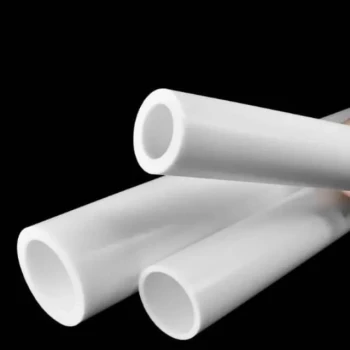
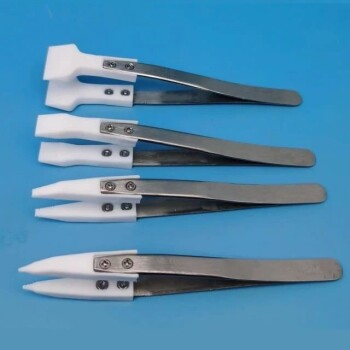
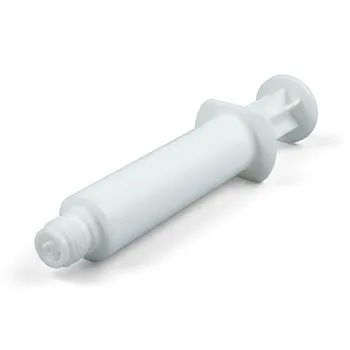
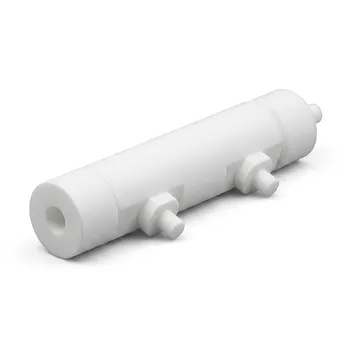
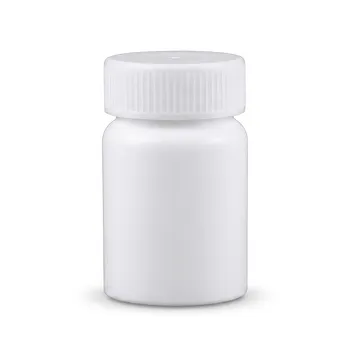
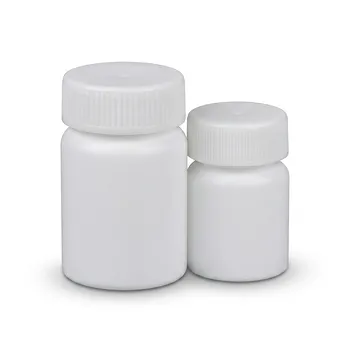
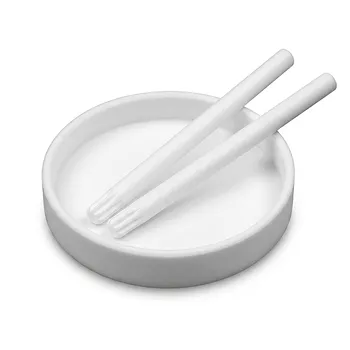
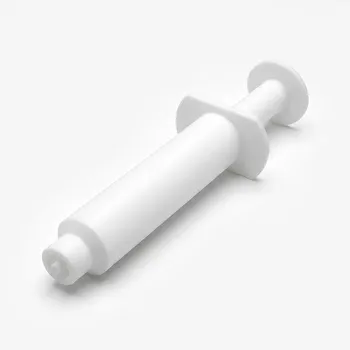
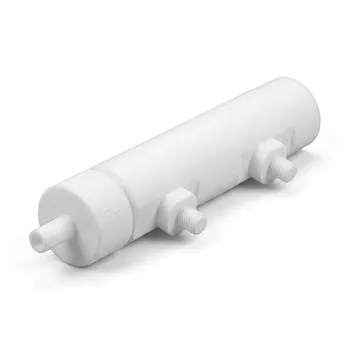
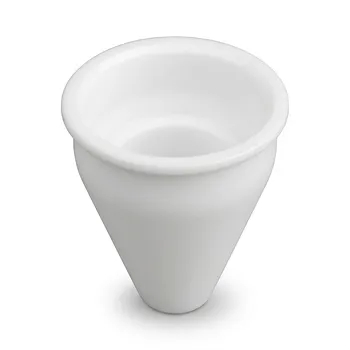
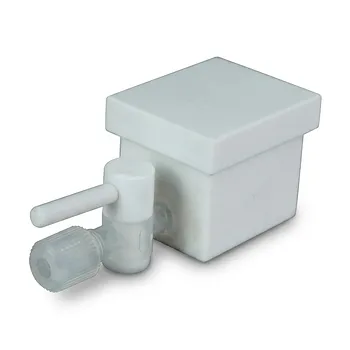
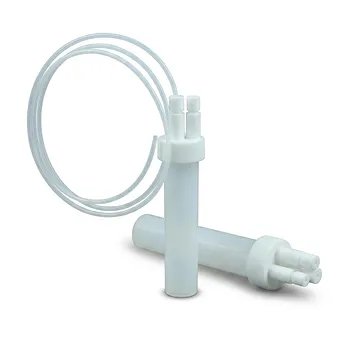
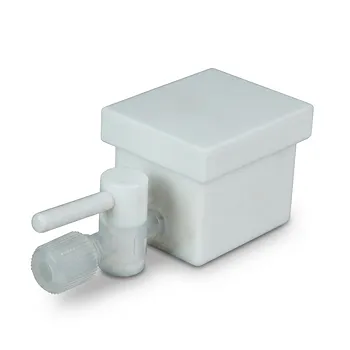
PTFE battery molds provide a superior alternative to stainless steel by offering extreme chemical inertness, non-stick surfaces, and inherent electrical insulation. These properties are essential for maintaining the purity and structural integrity of reactive solid-state electrolytes during high-pressure fabrication.
PTFE (Polytetrafluoroethylene) molds eliminate the risks of chemical contamination and mechanical damage to fragile solid-solid interfaces, which are the primary failure points in next-generation battery prototyping.
Ensuring Chemical and Material Purity
Eliminating Metallic Contamination
Conventional stainless steel molds can leach metallic ions into highly reactive electrolyte powders, such as sulfide-based or oxide-based compounds. PTFE’s extreme chemical inertness, driven by strong carbon-fluorine bonds, ensures that the battery chemistry remains uncontaminated during the pressing process.
Stability in Controlled Environments
Solid-state battery fabrication often occurs in argon or nitrogen-filled glove boxes where moisture-sensitive lithium or sodium compounds are handled. PTFE is chemically stable and does not degrade or react with these sensitive materials, ensuring repeatable results across multiple prototypes.
Optimizing the Solid-Solid Interface
Preserving Fragile Boundaries
The performance of a solid-state battery depends on intimate particle contact and low grain-boundary resistance. PTFE’s non-stick properties prevent powder adhesion to the mold walls, ensuring that the delicate layers do not shear or crack during the demolding process.
Precision Geometry and Uniformity
PTFE molds facilitate reproducible densification under high pressure, allowing for layer thicknesses to remain uniform within a few micrometers. This precision ensures that the ion-transport pathways remain consistent throughout the entire cell stack.
Enhancing Electrical and Mechanical Safety
Preventing Internal Short Circuits
Unlike conductive stainless steel, PTFE is a dielectric material with high electrical resistivity. When used as a mold or lining, it prevents internal short circuits between current collectors and the mold body during high-pressure assembly.
Friction Reduction and Durability
With an exceptionally low coefficient of friction (0.05–0.10), PTFE allows for smooth mechanical operation during uniaxial or isostatic pressing. This reduces wear on the mold components and ensures that the pressure is transmitted evenly across the battery materials.
Understanding the Trade-offs
Mechanical Rigidity and Deformation
While PTFE is chemically superior, it is significantly softer than stainless steel. Under extreme pressures, PTFE may undergo "cold flow" or deformation, which can affect the dimensional tolerances of the final pellet if the mold is not properly reinforced.
Thermal Limits
PTFE is thermally stable up to 260°C, which is sufficient for most battery fabrication processes. However, for specialized sintering processes requiring temperatures beyond this range, stainless steel or ceramic molds remain the only viable options.
Applying This to Your Fabrication Process
Choosing the Right Material for Your Goal
The selection of mold material should be dictated by your specific electrolyte chemistry and the required assembly pressure.
- If your primary focus is working with reactive sulfides: Utilize PTFE molds to prevent chemical degradation and ensure the highest possible interfacial quality.
- If your primary focus is high-temperature sintering (above 260°C): Stick with stainless steel or specialized ceramic molds, as PTFE will lose structural integrity at these temperatures.
- If your primary focus is preventing electrical shorts during compression: Use PTFE liners or sleeves within a metal housing to combine mechanical strength with electrical insulation.
By prioritizing the chemical and electrical neutrality of your molding environment, you ensure that your battery's performance is limited only by its chemistry, not its fabrication.
Summary Table:
| Feature | PTFE Battery Molds | Stainless Steel Molds |
|---|---|---|
| Chemical Purity | Extreme inertness; no metallic leaching | Risk of ionic contamination |
| Surface Property | Non-stick; preserves fragile interfaces | Potential powder adhesion/shearing |
| Electrical Safety | Dielectric; prevents internal shorts | Conductive; risk of short circuits |
| Friction Coeff. | Very Low (0.05–0.10) | Higher; potential mechanical wear |
| Thermal Limit | Up to 260°C | Extremely high (ideal for sintering) |
| Rigidity | Softer (subject to cold flow) | High mechanical strength |
Optimize Your Solid-State Battery Research with KINTEK
Achieving precision in solid-state battery fabrication requires materials that won't compromise your chemistry. KINTEK specializes in high-performance fluoropolymer laboratory supplies designed for the most demanding research environments.
Our extensive range covers everything your lab needs: from everyday basics (PTFE beakers, crucibles, and high-purity reagent bottles) and fluid transfer components (tubing, fittings, valves) to specialized battery research tools including custom battery testing fixtures, electrode accessories, and electrochemical cells.
Backed by end-to-end custom CNC fabrication, KINTEK can deliver everything from complex non-standard machined parts to high-volume orders of PFA and PTFE components. Ensure your battery performance is limited only by its chemistry, not its fabrication tools.
Ready to upgrade your lab setup? Contact KINTEK today to discuss your custom requirements!
Related Products
- Acid Resistant PTFE Button Cell Battery Test Fixture Customizable Machining High Purity Electrochemical Testing Clamp
- Corrosion Resistant PTFE Small Reaction Bottle One Piece Molded Teflon Sample Storage Tank
- Custom Machined Molded PTFE Teflon Parts Manufacturer for Laboratory ITO FTO Conductive Glass Cleaning Flower Basket
- Custom PTFE Parts Manufacturer for Teflon Containers and Components
- White PTFE Electrolytic Cell with Movable Slider and Insulated Lid for Fluorine Corrosion Resistance
People Also Ask
- In what ways do PTFE battery testing fixtures enhance laboratory throughput and reliability? Maximize Research Efficiency
- How does the chemical inertness of PTFE benefit laboratory-scale battery testing? Ensure high-purity research results.
- In what industrial manufacturing contexts are PTFE battery clamps or fixtures utilized? Optimize Battery Production.
- What is the thermal operating range for PTFE battery clamps in electrochemical research? Stability from -200°C to +260°C
- What are the primary functions and material compositions of PTFE battery clamps? Ensure Precision & Chemical Resistance