PTFE's susceptibility to cold flow necessitates a design shift from rigid static interfaces to dynamic, compensatory systems. Because PTFE lacks molecular cross-linking, its polymer chains slide past one another when subjected to sustained mechanical stress, leading to permanent deformation over time. To counter this, laboratory component design must incorporate thicker wall sections, "live-loading" mechanisms like Belleville washers, and reinforced material grades to ensure structural and sealing integrity.
Core Takeaway: PTFE’s tendency to "creep" under load means that standard static seals will eventually fail as the material flows away from the pressure point. Effective design requires active compensation—such as spring-loading or mechanical reinforcements—to maintain constant contact pressure and prevent leaks as the material deforms.
The Mechanics of Cold Flow in PTFE
Lack of Molecular Cross-linking
PTFE is a viscoelastic material that lacks the strong intermolecular cross-links found in many other polymers. Under constant compressive stress, these independent polymer chains gradually shift, causing the material to thin or "flow" away from the source of pressure.
Time and Temperature Dependency
Creep is a time-dependent plastic deformation that worsens as environmental conditions become more extreme. While cold flow occurs at room temperature, the rate of deformation increases significantly in service environments exceeding 100 degrees Celsius.
Structural Design Strategies
Increased Wall Thickness and Reinforcement
To maintain structural integrity under continuous pressure loading, laboratory apparatus design often specifies thicker wall sections. In high-pressure tubing applications, engineers may also add external reinforcements like stainless steel braiding or jacketing to contain the material and prevent radial extrusion.
Mechanical Retention Features
Designers use physical barriers to stop PTFE from migrating under load. Implementing mechanical locking grooves or dovetail recesses in liners ensures that the material remains anchored, preventing displacement in valves and lined pipes.
Achieving Reliable Seals and Connections
Live-Loading with Belleville Washers
In sealing applications such as gaskets and valves, designers utilize spring-loaded mechanisms or Belleville washers. These components provide "live-loading," which automatically adjusts to material thinning by maintaining a consistent, leak-proof sealing force even as the PTFE deforms.
Advanced Fitting Geometry
High-performance connectors often move away from single-point compression. Two-ferrule systems are frequently used to separate the sealing and gripping functions, while internal O-rings provide redundant seals that remain effective even if the primary PTFE interface experiences creep.
Material Modifications for Stability
Filled and Reinforced PTFE (RPTFE)
Adding fillers such as glass, carbon, or graphite significantly improves the structural stability of PTFE. These reinforced grades (RPTFE) offer much higher resistance to abrasion and cold flow than virgin PTFE, making them ideal for high-cycle industrial components.
Expanded PTFE (ePTFE)
Utilizing an expanded fibrillar structure (ePTFE) creates a multidirectional strength that virgin PTFE lacks. This structure is specifically engineered to resist "creep-to-set," ensuring that gaskets maintain their thickness and bolt preload over long periods.
Understanding the Trade-offs
Chemical Purity vs. Mechanical Stability
While adding fillers like glass or carbon reduces cold flow, it can introduce leachable impurities into the laboratory environment. For applications requiring ultra-high purity, designers must often rely on complex mechanical compensators (like spring-loading) rather than material additives.
Precision Machining Constraints
PTFE’s low stiffness and high thermal expansion make it difficult to maintain precise machining tolerances. Over-tightening a fitting to compensate for this can actually accelerate cold flow, creating a "compression set" that leads to premature failure of the joint.
How to Apply This to Your Project
Recommendations Based on Your Objectives
- If your primary focus is high-pressure sealing: Incorporate live-loading Belleville washers to ensure the seal remains energized as the PTFE deforms over time.
- If your primary focus is structural longevity at high temperatures: Specify Reinforced PTFE (RPTFE) with glass or carbon fillers to decrease the rate of material creep.
- If your primary focus is ultra-pure chemical handling: Utilize virgin PTFE with increased wall thicknesses and mechanical retention grooves to avoid the contamination risks of fillers.
- If your primary focus is preventing tube bursting: Use external braiding or jacketing to provide the necessary hoop strength that PTFE cannot provide on its own.
By treating PTFE as a dynamic material rather than a static one, engineers can leverage its peerless chemical resistance while neutralizing its mechanical limitations.
Summary Table:
| Design Challenge | Mitigation Strategy | Key Benefit |
|---|---|---|
| Material Thinning/Flow | Live-loading (Belleville washers) | Maintains constant sealing pressure |
| Structural Deformation | Increased wall thickness & RPTFE | Enhances mechanical stability under load |
| Material Migration | Mechanical locking/Dovetail recesses | Anchors components to prevent displacement |
| Radial Extrusion | External braiding/Jacketing | Provides hoop strength for high-pressure use |
| Purity vs. Stability | Virgin PTFE + Mechanical compensation | Prevents contamination from fillers |
Engineer Reliability into Your Laboratory Workflow with KINTEK
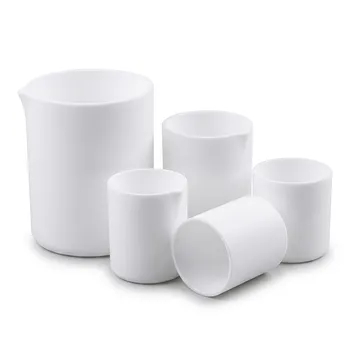
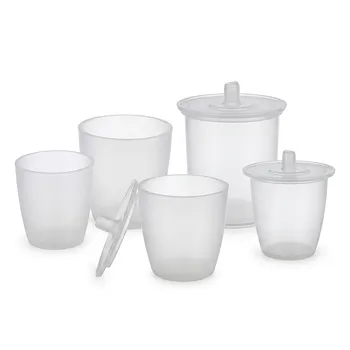
Don't let material creep compromise your research. KINTEK specializes in high-performance fluoropolymer solutions, offering an exhaustive range of PTFE and PFA laboratory supplies. Whether you need everyday essentials—like beakers, tubing, fittings, and filtration tools—or advanced apparatus such as electrochemical cells and microwave digestion vessels, our expert team ensures every component is designed to withstand the rigors of cold flow and mechanical stress.
Why Choose KINTEK?
- Precision Engineering: End-to-end custom CNC fabrication for complex, non-standard machined parts.
- Material Expertise: From ultra-pure virgin PTFE to high-stability reinforced grades (RPTFE).
- Scalable Solutions: We handle everything from bespoke laboratory setups to high-volume industrial orders.
Contact us today to discuss your custom project or explore our catalog of high-performance labware. Let's build a leak-proof future for your lab!
Related Products
- Custom PTFE Parts Manufacturer for Teflon Containers and Components
- Custom PTFE Laboratory Apparatus Corrosion Resistant Low Background Reaction Cells Precision CNC Fabrication
- Custom Machined Molded PTFE Teflon Parts Manufacturer for Laboratory ITO FTO Conductive Glass Cleaning Flower Basket
- Corrosion Resistant PTFE Dispersing Disc and High Temperature Propeller Stirring Paddle for Laboratory Chemical Mixing
- Large Scale PTFE Beakers and Flasks for High Temperature Corrosion Resistant Laboratory Applications with Custom CNC Fabrication
People Also Ask
- What industries use custom PTFE parts and for what purposes? Solve Critical Challenges with High-Performance Materials
- What design considerations are important for custom PTFE parts? Design for Performance & Reliability
- What advantages do custom PTFE parts offer for industrial efficiency? Boost Uptime & Cut Costs
- What industries benefit most from custom PTFE parts? Solve Extreme Environment Challenges
- What are the key properties of Teflon (PTFE) used in custom parts? | Achieve Peak Performance