PTFE’s transition near 19°C matters because it changes both crystal structure and processing behavior. Below approximately 19°C, PTFE is relatively more rigid and its crystalline structure is predominantly triclinic. Above this temperature, the molecular helix partially untwists, the structure shifts toward a hexagonal form, and PTFE becomes more deformable; this can change grinding fracture, particle morphology, powder flow, machining dimensions, and molded-part shrinkage.
The 19°C transition is not simply a “melting” or abrupt bulk-softening point. It is a first-order crystalline transition that produces a sharp change in molecular packing and specific volume, while also altering how PTFE responds to mechanical energy. Milling and dimensional inspection should therefore be performed under controlled, documented temperatures.
What Changes at Approximately 19°C?
The crystalline structure changes
Below approximately 19°C, PTFE has a relatively ordered triclinic crystal structure. Near and above the transition, the molecular helix partially untwists and the crystal structure shifts toward a hexagonal arrangement.
This change is associated with a change from approximately a 13/6 to a 15/7 helical conformation, meaning the number of CF₂ groups per molecular twist changes as the chains become less tightly packed.
Specific volume increases
Between approximately 19°C and 30°C, increasing chain disorder produces a substantial increase in PTFE’s specific volume. Reported values are approximately 1–1.8%, depending on the material and measurement basis.
This is large enough to affect tight-tolerance components, seals, fittings, valves, volumetric parts, and other precision PTFE products.
Mechanical response becomes more compliant
Above the transition, PTFE generally behaves as less rigid and more pliable than it does below 19°C. The practical effect is not that PTFE suddenly becomes soft like a thermoplastic above its melt temperature; rather, its resistance to local deformation, fracture, and particle breakage changes.
This distinction matters during milling because particle formation depends on whether the resin fractures cleanly or deforms before breaking.
How Temperature Affects Milling and Grinding
Milling below 19°C favors cleaner fracture
When PTFE is maintained below the transition, its greater rigidity can promote more brittle fracture during mechanical size reduction. Particles may break more readily under impact or shear instead of stretching extensively before separating.
This can be useful when the objective is a more regular particle shape, stable particle-size control, or reduced smearing on milling equipment.
Milling above 19°C increases deformation
Above the transition, PTFE is more capable of absorbing mechanical energy through deformation. During high-shear grinding, particles can elongate, flatten, smear, or resist clean fracture.
The result can be a different particle-size distribution even when the mill settings remain unchanged. Temperature is therefore a process variable, not merely an environmental detail.
Heat generated during milling can change the result
Mechanical milling converts part of the applied energy into heat. A process that begins near 19°C can therefore cross the transition during operation, causing the resin’s fracture behavior to change during the run.
This can produce inconsistent particle morphology or batch-to-batch variation unless the material and equipment temperatures are monitored and controlled.
Elevated grinding temperatures can produce elongated particles
The supplied reference reports that grinding PTFE at approximately 40–50°C produces smaller, more elongated particles than grinding at approximately 25°C.
These particles can have a lower bulk density and different packing behavior because elongated or irregular particles do not arrange as efficiently as more equiaxed particles.
Particle morphology affects powder flow
Particle shape influences bulk density, flowability, packing, mold filling, and porosity. Smaller elongated particles may have greater interparticle friction and poorer free-flow behavior than more regular particles.
Consequently, two PTFE powders with similar nominal particle-size measurements can behave differently during blending, charging, molding, or compression if their shapes were produced at different temperatures.
Effects on Molded PTFE Properties
Particle shape changes mold packing
A powder made at a higher temperature may contain more elongated particles and may pack differently in the mold. This changes the void structure before sintering and can influence consolidation.
The practical consequences may include changes in mold shrinkage, porosity, density, and dimensional reproducibility.
Higher-temperature-milled resin can behave differently after molding
The reference indicates that PTFE milled at approximately 40–50°C can produce molded parts with greater mold shrinkage and higher tensile strength than resin milled at approximately 25°C.
These results should be treated as material- and process-specific rather than universal constants. Milling temperature interacts with resin grade, particle-size distribution, compression conditions, sintering schedule, and the thermal history of the powder.
Mechanical properties are process-dependent
The 19°C transition does not independently determine the final tensile strength or porosity of a molded part. It changes the powder’s physical state and particle morphology, which then influence downstream processing.
The final properties depend on the entire chain: milling temperature → particle shape and packing → molding behavior → sintering and crystallization history.
Consequences for Precision PTFE Machining
Dimensions can shift across the transition
A PTFE component measured below 19°C may not have the same dimensions after warming into the 20–25°C range. The change is associated with the phase transition and the accompanying increase in specific volume.
For ordinary parts, this may be insignificant. For tight-tolerance fittings, valve seats, seals, volumetric apparatus, and precision-machined laboratory components, it can be consequential.
Seal integrity can be affected
A dimensional change can alter interference fits, clearances, compression, and contact pressure. A seal that appears correct during inspection may perform differently if the component reaches a temperature on the other side of the transition during use.
This is especially important when PTFE is paired with a material having a different thermal expansion behavior.
Inspection temperature must be defined
Machining and measurement should be performed at a controlled reference temperature, commonly around 25°C, when that temperature represents the intended dimensional standard.
The essential requirement is not that every application use 25°C, but that machining, inspection, and specification use a consistent and documented temperature.
Understanding the Trade-offs
Cooling improves rigidity but complicates process control
Cooling PTFE below 19°C can promote cleaner fracture and reduce deformation during grinding. However, cooling may increase process complexity, create condensation risks, and make temperature uniformity more difficult to maintain.
The resin temperature—not just room temperature—must be controlled, because the material can warm during milling.
Warmer milling may improve some molded properties
Higher-temperature grinding can produce smaller particles and, in the cited processing comparison, molded parts with higher tensile strength. However, the same condition can also produce elongated particles, lower bulk density, greater shrinkage, and less predictable powder flow.
There is no universally optimal milling temperature. The correct condition depends on whether the priority is particle morphology, flow, molded strength, dimensional stability, or low porosity.
“Below 19°C” is not automatically the best specification
The transition temperature should not be treated as a universal pass/fail limit. PTFE processing performance depends on equipment, residence time, shear rate, resin grade, moisture control, and the complete thermal cycle.
A useful specification should define a temperature range and verify the resulting particle-size distribution, shape, bulk density, flow, and molded properties.
Ignoring the second transition can cause errors
PTFE also exhibits a further crystalline transition near 30°C. Between approximately 19°C and 30°C, the increasing molecular disorder contributes to the reported volume expansion.
Therefore, controlling only whether the material is just below or just above 19°C may be insufficient for precision dimensional work across a wider temperature range.
How to Apply This to Your Process
Use the transition as a controlled process boundary rather than assuming room temperature is stable or mechanically neutral.
- If your primary focus is clean particle fracture: Keep the PTFE and milling equipment consistently below 19°C, while monitoring temperature throughout the run to prevent heat-driven changes in fracture behavior.
- If your primary focus is molded tensile strength: Evaluate warmer milling conditions, including the reported 40–50°C range, but verify the resulting shrinkage, density, porosity, and dimensional repeatability.
- If your primary focus is powder flow and packing: Characterize particle shape, bulk density, and flow after milling; do not rely on nominal particle size alone.
- If your primary focus is precision machining: Machine and inspect at a controlled reference temperature, and specify that temperature alongside the dimensional tolerances.
- If your primary focus is sealing or volumetric accuracy: Account for PTFE’s approximately 1–1.8% transition-associated volume change across the 19–30°C region and validate performance at the actual service temperature.
The most reliable PTFE process is one that controls temperature history from milling through final inspection, rather than treating 19°C as an incidental room-temperature detail.
Summary Table:
| Aspect | Below 19°C | Above 19°C |
|---|---|---|
| Crystal structure | Triclinic | Hexagonal |
| Rigidity | More rigid | More pliable |
| Milling behavior | Cleaner fracture | More deformation, elongated particles |
| Specific volume | Lower | Higher (1–1.8% increase up to 30°C) |
| Molded properties | — | Higher shrinkage, tensile strength (in some cases) |
| Precision machining | — | Dimensional shifts across transition |
Ensure consistent PTFE processing with precision-controlled equipment. KINTEK offers high-performance PTFE and PFA labware and custom machining solutions. Contact us to optimize your milling and machining processes for superior results. Get in touch.
Related Products
- Custom PTFE Filtration System Acid Resistant High Purity Semiconductor Grade Chemical Processing Filter
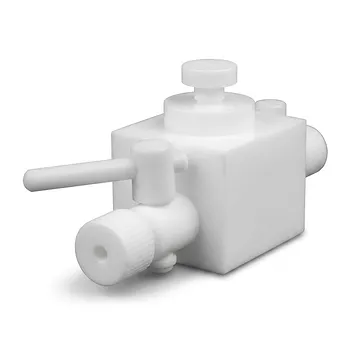
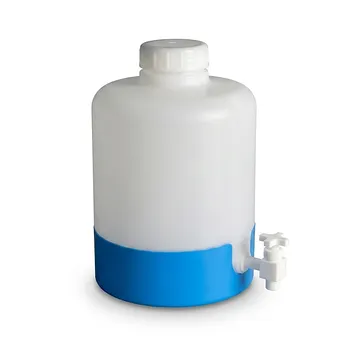
- High Corrosion Resistant PTFE Faucet Polytetrafluoroethylene Valve for Chemical Storage Drums and Fluid Transfer Systems Customizable Industrial Grade
- PTFE PFA Vacuum Filtration System Corrosion Resistant Customizable Shatterproof Laboratory Device
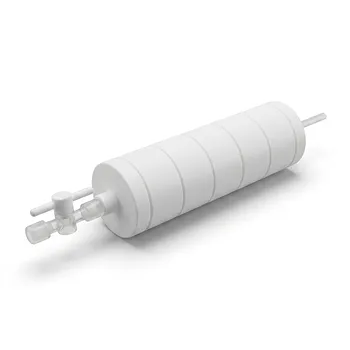
- PTFE Corrosion Resistant Filter with PFA Valve Connections and Integrated Sieve Plate
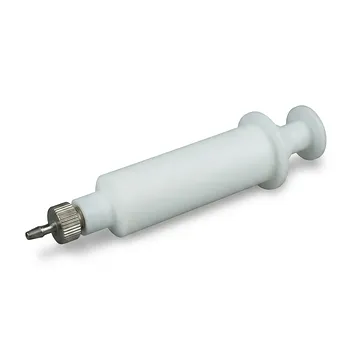
- High Temperature Chemical Resistant 50ml PTFE Syringe Customized Teflon Injector with Threaded Seal for Trace Analysis
People Also Ask
- What makes PTFE filtration systems advantageous for industrial and scientific use? Unmatched Chemical & Thermal Stability
- What steps are involved in selecting the proper PTFE filter? A 4-Step Guide to Optimal Filtration
- What sizes and pore options are available for PTFE filters? Choose the Right Filter for Your Application
- How does the hydrophobicity of PTFE filters benefit their use? Ensure Uninterrupted Gas Flow and Solvent Filtration
- What temperature resistance do PTFE filters offer? Unmatched Thermal Stability from -200°C to +260°C