High melt viscosity makes many fluoropolymers difficult to shape by conventional molding. PTFE, the most important example, does not flow like an ordinary thermoplastic above its approximately 340°C melting transition; it forms a stiff, highly viscous gel instead. As a result, custom laboratory apparatus and specialized reaction vessels are typically produced by compression molding and sintering, followed by precision CNC machining from molded blanks or solid stock.
The central consequence is that PTFE fabrication is primarily a solid-state and machining process, not a conventional injection-molding process. This adds manufacturing time and cost, but it enables chemically pure, mechanically durable components with precise custom geometries.
Why High Melt Viscosity Changes Fabrication
PTFE Cannot Fill a Mold Like a Standard Thermoplastic
Standard injection molding depends on a polymer becoming fluid enough to flow through runners, gates, and narrow mold cavities. PTFE's exceptionally high molecular weight prevents this kind of melt flow, even when the material is heated beyond its melting transition.
The material therefore cannot reliably fill intricate cavities or reproduce fine features through ordinary injection molding. Increasing temperature is not a practical solution because excessive heating can create thermal degradation risks without producing useful flow.
Compression Molding Provides the Initial Shape
PTFE is commonly formed from granular or fine powder using compression molding. Pressure creates a consolidated preform, which is then heated in a controlled sintering cycle so the particles fuse into a coherent structure.
This process is well suited to producing tubes, blocks, blanks, and vessel bodies. It is less suited to directly producing every detail of a complex apparatus, particularly internal channels, threaded interfaces, recesses, and non-standard laboratory connections.
CNC Machining Supplies the Required Geometry
After molding and sintering, manufacturers use precision CNC machining to create the final dimensions and features. Machining can produce custom electrochemical cells, specialized fittings, digestion vessels, valve bodies, and fluid-transfer components without requiring the polymer to flow into a complicated mold.
For one-off or low-volume laboratory equipment, direct machining from high-density PTFE or another suitable fluoropolymer stock can also be more practical than developing dedicated tooling.
Effects on Custom Laboratory Apparatus
Complex Internal Features Require Careful Machining
Reaction vessels and laboratory apparatus often contain narrow bores, stepped chambers, sealing surfaces, ports, and specialized flow paths. These features are difficult to form directly through PTFE molding because the material cannot readily flow into thin or sharply defined sections.
CNC machining makes these geometries accessible, but tool paths, wall thickness, corner radii, and chip removal must be planned around the material's mechanical behavior.
Dimensional Accuracy Depends on Process Control
Sintered fluoropolymer blanks can experience dimensional changes associated with consolidation, thermal history, crystallinity, and cooling. Machining from a stable, properly processed blank helps bring the component to its final tolerance.
For apparatus used in analytical procedures, the critical dimensions are often sealing faces, mating interfaces, electrode locations, vessel volumes, and port alignment. These features may require secondary finishing and inspection after machining.
Uniform Density Matters for Vessel Reliability
High melt viscosity can make consolidation and sintering more demanding. If processing is poorly controlled, microscopic voids or variations in density may remain in the finished material.
For digestion vessels, chemical storage tanks, and trace-analysis containers, minimizing such defects is important because they can reduce stress-crack resistance, promote permeation, or provide sites for sample entrapment and contamination.
Benefits of the Required Fabrication Method
Chemical Purity Is Preserved
PTFE is highly chemically inert and difficult to modify or bond to other materials. Machining from suitable stock allows manufacturers to create the required mechanical interfaces while leaving the polymer's chemical composition essentially unchanged.
This is valuable where the vessel contacts aggressive reagents, high-purity samples, or solutions used in trace analysis.
Structural Performance Remains High
Controlled compression molding and sintering can produce dense, mechanically durable blanks. Precision machining then converts those blanks into components capable of maintaining their shape across demanding laboratory temperature and chemical conditions.
PTFE components commonly support continuous service temperatures approaching 260°C, although the allowable temperature depends on load, pressure, design, duration, and the specific fluoropolymer grade.
Customization Is Economically Practical at Low Volume
Injection molding can be efficient for large production runs, but it requires specialized tooling and a polymer that can flow through the mold. Compression molding followed by machining is often better suited to unusual geometries, prototypes, replacement parts, and small production quantities.
The approach allows laboratory designers to specify the function first, then manufacture the geometry required by the experiment rather than adapting the apparatus to a standard catalog shape.
Understanding the Trade-offs
Fabrication Takes Longer and Costs More
Compression molding, sintering, CNC programming, machining, and inspection generally require more processing steps than conventional injection molding. The cost becomes particularly significant for large vessels, very intricate parts, or components requiring tight tolerances.
Tooling may be reduced for low-volume work, but the machining and inspection burden remains.
Material Waste Can Be Significant
Machining a vessel from a solid block or thick molded blank can generate substantial scrap. Because fluoropolymer stock is expensive and machining rates may be controlled to protect surface quality, material utilization should be considered during design.
Near-net compression-molded blanks can reduce waste when the expected production volume justifies the additional forming work.
Voids and Warpage Must Be Managed
PTFE undergoes changes in volume during melting and recrystallization. Its thermal history affects crystallinity, stiffness, strength, flex-fatigue behavior, and dimensional stability.
A vessel designed for pressure or mechanical rigidity may benefit from a processing route that promotes consistent density and suitable crystallinity. Rapid or uneven cooling can produce different properties and may complicate dimensional control.
Not Every Fluoropolymer Has the Same Limitation
The strongest restriction applies to PTFE and other fluoropolymers with extreme melt viscosity or poor thermal stability. Some fluoropolymers, including PFA and FEP, are melt-processable under suitable conditions, although their processing windows, properties, and chemical performance differ from PTFE.
The material should therefore be selected based on the required chemical resistance, temperature capability, transparency, flexibility, pressure performance, and manufacturing route rather than by treating all fluoropolymers as interchangeable.
Designing for Machined Fluoropolymer Components
Define the Critical Features First
Specify which dimensions control experimental performance: vessel volume, port locations, sealing surfaces, electrode spacing, internal clearances, and pressure-bearing wall thickness. This helps the manufacturer focus tolerance and inspection effort where it matters most.
Non-critical external surfaces can often use more practical tolerances without affecting laboratory results.
Avoid Unnecessary Sharp Features
Sharp internal corners and abrupt wall transitions can increase machining difficulty and create local stress concentrations. Radiused corners and tool-accessible geometries usually improve manufacturability and reduce the risk of defects.
The design should also provide adequate access for boring, drilling, threading, deburring, and cleaning.
Match the Process to the Use Case
A compression-molded and machined component is appropriate when density, chemical purity, and custom geometry are central requirements. Direct machining from stock may be preferable for one-off components, while a specialized molding strategy may become more attractive for repeat production.
The final design should be reviewed with the fabricator before dimensions are fixed, especially for pressure vessels and assemblies containing inserts or seals.
Making the Right Choice for Your Goal
The fabrication constraint is manageable when the apparatus is designed around the material's actual processing behavior.
- If your primary focus is chemical purity: Use a suitable high-density fluoropolymer and a controlled molding, sintering, and machining process that minimizes contamination, voids, and sample retention sites.
- If your primary focus is complex custom geometry: Plan for precision CNC machining and design internal features, radii, ports, and tolerances around tool access.
- If your primary focus is pressure or structural durability: Prioritize uniform density, controlled thermal history, adequate wall thickness, and inspection of critical surfaces.
- If your primary focus is production efficiency: Evaluate whether a melt-processable fluoropolymer or a near-net compression-molded blank can reduce machining and material waste without compromising chemical performance.
High melt viscosity makes fluoropolymer fabrication more specialized, but it also supports the production of highly customized laboratory components with the purity, durability, and precision that demanding experiments require.
Summary Table:
| Aspect | Impact |
|---|---|
| Molding | PTFE cannot injection mold; uses compression molding and sintering |
| Machining | CNC machining required for complex geometries and tight tolerances |
| Purity | Machining preserves chemical inertness, ideal for trace analysis |
| Cost | More steps increase time and cost; waste can be significant |
| Design | Design around tool access; avoid sharp corners; plan for tolerance |
| Alternatives | PFA/FEP are melt-processable but differ in properties |
Ready to overcome fluoropolymer fabrication challenges? KINTEK's precision PTFE/PFA custom machining delivers pure, durable labware and reaction vessels tailored to your specs. From complex electrochemical cells to high-volume orders, our end-to-end CNC capabilities ensure accuracy and reliability. Contact us today to discuss your project and get a quote.
Related Products
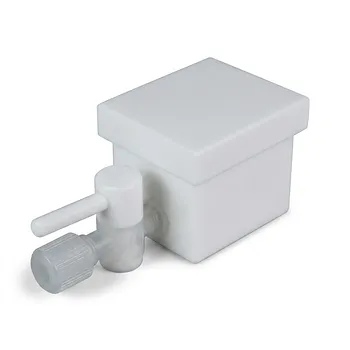
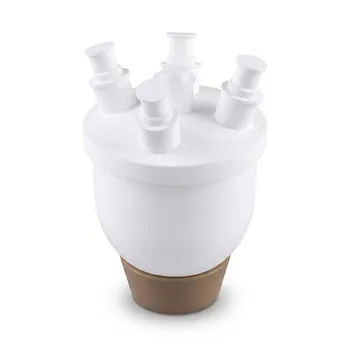
- Custom PTFE Laboratory Apparatus Corrosion Resistant Low Background Reaction Cells Precision CNC Fabrication
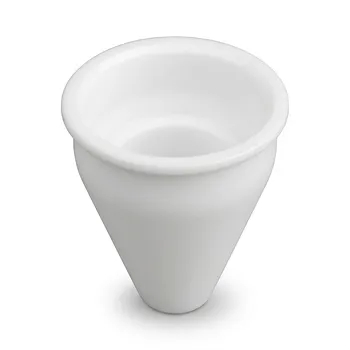
- Custom Machined PTFE Conical Sample Cell Corrosion Resistant Triangular Fluoropolymer Container for Trace Analysis
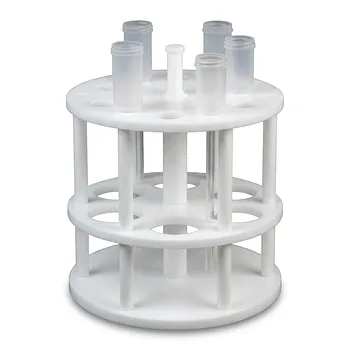
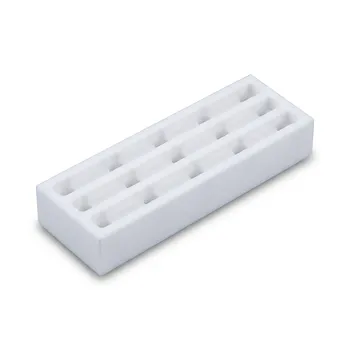
- Custom PFA Microcolumn Racks and PTFE Machined Low Background Corrosion Resistant Laboratory Fixtures
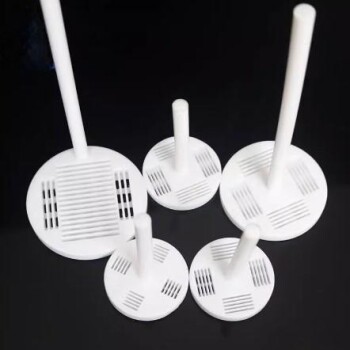
- Custom PTFE Multilayer Reaction Apparatus High Temperature Corrosion Resistant Threaded Modular Sieve System
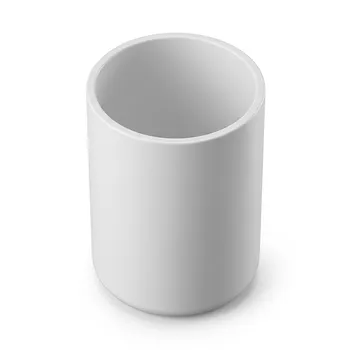
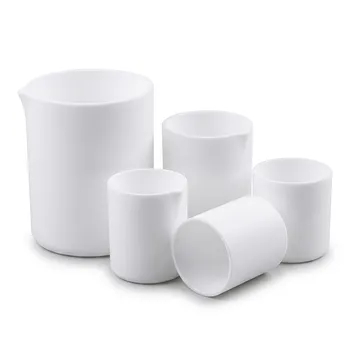
- Heat Resistant Custom PTFE Laboratory Beaker for Hot Plate Heating and Trace Analysis
People Also Ask
- How does PTFE's melting behavior affect custom lab apparatus? Key insights for manufacturing.
- What are the primary fabrication methods for PTFE laboratory apparatus? Expert Insights into Fluoropolymer Engineering
- What is the chemical compatibility range for PTFE laboratory apparatus? Explore Near-Universal Chemical Resistance.
- Why use PTFE or PFA for modified Cu-MOF synthesis? Ensure High Purity and Exceptional Chemical Stability
- What are the primary chemical resistance properties of PTFE laboratory apparatus? Unmatched Purity and Inertness