Drying temperature and powder handling directly determine whether fine-powder PTFE will extrude smoothly and develop the intended properties. Drying coagulated PTFE dispersion at approximately 100°C to 180°C is necessary, but excessive heat combined with particle friction can cause premature fibrillation. The powder then loses its particulate structure, requiring abnormally high paste-extrusion pressure and producing components with poorer mechanical uniformity, structural consistency, and surface quality.
Fine-powder PTFE must remain particulate during drying, storage, and transport, then fibrillate in a controlled manner during paste extrusion. Excessive thermal exposure or mechanical abuse shifts fibrillation to the wrong stage, making extrusion more difficult and reducing the consistency of the finished component.
Why Powder Structure Controls Paste Extrusion
Fine-Powder PTFE Is Not Melt-Processed
Fine-powder PTFE is processed by paste extrusion because it cannot be conventionally melt-processed. The resin is blended with an isoparaffin lubricant, compacted into a preform, forced through a die, and then dried and sintered.
During extrusion, controlled particle deformation and fibrillation create the green strength needed for the unsintered tube or profile to retain its shape. The powder must therefore arrive at the extruder with its original particulate structure substantially intact.
Fibrillation Must Occur During Extrusion
Fibrillation is the formation of a network of elongated PTFE structures under controlled shear and pressure. This network allows the extrudate to hold together before sintering.
When fibrillation occurs prematurely during drying or handling, the resin has less capacity to respond predictably inside the die. The resulting paste generally requires higher pressure and may produce less uniform extrudates.
Extrusion Pressure Is a Process Indicator
A sudden increase in paste-extrusion pressure can indicate that the resin has been damaged by drying conditions, friction, or unsuitable handling. Pressure that is too high can create processing instability and increase the load on the extrusion equipment.
Pressure must also be considered alongside the lubricant ratio, preform quality, reduction ratio, die geometry, and temperature. It is not, by itself, proof that drying caused the problem, but it is an important diagnostic signal.
How Drying Conditions Affect the Resin
Excessive Temperature Promotes Premature Fibrillation
Drying temperatures for coagulated PTFE dispersion commonly fall between 100°C and 180°C. At the upper end of this range, inadequate control can expose particles to excessive thermal stress and make them more vulnerable to deformation during subsequent movement.
The risk increases when heat is combined with mechanical contact, agitation, or friction. The objective is to remove moisture while preserving the agglomerate and particulate structure required for stable paste extrusion.
Friction Is Especially Harmful During Heated Handling
Particle-to-particle friction during drying, transfer, or fluidization can initiate fibrillation before the resin reaches the extruder. Heated powder is more susceptible because the polymer becomes softer and more pliable as it approaches and passes its solid-state transition temperatures.
Consequently, drying equipment and transfer systems should minimize unnecessary agitation, impact, and shear. Temperature control alone is insufficient if the powder is mechanically abused while hot.
Drying Uniformity Affects Component Uniformity
Uneven drying can create resin populations with different degrees of pre-fibrillation. Those differences may appear later as variations in extrusion pressure, wall thickness, density, surface finish, or mechanical performance.
Consistent drying therefore supports not only stable processing but also repeatability between batches and across sections of the same extruded profile.
How Storage and Transport Protect Processability
Keep Resin Below Its Critical Transition During Handling
For TFE homopolymer fine powders, the primary transition of concern is approximately 19°C. Storage and transport below this temperature help limit particle deformation, shear damage, and unwanted pre-fibrillation.
A practical handling strategy is to keep the resin cold, preferably below the transition by a meaningful margin, while avoiding temperature cycling that can repeatedly soften and stiffen the particles.
Separate Storage Conditions From Extrusion Conditions
The resin should be protected from deformation during storage and handling, but it must become sufficiently deformable during paste extrusion for controlled fibrillation to occur. The relevant temperature window is therefore different for each processing stage.
In the extrusion operation, the preform and paste are typically processed at temperatures above the resin's lower transition range, often around or above 30°C, depending on the formulation and equipment. The exact operating condition must be established for the specific resin, lubricant system, die, and reduction ratio.
Avoid Mechanical Damage During Transfer
Pneumatic conveying, aggressive mixing, repeated compaction, and rough transfer can introduce shear and friction into the resin. These effects are particularly undesirable if the powder has warmed above its handling transition.
Transfer systems should maintain the intended temperature and use the lowest mechanical stress compatible with reliable movement and blending.
How Process Control Converts Powder Quality Into Part Performance
Lubricant Distribution Must Be Uniform
Fine-powder PTFE is blended with an isoparaffin lubricant to enable paste extrusion. Rolling or another controlled blending method allows the lubricant to diffuse evenly over the particle surfaces.
Uneven lubricant distribution can create local differences in flow resistance and compaction, making it difficult to distinguish a drying-related problem from a formulation or blending problem.
Preforming and Reduction Ratio Matter
The lubricated blend is compacted into a tubular or shaped preform before entering the paste extruder. Preform density and integrity affect how evenly the paste responds to hydraulic ram pressure.
The reduction ratio, which compares barrel cross-sectional area with die-orifice area, also strongly affects extrusion pressure and fibrillation. A damaged resin may become especially difficult to process at high reduction ratios.
Sintering Determines the Final Structure
The green extrudate is subsequently dried to remove lubricant and sintered to develop the final PTFE structure. A controlled extrusion history provides a more uniform starting point for these thermal steps.
When the powder has been pre-fibrillated, the finished component may show reduced mechanical consistency, nonuniform structure, poorer surface quality, or less predictable dimensional behavior.
Component Performance Depends on Structural Consistency
For tubing and fluid-handling components, uniform structure supports reliable pressure performance and leak resistance. Smooth, consistent surfaces also help preserve PTFE's non-wetting behavior and reduce the risk of sample retention or contamination in high-purity laboratory applications.
These performance benefits depend on the entire process chain: resin morphology, drying, storage, blending, preforming, extrusion, lubricant removal, and sintering.
Understanding the Trade-offs
Higher Drying Temperature Can Improve Throughput but Increase Risk
Higher drying temperatures may accelerate moisture removal, but they reduce the margin for error when particle contact and friction are present. The relevant optimization is not simply the fastest drying cycle; it is the fastest cycle that preserves the resin structure.
Temperature, residence time, airflow, powder movement, and equipment design must therefore be evaluated together.
Cooling Protects the Powder but Adds Handling Complexity
Keeping resin below its transition temperature reduces premature deformation, but it may require controlled storage, refrigerated transport, and thermal equilibration before blending or extrusion. Condensation and temperature gradients must also be managed so that cooling does not introduce moisture or inconsistent processing conditions.
Cold handling is valuable only when the subsequent transition to extrusion conditions is controlled.
High Extrusion Pressure Is Not Always a Resin Failure
Extrusion pressure also depends on particle size, lubricant content, preform density, die dimensions, reduction ratio, and operating temperature. Fine powders with very small primary particles can require higher pressure, while larger particles may reduce strength even if extrusion is easier.
Pressure trends should therefore be interpreted with resin characterization and process records rather than used as an isolated acceptance criterion.
Over-Handling Can Be as Damaging as Overheating
A compliant drying temperature does not guarantee good resin if the powder is subjected to severe friction or fluidization. Conversely, gentle handling can reduce risk but cannot compensate for an excessively hot or prolonged drying cycle.
The process must control both thermal exposure and mechanical exposure.
Making the Right Choice for Your Goal
The most reliable approach is to treat powder preservation as a process-control requirement, not merely a storage preference.
- If your primary focus is stable paste-extrusion pressure: Dry within the qualified temperature range, minimize hot-powder friction, and monitor pressure together with lubricant ratio, preform density, and reduction ratio.
- If your primary focus is mechanical strength and uniformity: Preserve the particulate structure through drying and handling so that fibrillation occurs primarily during controlled extrusion.
- If your primary focus is high-quality tubing and fluid-transfer components: Control powder temperature, blending, die reduction, lubricant removal, and sintering as one linked process.
- If your primary focus is resin storage and transport: Keep fine-powder PTFE below its relevant transition temperature, avoid temperature cycling, and minimize shear, impact, and aggressive transfer.
- If your primary focus is troubleshooting high extrusion pressure: First examine drying temperature, hot-powder friction, handling history, lubricant distribution, particle size, preform quality, and die conditions before changing the extrusion equipment.
Protecting the powder before extrusion gives the process control it needs to create consistent PTFE components with predictable structural and mechanical properties.
Summary Table:
| Factor | Impact on Paste Extrusion | Impact on Material Properties |
|---|---|---|
| Drying temperature (100-180°C) | Excessive heat promotes premature fibrillation, increasing extrusion pressure | Nonuniform structure, reduced mechanical consistency |
| Powder handling (friction, agitation) | Premature fibrillation during handling raises extrusion pressure | Poorer surface quality, dimensional inconsistency |
| Storage temperature (<19°C) | Keeps particles intact, preserving extrudability | Consistent structure and mechanical properties |
| Lubricant distribution uniformity | Ensures even flow, reducing pressure variations | Uniform density and wall thickness |
| Preform density and reduction ratio | Affects pressure and fibrillation control | Stronger, more uniform final parts |
| Sintering process | Controlled extrusion history leads to uniform sintering | Optimal mechanical strength and surface finish |
Optimize your PTFE component manufacturing with KINTEK's high-performance fluoropolymer solutions. Our precision-engineered PTFE and PFA labware, tubing, fittings, and custom CNC-machined parts ensure consistent quality and reliability. Contact our experts today to enhance your process and product performance – get in touch now!
Related Products
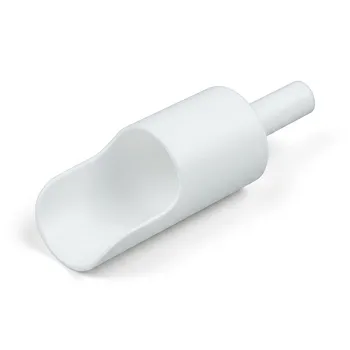
- Custom PTFE Pharmaceutical Sampling Scoop Low Leaching Cylindrical Chemical Powder Sampler Zero Contamination High Purity Laboratory Shovel
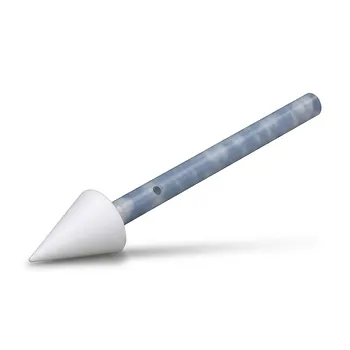
- High Temperature Resistant PTFE Solid Sampler Corrosion Resistant Non Leaching Reusable Biopharmaceutical White Powder Sampling Device
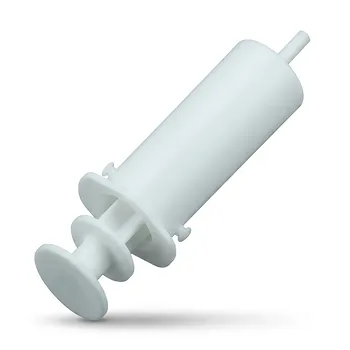
- High Purity Laboratory Grade PTFE Syringe Chemical Resistant Fluoropolymer Injector for Trace Analysis
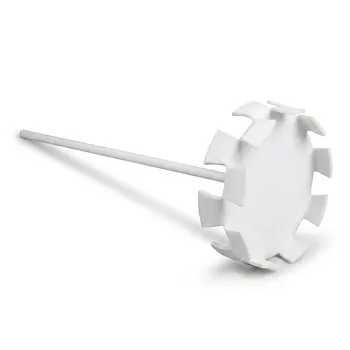
- PTFE Dispersion Disk Food Cosmetic Grade Non Stick Corrosion Resistant Large Stirring Paddle Customizable Impeller
- Custom PTFE Petri Dishes Corrosion Resistant High Purity Low Background Labware
People Also Ask
- What factors should be considered when selecting a PTFE shovel for laboratory use? Ensure Chemical Inertness & Sample Integrity
- How does the durability of PTFE shovels compare to plastic shovels? Discover the Superior Choice for Harsh Conditions
- What are the advantages of PTFE shovels over metal shovels? Precision Handling for Sensitive Materials
- How does the ergonomic design of PTFE shovels benefit users? Reduce Strain and Boost Lab Efficiency
- What are some specific applications of PTFE shovels in the laboratory? Ensure Sample Purity and Safety