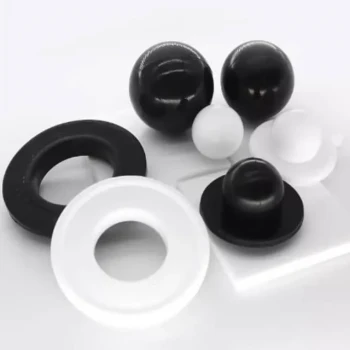
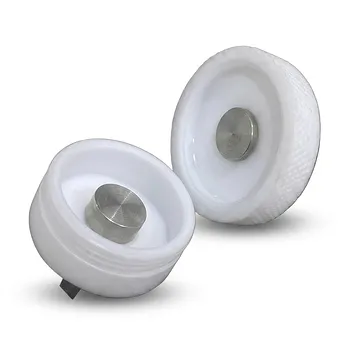
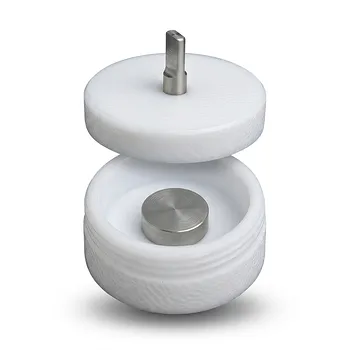
PTFE’s chemical inertness is the primary safeguard against contamination and performance loss during the assembly of reactive battery components. By leveraging exceptionally strong carbon-fluorine bonds, PTFE components resist degradation when exposed to aggressive substances like sodium metal, sulfide electrolytes, and lithium salts. This prevents the formation of resistive layers and ensures the electrochemical purity of the cell.
Core Takeaway: PTFE serves as an ultra-stable barrier that prevents parasitic side reactions and ion leaching during battery assembly. This inertness is critical for maintaining the high-purity environment required for modern lithium-ion, sodium-ion, and solid-state battery performance.
The Molecular Foundation of Inertness
The Strength of Carbon-Fluorine Bonds
The chemical stability of PTFE is derived from its carbon-fluorine (C-F) bonds, which are among the strongest in organic chemistry. With a bond energy of approximately 485 kJ/mol, these bonds require immense energy to break, making the material nearly impervious to chemical attack.
Steric and Electronic Shielding
PTFE consists of a carbon backbone shielded by a dense, helical sheath of fluorine atoms. This electron-dense surface provides both steric protection (physical blocking) and electronic repulsion, preventing reactive agents from interacting with the carbon chain.
Non-Polar Surface Characteristics
The non-polar nature of PTFE ensures that it does not react with or attract polar solvents and ions. This characteristic prevents the material from swelling or dissolving when in contact with aggressive battery electrolytes or organic carbonate solvents.
Safeguarding Battery Performance
Elimination of Side Reactions
During the compaction of battery materials, reactive components like sulfide electrolytes can easily trigger side reactions with standard materials. PTFE’s inertness ensures that no metal-ion contamination or fluoride leaching occurs, preserving the intended chemistry of the cell.
Preventing Resistive Layer Formation
If a mold or clamp reacts with the battery components, it can create resistive layers on the electrode surfaces. These layers impede ion flow and significantly degrade cell performance; PTFE eliminates this risk by remaining completely passive during the assembly process.
Maintaining Electrolyte Purity
PTFE components prevent the introduction of parasitic reactions that could otherwise destabilize the electrolyte. By ensuring no ions are leached into the system, PTFE maintains the long-term stability of reference measurements during continuous battery testing.
Ensuring Structural Integrity in Hostile Environments
Resistance to Aggressive Acids and Bases
Battery assembly often involves exposure to sulfuric acid or alkaline solutions. PTFE remains unaffected by these substances, whereas other polymers might degrade, crack, or lose their structural shape.
High-Purity Chemical Handling
PTFE is the standard for components that must handle lithium hexafluorophosphate and other high-purity reagents. Its ability to remain non-soluble ensures that no impurities are introduced into the electrochemical system during the sensitive filling or sealing stages.
Understanding the Trade-offs
Sensitivity to Alkali Metals
While PTFE is highly resistant to most chemicals, it can exhibit reactivity to alkali metals (such as pure lithium or sodium) under specific high-energy conditions. While generally used successfully for molds, users must monitor for surface discoloration when in direct, prolonged contact with molten alkali metals.
Mechanical Softness
PTFE is a relatively soft polymer compared to metallic assembly tools. While its chemical resistance is superior, it may undergo deformation or "creep" under extreme mechanical loads if the component design does not account for its lower structural hardness.
Applying PTFE to Your Battery Project
Recommendations for Assembly and Testing
- If your primary focus is preventing electrode contamination: Utilize PTFE-lined molds and holders to ensure that no foreign ions or leached fluorides interfere with the interface between the electrolyte and the active material.
- If your primary focus is testing aggressive new chemistries: Standardize on PTFE clamps and fittings, as their near-universal compatibility allows you to switch between acidic, basic, and organic solvent electrolytes without replacing hardware.
- If your primary focus is high-pressure solid-state compaction: Use PTFE-sleeved dies to minimize side reactions with sulfide or oxide electrolytes, but ensure the outer housing provides the necessary mechanical support.
By serving as a chemically invisible participant in the assembly process, PTFE ensures that the final battery performance is a true reflection of your materials rather than a result of environmental contamination.
Summary Table:
| Feature | Benefit to Battery Assembly |
|---|---|
| C-F Bond Strength | Resists degradation from aggressive electrolytes and salts. |
| Steric Shielding | Protects internal molecular structure from chemical attack. |
| Non-Polar Nature | Prevents material swelling or dissolution in organic solvents. |
| Surface Inertness | Eliminates metal-ion contamination and resistive layer formation. |
Elevate Your Battery Research with KINTEK’s High-Purity Fluoropolymer Solutions
Precision in battery assembly requires materials that never compromise your chemistry. KINTEK specializes in high-performance PTFE and PFA laboratory supplies, offering everything from everyday basics—like beakers, centrifuge tubes, and reagent bottles—to specialized trace analysis instruments and fluid transfer components including tubing and valves.
Our expertise extends to advanced battery testing fixtures, including custom electrochemical cells, hydrothermal synthesis liners, and microwave digestion vessels. Whether you need high-volume consumables like O-rings and gaskets or complex, non-standard machined parts, our end-to-end custom CNC fabrication ensures your setups are perfectly tailored to your reactive battery projects.
Safeguard your electrochemical purity today. Contact KINTEK for bespoke laboratory solutions and experience the advantage of our exclusive focus on high-performance fluoropolymers.
Related Products
- Custom PTFE Parts Manufacturer for Teflon Containers and Components
- Custom PTFE and Nitrile Diaphragm Pump Components for Demanding Applications
- Corrosion Resistant PTFE Coin Cell Battery Testing Clamps and Acid Proof Custom Fluoropolymer Battery Fixtures
- Acid Resistant PTFE Button Cell Battery Test Fixture Customizable Machining High Purity Electrochemical Testing Clamp
- Custom PTFE Sleeves and Hollow Rods for Advanced Applications
People Also Ask
- What design considerations are important for custom PTFE parts? Design for Performance & Reliability
- What industries use custom PTFE parts and for what purposes? Solve Critical Challenges with High-Performance Materials
- What advantages do custom PTFE parts offer for industrial efficiency? Boost Uptime & Cut Costs
- What industries benefit most from custom PTFE parts? Solve Extreme Environment Challenges
- What are the main advantages of using PTFE for custom parts? Solve Complex Engineering Challenges