Surface modification makes fluoropolymers more chemically robust and more functionally selective without requiring a change to the bulk material. Replacing shorter fluoroalkoxy surface groups with longer-chain fluoroalkoxy groups can substantially improve resistance to organic liquids and aggressive solvents. Other treatments, including plasma patterning and alkaline activation, can add controlled hydrophilicity or reactive chemical groups while preserving the fluoropolymer’s underlying mechanical strength.
The central advantage is surface-specific engineering: the surface can be made more resistant, selectively wettable, or biologically active while the bulk fluoropolymer retains its thermal stability, flexibility, strength, and inherent chemical inertness.
Why Fluoropolymer Surfaces Resist Organic Liquids
Strong carbon–fluorine chemistry
Fluoropolymers derive their stability from strong carbon–fluorine bonds and low surface energy. Their fluorinated segments preferentially migrate toward the material–environment interface, forming a chemically shielded, low-energy surface.
This structure limits interaction with many organic liquids, reduces solvent penetration, and helps prevent chemical degradation.
Fluorine content limits swelling
Chemical resistance is influenced not only by the surface treatment but also by the polymer’s overall fluorine content. Higher fluorine content generally reduces solvent absorption and volume swelling.
For example, increasing fluorine content from 65% to 71% can reduce swelling in aromatic hydrocarbons such as benzene from approximately 20% to 3%. This distinction matters in seals, joints, storage tanks, and fluid-transfer components, where swelling can cause dimensional failure.
Crystallinity adds another barrier
Highly crystalline fluoropolymers typically resist solvent permeation and swelling more effectively than highly amorphous materials. Tightly packed crystalline regions make it more difficult for aggressive organic reagents to penetrate the polymer.
Accordingly, surface modification and appropriate bulk morphology should be considered together when long-term chemical durability is required.
How Surface Modification Improves Chemical Resistance
Longer-chain fluoroalkoxy groups create a more resistant interface
Replacing shorter fluoroalkoxy surface groups with longer-chain fluoroalkoxy groups changes the chemistry of the outermost interface. The modified surface presents a more fluorinated, low-energy barrier to organic liquids and harsh solvents.
The practical result is improved resistance to liquid contact, reduced solvent interaction, and better preservation of surface integrity during demanding chemical operations.
The bulk properties remain largely intact
Because the modification is concentrated at the surface, it can tailor chemical behavior without reformulating or restructuring the entire polymer. This is valuable when the existing fluoropolymer already provides the required mechanical performance.
A component can therefore retain its bulk flexibility, strength, thermal resistance, and dimensional characteristics while gaining a more protective outer surface.
Surface modification complements material selection
Surface treatment is not a substitute for selecting a suitable fluoropolymer. PTFE, PFA, and other highly fluorinated materials already provide strong resistance to aggressive solvents, while blends such as PTFE with FEP or PFA can improve coating protection and service longevity.
The most reliable design combines appropriate resin chemistry, fluorine content, crystallinity, and surface treatment.
How Modification Creates Functional Versatility
Plasma etching produces patterned wettability
Fluoropolymer surfaces are naturally hydrophobic and often oleophobic because of their low surface energy. Plasma etching can selectively alter this behavior, particularly when applied through masks or controlled treatment patterns.
The result is a surface containing distinct hydrophilic and hydrophobic motifs rather than one uniform wetting state.
Patterned surfaces control fluid movement
Hydrophilic regions attract aqueous fluids, while untreated or more fluorinated regions continue to repel them. This contrast enables localized fluid spreading, confinement, transport, or separation.
Such control is useful in microfluidic devices, analytical platforms, printing systems, and other applications requiring selective fluid placement.
Nanostructure can amplify hydrophobicity
When fluoropolymers are formed into high-surface-area nanofiber mats, low fluorocarbon surface energy combines with microscale roughness. This can produce superhydrophobic behavior, with reported water contact angles reaching approximately 155°–160°, compared with around 104° for standard cast films.
The same surface can then be selectively made more hydrophilic through plasma treatment or chemical modification, creating precise wetting contrasts.
Alkaline treatment introduces reactive groups
Treatment with strong bases can introduce surface hydroxyl groups onto a fluoropolymer. These groups provide chemical handles for covalent attachment of other molecules.
This converts an otherwise inert surface into a platform capable of immobilizing biomolecules, including components needed for specialized cardiovascular apparatus and advanced bioanalytical laboratory systems.
Biomolecule immobilization adds biological function
Covalent immobilization is more durable than relying solely on weak physical adsorption. The surface can be engineered to present selected biological molecules while the fluoropolymer substrate continues to provide chemical resistance and low interaction with surrounding fluids.
This combination is particularly valuable where a device must be both biologically functional and resistant to aggressive cleaning or process chemicals.
Understanding the Trade-offs
A more functional surface may be less uniformly inert
The untreated fluoropolymer surface is highly inert, hydrophobic, and low energy. Introducing hydroxyl groups or hydrophilic patterns intentionally reduces that uniform inertness in selected areas.
That is beneficial for fluid control or biomolecule attachment, but it requires careful control when the application depends on minimal surface interaction everywhere.
Surface treatments require process control
Plasma exposure, strong-base treatment, and chemical substitution must be controlled for treatment intensity, pattern definition, reaction time, and post-treatment handling. Excessive treatment can produce nonuniformity or affect surface durability.
The modification should therefore be validated under the actual solvent, temperature, sterilization, and mechanical conditions of use.
Aggressive reagents create equipment risks
Strong alkaline solutions and organic solvents can attack conventional glass or low-grade plastic laboratory vessels. Degraded containers may contaminate samples or compromise process repeatability.
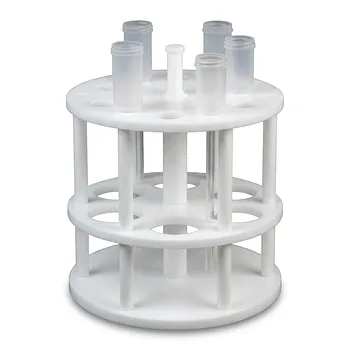
High-purity PTFE or PFA tanks, reaction dishes, delivery lines, and related labware provide a chemically resistant environment for carrying out these treatments.
Direct fluorination is powerful but difficult
Gaseous elemental fluorine can strongly enhance surface inertness, barrier behavior, and gas-permeation characteristics. However, it is highly reactive and difficult to control safely.
Fluorination in perfluorinated solvent systems can provide a more manageable route for controlled surface enhancement without unnecessarily damaging the underlying polymer.
How to Apply This to Your Project
Surface engineering should begin with the required chemical exposure and then add only the functionality the application needs.
- If your primary focus is organic-solvent resistance: Select a highly fluorinated, suitably crystalline fluoropolymer and consider longer-chain fluoroalkoxy surface groups to strengthen the liquid-contact barrier.
- If your primary focus is dimensional stability: Prioritize high fluorine content, appropriate crystallinity, and compatibility testing against the specific solvent, temperature, and exposure duration.
- If your primary focus is microfluidic or printing control: Use masked plasma treatment or another localized method to create defined hydrophilic and hydrophobic regions.
- If your primary focus is biological integration: Introduce surface hydroxyl groups under controlled alkaline conditions, then use them as sites for covalent biomolecule immobilization.
- If your primary focus is process reliability: Perform modification in high-purity PTFE or PFA equipment to minimize chemical attack, contamination, and variation between batches.
The most effective fluoropolymer design separates bulk performance from surface function, allowing each to be optimized for its specific role.
Summary Table:
| Aspect | Key Points |
|---|---|
| Chemical Resistance | Longer-chain fluoroalkoxy groups, higher fluorine content, and crystallinity enhance resistance to organic liquids. |
| Surface Modification | Plasma etching and alkaline activation introduce hydrophilicity or reactive groups while preserving bulk properties. |
| Functional Versatility | Patterned wettability, superhydrophobicity, and biomolecule immobilization enable specialized applications. |
| Trade-offs | Surface treatments require process control and may reduce uniform inertness. |
| Application Guidance | Choose modification strategy based on primary focus: solvent resistance, dimensional stability, fluid control, or biological integration. |
Ready to enhance your fluoropolymer components with surface modification? At KINTEK, we specialize in high-performance PTFE and PFA labware, from custom machined parts to complete systems. Contact us today to discuss your application and discover how our expertise can deliver the durability and versatility you need. Contact us now.
Related Products
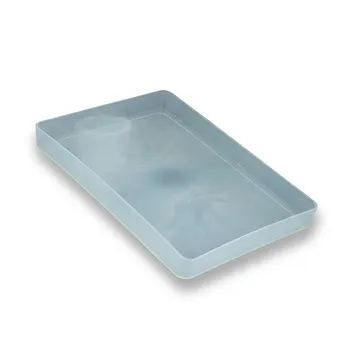
- Customizable PFA Square Tray Corrosion Resistant High Temperature Large Petri Dish Electrolytic Cell
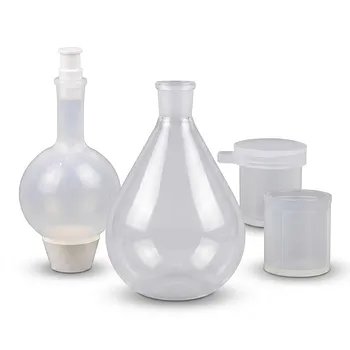
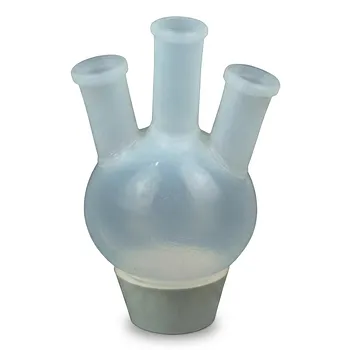
- PFA Eggplant Flask Custom Molded Pear Shaped Laboratory Flask Corrosion Resistant Glass Alternative
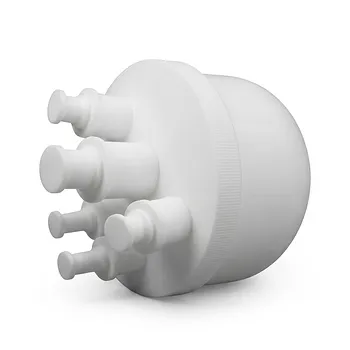
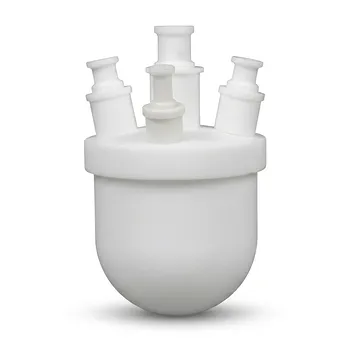
- Custom Multi Neck PTFE Flask for Chemical Engineering and High Purity Laboratory Synthesis Applications
- Customizable PTFE Scrapers and Shovels for Demanding Applications
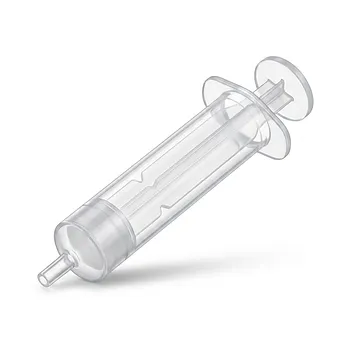
- Corrosion Resistant PFA Syringe Translucent Visual Fluoropolymer Labware 10ml Chemical Handling Tool
People Also Ask
- How are electrolytic cells utilized in the Hall-Héroult process? Optimizing Purity and Energy Efficiency
- What are the primary components required for the construction of a standard electrolytic cell? Essential Hardware Guide
- How does the incorporation of comonomers such as perfluoropropyl vinyl ether (PPVE) alter the molecular structure and processing characteristics of TFE-based fluoropolymers like PFA compared to standard PTFE?
- How are electrolytic cells applied in wastewater treatment and contaminant removal? Achieve Chemical-Free Purification
- What is the fundamental operating principle of an electrolytic cell? Master Energy-Driven Redox Reactions