Operating temperature is a primary determinant of PTFE fracture behavior. Below approximately 19°C, PTFE has limited molecular mobility and becomes more vulnerable to crack initiation and brittle propagation. Above its ambient phase-transition region, roughly 19–25°C, molecular mobility enables plastic deformation and fibril bridging, which generally increases energy absorption and fracture toughness. At elevated temperatures, however, PTFE softens, loses stiffness and strength, and becomes more susceptible to deformation, creep, and loss of dimensional reliability.
Temperature changes the failure mode of PTFE: cold conditions increase the risk of sudden brittle fracture, while hot conditions increase the risk of yielding, creep, distortion, and pressure-rating loss.
Why Temperature Changes PTFE Fracture Toughness
Below the ambient phase transition
In the lower-temperature regime, PTFE is associated with Phase II, where restricted molecular mobility limits the polymer’s ability to plastically deform around a crack tip.
As a result, a crack can propagate with relatively little energy absorption through cleavage-like fracture or microvoid coalescence. This is especially important for components exposed to impact, sudden loading, tight interference fits, or pre-existing machining defects.
Above approximately 19°C
In the higher-temperature phases commonly encountered above the transition region, PTFE chains have greater mobility. Localized plastic deformation can occur near the crack tip, forming micro-fibrils that bridge the crack surfaces.
These fibrils dissipate strain energy and slow crack growth. In practical terms, PTFE is generally more damage-tolerant at ordinary laboratory temperatures than it is in a cold room or cryogenic environment.
Fracture toughness is not the same as stiffness
A stiffer material is not automatically a tougher material. At low temperatures, PTFE becomes stiffer and its yield stress increases, but its reduced ductility makes crack propagation more abrupt.
At higher temperatures, PTFE can absorb more fracture energy through plastic deformation, yet its lower modulus and strength can allow a component to deform substantially before fracture becomes the governing failure mode.
How Temperature Affects Mechanical Reliability
Low-temperature reliability is governed by brittle failure
Cold PTFE components may tolerate static loads yet fail when subjected to a sudden impact or a stress concentration. Typical vulnerable locations include sharp internal corners, threads, drilled holes, thin sections, scratches, and tool marks.
A fitting or vessel that appears adequately rated at room temperature should not automatically be assumed safe at sub-ambient temperatures. The same defect that is stable at room temperature may become the starting point for rapid crack growth when the component is cold.
Elevated-temperature reliability is governed by deformation
As temperature rises, PTFE’s elastic modulus, yield stress, tensile strength, and hardness decrease, while elongation generally increases. The material therefore becomes more flexible and less capable of supporting sustained mechanical or pressure loads without deformation.
The supplementary data indicate a substantial modulus reduction with temperature, from approximately 600 MPa at 25°C to around 100 MPa at 150°C, and below 50 MPa at 250°C. These values should be treated as representative rather than universal because grade, crystallinity, processing, fillers, geometry, and test method all affect the result.
Creep becomes increasingly important
At elevated temperature, a PTFE component may not fracture immediately but can gradually deform under a constant load. This can cause seal relaxation, dimensional drift, joint loosening, permanent bending, and loss of containment.
For laboratory pressure vessels, valve seats, tubing supports, and threaded fittings, long-duration performance may therefore be controlled by creep rather than short-term tensile strength.
Thermal cycling creates additional risk
Repeated movement between cold and warm conditions can combine both failure mechanisms. Cooling reduces ductility and increases brittle-fracture sensitivity, while heating promotes softening and creep.
Differential thermal expansion between PTFE and adjacent glass, metal, or ceramic parts can also impose additional stresses. Constrained components are particularly vulnerable because they cannot freely expand or contract.
Design Implications for PTFE Laboratory Components
Evaluate the actual service temperature
Use the lowest and highest component temperatures, not merely the surrounding room or bath temperature. A fitting may be locally colder near a cryogenic fluid or locally hotter near a heated vessel, seal, or process stream.
The relevant condition is often the temperature during startup, shutdown, cleaning, or upset operation rather than the nominal steady-state temperature.
Treat cold service as an impact-sensitive application
For low-temperature use:
- Avoid sudden loading and impact.
- Reduce stress concentrations with generous radii.
- Inspect for scratches, chips, and machining marks.
- Avoid forcing cold PTFE parts into tight fits.
- Review pressure and torque ratings specifically for the cold condition.
- Allow components to reach a controlled temperature before applying load where practical.
The objective is to prevent a small flaw from becoming a rapidly propagating crack.
Treat hot service as a deformation-sensitive application
For elevated-temperature use:
- Recalculate pressure and load ratings.
- Check dimensional stability over the full exposure time.
- Account for creep in seals, supports, and threaded connections.
- Provide external support where PTFE is carrying sustained load.
- Recheck clearances and compression after thermal expansion.
- Avoid relying on room-temperature stiffness data.
A component that remains intact may still be unsuitable if it has distorted enough to compromise sealing, alignment, flow control, or containment.
Account for component geometry
Material data alone do not determine reliability. Thin walls, long unsupported spans, sharp corners, deep threads, and holes can substantially increase local stress.
A robust design uses temperature-appropriate material data together with the actual geometry, loading mode, duration, and flaw sensitivity of the component.
Understanding the Trade-offs
Cold PTFE: stronger but less damage-tolerant
Lower temperatures can increase stiffness and yield stress, which may appear beneficial for load support. The trade-off is reduced molecular mobility and ductility, producing a higher risk of sudden brittle fracture.
This makes cold PTFE particularly sensitive to impact, notches, assembly damage, and rapid pressure changes.
Hot PTFE: tougher in crack-tip deformation but weaker structurally
Higher temperatures promote plastic deformation and fibril bridging, which can improve resistance to stable crack growth. At the same time, reduced modulus and yield stress increase the likelihood of creep, collapse, leakage, and permanent deformation.
Therefore, “higher fracture toughness” at elevated temperature does not mean that a component has a higher overall load or pressure rating.
Ratings cannot be transferred directly across temperatures
A room-temperature rating is not a universal rating. Temperature-dependent properties, component geometry, exposure duration, and loading history must be considered together.
The commonly cited PTFE operating range—approximately −73°C to 204°C in the supplied reference—should be treated as a material-use guideline, not a substitute for a component-specific design assessment.
Do not confuse PTFE with PFA data
PFA has related fluoropolymer behavior but is not interchangeable with PTFE for mechanical design calculations. PFA strength, modulus, hardness, and pressure behavior must be evaluated using PFA-specific data.
How to Apply This to Your Project
Temperature should be incorporated into the component specification before material selection, machining, and testing.
- If your primary focus is cold-room or cryogenic service: Design for reduced ductility and brittle crack propagation, with particular attention to impact, notches, machining defects, thermal contraction, and cold-condition pressure ratings.
- If your primary focus is elevated-temperature service: Design for reduced stiffness and strength, creep, permanent deformation, seal relaxation, and loss of dimensional accuracy over time.
- If your primary focus is pressure containment: Use temperature-specific allowable stresses and verify the complete component geometry rather than relying on room-temperature material ratings.
- If your primary focus is repeated heating and cooling: Evaluate thermal cycling, differential expansion, assembly constraints, and inspection requirements in addition to steady-state temperature.
- If your primary focus is long-term reliability: Test or qualify the actual PTFE grade, geometry, loading duration, and temperature history under representative service conditions.
A reliable PTFE component is one designed for its complete thermal and mechanical history—not merely for its nominal operating temperature.
Summary Table:
| Temperature Range | Fracture Toughness | Mechanical Reliability | Key Risks |
|---|---|---|---|
| Below ~19°C | Reduced ductility, brittle crack propagation | Risk of sudden fracture from impact or defects | Brittle failure, notch sensitivity |
| ~19–25°C | Enhanced plastic deformation, fibril bridging | Balanced strength and ductility | Optimal for most applications |
| Above ~25°C (up to 204°C+) | Increased toughness via plastic deformation but reduced strength | Softening, creep, loss of stiffness | Deformation, creep, seal relaxation |
Ensure your PTFE lab components are engineered for your specific temperature conditions. KINTEK offers high-performance PTFE and PFA labware, from basic beakers to custom CNC-machined parts. Whether you need cryogenic-grade or high-temperature solutions, our expertise ensures reliable performance. Contact us today to discuss your requirements and benefit from our tailored support. Contact us now!
Related Products
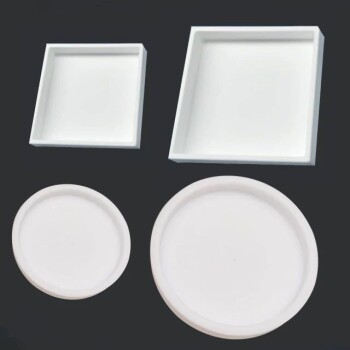
- Custom PTFE Parts Manufacturer for Teflon Containers and Components
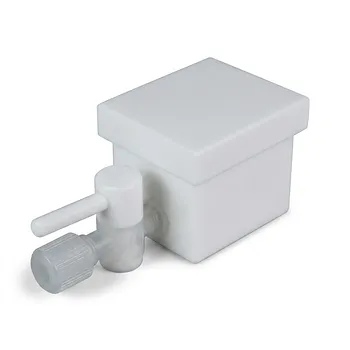
- Custom PTFE Laboratory Apparatus Corrosion Resistant Low Background Reaction Cells Precision CNC Fabrication
- Custom Machined Molded PTFE Teflon Parts Manufacturer for Laboratory ITO FTO Conductive Glass Cleaning Flower Basket
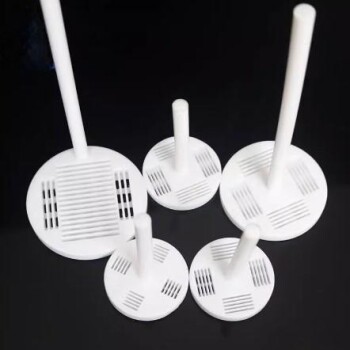
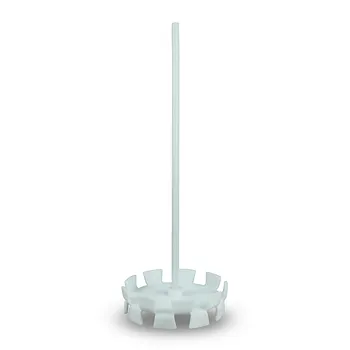
- Corrosion Resistant PTFE Dispersing Disc and High Temperature Propeller Stirring Paddle for Laboratory Chemical Mixing
- Large Scale PTFE Beakers and Flasks for High Temperature Corrosion Resistant Laboratory Applications with Custom CNC Fabrication
People Also Ask
- What design considerations are important for custom PTFE parts? Design for Performance & Reliability
- What industries use custom PTFE parts and for what purposes? Solve Critical Challenges with High-Performance Materials
- What advantages do custom PTFE parts offer for industrial efficiency? Boost Uptime & Cut Costs
- What industries benefit most from custom PTFE parts? Solve Extreme Environment Challenges
- What are the main advantages of using PTFE for custom parts? Solve Complex Engineering Challenges