Microscopic chain folding is the link between PTFE’s molecular structure and its final particle density. During aqueous emulsion polymerization, growing TFE chains extend and then fold into hairpin-shaped segments as surface-energy effects favor a more compact arrangement. Repeated folding creates accordion-like crystallites that develop from ribbon-shaped crystals into rods and, under suitable interfacial conditions, dense spherical particles.
PTFE density is not determined by chain length alone. It emerges from how chains fold into crystallites, how those crystallites pack inside primary particles, and how particle geometry is controlled during polymerization and subsequent sintering.
How Chain Folding Creates PTFE Crystallites
Growing Chains Reach a Folding Regime
In emulsion polymerization, TFE is converted into long, linear fluorocarbon chains within an aqueous dispersion. According to the reference model, chains extend to roughly 100 carbon atoms before surface-energy effects make continued extension less favorable than folding.
The chain then bends back into a hairpin configuration. This folding reduces the exposed molecular surface and allows fluorinated segments to organize into a more compact crystalline arrangement.
Repeated Folding Produces an Accordion Structure
A single hairpin is only the beginning. Continued folding stacks sections of the same chain into an accordion-like crystallite.
This geometry is important because it converts extremely long molecular chains into organized, compact structural units. The resulting crystallites act as the building blocks of the PTFE primary particle.
Particle Geometry Evolves During Polymerization
The developing structure can progress through several recognizable forms:
- Ribbon-shaped single crystals
- Rod-like crystallites or particles
- Spherical particles formed through further folding and aggregation
The final particle shape depends on both molecular folding and the surrounding aqueous interface. Folding establishes the internal crystalline structure; surface tension and surfactant conditions influence how those structures assemble externally.
Why Folding Increases PTFE Density
Compact Crystallites Reduce Internal Void Space
Accordion folding places many chain segments close together. When these crystallites aggregate tightly, they create primary particles with low internal porosity.
The important distinction is between molecular density and bulk powder density. Chain folding does not change the intrinsic density of a PTFE segment by itself, but it helps determine how efficiently crystallites and particles occupy space.
Spherical Particles Pack More Uniformly
At sufficiently high surface tension, particles tend to minimize their Gibbs free surface energy by becoming more spherical. Spherical PTFE particles generally pack more consistently than irregular or highly elongated particles.
That uniformity supports predictable powder handling, consistent compaction, and smoother extrusion behavior. Under lower surface-tension conditions, particles may remain rod-shaped, producing different packing and flow characteristics.
Sintering Converts Packing Into Bulk Density
Fine PTFE powder is commonly compressed and sintered into finished components. During this process, particle contacts consolidate and remaining voids are reduced, allowing the microscopic crystalline arrangement and particle packing to contribute to a dense finished material.
A typical sintered PTFE specific gravity is around 2.22, although the final value depends on resin grade, processing history, porosity, fillers, and thermal conditions.
How Processing Conditions Control the Result
Surface Tension Sets the Preferred Particle Shape
The aqueous polymerization medium provides the interface at which particle shape develops. The supplementary reference associates surface tensions below approximately 18 dyn/cm with rod-shaped particles and values above approximately 25 dyn/cm with more spherical morphologies.
These values should be treated as process-specific guidance rather than universal thresholds. Reactor design, temperature, agitation, surfactant chemistry, and polymerization kinetics also affect the observed morphology.
Surfactant Concentration Stabilizes the Dispersion
Fluorinated surfactant above its critical micelle concentration (CMC) helps stabilize the sub-micron particles and suppress uncontrolled aggregation. Stable dispersions support more consistent particle growth and morphology.
The resulting emulsion can contain particles approximately 0.05 to 0.3 micrometers in diameter. These particles may be used directly in coatings or coagulated and dried into fine powders for molding and sintering.
Molecular Weight Preserves Mechanical Performance
Chain folding organizes the polymer, but the underlying chain length still matters. Unintended chain transfer can terminate growing radicals and reduce molecular weight.
Maintaining the ultra-high molecular weight associated with PTFE is important for mechanical strength, dimensional stability, creep resistance, and service life. Surfactants and additives must therefore stabilize the emulsion without introducing excessive chain transfer.
Core/Shell Design Modifies Processing Behavior
Late addition of comonomer modifiers can create a particle with a high-molecular-weight PTFE core and a modified, lower-molecular-weight shell. This architecture changes how particles fuse and deform during processing.
The shell can reduce melt creep viscosity and limit excessive fibrillation while preserving the core’s chemical resistance and mechanical contribution. In practical terms, the structure allows manufacturers to tune processability without abandoning the dense, durable PTFE morphology required for laboratory components.
How Morphology Affects Finished PTFE Materials
Dense Structure Improves Impermeability
Low-porosity primary particles and effective sintering reduce continuous pathways through the material. This contributes to PTFE’s strong impermeability and barrier performance, which are valuable in fluid-handling parts, reaction vessels, filtration components, and high-purity laboratory containers.
The relationship is indirect but consequential: chain folding creates compact crystallites, compact crystallites support dense particles, and dense particles provide a better starting structure for consolidation.
Uniform Packing Improves Dimensional Consistency
Spherical resin particles tend to distribute and compact more uniformly. This helps reduce local differences in packing density that can otherwise produce variations in shrinkage, void content, or mechanical behavior.
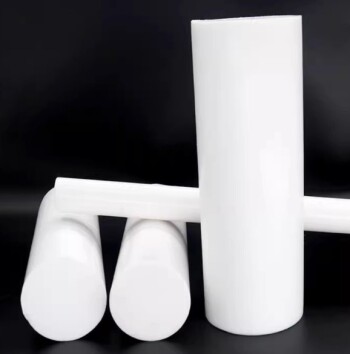
For precision manufacturing, consistent particle morphology is particularly valuable in compression molding, extrusion, and sintering of machined blanks.
Crystalline Organization Supports Durability
PTFE’s crystalline regions reinforce the polymer structure and help maintain its mechanical properties under demanding chemical and thermal exposure. The folded-chain morphology contributes to a consistent crystalline geometry throughout the resin particle.
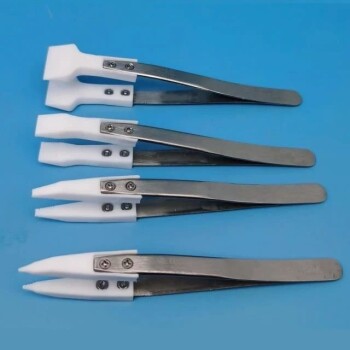
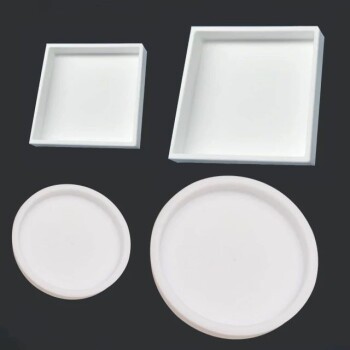
Finished products such as CNC-machined parts, fluoropolymer dishes, and filtration media benefit from the resulting combination of chemical resistance, mechanical durability, and low permeability.
Understanding the Trade-offs
Maximum Density Is Not the Only Objective
The most spherical and tightly packed resin is not automatically the best choice for every process. Particle morphology must match the intended operation, whether that is coating, paste extrusion, compression molding, or sintering.
A resin optimized for smooth packing may behave differently from one designed for controlled fibrillation or specialized extrusion.
High Molecular Weight Improves Strength but Complicates Processing
Long PTFE chains support strength and dimensional stability, but they also increase resistance to flow and make conventional melt processing difficult. This is why core/shell modification and controlled molecular-weight architecture can be useful.
Reducing molecular weight too aggressively, however, can compromise creep resistance and mechanical longevity. Processing gains must be balanced against the properties required in service.
Surfactant Control Requires Multiple Constraints
Increasing surfactant concentration can improve dispersion stability and promote consistent particle formation, but surfactant selection must also avoid unwanted chain transfer and residual contamination.
The process therefore requires simultaneous control of particle stability, molecular weight, purity, and particle shape. Optimizing one variable in isolation can damage another part of the material profile.
Powder Density Is Not Identical to Sintered Density
Fine powders can contain interparticle voids even when their primary particles are internally compact. Sintering history, compression pressure, heating rate, and cooling conditions determine how effectively those voids are removed.
Measurements of raw powder morphology should therefore not be interpreted as a direct prediction of final component density without considering the complete conversion process.
How to Apply This to Your Project
The correct PTFE resin should be selected by connecting microscopic morphology to the required forming and service conditions.
- If your primary focus is maximum density and impermeability: Favor resin morphology that provides compact primary particles, consistent spherical packing, and a controlled sintering process that minimizes residual porosity.
- If your primary focus is precision molding or extrusion: Favor uniform particle geometry and dispersion stability, while selecting molecular-weight or core/shell architecture that provides the required balance between strength and processability.
- If your primary focus is mechanical durability: Preserve very high molecular weight by controlling chain transfer and avoiding surfactant or additive choices that prematurely cap growing chains.
- If your primary focus is high-purity laboratory components: Control surfactant residues, coagulation, drying, and sintering together, because final purity and density depend on the entire processing sequence.
- If your primary focus is coating or dispersion use: Retain the stable aqueous colloid and optimize particle size and surface chemistry rather than treating coagulated powder morphology as the only performance target.
PTFE’s density and crystalline morphology are ultimately engineered through the interaction of chain folding, particle assembly, interfacial control, and consolidation.
Summary Table:
| Factor | Effect on PTFE Morphology & Density | Processing Consideration |
|---|---|---|
| Chain folding | Creates accordion-like crystallites, reducing internal void space | Supports dense particle packing and low porosity |
| Particle shape | Spherical particles pack more uniformly than rods | Improves consistency in molding and extrusion |
| Surface tension | Low (<18 dyn/cm) → rods; high (>25 dyn/cm) → spheres | Adjust reactor conditions to control morphology |
| Surfactant concentration | Above CMC stabilizes dispersion and particle size | Prevents aggregation; may affect molecular weight |
| Molecular weight | High MW preserves mechanical strength | Chain transfer must be minimized |
| Core/shell design | Modified shell tunes processability | Balances strength and ease of processing |
| Sintering | Converts particle packing into bulk density | Key to achieving final density (typical SG ~2.22) |
Ready to optimize your PTFE materials for maximum density and performance? At KINTEK, we specialize in high-performance fluoropolymers, offering a full range of PTFE and PFA labware, custom machined parts, and bespoke solutions. Whether you need standard beakers, high-purity analysis instruments, or complex custom components, our end-to-end CNC machining and expert guidance ensure you get the right product for your application. Contact us today to discuss your requirements and benefit from our precision engineering and reliable supply. Get in touch with us!
Related Products
- Custom PTFE Filtration System Acid Resistant High Purity Semiconductor Grade Chemical Processing Filter
- High Corrosion Resistant PTFE Faucet Polytetrafluoroethylene Valve for Chemical Storage Drums and Fluid Transfer Systems Customizable Industrial Grade
- PTFE PFA Vacuum Filtration System Corrosion Resistant Customizable Shatterproof Laboratory Device
- PTFE Corrosion Resistant Filter with PFA Valve Connections and Integrated Sieve Plate
- High Temperature Chemical Resistant 50ml PTFE Syringe Customized Teflon Injector with Threaded Seal for Trace Analysis
People Also Ask
- What makes PTFE filtration systems advantageous for industrial and scientific use? Unmatched Chemical & Thermal Stability
- What sizes and pore options are available for PTFE filters? Choose the Right Filter for Your Application
- What steps are involved in selecting the proper PTFE filter? A 4-Step Guide to Optimal Filtration
- What temperature resistance do PTFE filters offer? Unmatched Thermal Stability from -200°C to +260°C
- How does the hydrophobicity of PTFE filters benefit their use? Ensure Uninterrupted Gas Flow and Solvent Filtration