Custom CNC machining acts as the critical bridge between theoretical research and physical hardware in high-tech industries. By enabling the fabrication of non-standard, high-purity components from materials like PTFE and PFA, CNC machining allows researchers to create specialized reaction chambers and electrochemical cells that standard laboratory catalog items cannot replicate.
Core Takeaway: Custom CNC machining enables the semiconductor and new energy sectors to bypass the limitations of off-the-shelf equipment, providing the geometric complexity and material purity required to develop next-generation technologies.
Enabling Complex Geometries and Non-Standard Designs
The Power of Five-Axis Precision
High-precision five-axis CNC machining allows for the creation of intricate, non-standard parts that traditional manufacturing cannot achieve. This capability is essential for fabricating complex microfluidic reactors and unique electrochemical cells with specific internal geometries.
Translating Theory into Hardware
Researchers often develop innovative experimental designs that exist only in digital models. Custom CNC fabrication provides a rapid pathway to translate these theoretical designs into physical prototypes, ensuring the hardware meets exact technical specifications for advanced chemical research.
Beyond Standard Equipment
Standard laboratory tools often fail to meet the rigorous demands of semiconductor and new energy research. Custom machining allows for the creation of bespoke reaction vessel lids, sensor brackets, and specialized housings that are tailored to unique experimental setups.
Ensuring Material Purity and Chemical Resistance
The Role of High-Performance Fluoropolymers
The semiconductor and energy sectors rely heavily on materials like PTFE and PFA due to their extreme chemical resistance. CNC machining allows these high-performance fluoropolymers to be shaped into precise components without compromising their structural integrity.
Maintaining High-Purity Fluid Paths
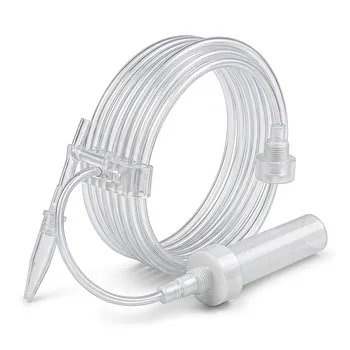
In trace analysis and nanoparticle synthesis, even minor contamination can ruin an experiment. Custom-machined PFA components provide a high-purity fluid path that is resistant to aggressive reagents and high temperatures, ensuring the integrity of the final product.
Solving Challenges in Corrosive Environments
For the new energy sector, equipment must often withstand highly corrosive liquids. Custom-machined seals, gaskets, and linings provide a tight, reliable fit that prevents leaks and equipment failure in harsh chemical environments.
Facilitating the Path to Industrialization
Scaling Laboratory Innovation
Custom CNC machining does not just support small-scale experiments; it facilitates the industrialization of cutting-edge technologies. By refining prototypes through precision machining, researchers can develop hardware that is robust enough for industrial application.
Accelerating Prototype Iteration
The ability to quickly modify and re-machine components allows for a faster development cycle. This agility is crucial in the competitive semiconductor and new energy landscapes, where speed-to-market for new materials and processes is a key advantage.
Supporting Advanced Synthesis Techniques
Custom hardware supports specialized methods like the hydrothermal production of doped nanoparticles. These setups require custom-machined parts that can handle high-pressure and high-temperature environments while maintaining absolute chemical neutrality.
Understanding the Trade-offs
Cost and Material Waste
While CNC machining offers unmatched precision, it is a subtractive process that can result in significant material waste, especially when working with expensive fluoropolymers. The cost per part is also significantly higher than mass-produced, molded alternatives.
Design Complexity vs. Machinability
Not every complex digital design is easily machinable. Engineers must balance geometric complexity with the physical limitations of cutting tools, often requiring iterative design adjustments to ensure the part can be manufactured accurately.
Material Limitations
While PTFE and PFA offer excellent chemical resistance, they have lower mechanical strength than metals. Designers must account for material deformation and thermal expansion when machining parts for high-pressure or high-load applications.
How to Apply This to Your Project
When integrating custom CNC machining into your laboratory development workflow, consider your primary technical objective to choose the right approach.
- If your primary focus is Chemical Purity: Prioritize custom PFA components to ensure a non-reactive fluid path for trace analysis or sensitive nanoparticle synthesis.
- If your primary focus is Complex Experimental Geometry: Utilize five-axis CNC machining to create non-standard electrochemical cells that accommodate unique sensor placements or flow patterns.
- If your primary focus is Durability in Harsh Environments: Focus on precision-machined PTFE seals and linings to protect your equipment from aggressive reagents and thermal stress.
By leveraging the precision of custom CNC machining, researchers can transform innovative concepts into the robust physical systems required to drive the future of semiconductor and renewable energy technologies.
Summary Table:
| Aspect | Impact on Semiconductor/Energy | Key Benefit |
|---|---|---|
| Geometric Complexity | High-precision 5-axis machining for unique cells | Enables non-standard, theoretical designs |
| Material Purity | Use of high-performance PFA/PTFE | Contamination-free trace analysis paths |
| Chemical Resistance | Durable seals & linings for aggressive reagents | Long-term reliability in harsh environments |
| Rapid Prototyping | Faster iteration of experimental hardware | Accelerates speed-to-market for new tech |
Elevate Your Research with KINTEK’s Precision Fluoropolymer Solutions
Standard laboratory catalogs shouldn't limit your innovation. KINTEK specializes in bridging the gap between digital theory and physical hardware through our expert custom CNC fabrication.
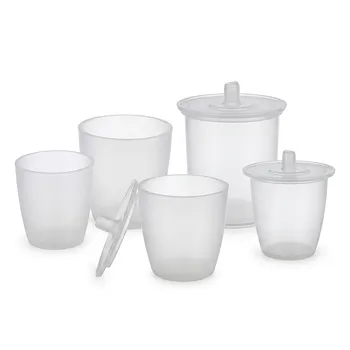
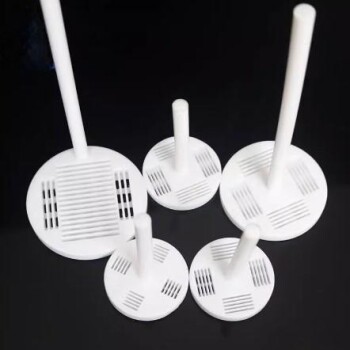
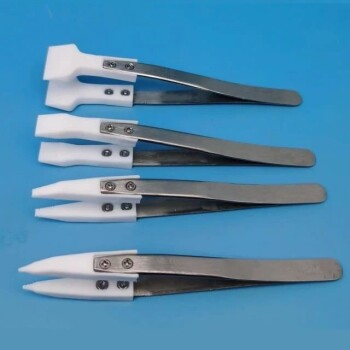
We manufacture virtually all imaginable laboratory supplies crafted exclusively from PTFE and PFA. Our expertise ranges from everyday basics—beakers, crucibles, and reagent bottles—to specialized fluid transfer components, sample prep tools, and advanced reaction apparatus such as electrochemical cells, battery testing fixtures, and hydrothermal synthesis liners.
Backed by end-to-end custom CNC machining, we deliver everything from complex non-standard parts to high-volume orders with an absolute focus on high-performance fluoropolymers. Ready to transform your laboratory setup? Contact us today to discuss your bespoke requirements and drive the future of semiconductor and renewable energy technology.
References
- Melena Groß, Hans‐Jürgen Meyer. Hydrothermal Synthesis and Characterization of the Melamine‐Based Second‐Harmonic Generation Material HgCl<sub>2</sub>(C<sub>3</sub>N<sub>6</sub>H<sub>6</sub>). DOI: 10.1002/ejic.202500256
This article is also based on technical information from Kintek Knowledge Base .
Related Products
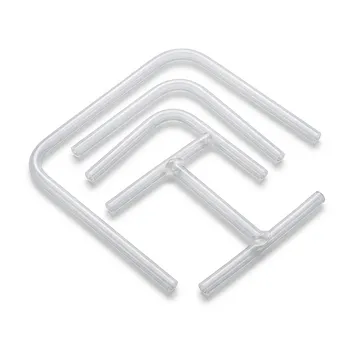
- High Purity PFA Coiled Tubing Custom PTFE Machining PFA Welding and Precision Bending Solutions
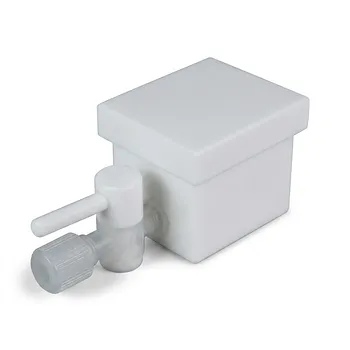
- Custom PTFE Laboratory Apparatus Corrosion Resistant Low Background Reaction Cells Precision CNC Fabrication
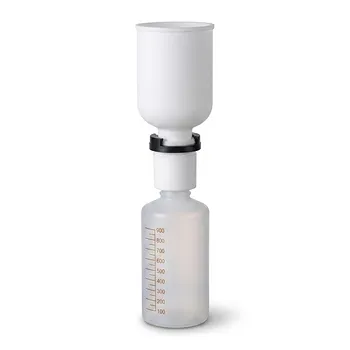
- Custom PTFE Constant Pressure Separatory Funnel Corrosion Resistant Low Background Labware for PFA Flasks
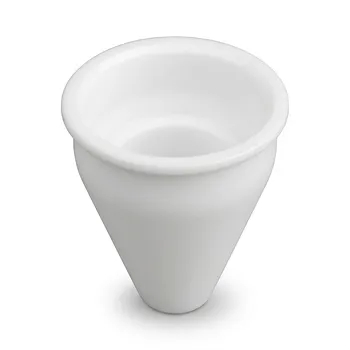
- Custom Machined PTFE Conical Sample Cell Corrosion Resistant Triangular Fluoropolymer Container for Trace Analysis
- Customizable PTFE Scrapers and Shovels for Demanding Applications
People Also Ask
- How does die design and core pin arrangement impact PTFE tubing accuracy?
- How has the elimination of ammonium perfluorooctanoate impacted the manufacturing and safety profile of fluoropolymer products? Key changes and what they mean for you
- What are the technical advantages of high-precision PFA tubing in MXene production? Maximize Purity and Yield.
- PTFE vs PFA: High-Temperature & Mechanical Comparison
- PTFE vs PFA: What are the key thermal and processing differences for lab apparatus?