Chemical etching with alkali metals makes PTFE bondable by chemically changing only its outermost surface. Highly reactive metals such as sodium, potassium, or lithium remove fluorine from the surface carbon-fluorine bonds, producing a carbon-rich layer with unsaturated bonds and oxygen-containing polar groups. This treatment raises surface energy and wettability, allowing structural adhesives to spread across and bond to PTFE components while the untreated bulk retains its chemical resistance.
The essential change is localized surface defluorination: alkali-metal etching replaces PTFE’s low-energy, fluorine-shielded surface with a reactive carbonaceous layer that adhesives can wet, chemically interact with, and mechanically anchor to.
Why Untreated PTFE Resists Adhesive Bonding
The fluorine shell protects the polymer
PTFE’s carbon backbone is surrounded by tightly bound fluorine atoms. This structure gives PTFE its exceptional chemical resistance, but it also shields the carbon backbone from adhesive chemistry.
Low surface energy prevents wetting
PTFE has extremely low surface energy and is strongly non-stick. Conventional adhesives tend to retract or bead on the surface instead of forming the continuous contact needed for a reliable bond.
Laboratory assemblies need surface modification
PTFE tubing, fittings, liners, and machined components often must connect to metals, glass, rubber, or other polymers. Without treatment, an adhesive joint may have limited contact area and fail at relatively low loads.
How Alkali-Metal Etching Changes PTFE
Fluorine is removed from the surface
The reactive alkali metal attacks the outer molecular layers and abstracts fluorine from the PTFE backbone. Chemically, this is best understood as a highly reactive defluorination process involving electron transfer and cleavage of surface carbon-fluorine bonds, rather than simply an ordinary surface-cleaning step.
A carbon-rich layer is created
After fluorine removal, the modified surface contains more exposed carbon, unsaturated bonds, and reactive sites. Subsequent interaction with oxygen and moisture can introduce polar groups such as hydroxyl and carbonyl groups.
The treated surface becomes visibly dark
The modified layer commonly changes from PTFE’s original white appearance to brown or black. This color is a practical indication that the fluorine-rich surface has been chemically transformed into a carbon-rich layer.
Why the Modified Surface Bonds Better
Surface energy and wettability increase
The new polar and unsaturated surface is substantially more receptive to adhesive contact. Adhesives can spread over the treated PTFE instead of pulling away from it, increasing the effective bonded area.
Chemical interactions become possible
Oxygen-containing groups provide sites for stronger interactions with adhesive systems, including epoxies and other structural adhesives. These interactions are unavailable or severely limited on untreated PTFE because its fluorine atoms dominate the exposed surface.
Microscopic texture can support mechanical anchoring
Etching can also produce a fine, modified surface layer that allows adhesive to engage with microscopic irregularities. The resulting joint can benefit from both chemical interaction and mechanical interlocking.
The bulk PTFE remains largely unchanged
The treatment is intended to modify only the near-surface region. The underlying PTFE continues to provide its characteristic chemical resistance, low friction, and temperature performance, provided exposure is controlled and the surface layer is not damaged.
Applying the Treatment to Laboratory Components
Treat only the intended bond area
For tubing, fittings, and custom-machined parts, the etched region should correspond to the adhesive joint. Protecting untreated areas helps preserve the original non-stick surface and avoids unnecessary chemical exposure.
Control exposure time
Commercial sodium-based treatments are typically applied for a short, controlled period, often seconds rather than minutes. Excessive exposure can produce a weak carbonaceous layer that may shear away from the underlying PTFE.
Rinse and prepare the surface correctly
After etching, the component must be rinsed using the process specified for the treatment chemistry, commonly with an appropriate solvent or alcohol sequence. Contamination, residue, or poor drying can reduce the reliability of the subsequent adhesive bond.
Bond soon after treatment
The modified surface is more vulnerable to contamination and environmental changes than untreated PTFE. Adhesive application should follow the process window recommended by the treatment and adhesive suppliers.
Understanding the Trade-offs
The process uses hazardous chemistry
Alkali metals and sodium-naphthalene-based etchants are highly reactive and may involve hazardous solvents or atmospheres. Processing requires appropriate engineering controls, personal protective equipment, chemical compatibility procedures, and trained personnel.
Over-etching can weaken the joint
More aggressive treatment does not necessarily produce a stronger bond. If the modified layer becomes too thick, porous, or weakly attached, failure may occur within that layer rather than at the adhesive interface.
Results depend on process control
Bond performance varies with etchant composition, concentration, exposure time, rinsing, surface contamination, adhesive selection, and curing conditions. A visible color change alone does not guarantee a qualified structural bond.
Alternative treatments may fit some applications better
Plasma treatment can introduce polar groups without using wet alkali-metal chemistry, while mechanical roughening can provide limited assistance in less demanding joints. These alternatives may be preferable where chemical handling, component geometry, or production scale makes sodium etching impractical, although their performance must be validated for the specific PTFE assembly.
Making the Right Choice for Your Goal
The correct process depends on whether the assembly prioritizes bond strength, chemical resistance, production controls, or reduced hazardous-chemical handling.
- If your primary focus is maximum adhesive bond strength: Use a controlled commercial alkali-metal treatment and validate the complete etch, rinse, adhesive, and cure process with representative PTFE components.
- If your primary focus is preserving PTFE chemical performance: Restrict treatment to the bond area and control exposure so the modification remains localized to the surface.
- If your primary focus is production safety or process simplicity: Evaluate plasma or another qualified surface-treatment method, recognizing that its bond performance must be demonstrated for the intended adhesive and geometry.
- If your primary focus is long-term reliability: Test for cohesive failure, surface-layer failure, environmental aging, and the actual loads and fluids expected in the laboratory assembly.
Alkali-metal etching does not make all of PTFE adhesive-friendly; it selectively transforms the surface so the adhesive can bond while the bulk material continues to perform as PTFE.
Summary Table:
| Aspect | Untreated PTFE | Alkali-Metal Etched PTFE |
|---|---|---|
| Surface Composition | Fluorine-rich, low energy | Carbon-rich, polar groups |
| Surface Energy | Very low, non-stick | Increased, wettable |
| Adhesive Wetting | Poor, beads up | Good, spreads evenly |
| Bond Strength | Low, unreliable | High, structural |
| Bulk Properties | Maintained | Maintained |
| Appearance | White | Dark (brown/black) |
Ready to achieve strong, reliable bonds on PTFE components? At KINTEK, we specialize in precision PTFE and PFA labware and custom-machined parts. Whether you need standard tubing, fittings, or complex custom assemblies, our expertise in surface modification and adhesive bonding ensures your components perform flawlessly. Contact us today to discuss your project and discover how we can enhance your laboratory's efficiency and reliability.
Related Products
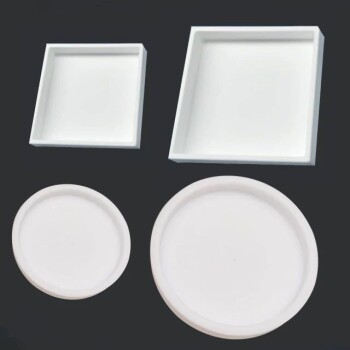
- Custom PTFE Parts Manufacturer for Teflon Containers and Components
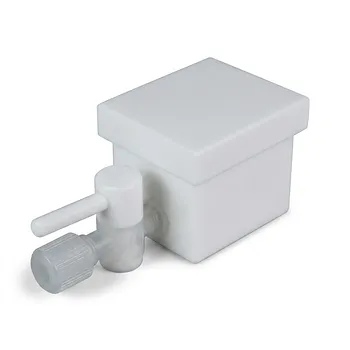
- Custom PTFE Laboratory Apparatus Corrosion Resistant Low Background Reaction Cells Precision CNC Fabrication
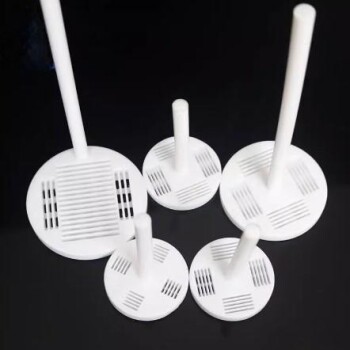
- Custom Machined Molded PTFE Teflon Parts Manufacturer for Laboratory ITO FTO Conductive Glass Cleaning Flower Basket
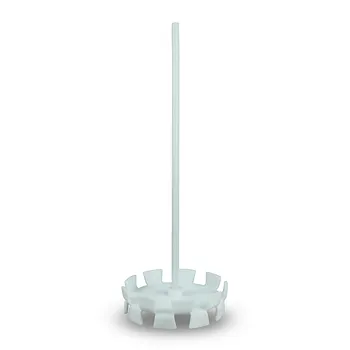
- Corrosion Resistant PTFE Dispersing Disc and High Temperature Propeller Stirring Paddle for Laboratory Chemical Mixing
- Large Scale PTFE Beakers and Flasks for High Temperature Corrosion Resistant Laboratory Applications with Custom CNC Fabrication
People Also Ask
- What design considerations are important for custom PTFE parts? Design for Performance & Reliability
- What industries use custom PTFE parts and for what purposes? Solve Critical Challenges with High-Performance Materials
- What advantages do custom PTFE parts offer for industrial efficiency? Boost Uptime & Cut Costs
- What industries benefit most from custom PTFE parts? Solve Extreme Environment Challenges
- What are the main advantages of using PTFE for custom parts? Solve Complex Engineering Challenges