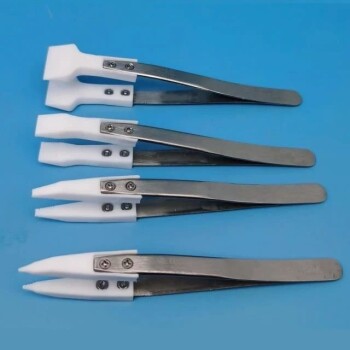
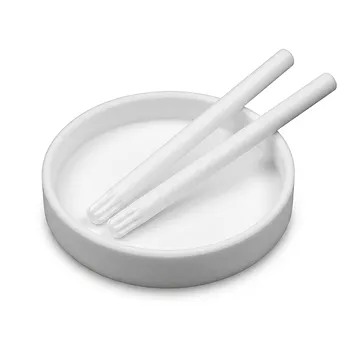
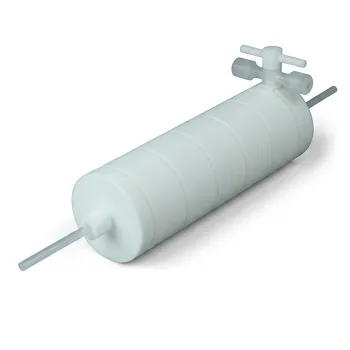
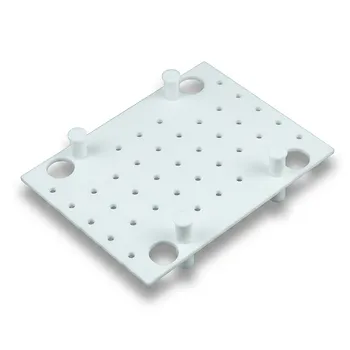
PTFE is substantially less expensive than PFA at the raw-resin level. PTFE has historically been priced around $9.90-$14.80 per kilogram, while PFA typically ranges from $34.10-$55.40 per kilogram. In practical terms, PFA often costs several times more because it combines fluoropolymer chemical resistance with melt-processability, specialized purity, and improved molding performance.
Choose PTFE when chemical resistance, temperature capability, low friction, and cost efficiency are the priorities. Choose PFA when the component must be melt-molded, translucent, seamless, or exceptionally resistant to trace-element contamination and fluid permeation.
Why PFA Costs More Than PTFE
Raw-material economics
Both materials are costly compared with commodity plastics because fluoropolymer production requires expensive equipment, fluorine-based feedstocks, and tightly controlled polymerization environments. Their prices also vary by resin grade, purity specification, processing characteristics, and supply conditions.
PTFE remains the more economical option for many laboratory applications. PFA carries a significant premium because its resin is engineered to support melt processing and demanding high-purity applications.
The value of melt-processability
High-molecular-weight PTFE does not flow like a conventional thermoplastic when heated. It must generally be compression-molded and sintered, then machined or otherwise processed into its final form.
PFA can be melted and processed using techniques such as injection molding and extrusion. This enables complex, seamless tubing, fittings, valves, vessels, and other shapes that would require more secondary machining or specialized fabrication in PTFE.
Fabrication affects total cost
Raw resin price is only one part of the finished-component cost. PTFE may have a lower material cost but require compression molding, sintering, precision CNC machining, and additional finishing.
PFA may reduce some manufacturing steps through direct molding, especially for intricate or repeated designs. The higher resin price can therefore be partly offset when production volume, geometry, surface quality, or reduced assembly is important.
Where PTFE Provides the Better Material Choice
General chemical resistance
PTFE and PFA both provide exceptional resistance to a broad range of chemicals and are suitable for demanding laboratory environments. PTFE is often the more economical choice for general-purpose containment, seals, gaskets, crucibles, stir bars, and machined apparatus.
For applications where the chemical environment is severe but the geometry is relatively simple, paying the PFA premium may provide little practical benefit.
Low friction and non-stick performance
PTFE has the lowest coefficient of friction among the fluoropolymers described in the references. This makes it particularly effective for sliding seals, stir bars, diaphragms, and other parts where low drag and non-stick behavior matter.
PFA also has low friction, but PTFE is generally preferred when friction reduction is the primary functional requirement.
Cryogenic service
PTFE maintains structural integrity at temperatures approaching -267°C (-450°F), making it a strong choice for cryogenic containment and low-temperature laboratory equipment.
Both materials can support continuous service temperatures around 260°C, so the selection at the high-temperature end is usually driven more by fabrication, purity, geometry, and mechanical requirements than by maximum continuous temperature alone.
Cost-sensitive laboratory supplies
Mechanical-grade PTFE is well suited to standard labware, gaskets, seals, machined blocks, and custom components where extreme chemical resistance is required without the cost of specialty PFA.
It is especially attractive when the part can be produced efficiently through established PTFE fabrication methods and does not require optical transparency or melt-molded construction.
Where PFA Justifies Its Premium
High-purity fluid handling
PFA is preferred for ultra-pure acid and solvent distribution, trace-analysis vessels, high-purity tubing, valves, and fittings when minimizing contamination is critical.
Melt molding can produce void-free, non-porous components with smooth internal surfaces and lower permeation than standard PTFE constructions. These characteristics help reduce fluid retention, permeation, and trace-element leaching.
Complex seamless geometries
PFA's melt-processability allows manufacturers to produce intricate shapes with fewer joints and less secondary machining. This is valuable for molded valve bodies, fittings, vessels, tubing, and specialized fluid-transfer components.
A seamless molded design can improve cleanliness and reduce locations where contaminants may collect.
Optical inspection
PTFE is generally opaque white after processing because of its relatively high crystallinity. PFA can be translucent or optically clearer, allowing technicians to observe fluid levels, bubbles, particles, or process conditions.
This visibility can be important in trace-analysis vessels, wash bottles, sight sections, and other laboratory supplies where inspection without opening the system is useful.
Specialized electrical performance
Both PTFE and PFA have low dielectric constants of approximately 2.1 and very low dissipation factors. PFA can provide higher short-term dielectric breakdown strength in certain thin-film configurations.
This distinction matters in specialized high-voltage, electrochemical, and analytical equipment, but it is not normally the deciding factor for ordinary laboratory containers or fittings.
Understanding the Trade-offs
Lower resin cost does not always mean lower finished-part cost
PTFE's lower raw-material price is compelling, but machining and fabrication can add substantial cost, particularly for complex shapes or small production runs.
PFA's higher resin cost may be justified when molding eliminates machining, reduces assembly, improves consistency, or produces a cleaner component.
Purity is grade- and process-dependent
PFA is often selected for ultra-clean applications, but material selection should not rely on the polymer name alone. Resin grade, additives, processing equipment, cleaning procedures, packaging, and manufacturing controls all influence the final contamination profile.
Similarly, PTFE can be appropriate for high-purity service when a suitable unfilled grade and controlled fabrication process are specified.
PTFE can offer better dynamic performance
PTFE provides strong flex-fatigue resistance and is often better suited to repeated flexing in components such as bellows, diaphragms, and other dynamic parts.
PFA's advantages in purity, molding, and clarity do not automatically make it the best choice for mechanically cycling components.
Both materials have design limitations
PTFE's high melt viscosity prevents conventional melt molding and can make intricate designs expensive or impractical. PFA is easier to mold, but its premium cost may be unnecessary for simple, static, or non-critical parts.
Neither material eliminates the need to evaluate creep, dimensional stability, permeation, thermal cycling, pressure, flexing, and chemical compatibility under the actual operating conditions.
How to Apply This to Your Project
Material selection should begin with the component's required performance and manufacturing route, then account for resin price and total production cost.
- If your primary focus is minimizing material cost: Select an appropriate PTFE grade for standard chemical-resistant labware, seals, gaskets, stir bars, and machined components.
- If your primary focus is ultra-high-purity fluid handling: Select high-purity PFA when low leachability, low permeation, and smooth non-porous surfaces are mandatory.
- If your primary focus is complex molded geometry: Select PFA when seamless injection-molded or extruded components can reduce machining, joints, or assembly.
- If your primary focus is low friction or non-stick performance: Favor PTFE, particularly for sliding seals, stir bars, and other low-drag components.
- If your primary focus is cryogenic operation: Favor PTFE when the design requires reliable performance near cryogenic temperatures.
- If your primary focus is visual inspection: Favor translucent PFA for vessels, tubing, or containers where observing the contents is operationally important.
The right decision is the one that balances resin price, fabrication cost, purity requirements, mechanical behavior, and the consequences of contamination or failure.
Summary Table:
| Material | Raw Resin Cost (per kg) | Melt-Processable? | Key Advantages | Typical Applications |
|---|---|---|---|---|
| PTFE | $9.90-$14.80 | No (requires compression molding/sintering) | Cost-effective, excellent chemical resistance, low friction, cryogenic capability | General labware, seals, gaskets, stir bars, machined parts |
| PFA | $34.10-$55.40 | Yes | High purity, low permeation, translucent, complex seamless geometries | Ultra-high-purity fluid handling, molded valves/fittings, trace analysis vessels |
Ready to choose the right fluoropolymer for your lab? At KINTEK, we specialize in high-performance PTFE and PFA products, from standard labware to custom CNC-machined parts. Our team supports OEM/ODM projects, ensures supply reliability, and offers competitive margins for distributors. Contact us today for a tailored solution that balances cost, purity, and performance.
Related Products
- Custom PTFE Filtration System Acid Resistant High Purity Semiconductor Grade Chemical Processing Filter
- PTFE Corrosion Resistant Filter with PFA Valve Connections and Integrated Sieve Plate
- High Temperature Chemical Resistant 50ml PTFE Syringe Customized Teflon Injector with Threaded Seal for Trace Analysis
- Custom PTFE Teflon Balls for Advanced Industrial Applications
- Custom PTFE Insulating Gaskets and Corrosion Resistant Fluoropolymer Seals for Industrial Electrical Applications
People Also Ask
- What makes PTFE filtration systems advantageous for industrial and scientific use? Unmatched Chemical & Thermal Stability
- What steps are involved in selecting the proper PTFE filter? A 4-Step Guide to Optimal Filtration
- What sizes and pore options are available for PTFE filters? Choose the Right Filter for Your Application
- How does the hydrophobicity of PTFE filters benefit their use? Ensure Uninterrupted Gas Flow and Solvent Filtration
- What temperature resistance do PTFE filters offer? Unmatched Thermal Stability from -200°C to +260°C