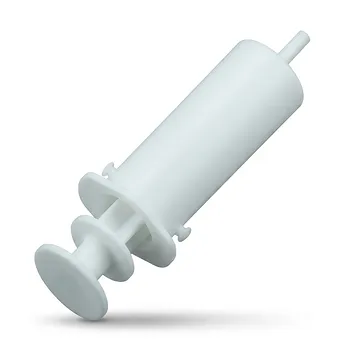
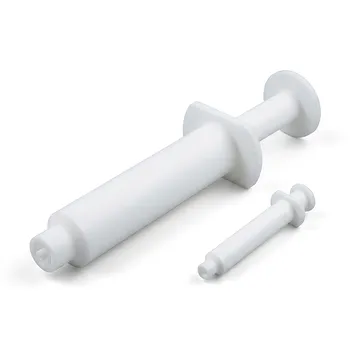
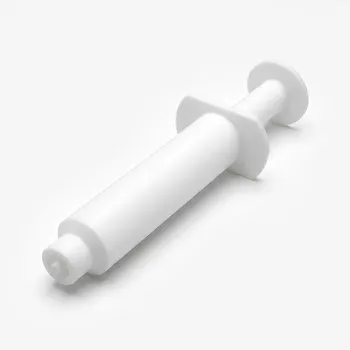
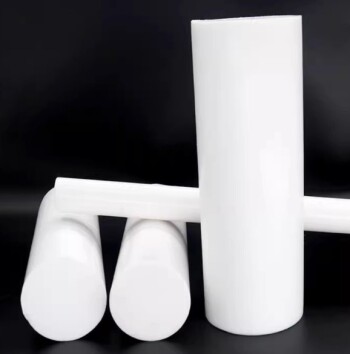
Granular PTFE is made for rigid, machinable parts, while fine-powder and dispersion PTFE are made for paste-extruded or coated products. Granular resin is produced by aqueous suspension polymerization with vigorous agitation, creating larger precipitated particles that can be compression-molded and sintered into billets, rods, sheets, and thick-walled tubes. Fine powder and aqueous dispersion resins are produced through dispersion or emulsion polymerization with mild agitation and polymerization aids, generating much smaller particles suited to paste extrusion, films, membranes, and coatings.
The polymerization method determines the resin’s particle morphology, and particle morphology determines how the PTFE can be processed. Choose granular PTFE when the finished component must be dense, rigid, and CNC-machinable; choose fine powder or dispersion PTFE when the product must be continuously extruded, thin, flexible, porous, or applied as a coating.
Why the Polymerization Method Matters
Suspension polymerization produces granular resin
In suspension polymerization, TFE reacts in an aqueous medium with little or no dispersing agent and vigorous agitation. The polymer precipitates as relatively large, irregular particles rather than remaining as a stable colloidal dispersion.
This resin is commonly called granular PTFE or suspension-grade PTFE. Its particle structure supports bulk forming processes such as compression molding and sintering.
Dispersion polymerization produces fine particles
Dispersion or emulsion polymerization uses mild agitation and fluorinated surfactants or other polymerization aids to stabilize very small PTFE particles in water. The result may be retained as an aqueous dispersion or recovered as a coagulated fine powder.
The resulting particles are fundamentally different from granular resin. They are suited to processes that rely on controlled flow and consolidation of a fine powder, rather than direct bulk molding followed by machining.
Reactor geometry is less important than process conditions
Descriptions sometimes associate granular PTFE with vertical reactors and dispersion products with horizontal reactors. That is not the defining distinction across all manufacturers.
The more reliable distinction is agitation intensity, use of dispersing aids, particle formation, and resulting processing behavior. These factors—not reactor orientation alone—dictate whether a resin is suitable for compression molding, paste extrusion, or coating.
How Resin Form Dictates Manufacturing
Granular PTFE supports compression molding
Granular resin is compacted under pressure and then sintered to form solid stock shapes such as blocks, rods, sheets, and tubes. These shapes can subsequently be cut or CNC-machined into finished components.
This route is particularly valuable when the design is custom, thick-walled, or geometrically complex enough that direct extrusion is impractical.
Fine powder supports paste extrusion
Fine-powder PTFE is blended with a suitable processing lubricant to create a paste. The paste is forced through a die, after which the lubricant is removed and the PTFE is sintered.
Paste extrusion is well suited to thin-walled tubing, flexible fluid-transfer lines, sealing tape, films, and some porous structures. The process can produce continuous lengths and geometries that would be inefficient to machine from a molded billet.
Dispersion PTFE supports coating and impregnation
Aqueous dispersion PTFE is typically used as a liquid-form material. It can be applied by coating, impregnation, or related deposition methods and then dried and sintered to form a PTFE layer.
This makes dispersion grades appropriate for non-wetting, low-friction, and corrosion-resistant surfaces, rather than for machining a self-supporting vessel or fitting from solid stock.
What This Means for Fluoropolymer Labware
Select granular PTFE for structural labware
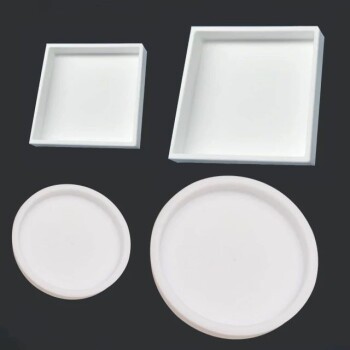
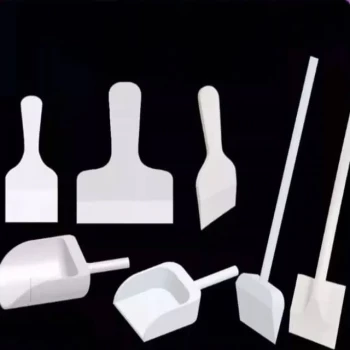
Granular PTFE is generally the appropriate starting material for rigid laboratory items such as:
- Thick-walled beakers and vessels
- Crucibles and reagent containers
- Microwave digestion vessels
- Custom reaction cells
- Electrochemical cell bodies
- Stopcocks and machined fluid fittings
- Custom blocks, covers, and supports
These products depend on bulk density, dimensional stability, wall strength, and machinability. Compression-molded and sintered stock provides the solid material needed for precision machining.
Select fine powder for flexible fluid paths
Fine-powder PTFE is preferred when the product must be formed continuously and retain a thin, flexible geometry. Typical examples include:
- Thin-walled tubing
- Flexible hoses
- Sealing tapes
- Certain films and membranes
- Some wire or cable insulation applications
For laboratory fluid handling, this is the relevant choice when flexibility, bendability, and continuous length matter more than rigid structural support.
Select dispersion for surface functionality
Dispersion PTFE is appropriate when the required function comes primarily from a surface layer. Examples include protective coatings, hydrophobic treatments, non-stick surfaces, and PTFE-impregnated substrates.
A coating-grade dispersion should not be treated as an interchangeable substitute for granular resin. It is designed to be deposited and sintered onto another substrate, not normally to serve as the feedstock for a thick machined component.
The Selection Criteria Beyond Resin Form
Consider the component’s geometry
A thick, rigid, custom-shaped part usually favors compression-molded granular PTFE followed by machining. A long, uniform tube usually favors paste extrusion of fine powder.
The more the geometry resembles a stock shape with removed material, the stronger the case for granular PTFE. The more it resembles a continuous profile or thin film, the stronger the case for fine powder.
Consider mechanical requirements
Structural labware must resist deformation under handling, clamping, pressure, and thermal cycling. Granular PTFE stock is normally selected when the component must maintain a defined three-dimensional shape.
Fine-powder products can also be mechanically robust, but their value is in thin, continuous, or flexible forms rather than in heavily machined structural bodies.
Consider chemical and thermal exposure
All three resin forms can deliver PTFE’s characteristic chemical resistance and high-temperature capability after suitable processing. However, resin form does not by itself guarantee performance.
The final part’s density, porosity, wall thickness, sintering history, dimensions, and any fillers or additives must also be evaluated. A chemically compatible coating, for example, may still be unsuitable where a thick pressure-retaining wall is required.
Consider dimensional tolerances
Machining molded granular stock can provide precise custom dimensions and features. This is useful for mating surfaces, ports, threads, grooves, and complex internal cavities.
Extrusion is efficient for consistent profiles and long lengths, but the design must account for extrusion tolerances, shrinkage, and the limitations of thin-wall geometries.
Understanding the Trade-offs
Granular PTFE is structurally capable but less efficient for continuous products
Compression molding and machining can produce excellent custom components, but the route may involve longer lead times, material waste, and higher cost for simple tubing or long uniform profiles.
It is usually the wrong economic and manufacturing choice for a product that could be continuously paste-extruded.
Fine powder is process-specific
Fine powder generally requires careful lubricant blending, paste preparation, extrusion, drying, and sintering. It is not a drop-in replacement for granular resin in ordinary compression molding and machining operations.
Attempting to use the wrong resin form can cause poor consolidation, unsuitable dimensions, or an inability to achieve the intended geometry.
Dispersion coatings are not structural substitutes
A dispersion coating can provide excellent surface properties while contributing little to the structural strength of the underlying component. Coating adhesion, substrate compatibility, thickness uniformity, and thermal processing must be considered.
If the part itself must carry load, retain pressure, or be machined from a solid block, a coating-grade dispersion is not the appropriate primary material.
“PTFE” alone is not a complete material specification
Different PTFE grades can vary in molecular characteristics, particle morphology, processing behavior, and intended end use. The selection should therefore identify the resin form and processing route, not merely the polymer name.
For critical laboratory components, confirm the manufacturer’s processing recommendations, dimensional requirements, purity needs, and compatibility with the actual chemicals and temperatures.
Making the Right Choice for Your Goal
The practical decision is to match the resin form to the way the finished component must be manufactured and used.
- If your primary focus is rigid, custom-machined labware: Choose granular suspension-grade PTFE that can be compression-molded and sintered into stock for CNC machining.
- If your primary focus is flexible tubing or continuous fluid transfer: Choose fine-powder PTFE formulated for paste extrusion.
- If your primary focus is a hydrophobic, non-wetting, or corrosion-resistant surface: Choose an aqueous PTFE dispersion designed for coating or impregnation.
- If your primary focus is pressure retention or dimensional stability: Prioritize dense, properly sintered granular PTFE stock and evaluate wall thickness, creep, and machining tolerances.
- If your primary focus is material purity or application-specific performance: Select the resin grade together with its additives, processing history, and validated chemical and thermal limits.
The correct PTFE choice begins with the required product geometry and function, then works backward to the polymerization-derived resin form that can reliably produce it.
Summary Table:
| Resin Form | Polymerization Method | Typical Processing | Common Applications |
|---|---|---|---|
| Granular PTFE | Suspension (vigorous agitation) | Compression molding, sintering, CNC machining | Rigid beakers, vessels, crucibles, custom parts |
| Fine Powder PTFE | Dispersion (mild agitation, coagulated) | Paste extrusion | Thin-walled tubing, flexible hoses, sealing tapes |
| Dispersion PTFE | Dispersion (mild agitation, aqueous) | Coating, impregnation | Non-stick coatings, hydrophobic surfaces, impregnated substrates |
Need expert guidance on selecting the right PTFE resin for your laboratory?
At KINTEK, we specialize in high-performance fluoropolymers, offering a comprehensive range of labware and components crafted from PTFE and PFA. Whether you require rigid machined parts, flexible tubing, or protective coatings, our end-to-end custom CNC machining capabilities ensure we can deliver exactly what you need, from custom electrochemical cells to high-volume orders. Contact us today to discuss your specific requirements and benefit from our tailored solutions designed to enhance your lab's efficiency and reliability.
Related Products
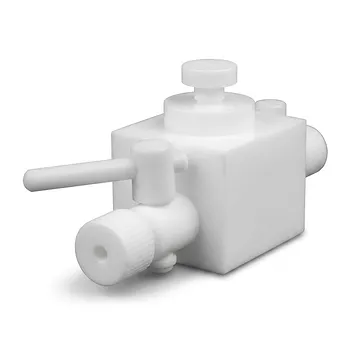
- Custom PTFE Filtration System Acid Resistant High Purity Semiconductor Grade Chemical Processing Filter
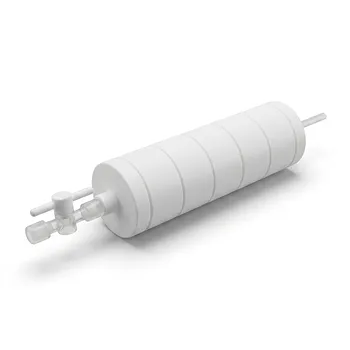
- PTFE Corrosion Resistant Filter with PFA Valve Connections and Integrated Sieve Plate
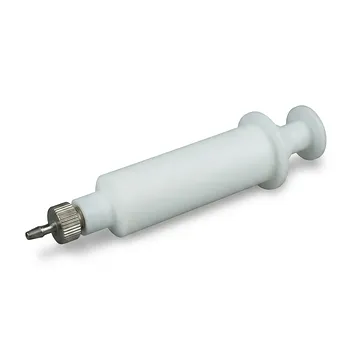
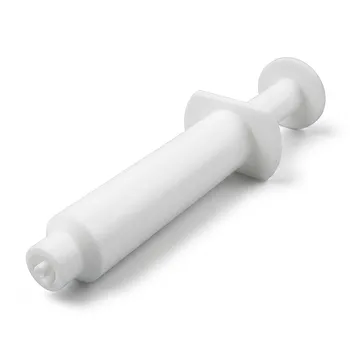
- High Temperature Chemical Resistant 50ml PTFE Syringe Customized Teflon Injector with Threaded Seal for Trace Analysis
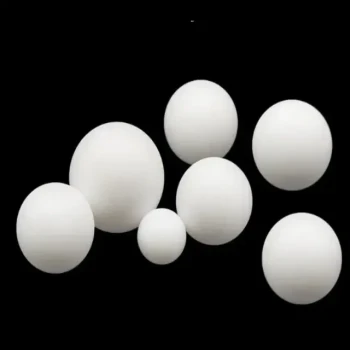
- Custom PTFE Teflon Balls for Advanced Industrial Applications
- Custom PTFE Insulating Gaskets and Corrosion Resistant Fluoropolymer Seals for Industrial Electrical Applications
People Also Ask
- What makes PTFE filtration systems advantageous for industrial and scientific use? Unmatched Chemical & Thermal Stability
- What sizes and pore options are available for PTFE filters? Choose the Right Filter for Your Application
- What steps are involved in selecting the proper PTFE filter? A 4-Step Guide to Optimal Filtration
- How does the hydrophobicity of PTFE filters benefit their use? Ensure Uninterrupted Gas Flow and Solvent Filtration
- What temperature resistance do PTFE filters offer? Unmatched Thermal Stability from -200°C to +260°C