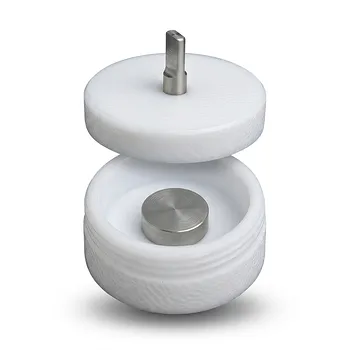
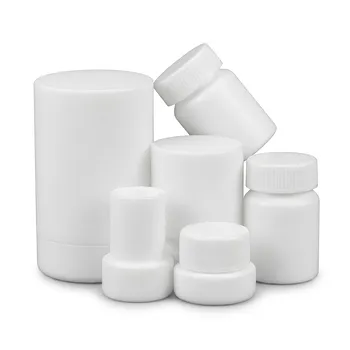
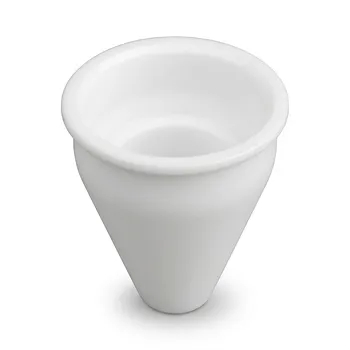
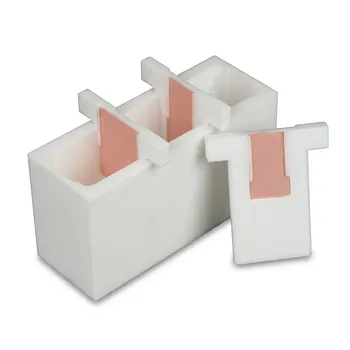
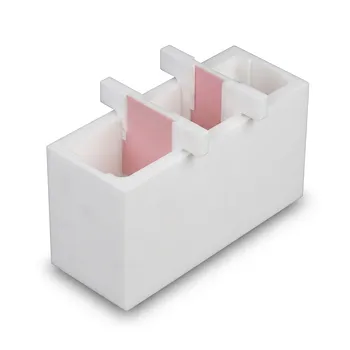
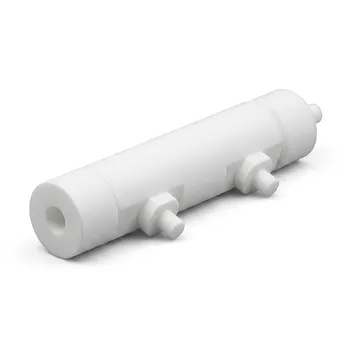
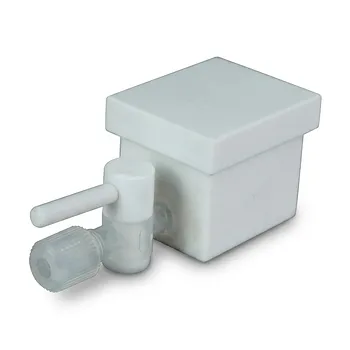
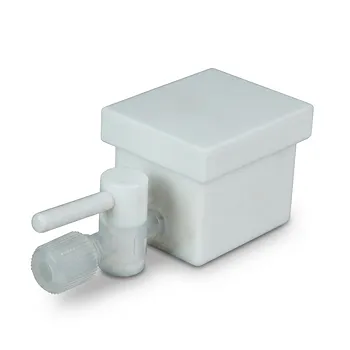
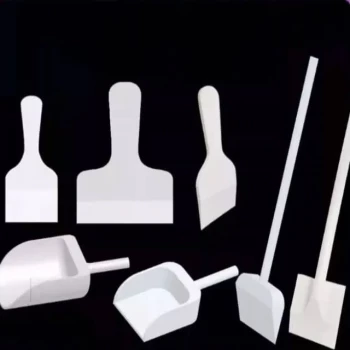
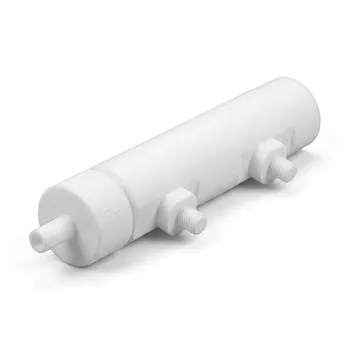
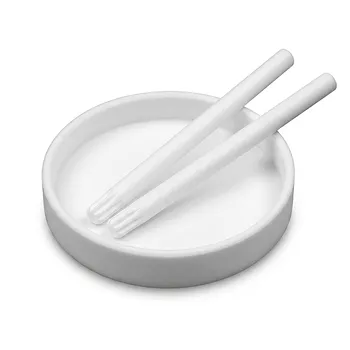
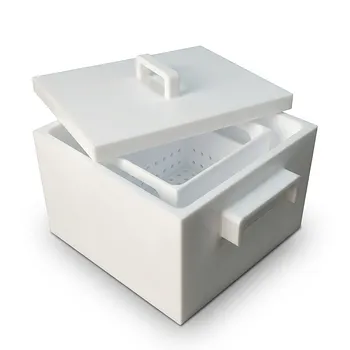
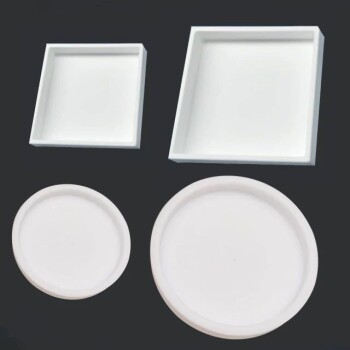
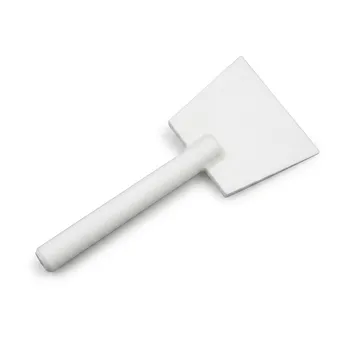
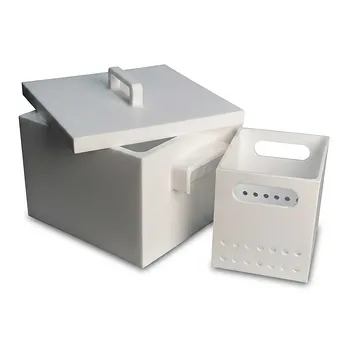
PTFE battery molds are essential precision instruments for interface engineering in all-solid-state batteries. They act as chemically inert containment dies that allow electrode and electrolyte powders to be compacted into dense, multi-layer stacks under high pressure. By maintaining micrometer-level thickness uniformity and providing a non-stick environment, these molds ensure the creation of the intimate solid-solid contacts required for efficient lithium-ion transport.
PTFE molds facilitate the transition from loose powders to high-performance solid-state cells by enabling high-pressure densification while simultaneously protecting the chemical purity and mechanical integrity of fragile internal interfaces.
Engineering Intimate Solid-Solid Contacts
High-Pressure Transmission and Densification
All-solid-state batteries (ASSBs) require extreme pressure to eliminate voids between particles and reduce grain-boundary resistance. PTFE molds allow for uniaxial or isostatic pressing, transmitting force evenly across the powder bed to create a dense, continuous medium. This process establishes reliable ion-transport pathways across previously disconnected solid boundaries.
Precision Geometry and Layer Uniformity
Interface engineering relies heavily on the spatial control of battery components. PTFE molds provide the precision geometry necessary to ensure that layer thicknesses remain uniform within just a few micrometers. This uniformity prevents localized current hotspots and ensures a consistent electrochemical environment across the entire cell area.
Elimination of Internal Shear Stresses
Unlike rigid metal containers, the unique mechanical properties of PTFE help distribute forces without introducing damaging shear stresses. This allows the powders to settle into their most stable configurations during compaction. Reducing these internal stresses is vital for maintaining the long-term structural integrity of the solid-solid interfaces.
Maintaining Chemical and Mechanical Integrity
Preventing Adhesion and Demolding Damage
The intrinsic non-stick properties of PTFE are critical when dealing with fragile solid-state layers. These properties prevent powder adhesion to the mold walls, ensuring that the interfaces are not delaminated or torn during the demolding process. This preservation of surface quality is essential for maintaining low interfacial resistance.
Eliminating Chemical and Metallic Contamination
Standard metal molds can introduce metallic ions or react with highly sensitive sulfide-based electrolytes. PTFE is exceptionally chemically compatible with reactive oxides and sulfides, providing a "clean-room" environment within the mold itself. This ensures that no chemical contaminants interfere with the delicate electrochemical reactions at the electrode-electrolyte boundary.
Understanding the Technical Trade-offs
Mechanical Deformation Under Extreme Pressure
While PTFE is prized for its chemical inertness, it is a relatively soft polymer compared to hardened steel. At extremely high pressures, the mold itself may undergo creep or deformation, which can slightly alter the final dimensions of the battery pellet. Engineers must calibrate pressure cycles carefully to balance material densification with mold longevity.
Thermal Conductivity Limitations
PTFE is an excellent thermal insulator, which can be a disadvantage if the assembly process requires rapid temperature changes. If the interface engineering process involves sintering or heat-pressing, the mold may slow down the heating and cooling cycles. This requires longer dwell times to ensure the internal components reach the target temperature.
How to Apply This to Your Project
If your goal is to optimize the performance of an all-solid-state cell, consider the following recommendations based on your specific focus:
- If your primary focus is reducing interfacial resistance: Prioritize high-pressure compaction within the PTFE mold to ensure maximum particle-to-particle contact and eliminate internal voids.
- If your primary focus is material purity: Utilize PTFE molds specifically when working with sulfide-based electrolytes to prevent metallic ion contamination that could cause short-circuiting.
- If your primary focus is manufacturing reproducibility: Use the precision-machined dimensions of the mold to maintain micrometer-level control over layer thickness across multiple cell batches.
By leveraging the non-stick and inert properties of PTFE, you can transform sensitive powder materials into a cohesive, high-performance electrochemical system.
Summary Table:
| Feature of PTFE Molds | Benefit for Interface Engineering | Impact on Battery Performance |
|---|---|---|
| High-Pressure Transmission | Eliminates voids between particles | Reduces grain-boundary resistance |
| Non-Stick Surface | Prevents powder adhesion during demolding | Maintains structural integrity of layers |
| Chemical Inertness | Prevents reaction with sulfide electrolytes | Eliminates metallic ion contamination |
| Precision Geometry | Ensures micrometer-level layer uniformity | Prevents localized current hotspots |
| Mechanical Cushioning | Distributes force without shear stress | Reduces internal mechanical defects |
Elevate Your Solid-State Research with KINTEK Precision
To achieve superior interface engineering in all-solid-state batteries, your materials must be as precise as your science. KINTEK specializes in high-performance fluoropolymer solutions, offering an exhaustive range of laboratory supplies crafted from premium PTFE and PFA.
Whether you require everyday basics like beakers and reagent bottles, or specialized components for high-purity trace analysis and fluid transfer (tubing, fittings, valves), we deliver uncompromised quality. Our expertise extends to advanced reaction apparatus, including custom electrochemical cells, battery testing fixtures, and microwave digestion vessels.
Why choose KINTEK?
- Custom CNC Fabrication: We provide end-to-end bespoke machining for complex, non-standard parts tailored to your unique experimental setups.
- Comprehensive Catalog: From sample prep tools (filters, pipettes) to general consumables (O-rings, seal tapes), we are your one-stop shop for fluoropolymer labware.
- Material Focus: Our absolute dedication to high-performance polymers ensures chemical inertness and durability in the most demanding environments.
Ready to optimize your lab's efficiency and battery performance? Contact us today to discuss your custom project or high-volume order!
Related Products
- Acid Resistant PTFE Button Cell Battery Test Fixture Customizable Machining High Purity Electrochemical Testing Clamp
- Corrosion Resistant PTFE Small Reaction Bottle One Piece Molded Teflon Sample Storage Tank
- Custom Machined PTFE Conical Sample Cell Corrosion Resistant Triangular Fluoropolymer Container for Trace Analysis
- White PTFE Electrolytic Cell with Movable Slider and Insulated Lid for Fluorine Corrosion Resistance
- Corrosion Resistant PTFE Electrochemical Cell for New Energy Research Inert Insulating Customizable Lab Reaction Vessel
People Also Ask
- In what ways do PTFE battery testing fixtures enhance laboratory throughput and reliability? Maximize Research Efficiency
- How does the chemical inertness of PTFE benefit laboratory-scale battery testing? Ensure high-purity research results.
- In what industrial manufacturing contexts are PTFE battery clamps or fixtures utilized? Optimize Battery Production.
- What is the thermal operating range for PTFE battery clamps in electrochemical research? Stability from -200°C to +260°C
- What are the primary functions and material compositions of PTFE battery clamps? Ensure Precision & Chemical Resistance