Fully perfluorinated polymers such as PTFE and PFA provide the best combination of thermal stability and chemical resistance for laboratory components, while partially fluorinated polymers such as PVDF, ETFE, and PCTFE are generally harder and more mechanically durable. PTFE and PFA are therefore preferred for highly corrosive chemicals, high-purity fluid handling, and trace analysis. Partially fluorinated materials are often better when abrasion resistance, stiffness, dimensional stability, or easier fabrication is more important than maximum chemical inertness.
The central trade-off is straightforward: increasing fluorine content improves thermal and chemical resistance, but fully fluorinated polymers are generally softer and more prone to deformation under mechanical load than partially fluorinated alternatives.
Why Fluorination Changes Laboratory Performance
Fully Fluorinated Polymer Structure
PTFE and PFA have carbon backbones extensively shielded by fluorine atoms. The strong carbon-fluorine bonds and chemically protected backbone make the materials difficult for most acids, bases, solvents, and other aggressive chemicals to attack.
This structure also reduces intermolecular interaction with many substances, producing low friction, non-stick behavior, and low risk of chemical contamination.
Partially Fluorinated Polymer Structure
PVDF, ETFE, and PCTFE retain hydrogen, chlorine, or hydrocarbon segments in their structures. These groups increase intermolecular interactions, which generally improves stiffness, tensile strength, hardness, and resistance to mechanical damage.
The same chemical features create more sites that can be affected by heat, solvents, or aggressive reagents. As a result, partially fluorinated polymers usually provide a narrower operating envelope.
Thermal Stability
PTFE and PFA Handle Higher Temperatures
PTFE and PFA are suitable for demanding thermal environments, with continuous-use temperatures commonly reaching approximately 260°C, depending on grade, load, exposure time, and component design. PTFE has a melting point near 327°C, although its practical service limit is lower than its melting point.
PFA offers similar chemical and thermal performance while being melt-processable, which allows it to be formed into tubing, bottles, vessels, and complex fluid-handling components.
Partially Fluorinated Polymers Have Lower Service Limits
Partially fluorinated materials commonly have continuous-use limits in the approximate range of 120°C to 150°C, although the exact value depends on the polymer and application. PVDF, ETFE, and PCTFE can perform reliably within these limits but generally provide less margin during high-temperature digestion, sterilization, or heated chemical processing.
The difference matters when a component must withstand both elevated temperature and aggressive chemistry simultaneously. A material that performs adequately under either condition alone may be unsuitable under both.
Mechanical Hardness and Durability
Partially Fluorinated Materials Are Usually Harder
ETFE, PVDF, and related materials generally have higher tensile strength, modulus, and surface hardness than unfilled PTFE or PFA. They are more resistant to scratching, cut-through, abrasion, and deformation during assembly or repeated handling.
This makes them useful for fittings, valve parts, protective liners, machined components, and tubing exposed to mechanical wear.
PTFE and PFA Prioritize Low Friction and Chemical Protection
PTFE is relatively soft compared with many partially fluorinated polymers and has modest tensile strength. Under sustained compressive load, it can undergo creep, also called cold flow, which may affect seals, threaded connections, and dimensionally critical parts.
PFA is generally easier to process and can offer better fabrication flexibility than PTFE, but it should not automatically be treated as a mechanically hard material. Both remain most valuable where chemical compatibility, cleanliness, and low friction dominate the design requirements.
Mechanical Performance Can Be Modified
Filled PTFE grades, including glass-fiber-filled formulations, can improve wear resistance, stiffness, and creep resistance. However, fillers may introduce extractables, affect purity, or reduce chemical compatibility, so they require careful evaluation in high-purity laboratory systems.
A harder partially fluorinated polymer is not always the better choice if trace contamination, adsorption, or exposure to an unusually aggressive reagent is the primary risk.
Chemical Resistance
PTFE and PFA Offer the Broadest Compatibility
Fully fluorinated polymers resist virtually all common laboratory acids, bases, and organic solvents. Their chemical inertness makes them strong candidates for digestion vessels, beakers, crucibles, tubing, fittings, valves, and components used in trace analysis.
They also have low friction and low surface reactivity, which helps reduce sample retention and unwanted interaction with the fluid path.
Partially Fluorinated Materials Have Narrower Resistance
PVDF and ETFE resist many laboratory chemicals and can be excellent general-purpose materials. However, they are more vulnerable than PTFE and PFA to certain solvents, hot aromatic compounds, ketones, amides, and other aggressive chemical conditions.
Their suitability must therefore be checked against the exact chemical, concentration, temperature, exposure duration, and mechanical stress. A compatibility chart based only on the polymer name is not sufficient for severe service.
“Chemically Inert” Is Not Literally Universal
PTFE and PFA are not immune to every possible chemical environment. Highly reactive substances, including some molten alkali metals or elemental fluorine under severe conditions, can attack fluoropolymers.
For normal laboratory acids, bases, solvents, and corrosive mixtures, however, fully fluorinated polymers provide the broadest practical resistance among these material categories.
Understanding the Trade-offs
Hardness Versus Chemical Inertness
The increased hydrogen, chlorine, or hydrocarbon content in partially fluorinated polymers strengthens intermolecular interactions. This generally improves hardness and mechanical strength but reduces the chemical shielding provided by a fully fluorinated backbone.
The material choice is therefore not a simple ranking. It depends on whether chemical attack or mechanical damage is the more serious failure mode.
Creep and Dimensional Stability
Unfilled PTFE can deform gradually under constant pressure, particularly at elevated temperature. This is important for gaskets, ferrules, valve seats, threaded fittings, and load-bearing supports.
Partially fluorinated materials usually maintain shape better under mechanical stress, while filled PTFE grades can reduce creep at the cost of potentially lower purity or altered chemical behavior.
Processing and Component Geometry
PTFE is difficult to melt-process and is commonly shaped through specialized methods such as compression molding and machining. PFA is melt-processable, which supports more complex geometries and seamless tubing while retaining much of PTFE’s chemical resistance.
Partially fluorinated polymers are generally easier to process and machine into rigid, dimensionally stable components. This can reduce manufacturing complexity for custom laboratory hardware.
Purity and Contamination Control
PTFE and PFA are preferred for high-purity applications because they can provide low reactivity, low friction, and minimal contribution to sample contamination. The complete component formulation still matters, including pigments, fillers, additives, seals, and manufacturing residues.
A partially fluorinated component may be chemically adequate but still inappropriate for trace analysis if it contributes extractables or interacts with the sample at the required detection limit.
Making the Right Choice for Your Goal
Choose based on the dominant combination of chemical exposure, temperature, mechanical load, purity requirements, and manufacturing constraints.
- If your primary focus is maximum chemical resistance: Choose PTFE or PFA, especially for strong acids, strong bases, aggressive solvents, digestion systems, and highly corrosive fluid handling.
- If your primary focus is high-temperature laboratory service: Prefer PTFE or PFA when the application approaches approximately 150°C to 260°C, subject to the specific grade and mechanical load.
- If your primary focus is hardness and abrasion resistance: Consider ETFE, PVDF, or another partially fluorinated polymer when the chemical environment is within its verified compatibility range.
- If your primary focus is dimensional stability under load: Evaluate partially fluorinated materials or filled PTFE grades, while checking creep, purity, and extractables.
- If your primary focus is trace-analysis purity: Use PTFE or PFA and assess the complete component for additives, manufacturing residues, adsorption, and contamination risk.
- If your primary focus is complex melt-processed geometry: Consider PFA or a partially fluorinated polymer, depending on the required chemical and thermal performance.
For laboratory components, the most reliable decision comes from matching the polymer’s chemical structure to the actual failure risk: fully fluorinated materials maximize protection, while partially fluorinated materials maximize mechanical robustness.
Summary Table:
| Property | PTFE/PFA (Fully Fluorinated) | Partially Fluorinated (PVDF, ETFE, PCTFE) |
|---|---|---|
| Thermal Stability | Up to ~260°C continuous | ~120-150°C continuous |
| Mechanical Hardness | Softer, prone to creep | Harder, more abrasion-resistant |
| Chemical Resistance | Broadest resistance to acids, bases, solvents | Good but limited against some solvents |
| Typical Lab Use | High-purity fluid handling, digestion vessels | Fittings, valve parts, structural components |
Need help selecting the ideal fluoropolymer for your lab? KINTEK's exclusive PTFE/PFA expertise ensures optimal chemical resistance and purity for your components—from custom machined parts to high-volume orders. Contact us today for tailored solutions!
Related Products
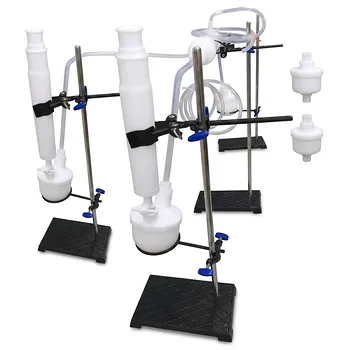
- PTFE PFA Vacuum Filtration System Corrosion Resistant Customizable Shatterproof Laboratory Device
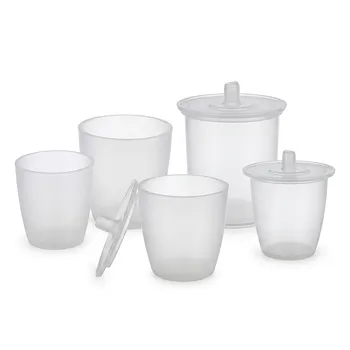
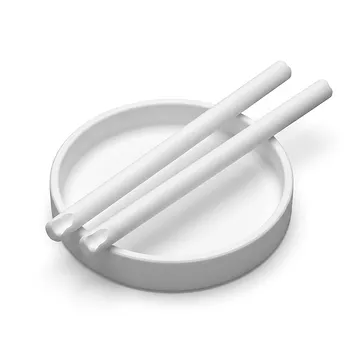
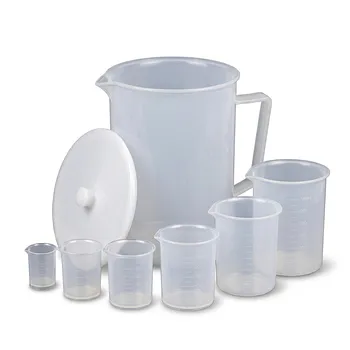
- High Purity PFA Crucible and Corrosion Resistant PTFE Beaker for Trace Analysis and Custom Laboratory Applications
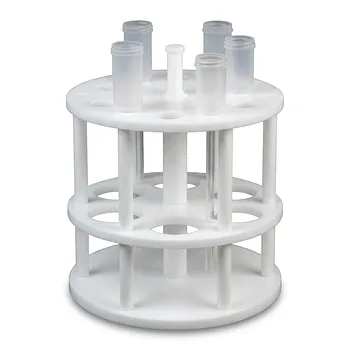
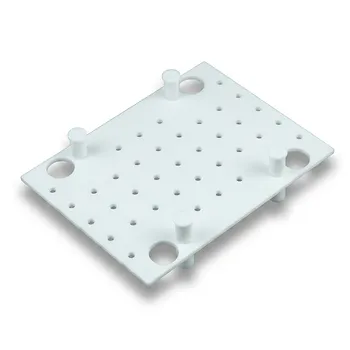
- Custom PFA Microcolumn Racks and PTFE Machined Low Background Corrosion Resistant Laboratory Fixtures
- PTFE Corrosion Resistant Filter with PFA Valve Connections and Integrated Sieve Plate
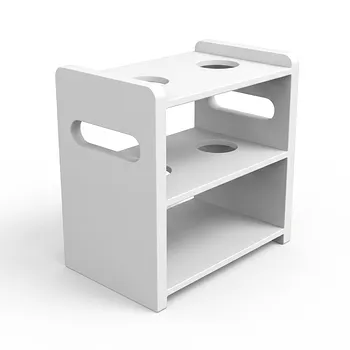
- Custom PTFE Acid Resistant Support Rack for PFA Hydrogen Absorption Systems Multi Hole Configurations
People Also Ask
- What makes PTFE filtration systems advantageous for industrial and scientific use? Unmatched Chemical & Thermal Stability
- What temperature resistance do PTFE filters offer? Unmatched Thermal Stability from -200°C to +260°C
- How does the hydrophobicity of PTFE filters benefit their use? Ensure Uninterrupted Gas Flow and Solvent Filtration
- Which chemicals are fully compatible with PTFE filters? Discover Unmatched Chemical Resistance
- What sizes and pore options are available for PTFE filters? Choose the Right Filter for Your Application