Fine-cut granular PTFE powders generally provide the highest mechanical performance, while pelletized PTFE resins are better suited to automated and isostatic molding. Fine-cut material uses small particles—typically about 20–40 µm—that can produce highly dense, strong molded components. Pelletized resin agglomerates those particles into larger, free-flowing granules, improving mold filling and process consistency with a modest reduction in tensile strength and elongation.
The choice is a balance between ultimate part performance and manufacturing reliability: use fine-cut PTFE when maximum strength and integrity are decisive; use pelletized PTFE when uniform, efficient filling of complex or high-volume molds is the priority.
How the Resin Structures Differ
Fine-cut granular PTFE
Fine-cut granular PTFE consists of very small polymer particles, commonly in the 20–40 µm range. Its low bulk density—often below 500 g/L—makes it difficult to feed and compact uniformly, but the fine structure can produce components with excellent density and mechanical integrity.
Pelletized granular PTFE
Pelletized, or free-flow, PTFE is made by forming fine particles into soft agglomerates without adding secondary chemical binders. The resulting granules are substantially larger—often several hundred micrometres—and have higher apparent bulk density and much better flow.
This structure does not change PTFE’s fundamental chemical resistance, but it changes how reliably the material can be delivered into a mold.
Mechanical Performance Differences
Fine-cut powders maximize strength
Fine-cut PTFE typically offers the strongest mechanical profile among the two materials. Representative grades can provide tensile strengths in the approximate range of 30–44 MPa and elongation at break of roughly 300–400%, depending on grade and processing conditions.
The fine particles can support high density and low internal void content when properly compacted and sintered. This is valuable for precision-machined seals, critical fittings, digestion vessels, and other parts exposed to mechanical or chemical stress.
Pelletized resin accepts a modest performance trade-off
Pelletized PTFE commonly provides somewhat lower tensile strength than fine-cut material. Representative free-flow grades may fall around 29–32 MPa, although the actual result depends on resin grade, molding pressure, sintering profile, part geometry, and post-machining conditions.
This difference is usually a deliberate manufacturing trade-off rather than a fundamental weakness. A pelletized resin may produce a more consistent part in an automated process because it fills the mold more uniformly.
Density uniformity can outweigh nominal strength
A fine-cut resin has higher theoretical mechanical potential, but poor filling can create bridging, incomplete regions, density variation, or voids. Such defects may reduce the performance of the finished component more severely than the nominal strength difference between resin types.
Pelletized resin often improves practical part quality by promoting homogeneous filling and more consistent compaction throughout the mold cavity.
Molding Application Suitability
Fine-cut PTFE suits demanding custom parts
Fine-cut granular PTFE is appropriate when the manufacturer can control powder loading and compaction carefully. It is particularly suitable for:
- High-strength custom-machined components
- Critical seals and valve seats
- Low-permeability fluid fittings
- Trace-analysis and chemical-digestion vessels
- Dense stock shapes requiring CNC machining
It is less attractive for processes that depend on rapid, automatic hopper feeding.
Pelletized PTFE suits automatic molding
The principal advantage of pelletized PTFE is its improved flow rate and bulk density. Compared with fine-cut powder, it fills mold cavities faster and more evenly, reducing the risk of bridging and incomplete filling.
This makes it well suited to:
- Automatic compression molding
- Isostatic molding
- High-volume laboratory containers
- Beakers, cylinders, and fittings
- Large preforms and stock shapes
- Complex or deep mold cavities
Higher bulk density also permits smaller or more efficient tooling than would be required for the same mass of low-density fine-cut powder.
Uniform filling matters for laboratory components
Laboratory components often combine complex geometry with strict requirements for chemical purity, dimensional stability, and leak resistance. Pelletized resin helps maintain consistent density across the molded shape, which is especially important when the preform will later be machined into a precision component.
For standard labware and high-throughput production, the processing advantage can be more important than achieving the maximum possible tensile strength.
Why Processing Behavior Drives the Choice
Fine-cut powder is difficult to handle automatically
The small particles of fine-cut PTFE have poor flow characteristics. They can resist movement through hoppers, form bridges, and fail to distribute evenly throughout intricate cavities.
Its low bulk density may also require disproportionately large tooling cavities to accommodate the required material charge.
Pelletized resin improves feeding and mold filling
Agglomeration increases both particle size and bulk density. Reported free-flow grades may have bulk densities from approximately 480 g/L to above 800 g/L, depending on the product, while fine-particle grades may be closer to 200–500 g/L.
The exact values vary by grade and measurement method, but the direction is consistent: pelletized resin flows more readily and occupies less mold volume for the same mass.
Both materials still require correct molding and sintering
Neither resin type eliminates the need for controlled compression, isostatic molding, and high-temperature sintering. Final properties depend on compaction pressure, preform design, sintering conditions, shrinkage control, and machining practice.
The resin primarily determines how reliably the material can be loaded and compacted before those later steps.
Understanding the Trade-offs
Maximum strength versus production efficiency
Fine-cut PTFE is the better choice when the part’s performance depends on maximizing tensile strength, elongation, density, or resistance to permeation. However, it demands more careful handling and is less compatible with automated mold loading.
Pelletized PTFE sacrifices some peak mechanical performance in exchange for faster feeding, more uniform filling, and better suitability for repeatable production.
Tooling efficiency versus material optimization
Fine-cut powder’s low bulk density can require larger cavities and more careful charge management. Pelletized resin reduces this burden, but its agglomerated structure may not deliver the same ultimate mechanical results as a well-compacted fine-cut grade.
Tooling and production volume should therefore be evaluated alongside material test data.
Avoid confusing granular molding grades with paste-extrusion powders
Fine-cut granular PTFE intended for compression molding should not automatically be treated as the same material as fine powders designed for paste extrusion. Paste-extrusion grades are processed with a lubricant and are typically selected for tubing, thin-wall products, or sealing tape.
For molded laboratory components and machined stock shapes, the relevant comparison is between fine-cut granular molding resin and pelletized free-flow granular molding resin.
Making the Right Choice for Your Goal
Choose the resin based on whether the dominant requirement is ultimate part performance or reliable mold processing.
- If your primary focus is maximum mechanical strength and density: Select a fine-cut granular PTFE grade, provided the molding operation can manage its poor flow and low bulk density.
- If your primary focus is automatic or isostatic molding: Select pelletized free-flow PTFE for faster, more uniform cavity filling and easier hopper handling.
- If your primary focus is high-volume standard laboratory ware: Favor pelletized PTFE because process consistency and tooling efficiency generally outweigh the modest mechanical-property reduction.
- If your primary focus is critical seals, precision fittings, or machined high-performance parts: Evaluate fine-cut PTFE first, while verifying that the molding process can produce void-free, homogeneous stock.
- If your primary focus is flexible tubing or thin-wall extruded products: Use a grade specifically designed for paste extrusion rather than selecting between these granular compression-molding grades.
The best PTFE resin is the one that delivers the required mechanical performance after accounting for how reliably the chosen molding process can produce a uniform, defect-free component.
Summary Table:
| Property | Fine-Cut Granular PTFE | Pelletized Granular PTFE |
|---|---|---|
| Particle Size | ~20–40 µm | Several hundred µm |
| Bulk Density | <500 g/L (often 200–500) | ~480 to >800 g/L |
| Flowability | Poor | Excellent |
| Tensile Strength | Higher (~30–44 MPa) | Lower (~29–32 MPa) |
| Elongation at Break | ~300–400% | Slightly lower |
| Molding Suitability | Custom, high-strength parts | Automatic/isostatic molding, high-volume ware |
| Best For | Seals, fittings, digestion vessels | Beakers, cylinders, complex shapes |
Elevate your lab's performance with precision PTFE components. Whether you need high-strength custom parts or high-volume labware, KINTEK's fine-cut and pelletized PTFE solutions deliver reliability and excellence. Leveraging our end-to-end CNC machining capabilities, we craft everything from complex machined parts to bespoke setups. Contact us today to discuss your requirements and discover how we can optimize your processes. Get in touch now!
Related Products
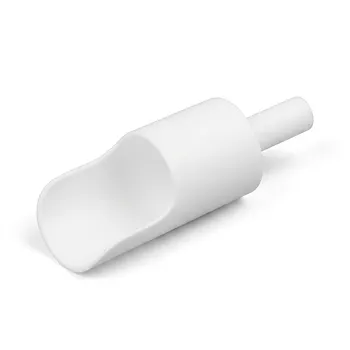
- Custom PTFE Pharmaceutical Sampling Scoop Low Leaching Cylindrical Chemical Powder Sampler Zero Contamination High Purity Laboratory Shovel
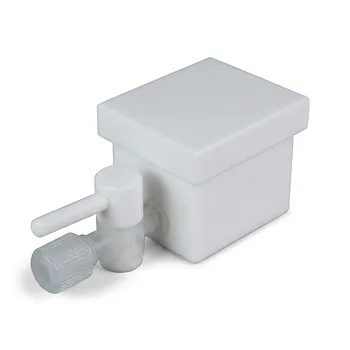
- High Purity PTFE Square Membrane Cutter Equipartition Device for Trace Analysis and Disease Control Centers Clean Non Stick No Leaching
- High Purity PTFE Filter Membrane Cutter with Ceramic Blade for PM2.5 Analysis and Customizable Laboratory Filter Paper Splitter
- High Temperature Resistant PTFE Solid Sampler Corrosion Resistant Non Leaching Reusable Biopharmaceutical White Powder Sampling Device
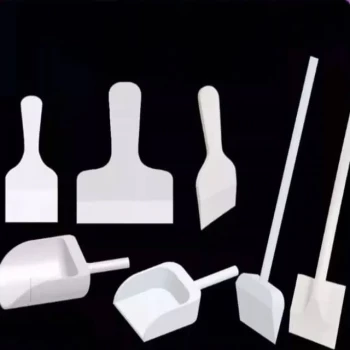
- High Purity PTFE Material Shovel Non Stick Chemically Inert Pharmaceutical Scoop for Trace Analysis
People Also Ask
- What factors should be considered when selecting a PTFE shovel for laboratory use? Ensure Chemical Inertness & Sample Integrity
- How does the durability of PTFE shovels compare to plastic shovels? Discover the Superior Choice for Harsh Conditions
- What are the advantages of PTFE shovels over metal shovels? Precision Handling for Sensitive Materials
- How does the ergonomic design of PTFE shovels benefit users? Reduce Strain and Boost Lab Efficiency
- What are some specific applications of PTFE shovels in the laboratory? Ensure Sample Purity and Safety