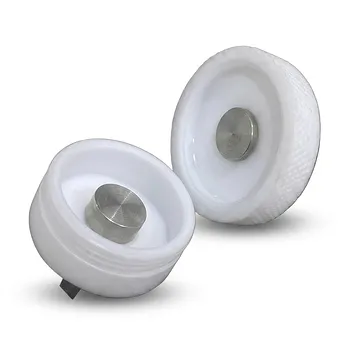
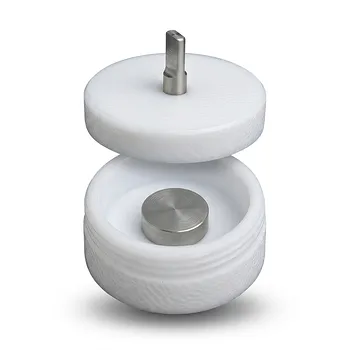
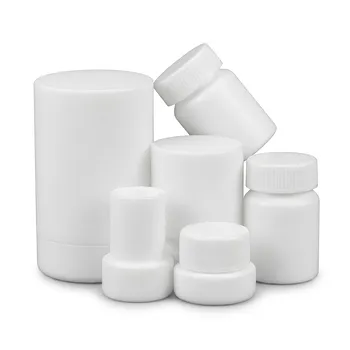
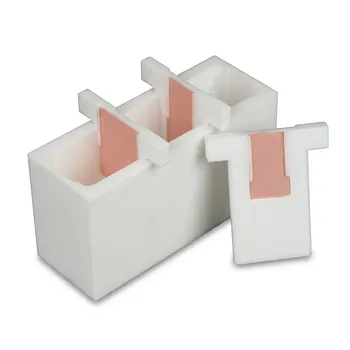
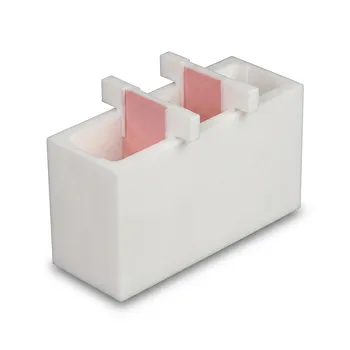
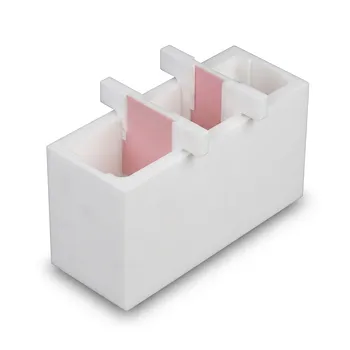
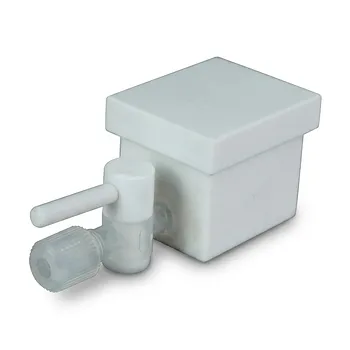
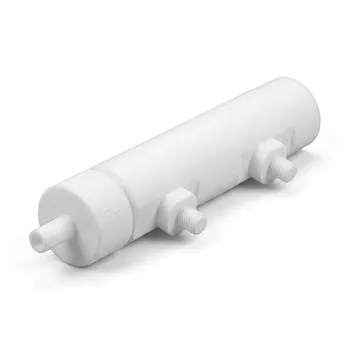
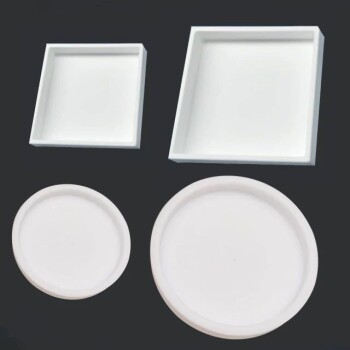
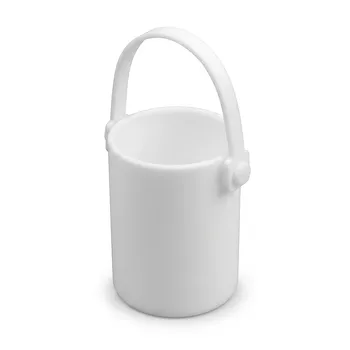
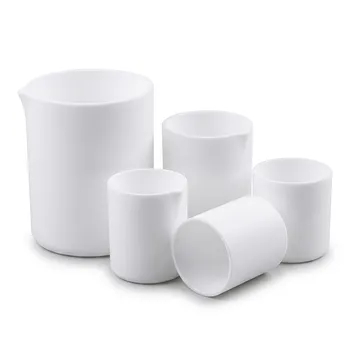
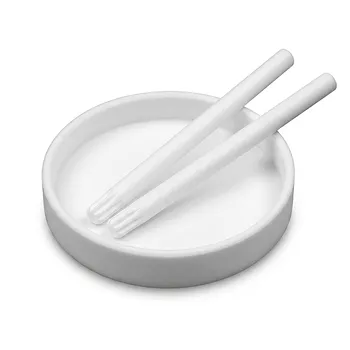
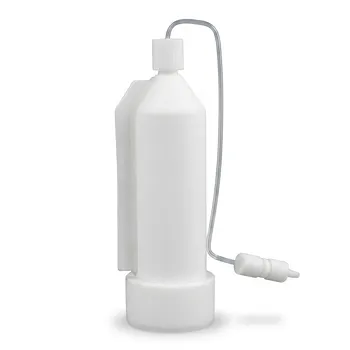
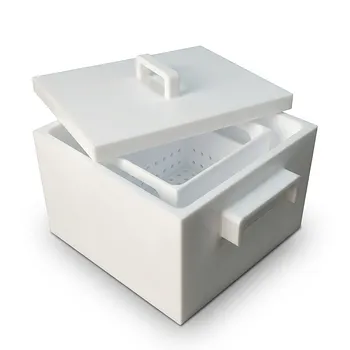
The manufacturing of PTFE battery molds relies on two primary pathways: compression molding followed by sintering, or precision CNC machining from solid stock. These processes transform raw PTFE powder or billets into rigid, dimensionally stable components capable of withstanding the chemical and thermal demands of battery assembly. While high-pressure molding is the standard for producing base shapes, subtractive machining allows for the complex geometries required in modern battery research.
Core Takeaway: Because PTFE’s high melt viscosity prevents traditional injection molding, manufacturers must use powder metallurgy-like techniques—compressing granular resin under immense pressure before "fusing" it with heat—or CNC machining to achieve the necessary precision for battery dies.
The Dominant Method: Compression Molding and Sintering
High-Pressure Cold Compression
The process begins with granular or fine powder PTFE being placed into a mold cavity. This powder is subjected to "cold molding" at high pressures ranging from 10 to 100 MPa. This step creates a "green" compact that has the shape of the final part but lacks full structural integrity.
The Sintering Phase
After initial shaping, the component undergoes sintering at temperatures between 360 °C and 380 °C. This controlled heating allows the polymer particles to fuse together, resulting in a dimensionally stable and rigid tool. This method is the preferred choice for producing reliable components for laboratory and pilot-scale battery assembly.
Precision Fabrication via Subtractive Machining
CNC Milling and Turning
When specific geometries or tight tolerances are required, PTFE battery molds are often CNC machined from solid stock. The material can be turned or milled easily, though expert fabricators often chill the PTFE beforehand to improve its machinability. This approach is ideal for creating custom cylindrical dies for pellet formation, often ranging from 10–20 mm in diameter.
Specialized Fabrication Techniques
Beyond standard milling, other methods like water jet cutting, laser cutting, and die cutting are used for thinner or more complex components. These services allow for the integration of features like threads or grooves for current collectors. These custom features are vital for multi-layer stacking molds that require precise alignment of battery layers.
Understanding the Trade-offs and Constraints
The Injection Molding Limitation
It is a common misconception that PTFE can be processed like other polymers; however, it is not a traditional thermoplastic. Because it does not flow when melted, it cannot be injection molded. This limitation necessitates the more labor-intensive compression and machining processes described above.
Managing Material Creep and Rigidity
PTFE is prone to creep, or slow deformation under constant pressure. To combat this, mold designers typically maintain wall thicknesses between 5–10 mm. This thickness balances the need for structural rigidity with the material's tendency to shift when used in high-pressure battery assembly environments.
Joining and Assembly Challenges
PTFE is famously non-stick and chemically inert, which makes it difficult to glue or weld. When designing complex battery dies, engineers must rely on mechanical fasteners or alignment features rather than adhesives. This ensures the mold remains intact during the sequential layering of battery components.
Selecting the Manufacturing Process for Your Battery Project
Choosing the right fabrication method depends on your specific production volume and the complexity of your battery architecture.
- If your primary focus is high-volume laboratory standards: Compression molding followed by sintering provides the most consistent, rigid, and cost-effective solution for standard die shapes.
- If your primary focus is rapid prototyping of complex geometries: CNC machining from solid PTFE stock allows for the fastest iteration of custom features like integrated grooves or non-standard diameters.
- If your primary focus is maximum dimensional stability: Ensure your design specifies a wall thickness of at least 5 mm and utilizes a sintering process to minimize the risk of material creep during use.
By understanding the unique mechanical constraints of PTFE, you can ensure your battery molds provide the chemical purity and structural integrity required for high-performance electrochemical testing.
Summary Table:
| Manufacturing Method | Process Detail | Primary Application |
|---|---|---|
| Compression Molding | High-pressure cold molding (10-100 MPa) followed by sintering at 360-380°C. | Standard lab shapes and high-volume production. |
| CNC Machining | Subtractive milling or turning from solid PTFE stock; often chilled for precision. | Custom geometries, cylindrical dies, and rapid prototyping. |
| Specialized Cutting | Water jet, laser, or die cutting of thin PTFE sheets. | Complex gaskets, thin components, and intricate features. |
| Custom Fabrication | Integration of mechanical fasteners, threads, and grooves. | Multi-layer stacking molds and specialized battery architectures. |
Elevate Your Battery Research with KINTEK’s Precision PTFE Solutions
Are you looking for reliable, high-purity battery molds or bespoke laboratory components? At KINTEK, we specialize exclusively in high-performance fluoropolymers like PTFE and PFA to ensure your research meets the highest standards of chemical purity and structural integrity.
Why Partner with KINTEK?
- End-to-End Custom CNC Fabrication: We deliver everything from complex non-standard machined parts to high-volume orders tailored to your specific battery architecture.
- Comprehensive Product Range: From everyday basic labware (beakers, crucibles, reagent bottles) and fluid transfer components (tubing, valves) to advanced reaction apparatus like electrochemical cells and battery testing fixtures.
- Specialized Tools: We provide high-purity sample prep tools, microwave digestion vessels, and custom microchannel reactors designed for extreme environments.
Don't settle for off-the-shelf solutions when you can have precision-engineered tools. Contact KINTEK today to discuss your project and discover how our fluoropolymer expertise can streamline your laboratory workflow.
Related Products
- Corrosion Resistant PTFE Coin Cell Battery Testing Clamps and Acid Proof Custom Fluoropolymer Battery Fixtures
- Acid Resistant PTFE Button Cell Battery Test Fixture Customizable Machining High Purity Electrochemical Testing Clamp
- Corrosion Resistant PTFE Small Reaction Bottle One Piece Molded Teflon Sample Storage Tank
- White PTFE Electrolytic Cell with Movable Slider and Insulated Lid for Fluorine Corrosion Resistance
- Custom Machined PTFE Conical Sample Cell Corrosion Resistant Triangular Fluoropolymer Container for Trace Analysis
People Also Ask
- What is the thermal operating range for PTFE battery clamps in electrochemical research? Stability from -200°C to +260°C
- What are the primary functions and material compositions of PTFE battery clamps? Ensure Precision & Chemical Resistance
- How do coin cell testing fixtures evaluate ZIF-derived LCO cycling stability? Ensure Battery Research Precision
- What are the electrical insulation and signal integrity advantages of using PTFE battery clamps? Ensure Data Accuracy
- How does the chemical inertness of PTFE benefit laboratory-scale battery testing? Ensure high-purity research results.