Ammonium perfluorooctanoate (APFO) was replaced because its PFOA-related chemistry is highly persistent, bioaccumulative, and environmentally difficult to control. Fluoropolymer manufacturers moved to alternative surfactants and polymerization technologies, including non-C8 systems and fluoropolyether-based aids. For modern PTFE laboratory products, this generally means lower risk of residual legacy PFAS contamination—but it does not mean purity is automatic; resin selection, finishing, cleaning, and extractables testing still matter.
The APFO phaseout improved the contamination profile of high-purity PTFE. Modern C8-free manufacturing reduces the likelihood that residual PFOA-related surfactants will leach into samples, supporting trace analysis and regulatory compliance while preserving PTFE’s chemical resistance and thermal performance.
Why APFO Was Replaced
Its environmental persistence created long-term risk
APFO was historically used as a surfactant in the aqueous polymerization of tetrafluoroethylene to produce PTFE and related fluoropolymers.
Its active fluorinated component, associated with perfluorooctanoic acid (PFOA) chemistry, is highly resistant to environmental degradation. It can remain in environmental and biological systems for extended periods.
Bioaccumulation and health concerns drove regulation
PFOA-related substances raised concerns because of their persistence, potential bioaccumulation, and potential health effects.
These concerns led regulators and manufacturers to establish global restrictions and phaseout programs. The industry therefore transitioned away from APFO rather than treating it as an acceptable long-term processing aid.
APFO was technically effective
APFO was not replaced because it failed to make PTFE. Its fluorinated chain helped reduce water surface tension and stabilize dispersed PTFE particles during aqueous polymerization.
That technical performance made it useful at high polymer solids concentrations, but its environmental profile was no longer acceptable.
What Replaced APFO
Manufacturers adopted alternative surfactants
Modern fluoropolymer production uses replacement technologies designed to avoid the legacy C8 surfactant chemistry.
These include short-chain or non-C8 fluorinated alternatives, fluoropolyether-based acids or salts, and other process technologies intended to reduce persistence and bioaccumulation concerns.
Replacement chemistry is not identical to “zero fluorinated chemistry”
A C8-free process does not necessarily mean that no fluorinated processing aid was used. Some replacement substances are themselves fluorinated, so manufacturers must evaluate their environmental behavior and control residuals.
The important change is the removal of APFO/PFOA-related legacy chemistry and the use of processes aligned with current regulatory requirements.
Polymerization initiators also affect purity
Surfactant selection is only one part of resin purity. For some high-purity PTFE grades, ammonium persulfate is preferred over potassium or sodium persulfates because it avoids introducing alkali-metal counter-ion residues such as potassium or sodium ions.
This helps reduce potential inorganic and ionic leachables in sensitive laboratory applications.
How the Change Affects Modern PTFE Purity
Lower risk of legacy surfactant residues
When PTFE resin is produced without APFO, the finished material has a lower risk of containing residual PFOA-related processing chemicals.
Finishing steps for solid PTFE products—such as machined labware, tubing, and fittings—also remove much of the remaining process residue. However, the actual residual level depends on the resin grade and manufacturing controls.
Reduced background contamination during analysis
Trace analysis can be affected by extremely small quantities of extractable contaminants. Residual surfactants or other process chemicals can migrate from a container into a sample and create background signals or false positives.
Modern C8-free PTFE helps reduce this specific contamination pathway, which is important for trace elemental analysis, PFAS testing, digestion, and high-sensitivity chemical workflows.
Lower ionic contamination is also valuable
High-purity laboratory products must control more than organic PFAS residues. Ionic species, metals, catalyst residues, and processing contaminants can also interfere with analytical results.
Using suitable initiators and carefully controlled resin processing can help achieve low ionic leachables and better sample integrity.
PTFE’s core performance remains intact
The APFO phaseout was intended to change the manufacturing process, not the fundamental structure responsible for PTFE’s performance.
Modern PTFE laboratory products can still provide excellent chemical inertness, low surface energy, high-temperature capability, and resistance to aggressive acids and solvents.
Why Product Processing Still Matters
Resin purity is only the starting point
A low-contamination resin can still become contaminated during molding, machining, assembly, packaging, or cleaning.
For this reason, high-purity laboratory products should be evaluated as complete components rather than judged solely by the absence of APFO in the polymerization process.
Extractables and leachables require verification
Manufacturers should support purity claims with appropriate testing, such as extraction studies, ionic contamination measurements, metals analysis, or targeted PFAS testing where relevant.
The appropriate test depends on the intended application and the contaminants that could affect the measurement.
Product type changes the contamination profile
Solid PTFE components generally retain less residual processing chemistry than some dispersion-based products. Surface finishing, thermal treatment, rinsing, and handling can further influence the final level of extractable material.
A product marketed as laboratory-grade is not automatically suitable for ultra-trace work; the specification and test documentation should match the application.
Understanding the Trade-offs
Replacement chemistry requires its own controls
Alternative surfactants reduce reliance on APFO/PFOA chemistry, but they must still be managed responsibly.
Manufacturers need to control residual replacement chemicals and demonstrate that the resulting resin meets the required environmental and purity specifications.
“PFOA-free” is not the same as universally contaminant-free
A PFOA-free declaration addresses a specific substance or group of substances. It does not necessarily guarantee the absence of all PFAS, metals, ions, organics, or other extractables.
For critical work, request the exact scope of the claim and the supporting analytical data.
PTFE may not be the best choice for every application
PTFE is highly chemically resistant but is generally non-melt-processible, which limits how it can be formed into complex, seamless components.
Where molded geometry, weldability, or transparent inspection is important, high-purity PFA may be more suitable. PFA retains comparable chemical resistance while offering melt-processability, but product selection should still be based on application-specific purity and temperature requirements.
Making the Right Choice for Your Goal
Select the material and documentation based on the contamination risks in your workflow.
- If your primary focus is trace-level chemical or elemental analysis: Choose high-purity PTFE or PFA with documented low extractables, low ionic leachables, and appropriate PFAS testing.
- If your primary focus is environmental compliance: Specify APFO/PFOA-free or C8-free manufacturing and confirm exactly which substances the supplier’s declaration covers.
- If your primary focus is aggressive chemical handling at elevated temperature: Use PTFE for maximum inertness or PFA when melt-processed geometry and seamless fluid handling are important.
- If your primary focus is reproducible analytical results: Evaluate the complete finished product, including machining, cleaning, packaging, and extractables data—not only the polymerization chemistry.
Modern C8-free fluoropolymer manufacturing reduces a major source of legacy contamination, but verified product-level testing remains the key to dependable PTFE laboratory purity.
Summary Table:
| Aspect | APFO-Based Manufacturing | Modern C8-Free Manufacturing |
|---|---|---|
| Surfactant | APFO (PFOA-related) | Alternative short-chain or fluoropolyether-based surfactants |
| Environmental impact | Persistent, bioaccumulative | Designed to reduce persistence and bioaccumulation |
| Purity profile | Potential residual PFOA-related contaminants | Lower risk of legacy PFAS residues |
| Regulatory compliance | Subject to restrictions | Aligned with global regulations |
| Suitability for trace analysis | May cause background contamination | Reduced background signals; better for trace analysis |
| Product integrity | PTFE performance retained | PTFE performance retained |
Ensure your lab achieves the highest purity standards with our C8-free PTFE and PFA labware. From trace-analysis grade vessels to custom-machined components, we deliver verified low-extractable solutions. Contact our experts today to discuss your requirements and get a quote!
Related Products
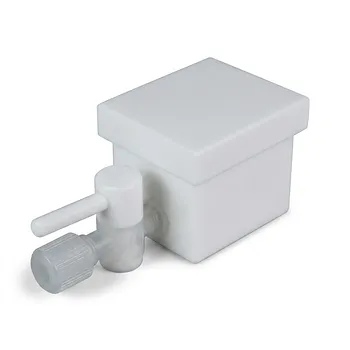
- Custom PTFE Laboratory Apparatus Corrosion Resistant Low Background Reaction Cells Precision CNC Fabrication
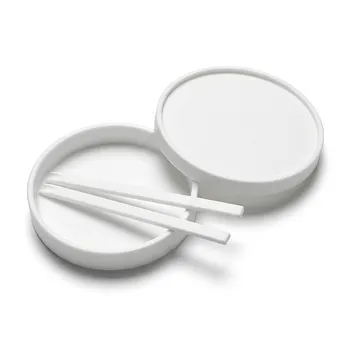
- Custom PTFE Petri Dish 30mm Corrosion Resistant Low Background Non Leaching Laboratory Ware
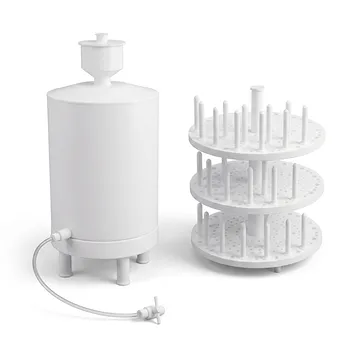
- High Purity Corrosion Resistant PTFE Acid Reflux Cleaning System for Laboratory Trace Analysis
- PTFE PFA Vacuum Filtration System Corrosion Resistant Customizable Shatterproof Laboratory Device
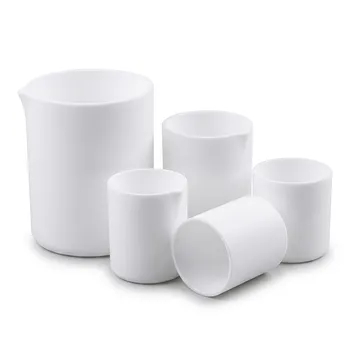
- Large Scale PTFE Beakers and Flasks for High Temperature Corrosion Resistant Laboratory Applications with Custom CNC Fabrication
People Also Ask
- How does PTFE's melting behavior affect custom lab apparatus? Key insights for manufacturing.
- What are the primary fabrication methods for PTFE laboratory apparatus? Expert Insights into Fluoropolymer Engineering
- What is the chemical compatibility range for PTFE laboratory apparatus? Explore Near-Universal Chemical Resistance.
- Why use PTFE or PFA for modified Cu-MOF synthesis? Ensure High Purity and Exceptional Chemical Stability
- What are the primary chemical resistance properties of PTFE laboratory apparatus? Unmatched Purity and Inertness