Ultra-high-purity TFE is required because trace trifluoroethylene can stop polymer chains before they reach the molecular weight needed for high-performance PTFE. TFE feedstock may need to meet an overall purity in the approximate range of 99.99% to 99.99995%, depending on the polymer grade and process, while trifluoroethylene is typically limited to below 0.2–0.5 ppm. High-purity PTFE, PFA, and related fluoropolymer components then help preserve that specification by preventing metals, organics, moisture, and other leachables from entering the monomer or reaction stream.
The purity requirement is fundamentally a chain-growth requirement. Trifluoroethylene is a particularly effective chain-transfer impurity, so even sub-ppm concentrations can reduce polymer molecular weight and alter the final material. High-purity fluid-transfer components do not replace monomer purification; they protect the purity achieved during synthesis, storage, and transfer.
Why TFE Purity Controls Polymer Quality
High molecular weight depends on uninterrupted chain growth
High-molecular-weight PTFE is produced when TFE molecules add repeatedly to growing polymer chains. The longer and more consistently those chains grow, the more likely the finished resin is to achieve the mechanical strength, chemical resistance, and thermal performance expected of PTFE.
Impurities containing hydrogen or chlorine can act as telogenic agents, also called chain-transfer agents. They interrupt the active chain-growth process and create prematurely terminated chains.
Trifluoroethylene is unusually damaging
Trifluoroethylene is structurally similar to TFE but behaves differently during radical polymerization. It can transfer or terminate growing chains efficiently, making its effect disproportionate to its concentration.
The result is not merely a small change in chemical composition. Excess trifluoroethylene can lower molecular weight, modify chain ends, and contribute to undesirable branching or cross-linking behavior. Those changes can reduce the mechanical integrity and consistency of the resulting fluoropolymer.
Parts-per-million limits are chemically meaningful
A concentration below one part per million may appear insignificant from a conventional process-control perspective. In a chain-reaction process, however, a trace impurity can interact with many growing polymer chains over the course of a batch.
That is why a TFE specification can require trifluoroethylene below approximately 0.2–0.5 ppm, even when the total monomer purity already appears extremely high.
What Else Must Be Controlled
Hydrogen- and chlorine-bearing impurities
Trifluoroethylene is the critical example, but it is not the only concern. Other hydrogen- or chlorine-containing impurities may also transfer radicals and terminate polymer chains prematurely.
The relevant question is therefore not only whether the feedstock meets a headline purity percentage. The process must also control specific impurities with disproportionate chemical effects.
Oxygen and uncontrolled polymerization
Trace oxygen presents a different type of risk. It can promote unwanted autopolymerization of TFE during storage or handling.
Uncontrolled local polymerization can generate heat. Under unfavorable conditions, that heat can contribute to dangerous decomposition reactions, including formation of carbon and tetrafluoromethane. Oxygen control, appropriate storage design, and validated stabilizer or scavenger practices are therefore process-safety concerns as well as purity concerns.
Metals, organics, and water
Trace metals, organic residues, and moisture can interfere with the polymerization system or become extractable contaminants in the finished material. Metal contamination can affect thermal stability, appearance, chain-end chemistry, or downstream analytical performance.
For high-purity applications, process water, reactor surfaces, seals, tubing, and fittings must all be treated as potential sources of contamination.
How Fluid-Transfer Components Protect the Process
They prevent recontamination after purification
Distillation and purification can produce a highly controlled TFE stream, but purity can be lost during transfer. Every valve, fitting, hose, vessel, and connection is part of the contact path.
High-purity PTFE and PFA components provide chemically resistant contact surfaces with low levels of extractable contaminants. When properly manufactured, cleaned, and installed, they help maintain the monomer specification between purification, reaction, and storage steps.
They reduce metal and organic leachables
Conventional metal components may release trace ions, particularly when exposed to aggressive fluorinated chemistry, acids, moisture, or repeated thermal cycling. Elastomers and ordinary plastics can also swell, degrade, or release organic residues.
Fluoropolymer tubing, fittings, valves, and reaction vessels reduce these risks because PTFE and PFA are highly resistant to many corrosive chemicals and have low reactivity. In applications requiring especially low backgrounds, compatible inert fittings and carefully selected seals are equally important.
They preserve a closed, controlled transfer path
A closed fluid path limits exposure to ambient air, moisture, and particulate contamination. It also reduces the number of opportunities for operator handling errors or accidental mixing with another process stream.
For reactive gases such as TFE, the transfer system must be designed around pressure, temperature, permeation, dead volume, sealing, and safety requirements. Material purity is necessary, but it is only one part of a reliable system.
They support high-purity reaction hardware
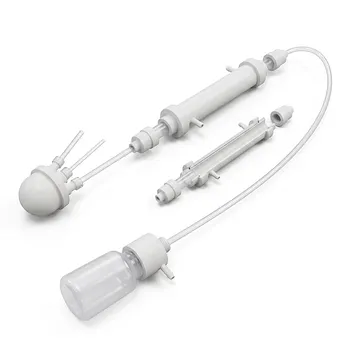
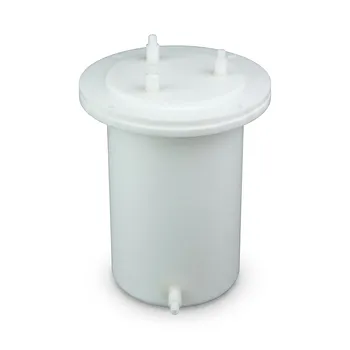
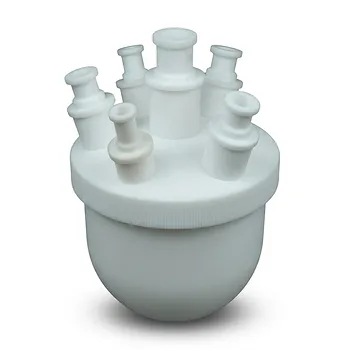
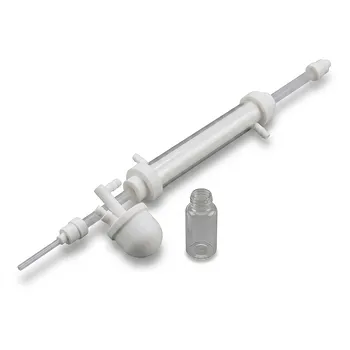
Custom PTFE or PFA vessels, digestion liners, transfer assemblies, and reaction components can provide a low-contamination environment where standard laboratory hardware would introduce metals or organics.
Where metal reactors are used, passivation and cleaning practices may be required to control iron and other residues. The correct material choice depends on the chemistry, pressure, temperature, mechanical load, and regulatory requirements of the process.
Why Component Purity Matters in the Final Product
Molecular weight affects performance
Maintaining low trifluoroethylene concentration helps preserve the high molecular weight required for PTFE’s mechanical performance. This affects durability, creep resistance, processing consistency, and the reliability of finished parts.
A polymer made from inadequately controlled TFE may still be chemically recognizable as PTFE, but it may not deliver the same performance envelope as a high-quality, high-molecular-weight resin.
Leachables affect analytical applications
Fluoropolymer labware and fluid-handling components are often used with aggressive reagents, trace samples, and high-purity solvents. Contaminants introduced during synthesis or transferred from process hardware can become background signals or interfere with measurements.
Low-leachable materials are therefore important for trace-analysis vessels, digestion tubes, tubing, fittings, and other components where sample integrity matters.
Chemical inertness must be maintained through fabrication
A high-purity polymer can be compromised by dirty processing equipment, unsuitable lubricants, contaminated tooling, or incompatible seals. Manufacturing and assembly controls must preserve the low-contamination characteristics established during polymer production.
The purity specification applies to the whole contact system, not only to the bulk resin.
Understanding the Trade-offs
Fluoropolymers are not automatically suitable for every service
PTFE and PFA offer excellent chemical resistance, but component selection still requires evaluation of pressure, temperature, mechanical stress, permeation, and connection design. A chemically compatible material may be unsuitable for a particular pressure or sealing duty.
TFE service also requires specialized engineering because the monomer is reactive and can present serious process-safety hazards.
Purity can conflict with mechanical requirements
The lowest-leachable material is not always the strongest or most dimensionally stable option for every component. A system may require a fluoropolymer-lined assembly, reinforced tubing, specialized valves, or limited use of passivated metal to satisfy both purity and mechanical requirements.
The correct design balances contamination control with structural integrity and safe containment.
“High purity” is not a complete specification
A supplier’s statement that a component is high purity does not, by itself, define its suitability. Relevant information includes resin grade, manufacturing history, cleaning method, extractables data, surface treatment, seal materials, and the component’s intended service conditions.
The component should be qualified against the actual impurity budget and operating envelope of the TFE process.
Purification and transfer control are separate functions
Fluid-transfer components cannot remove trifluoroethylene from TFE. Distillation, adsorption, analytical verification, and other validated purification steps establish the monomer purity.
The transfer system then prevents that purity from being lost. Treating component selection as a substitute for feedstock analysis is a common process-control error.
Making the Right Choice for Your Goal
The practical approach is to define the impurity limits first, then qualify every wetted component against those limits and the process conditions.
- If your primary focus is high-molecular-weight PTFE: Control trifluoroethylene at the required sub-ppm specification and verify other chain-transfer impurities before polymerization.
- If your primary focus is low-leachable laboratory or analytical components: Use qualified virgin PTFE or PFA, controlled cleaning procedures, inert fittings, and documented extractables performance.
- If your primary focus is process safety: Evaluate oxygen control, pressure and temperature limits, dead volume, sealing, venting, and the possibility of uncontrolled TFE polymerization or decomposition.
- If your primary focus is reliable fluid transfer: Use a closed, chemically compatible transfer path and validate tubing, valves, fittings, vessels, and seals as one integrated system.
Reliable fluoropolymer performance begins with controlling the chemistry of the TFE feed and ends with preserving that control throughout the entire fluid path.
Summary Table:
| Factor | Impact | Control Strategy |
|---|---|---|
| Trifluoroethylene | Chain transfer, reduces molecular weight | Limit to <0.2-0.5 ppm via distillation/adsorption |
| Oxygen | Uncontrolled polymerization, safety risk | Inert gas blanketing, oxygen sensors, stabilizers |
| Metals/Organics/Water | Catalyst poisoning, extractables, hydrolysis | Use high-purity PTFE/PFA, passivated metals, clean assembly |
| Fluid transfer components | Recontamination after purification | Use inert, low-leach materials, closed systems |
Ensure the highest purity in your fluoropolymer production with our precision PTFE/PFA components. From custom tubing and valves to reaction vessels, our low-leach, chemically resistant products protect your TFE stream and product quality. Contact our experts today for a tailored solution — contact us.
Related Products
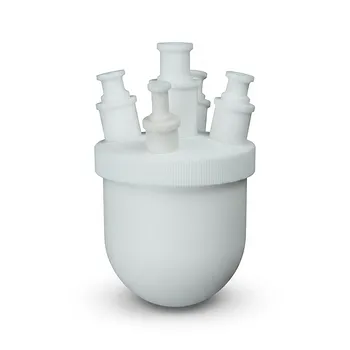
- High Purity Large Capacity PTFE Flask Custom Multi Neck Chemical Reaction Vessel for Corrosive Laboratory Synthesis and Industrial Processing
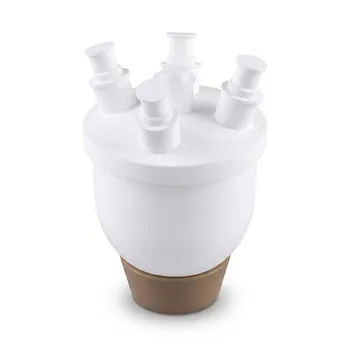
- High Performance Customizable PTFE Reaction Vessel and Corrosion Resistant Polytetrafluoroethylene Flask for Chemical Laboratory Use
- Custom PTFE Petri Dishes Corrosion Resistant High Purity Low Background Labware
- High Purity Custom PTFE Reaction Cell Electrolytic Tank for Semiconductor and Polysilicon Industrial Applications
- Custom PTFE Corrosion Resistant Insulating Electrophoresis Reaction Cell with Septum and Valves for Low Background Trace Analysis
People Also Ask
- What are the technical advantages of using high-pressure PTFE reaction vessels during metal digestion? Expert Insights.
- Why are high chemical resistance reaction vessels required in 4-SBD synthesis? Ensure High-Purity Material Inertness
- Why use PFA or PTFE for WO3-x acidification? Ensure high-purity nanocrystals and prevent metallic contamination.
- Why are high-performance pressure-resistant reaction vessels required for oxygen-assisted hydrothermal conversion at 150 °C?
- Why are corrosion-resistant etching vessels necessary for hierarchical porous carbon? Ensure high purity & performance.