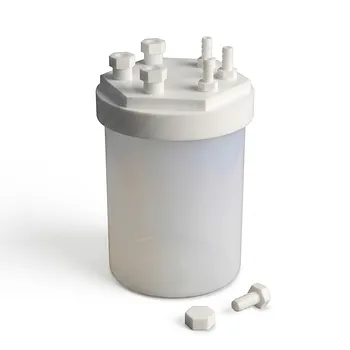
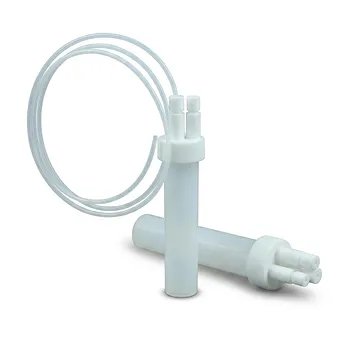
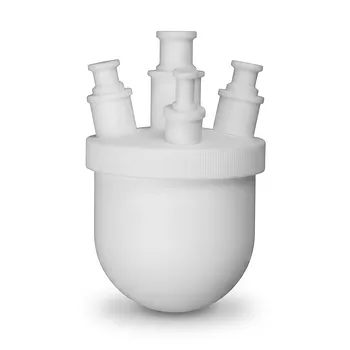
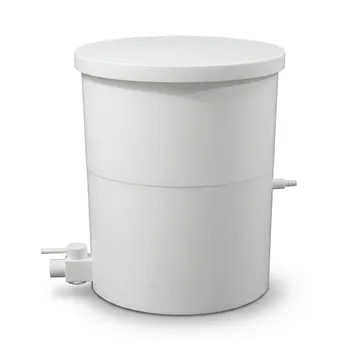
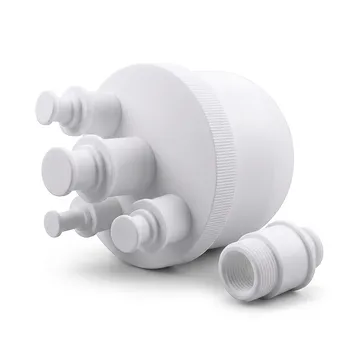
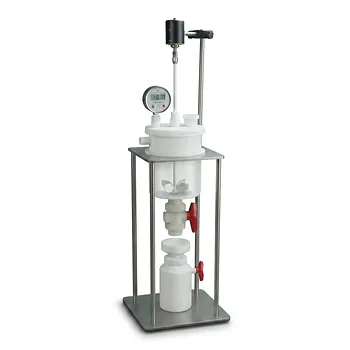
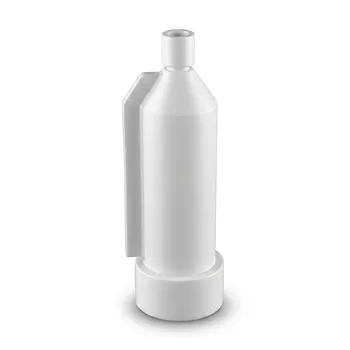
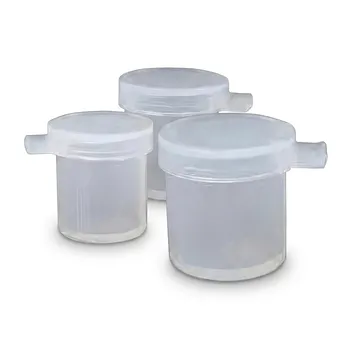
The synthesis of high-quality non-stoichiometric tungsten oxide ($WO_{3-x}$) nanocrystals requires a contamination-free environment under extreme chemical stress. The acidification phase utilizes 3.0 M hydrochloric acid at elevated temperatures, conditions that can cause standard laboratory glass or low-grade plastics to leach metal impurities into the reaction. PFA and PTFE vessels are recommended because their near-absolute chemical inertness prevents vessel etching, ensuring that the semiconductor physical properties and plasmonic characteristics of the nanocrystals remain untainted.
Core Takeaway: PFA and PTFE are used to provide a chemically "blind" environment, preventing the introduction of metallic impurities and the adsorption of target ions during the aggressive high-temperature acidification of $WO_{3-x}$ nanocrystals.
The Challenge of Aggressive Acidification
The Corrosive Nature of 3.0 M Hydrochloric Acid
The acidification of $WO_{3-x}$ is not a mild process; it involves high concentrations of hydrochloric acid (3.0 M) combined with high-temperature heating.
Under these conditions, standard borosilicate glass can undergo surface etching, which releases silicon and various trace metals into the solution.
Fluoropolymer materials like PFA (Perfluoroalkoxy) and PTFE (Polytetrafluoroethylene) are uniquely capable of resisting this high-temperature acid corrosion without structural degradation.
Preventing Lattice Contamination
Non-stoichiometric nanocrystals are highly sensitive to their chemical environment during formation.
If impurity ions from the reaction vessel enter the crystal lattice, they can fundamentally alter the material's electrochemical specific capacitance and cycling stability.
By using high-purity fluoroplastics, researchers ensure that the enrichment of functional groups and the expansion of surface area occur in a pure environment.
Physical and Chemical Advantages of Fluoropolymers
Near-Absolute Chemical Inertness
PFA and PTFE exhibit extreme resistance to strong oxidizing acids, including hydrochloric, nitric, and hydrofluoric acids.
This inertness is critical for maintaining a "clean background" value, which is essential when the goal is to produce materials with specific plasmonic characteristics.
These materials do not contain the metal additives often found in lower-grade plastics, which further eliminates the risk of leaching.
Low Surface Energy and Adsorption
The smooth, low-energy surfaces of PFA and PTFE prevent target elements or ions from adsorbing (sticking) to the container walls.
In $WO_{3-x}$ synthesis, this ensures that the concentration of reagents remains precise and that the entire sample can be recovered without loss to the vessel surface.
This characteristic is also why these materials are favored in trace mineral analysis and the synthesis of Fe–N–C catalysts, where every microgram of material counts.
Impact on Nanocrystal Performance
Preserving Plasmonic and Semiconductor Properties
The primary reason for selecting PFA or PTFE is the protection of the nanocrystal's physical properties.
Impurity ions can disrupt the plasmonic resonance of $WO_{3-x}$, leading to inconsistent performance in optical or electronic applications.
Using chemically stable vessels ensures that the synthesized nanocrystals meet the exact stoichiometric requirements for their intended semiconductor use.
Ensuring Consistency Across Batches
In advanced nanomaterial research, reproducibility is as important as initial purity.
Fluoropolymer vessels provide a consistent, non-reactive environment that does not change over multiple high-temperature cycles.
This prevents "drift" in experimental results that might otherwise be caused by the progressive degradation of less stable vessel materials.
Understanding the Trade-offs
Thermal and Physical Limitations
While PTFE and PFA are highly heat-resistant, they have specific melting points that must not be exceeded to avoid vessel deformation or the release of fumes.
PTFE is generally opaque, which can make it difficult to visually monitor reactions compared to translucent PFA or transparent glass.
Additionally, these materials are significantly more expensive than standard labware, requiring a higher initial investment for specialized synthesis setups.
Cleaning and Maintenance Requirements
To maintain their "trace-metal-free" status, these vessels require rigorous acid-cleaning protocols between uses.
Because they are softer than glass, they can be scratched by metal spatulas or abrasive cleaners, creating sites where contaminants might eventually lodge.
Proper handling is required to ensure that the long-term benefit of low impurity leaching is not compromised by physical damage.
Making the Right Choice for Your Goal
To achieve the best results in $WO_{3-x}$ nanocrystal synthesis or similar high-purity reactions, consider your primary operational priority:
- If your primary focus is maximum chemical purity: Use PFA vessels, as they offer the lowest leaching rates and are often available in higher-purity grades for trace analysis.
- If your primary focus is high-temperature stability on a budget: PTFE is often more cost-effective than PFA while still offering the required resistance to 3.0 M HCl.
- If your primary focus is visual monitoring of the reaction: Choose PFA, which is translucent and allows for better visibility of color changes or precipitate formation than opaque PTFE.
By prioritizing material stability, you ensure that the complex physical properties of your nanocrystals are a result of your chemistry, not your container.
Summary Table:
| Feature | PFA (Perfluoroalkoxy) | PTFE (Polytetrafluoroethylene) | Impact on $WO_{3-x}$ Synthesis |
|---|---|---|---|
| Chemical Inertness | Near-absolute; resists 3.0M HCl | Near-absolute; resists 3.0M HCl | Prevents vessel etching and impurity leaching |
| Purity Level | Ultra-high (Trace metal grade) | High (General laboratory grade) | Preserves plasmonic and semiconductor properties |
| Transparency | Translucent (Visible reactions) | Opaque (Visual check limited) | Facilitates monitoring of precipitates/color change |
| Surface Energy | Extremely Low | Extremely Low | Prevents ion adsorption and material loss |
| Customization | Excellent for molded/machined parts | Excellent for CNC machining | Enables bespoke reactor and vessel designs |
Elevate Your Nanocrystal Research with KINTEK’s Fluoropolymer Expertise
Don't let vessel-borne impurities compromise your semiconductor research. KINTEK provides the ultimate "chemically blind" environment required for the most aggressive acidification processes. We specialize in high-performance fluoropolymer materials, offering an exhaustive range of supplies tailored for advanced material synthesis.
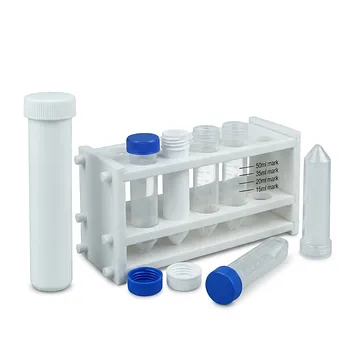
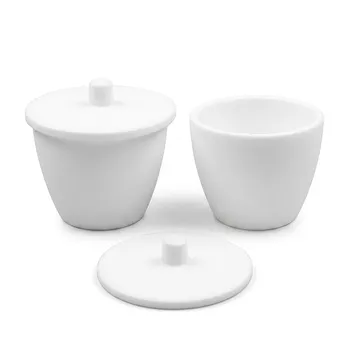
From everyday basic labware (beakers, measuring cylinders, crucibles, reagent bottles, and digestion tubes) to high-purity trace analysis instruments, KINTEK covers your entire workflow. Our capabilities extend to comprehensive fluid transfer components (tubing, valves, fittings), filtration tools, and general consumables (O-rings, seal tapes, septa). For complex research, we manufacture advanced derivative apparatus, including custom electrochemical cells, battery testing fixtures, and microwave digestion vessels.
Why choose KINTEK?
- End-to-End Custom CNC Fabrication: We deliver everything from complex non-standard machined parts to high-volume orders.
- Absolute Material Focus: Specialized exclusively in PFA and PTFE for maximum chemical stability.
- Bespoke Solutions: We can design and manufacture complete laboratory setups tailored to your specific reaction parameters.
Ensure the integrity of your $WO_{3-x}$ nanocrystals today. Contact our technical team for a custom quote or consultation!
References
- Mohsen Zafari, Fatemeh Shariatmadar Tehrani. Enhanced photocatalytic performance of non-stoichiometric WO3−x nanocrystals via near-infrared localized surface plasmon resonance. DOI: 10.1038/s41598-025-99138-x
This article is also based on technical information from Kintek Knowledge Base .
Related Products
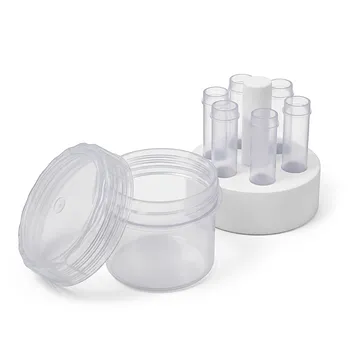
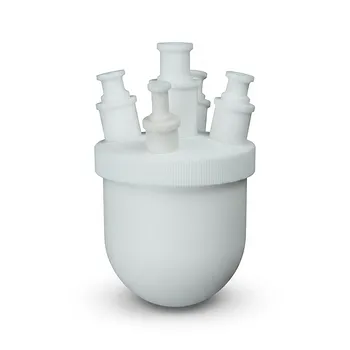
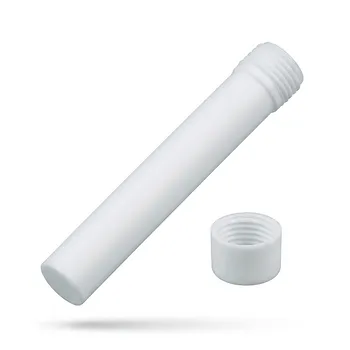
- High Purity Corrosion Resistant PFA Reaction Vessel with PTFE Holder and Integrated Sampling Tube for Trace Analysis
- High Purity PTFE PFA Microwave Digestion Vessels Custom Acid Digestion Tanks for Laboratory Sample Preparation
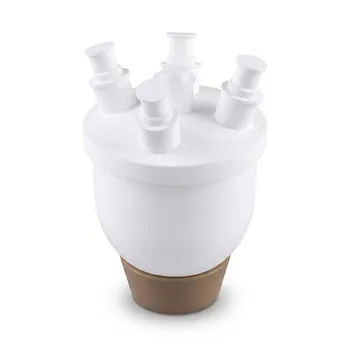
- High Performance Customizable PTFE Reaction Vessel and Corrosion Resistant Polytetrafluoroethylene Flask for Chemical Laboratory Use
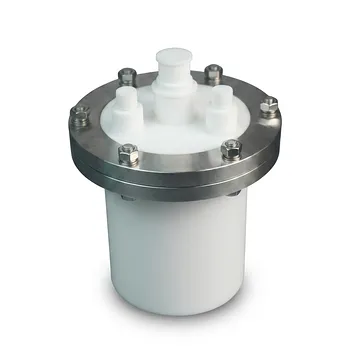
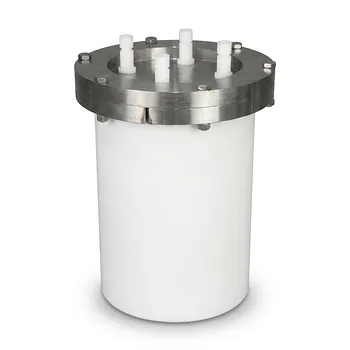
- Custom PTFE Reaction Kettle 2L Flanged Fluoropolymer Reactor Tank Acid and Alkali Resistant Polytetrafluoroethylene Vessel
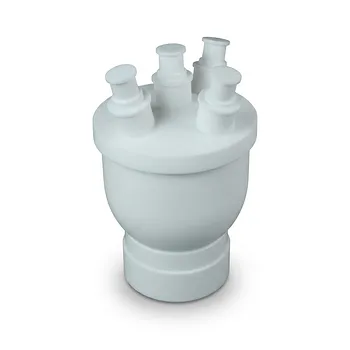
- PFA Chemical Reaction Tank with Customizable Fittings for Corrosive Solvent Synthesis and High Purity Lab Applications
People Also Ask
- Why is the choice of reaction vessel material critical during B-NiBDC synthesis? Optimize MOF Purity & Performance
- How do the material choice and sealing integrity of the reaction vessel affect the growth of NiFe-LDH? Optimize Synthesis
- Why are well-sealed reaction vessels necessary for superacid-promoted Friedel-Crafts polycondensation? Optimize Synthesis
- Role of reaction vessels in alkali treatment for oil palm waste: Achieve High-Purity Cellulose with PTFE Vessels
- What is the role of high chemical inertness reaction vessels in the organic synthesis of acylhydrazone ligands? | Guide