Ultra-high TFE monomer purity is critical because trace impurities can stop polymer chains before they reach the molecular weight required for high-performance PTFE and PFA. TFE feedstock may need to reach approximately 99.99995% purity, while particularly powerful chain-transfer impurities such as trifluoroethylene must be reduced to roughly below 0.2–0.3 ppm. Without this control, the resulting fluoropolymers can lose mechanical strength, chemical resistance, and cleanliness, making them unsuitable for high-purity laboratory supplies.
The purity of the TFE feedstock directly affects the structure and performance of the finished fluoropolymer. Removing hydrogen- and chlorine-bearing telogenic impurities allows polymer chains to grow to high molecular weight, producing PTFE and PFA components with stronger mechanical integrity, lower contamination risk, and reliable resistance to aggressive chemicals.
Why TFE Purity Controls Polymer Quality
Trace impurities terminate chain growth
High-molecular-weight PTFE is formed when TFE polymerizes into long, continuous molecular chains. Hydrogen- or chlorine-bearing impurities can act as telogens, or chain-transfer agents, interrupting this growth prematurely.
The result is a lower average molecular weight and a polymer with less robust physical performance. This is why purity requirements are far stricter than the percentage typically associated with ordinary industrial-grade chemicals.
Trifluoroethylene is especially damaging
Trifluoroethylene is a particularly strong chain-transfer impurity. Even at concentrations measured in fractions of a part per million, it can interfere with the polymerization process.
Maintaining trifluoroethylene below approximately 0.2–0.3 ppm helps prevent premature chain termination and protects the high molecular weight needed for demanding PTFE applications.
High molecular weight supports mechanical integrity
Long polymer chains contribute to the strength and durability of PTFE and PFA. They help laboratory components retain their shape and resist cracking, deformation, and mechanical damage during handling and use.
This matters for products such as digestion tubes, trace-analysis beakers, reaction vessels, transfer fittings, and microwave digestion liners, where failure can compromise both safety and analytical results.
Why Molecular Weight Matters in Laboratory Supplies
Chemical inertness depends on a stable polymer structure
PTFE and PFA are selected for their exceptional resistance to strong acids, strong bases, organic solvents, and other aggressive reagents. A properly formed, high-molecular-weight polymer provides a stable barrier between the chemical process and the surrounding equipment.
This stability helps prevent the container or fluid-handling component from reacting with the sample or process fluid.
Low leachables protect analytical accuracy
High-purity laboratory work is sensitive to contamination at very low concentrations. Metals, organic residues, and other extractable substances from equipment can create background signals or alter reaction chemistry.
Ultra-pure TFE feedstock supports the production of fluoropolymer materials with minimal leachable contaminants, reducing the likelihood that a beaker, tube, vessel, or fitting will introduce unwanted substances into the sample.
Surface cleanliness supports repeatable processes
PTFE and PFA also provide smooth, chemically resistant surfaces that limit material buildup and simplify cleaning. This is valuable in trace analysis and fine chemical synthesis, where residual particulates or deposits can contaminate subsequent runs.
The benefit depends on the complete manufacturing process, including resin quality, forming, cleaning, and handling. Monomer purity is the foundation, but it is not the only control point.
How Purity Affects PTFE and PFA
PTFE requires very high chain length
For PTFE, the primary concern is achieving the high molecular weight associated with its mechanical strength, chemical resistance, and service reliability. Chain-transfer impurities reduce the effective chain length and can degrade these properties.
The required TFE purity can reach approximately 99.99995%, with critical impurities controlled independently rather than relying only on the overall purity percentage.
PFA has an additional comonomer requirement
PFA is not made from TFE alone. It is a copolymer of TFE and a perfluoroalkyl vinyl ether comonomer, so the purity and consistency of both monomer streams matter.
Impure TFE can still disrupt chain growth and introduce contamination into the polymer. For PFA laboratory supplies, consistent control of the TFE feedstock helps preserve the combination of chemical resistance, cleanliness, toughness, and processability expected from the material.
Controlling the TFE Feedstock
Purity must be maintained through handling
Achieving a high assay at the point of purification is insufficient if the monomer becomes contaminated during storage, transfer, or polymerization. Equipment, seals, fittings, and vessels must be selected and maintained so they do not introduce metallic, organic, hydrogen-bearing, or chlorine-bearing contaminants.
This is one reason fluoropolymer components are commonly used in high-purity gas and fluid-handling systems.
Oxygen requires separate attention
Trace oxygen is a distinct process concern because it can promote unwanted TFE autopolymerization during storage or handling. That reaction can generate localized heat and create a serious decomposition hazard.
For this reason, oxygen control and appropriate stabilization practices are part of safe TFE management. They address a different risk from telogenic impurities: chain-transfer impurities primarily reduce polymer quality, while oxygen can threaten process stability.
Understanding the Trade-offs
Purity control increases manufacturing complexity
Producing and verifying TFE at approximately 99.99995% purity requires specialized purification, analytical measurement, storage, and transfer controls. These requirements increase equipment, process, and quality-assurance costs.
However, relaxing the specification can create greater downstream costs through rejected resin, inconsistent product performance, contamination investigations, or failure of critical laboratory components.
Overall purity can hide critical impurities
A reported purity percentage does not fully describe polymerization suitability. A very small amount of a highly active chain-transfer impurity may have a greater effect than a larger amount of a relatively inert contaminant.
Manufacturers therefore need impurity-specific limits, particularly for trifluoroethylene and other hydrogen- or chlorine-bearing compounds.
Monomer purity does not guarantee finished-product purity
Even perfectly purified TFE cannot compensate for contamination introduced during polymerization, molding, machining, cleaning, packaging, or installation. Finished PTFE and PFA supplies must also be evaluated for extractables, particulates, surface residues, and compatibility with the intended process.
The correct approach is a controlled materials system, with monomer purity as the first and most fundamental layer.
How to Apply This to Your Project
The appropriate priority depends on whether your main concern is polymer performance, analytical cleanliness, or process safety.
- If your primary focus is maximum mechanical and chemical performance: Require ultra-high-purity TFE and strict limits on trifluoroethylene and other telogenic impurities to preserve high polymer molecular weight.
- If your primary focus is trace analysis or contamination control: Specify PTFE or PFA made from tightly controlled feedstocks and verify the finished product for low leachables, particulates, and extractable residues.
- If your primary focus is safe TFE processing: Control oxygen exposure and storage conditions in addition to monitoring chain-transfer impurities, because autopolymerization presents a separate process hazard.
- If your primary focus is reliable fluid handling: Use compatible high-purity fluoropolymer vessels, tubing, seals, and fittings throughout the monomer and product-contact system to avoid recontamination.
Ultra-high TFE purity is not merely a specification for the monomer; it is the starting point for producing fluoropolymer laboratory supplies that remain strong, inert, and clean when experimental results depend on all three.
Summary Table:
| Aspect | Impact of Ultra-High Purity |
|---|---|
| Polymer Chain Length | Prevents telogens from terminating chains, ensuring high molecular weight for mechanical strength |
| Chemical Inertness | Stable polymer structure resists acids, bases, and solvents |
| Low Leachables | Minimizes extractables for accurate trace analysis |
| Surface Cleanliness | Smooth surfaces reduce contamination and simplify cleaning |
| PFA Copolymerization | Consistent TFE purity preserves comonomer balance for toughness and processability |
| Safety | Reduces autopolymerization risk when oxygen is controlled |
Elevate your lab's performance with KINTEK's high-purity PTFE and PFA products, crafted from ultra-pure TFE to ensure superior strength, chemical resistance, and analytical accuracy. Trust our end-to-end CNC machining for custom solutions. Contact us today to discuss your requirements.
Related Products
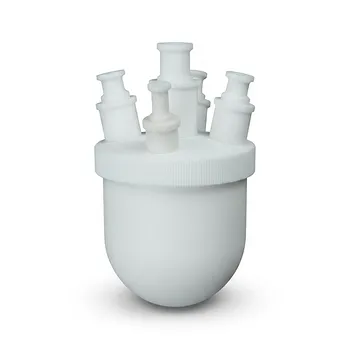
- High Purity Large Capacity PTFE Flask Custom Multi Neck Chemical Reaction Vessel for Corrosive Laboratory Synthesis and Industrial Processing
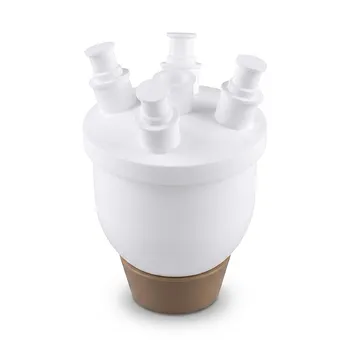
- High Performance Customizable PTFE Reaction Vessel and Corrosion Resistant Polytetrafluoroethylene Flask for Chemical Laboratory Use
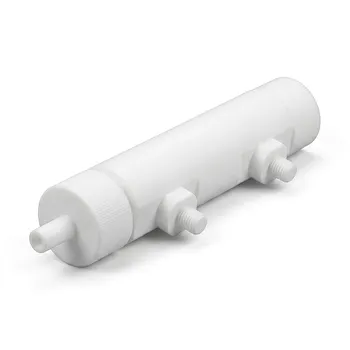
- High Purity Custom PTFE Reaction Cell Electrolytic Tank for Semiconductor and Polysilicon Industrial Applications
- Custom PTFE Petri Dishes Corrosion Resistant High Purity Low Background Labware
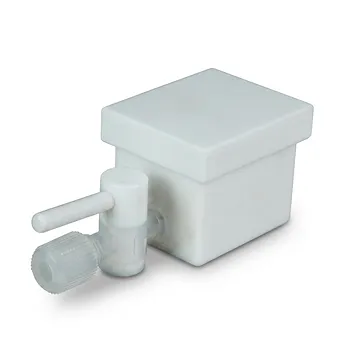
- Custom PTFE Corrosion Resistant Insulating Electrophoresis Reaction Cell with Septum and Valves for Low Background Trace Analysis
People Also Ask
- What are the technical advantages of using high-pressure PTFE reaction vessels during metal digestion? Expert Insights.
- Why are custom PTFE laboratory vessels and complex apparatus manufactured via sintering and CNC machining rather than conventional melt-injection molding?
- Why are high chemical resistance reaction vessels required in 4-SBD synthesis? Ensure High-Purity Material Inertness
- What are the key safety hazards of TFE monomer handling? Prevent deflagration with oxygen control and thermal management.
- Why use PFA or PTFE for WO3-x acidification? Ensure high-purity nanocrystals and prevent metallic contamination.