Surfactant residue control is critical because even trace extractables from PTFE can become significant analytical contaminants. During emulsion polymerization, surfactants stabilize PTFE particles but may remain trapped in the resin or dispersion. If they later leach from digestion tubes, wash bottles, or microwave vessels, they can elevate blanks, introduce organic or ionic background, and compromise trace-level measurements.
High-purity fluoropolymer labware is only as reliable as the purity of the resin and its post-polymerization treatment. Controlling residual surfactants reduces leachables, protects sample integrity, and helps ensure that measured signals come from the sample rather than the container.
Why Surfactants Are Used During PTFE Polymerization
Stabilizing the polymer particles
In emulsion polymerization, anionic surfactants surround and stabilize growing PTFE particles in the aqueous reaction medium. This prevents particle agglomeration and supports consistent polymer formation.
Historically, perfluorinated carboxylic ammonium salts such as APFO/PFOA were commonly used for this purpose.
The polymerization aid can become a purity risk
Surfactants are processing aids, not part of the desired PTFE structure. Some portion can remain in the solid polymer, aqueous dispersion, or particle interfaces after polymerization.
The primary concern is therefore not the presence of surfactant during synthesis, but incomplete removal before the resin is converted into laboratory equipment.
How Residues Affect Trace Analysis
They increase reagent and sample blanks
Residual surfactants or their degradation fragments can migrate from the fluoropolymer surface into acids, solvents, digests, or rinse solutions. In ultra-trace analysis, even very small quantities can produce a measurable background.
This can appear as a false elevation in the reported concentration of the analyte or as unexplained contamination in procedural blanks.
They can interfere with sensitive instruments
Extracted organic or ionic species may affect analytical measurements, particularly when laboratories are working near the instrument’s detection limit. The result can be elevated baselines, additional spectral or chemical background, or inconsistent blank subtraction.
The practical effect is reduced confidence in limit-of-detection and limit-of-quantification results.
They undermine sample integrity
High-purity labware must not contribute meaningful material to the sample. This is especially important for:
- ICP-MS digestion tubes
- Microwave digestion vessels
- PFA and PTFE reagent bottles
- High-purity wash bottles
- Trace-analysis containers and fluid-handling components
These applications often involve aggressive reagents that can extract contaminants more effectively than ordinary laboratory solutions.
They can create contamination that is difficult to diagnose
A container-related contaminant may not be obvious because the labware still appears chemically inert and visually clean. Without appropriate extractables testing and blank controls, the contamination may be incorrectly attributed to reagents, instruments, or the sample itself.
Why Resin Purity Matters More Than PTFE’s Reputation
Chemical inertness is not the same as zero extractables
PTFE is highly chemically resistant and generally has low surface reactivity. However, chemical resistance of the polymer does not automatically guarantee the absence of residual manufacturing substances.
Surfactants, initiator fragments, telogens, buffers, trace metals, and other process-related impurities must be controlled separately.
Surface purity affects the analytical background
For trace work, the relevant question is not simply whether the labware survives contact with an acid or solvent. The more important question is whether it releases any detectable material into that contact solution.
High-purity fluoropolymer production therefore requires control of the full process, including raw materials, reaction water, polymerization chemistry, washing, drying, and fabrication.
How Manufacturers Control Residual Surfactants
Selecting lower-risk polymerization technologies
Modern fluoropolymer manufacturing may use PFOA-free alternative surfactants, non-bioaccumulative fluorinated chemistries, or granular suspension polymerization methods.
These approaches are intended to reduce persistent processing residues and lower the potential for extractable contamination in the finished resin.
Washing and purification
Coagulated polymer can be washed to remove residual surfactants and other water-soluble or loosely associated impurities. The effectiveness of this step depends on the resin morphology, washing conditions, and verification method.
A supplier’s claim that a material is “PTFE” or “PFA” is not by itself sufficient evidence of suitability for ultra-trace analysis.
Controlling inorganic and process impurities
High-purity synthesis also requires control of trace metals, initiator residues, telogenic agents, and other additives. Ultra-pure process water and carefully controlled reaction conditions help limit these sources of contamination.
This matters because an analytical blank can be elevated by inorganic residues as well as by organic surfactants.
Verifying extractables rather than relying only on formulation
The most meaningful qualification is performance-based testing of the finished labware. Appropriate evaluations may include reagent extraction, procedural blanks, ionic contamination testing, and application-specific trace-element screening.
Testing the finished vessel is important because molding, sintering, machining, cleaning, and packaging can introduce additional contaminants after resin production.
Understanding the Trade-offs
Alternative surfactants reduce one risk but do not remove the need for testing
Replacing APFO/PFOA with newer chemistries addresses important environmental and regulatory concerns and may reduce residual contamination. However, an alternative surfactant can still become an extractable if it is not adequately removed.
PFOA-free should therefore be treated as a necessary attribute for many applications, not as a complete certificate of analytical cleanliness.
Polymerization route can affect material properties
Emulsion and suspension polymerization routes produce different particle structures and processing characteristics. A resin selected for its low extractables must still meet the required mechanical strength, dimensional stability, weldability, and thermal performance.
The cleanest material is not automatically the best choice if it cannot withstand the intended digestion or handling process.
Thermal treatment is not a universal solution
High-temperature processing may reduce some volatile or degradable residues, but it cannot be assumed to eliminate every contaminant. Nonvolatile inorganic species and thermally stable fragments may remain, while decomposition products can create new residues or discoloration.
Purification and extractables verification are more reliable than depending solely on thermal burn-off.
Excessive cleaning can introduce new contamination
Aggressive post-fabrication cleaning may remove manufacturing residues, but contaminated water, detergents, tools, or packaging can reintroduce impurities. Cleaning procedures must therefore be validated for both removal efficiency and cleanliness.
Choosing Labware for Ultra-Trace Work
Define the analytical risk
The required purity level depends on the analyte, matrix, reagent system, contact time, temperature, and detection limit. Microwave digestion with concentrated acids presents a different extraction challenge from short-term storage of neutral aqueous solutions.
The labware specification should reflect the actual analytical method rather than a generic “chemical-resistant” rating.
Request meaningful supplier documentation
Useful documentation may include:
- Resin type and polymerization route
- Confirmation of PFOA/APFO phase-out or absence
- Extractables and leachables data
- Trace-metal background results
- Lot or batch identification
- Cleaning and packaging controls
- Recommended preconditioning procedures
The strongest evidence is data generated using conditions relevant to the intended application.
Establish laboratory blank controls
Even qualified labware should be checked within the laboratory’s own workflow. Run container blanks, reagent blanks, and procedural blanks using the same acids, temperatures, contact times, and handling steps as the real samples.
This helps distinguish contamination from the vessel, reagent, digestion process, and analytical instrument.
Making the Right Choice for Your Goal
Select fluoropolymer labware based on both material purity and demonstrated performance in your analytical method.
- If your primary focus is minimum trace-element background: Choose PTFE or PFA labware made from high-purity, low-extractables resin and verify it with application-relevant blank testing.
- If your primary focus is regulatory and environmental compliance: Prefer fluoropolymers manufactured through PFOA/APFO-free or non-bioaccumulative processes, supported by supplier documentation.
- If your primary focus is microwave or high-temperature digestion: Confirm thermal suitability, dimensional stability, and extractables performance after the actual temperature and reagent cycle.
- If your primary focus is reproducible laboratory results: Standardize preconditioning, cleaning, blank correction, and lot qualification rather than relying only on the polymer name.
Controlling surfactant residue turns PTFE’s inherent chemical inertness into dependable analytical purity.
Summary Table:
| Aspect | Importance | Key Considerations |
|---|---|---|
| Surfactant Role | Stabilize PTFE particles during emulsion polymerization | Must be completely removed to avoid contamination |
| Risk | Residues leach into samples, increasing blanks | Use PFOA-free alternatives and thorough washing |
| Impact | Elevates background, interferes with instruments | Test extractables to ensure measurement integrity |
| Control | Washing, purification, and alternative technologies | Verify with performance-based testing, not just reputation |
| Selection | Match labware to application | Consider acid type, temperature, and detection limits |
Ensure your trace analysis results are reliable with KINTEK's high-purity PTFE/PFA labware. Our products are manufactured with rigorous surfactant control and extractables verification, minimizing contamination for accurate measurements. From digestion vessels to wash bottles, we provide labware that meets the demands of ultra-trace analysis. Contact us today to discuss your requirements and elevate your lab's performance!
Related Products
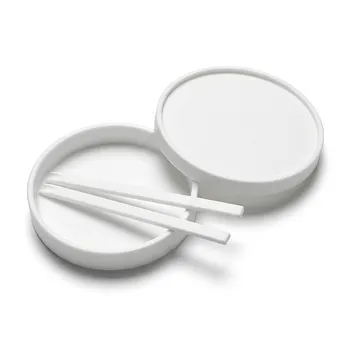
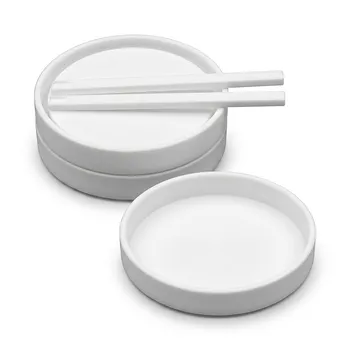
- Custom Polytetrafluoroethylene PTFE Petri Dishes 60mm Corrosion Resistant Low Background Labware
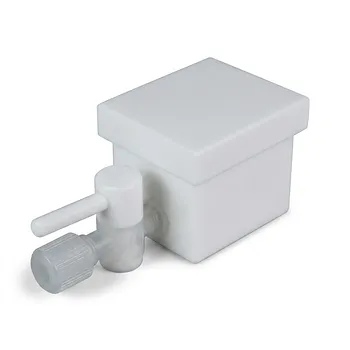
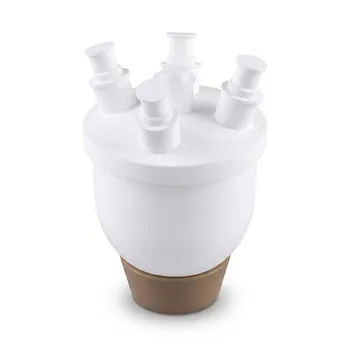
- Custom PTFE Laboratory Apparatus Corrosion Resistant Low Background Reaction Cells Precision CNC Fabrication
- Custom PTFE Petri Dishes Corrosion Resistant High Purity Low Background Labware
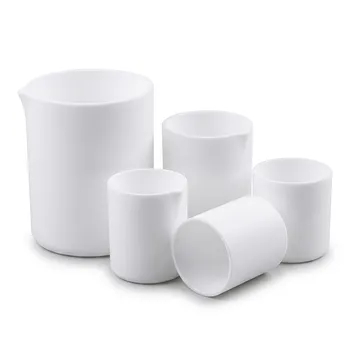
- Large Scale PTFE Beakers and Flasks for High Temperature Corrosion Resistant Laboratory Applications with Custom CNC Fabrication
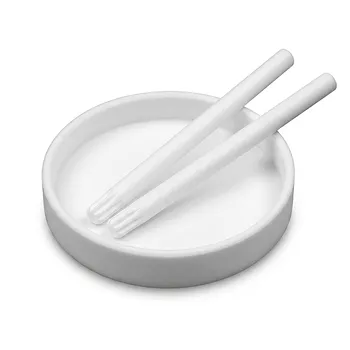
- Custom PTFE Petri Dish 120mm Diameter Corrosion Resistant Low Background High Purity Labware
People Also Ask
- Why are PTFE or PFA Petri dishes preferred for membrane casting? Ensure Damage-Free Recovery & Chemical Purity
- What types of labware or tools are commonly made from PTFE? Essential Chemically-Resistant Equipment for Your Lab
- What are the considerations for choosing PTFE or glass for Bi2O3/CeO2 synthesis? Ensure Purity and Precision.
- What are the key properties of PTFE that make it suitable for labware applications? Ensure Lab Integrity with Superior Material
- What types of PTFE labware are commonly available? Find the Right Tools for Your Lab