Knowledge PTFE(Teflon) Labware Why is steam injection applied during the pyrolysis step in TFE monomer manufacturing? Boost TFE yield for high-quality PTFE lab components
Author avatar

Tech Team · Kintek

Updated 1 month ago

Why is steam injection applied during the pyrolysis step in TFE monomer manufacturing? Boost TFE yield for high-quality PTFE lab components


Steam injection improves TFE production by shifting the pyrolysis equilibrium toward monomer formation. In the high-temperature pyrolysis of chlorodifluoromethane, (2\text{ CHClF}_2 \rightleftharpoons \text{C}_2\text{F}_4 + 2\text{ HCl}), superheated steam acts primarily as an inert diluent. It reduces the reactant’s partial pressure while allowing the reactor to operate at controlled total pressure, increasing TFE yield to approximately 90–94%, and in optimized conditions approaching 95%.

Core takeaway: Steam does not become part of the TFE molecule. It changes the gas-phase conditions so the reversible reaction favors TFE formation, improving raw-material efficiency and supporting a cleaner, more consistent feedstock for PTFE and PFA production.

Why the Pyrolysis Reaction Needs Dilution

The reaction produces more gas molecules

The pyrolysis reaction converts two moles of chlorodifluoromethane into three moles of gaseous products: one mole of TFE and two moles of hydrogen chloride.

According to Le Chatelier’s principle, increasing pressure favors the side with fewer gas molecules. Higher pressure therefore tends to push this equilibrium backward and reduce TFE formation.

Steam lowers the reactant partial pressure

Superheated steam dilutes the chlorodifluoromethane stream. Under the controlled pressure conditions used for the reactor, this lowers the partial pressure of the reactant and favors the product side, where more gas molecules are formed.

The key effect is partial-pressure control, rather than simply adding pressure or changing the chemical identity of the reaction.

High temperature enables rapid conversion

The reaction is conducted at approximately 750°C to 900°C, with commercial operation commonly near 850°C to 900°C. Steam-to-reactant ratios are typically controlled within a broad operating range, often around 7:1 to 10:1, depending on the process design.

These conditions help achieve high chlorodifluoromethane conversion while increasing TFE yield and limiting undesirable high-boiling by-products.

How Higher TFE Quality Supports Fluoropolymer Manufacturing

It improves raw-material utilization

A higher TFE yield means more of the chlorodifluoromethane feed is converted into the desired monomer rather than remaining unreacted or forming unwanted products.

This improves process efficiency and provides a more consistent supply of the monomer used in downstream fluoropolymer production.

It reduces unwanted polymer-forming impurities

TFE is subsequently purified and polymerized to produce PTFE and related fluoropolymers such as PFA. Better control of the pyrolysis step can reduce the formation of by-products such as hexafluoropropylene and perfluoroisobutylene, followed by appropriate scrubbing and purification.

Cleaner TFE feedstock reduces the risk that impurities will affect polymerization behavior or contribute to inconsistencies in the final resin.

It supports a more uniform polymer matrix

PTFE and PFA components depend on a consistent polymer structure for their demanding service properties. A cleaner and more controlled monomer stream supports resin uniformity, which helps reduce structural irregularities in molded or machined material.

The resulting benefit is indirect but important: steam injection improves the upstream chemistry that contributes to the quality of the finished fluoropolymer.

How This Benefits PTFE Laboratory Components

Mechanical integrity

Precision laboratory components, including CNC-machined fittings, valve bodies, and connectors, must withstand assembly forces, pressure cycling, and repeated handling.

More consistent PTFE or PFA resin helps produce components with fewer internal defects and more reliable mechanical performance.

Thermal stability

Laboratory equipment may be exposed to elevated temperatures, thermal cycling, or hot chemically aggressive fluids. A uniform fluoropolymer structure helps the component retain its dimensional and functional stability under these conditions.

The pyrolysis process does not itself make a component thermally stable; rather, it helps provide the high-quality polymer feedstock from which that stability is developed.

Chemical resistance and low contamination risk

PTFE and PFA are selected for their resistance to a wide range of corrosive chemicals and their low tendency to interact with samples.

High-purity resin is especially valuable for reagent bottles, reaction vessels, tubing connections, and valves because it supports clean fluid handling and reduces the risk of extractables, contamination, or sample carryover.

Leak-free performance

Leaks often result from dimensional variation, surface damage, porosity, cracking, or poor sealing behavior. Consistent resin quality, combined with correct molding, machining, and inspection, helps produce components with dependable sealing surfaces and dimensional accuracy.

Steam injection contributes by improving the quality and consistency of the monomer feedstock; it is one part of a larger manufacturing chain that determines leak-free performance.

Understanding the Trade-offs

Steam must be carefully controlled

Increasing steam dilution can improve equilibrium behavior, but excessive steam increases reactor throughput, heating demand, and downstream separation requirements.

The process therefore requires optimization of the steam-to-reactant ratio, temperature, residence time, and pressure, rather than maximizing steam without limit.

Yield is not the same as purity

A high TFE yield does not automatically mean the product stream is suitable for polymerization. Unreacted feedstock, hydrogen chloride, water, and secondary fluorocarbon products must still be removed through appropriate purification and scrubbing.

Final PTFE or PFA quality depends on the complete chain: pyrolysis, quenching, separation, purification, polymerization, and component fabrication.

Component quality has multiple causes

High-purity TFE supports high-quality fluoropolymer resin, but it cannot compensate for poor molding conditions, inadequate machining, contamination during fabrication, or insufficient quality control.

For laboratory components, material quality and manufacturing precision must be controlled together.

Making the Right Choice for Your Goal

Steam injection is most valuable when the objective is to improve monomer production without treating the reactor as a higher-pressure system.

  • If your primary focus is TFE yield: Use controlled superheated-steam dilution and high-temperature operation to shift the equilibrium toward TFE while maintaining effective reactant conversion.
  • If your primary focus is polymer purity: Pair optimized pyrolysis with rigorous removal of hydrogen chloride, water, and unwanted fluorocarbon by-products before polymerization.
  • If your primary focus is PTFE laboratory component reliability: Specify consistent, high-purity PTFE or PFA resin and verify molding, machining, dimensional, and leak-testing controls.
  • If your primary focus is chemical cleanliness: Favor well-purified fluoropolymer grades and manufacturing practices that minimize extractables, cross-contamination, and residual process impurities.

Properly controlled steam injection improves the upstream monomer chemistry that enables reliable, chemically resistant, thermally stable, and low-contamination PTFE laboratory components.

Summary Table:

Aspect Without Steam Injection With Steam Injection
TFE Yield Lower (limited by equilibrium) Higher (up to 90-94%)
Partial Pressure of Reactant Higher Lower (dilution effect)
Control of Reaction Difficult Enhanced (Le Chatelier's principle)
By-product Formation Higher Reduced
Polymer Quality Potentially inconsistent More uniform and pure

Elevate your lab's performance with high-quality PTFE/PFA components crafted from premium resins, enhanced by optimized TFE production. Our precision-machined labware ensures chemical resistance, thermal stability, and leak-free reliability. Contact KINTEK today to discuss your custom requirements and experience the difference in quality. Get in touch with our experts now!

Related Products

People Also Ask

Related Products

Custom PTFE Parts Manufacturer for Teflon Containers and Components

Custom PTFE Parts Manufacturer for Teflon Containers and Components

High-precision PTFE containers for labs & industry. Chemical-resistant, customizable sizes. Ideal for semiconductor, medical & lab applications. Get a quote!

Custom PTFE Laboratory Apparatus Corrosion Resistant Low Background Reaction Cells Precision CNC Fabrication

Custom PTFE Laboratory Apparatus Corrosion Resistant Low Background Reaction Cells Precision CNC Fabrication

Precision-engineered custom PTFE laboratory apparatus designed for extreme chemical resistance and low-background trace analysis. Our bespoke reaction cells and labware provide unbreakable, high-purity solutions for demanding industrial and research environments through specialized precision CNC fabrication and performance engineering.

Custom Machined Molded PTFE Teflon Parts Manufacturer for Laboratory ITO FTO Conductive Glass Cleaning Flower Basket

Custom Machined Molded PTFE Teflon Parts Manufacturer for Laboratory ITO FTO Conductive Glass Cleaning Flower Basket

High-purity PTFE flower baskets for semiconductor & lab use. Chemical-resistant, custom designs available. Ideal for silicon wafers & glass substrates.

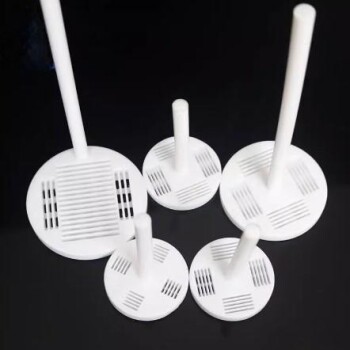
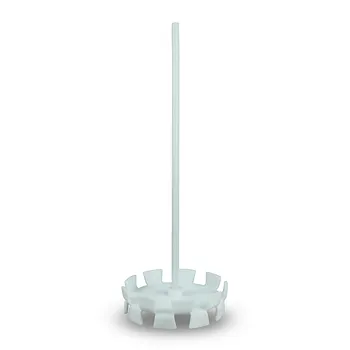
Corrosion Resistant PTFE Dispersing Disc and High Temperature Propeller Stirring Paddle for Laboratory Chemical Mixing

Corrosion Resistant PTFE Dispersing Disc and High Temperature Propeller Stirring Paddle for Laboratory Chemical Mixing

Optimize laboratory mixing with corrosion-resistant PTFE dispersing discs and propeller stirrers. Engineered for high-temperature stability and ultra-pure trace analysis, these custom-fabricated stirring paddles ensure maximum chemical compatibility and long-term durability in demanding industrial and research environments.

Large Scale PTFE Beakers and Flasks for High Temperature Corrosion Resistant Laboratory Applications with Custom CNC Fabrication

Large Scale PTFE Beakers and Flasks for High Temperature Corrosion Resistant Laboratory Applications with Custom CNC Fabrication

High-performance PTFE beakers and flasks offering superior chemical resistance and thermal stability for demanding laboratory environments. Fully customizable large-scale labware engineered with precision CNC fabrication to meet specific industrial requirements for high-purity trace analysis and chemical processing.

PTFE PFA Vacuum Filtration System Corrosion Resistant Customizable Shatterproof Laboratory Device

PTFE PFA Vacuum Filtration System Corrosion Resistant Customizable Shatterproof Laboratory Device

High-performance PTFE and PFA vacuum filtration systems designed for extreme chemical resistance. This customizable, shatterproof unit ensures trace-level purity and exceptional thermal stability for demanding laboratory processes and hazardous fluid transfers in industrial and research applications.

High Purity PFA Crucible and Corrosion Resistant PTFE Beaker for Trace Analysis and Custom Laboratory Applications

High Purity PFA Crucible and Corrosion Resistant PTFE Beaker for Trace Analysis and Custom Laboratory Applications

Discover high-purity PFA crucibles and PTFE beakers engineered for extreme chemical resistance and ultra-low background noise. These customizable fluoropolymer solutions ensure precision in trace analysis, semiconductor processing, and demanding industrial laboratory environments worldwide. Contact us for bespoke engineering quotes.

Corrosion Resistant PTFE Electrochemical Cell for New Energy Research Inert Insulating Customizable Lab Reaction Vessel

Corrosion Resistant PTFE Electrochemical Cell for New Energy Research Inert Insulating Customizable Lab Reaction Vessel

Professional PTFE electrochemical cell designed for new energy research featuring exceptional chemical inertness and corrosion resistance. Available in 400ml and 1000ml capacities with full customization for advanced battery testing and high-purity trace analysis delivering reliable industrial performance and extreme durability.

Custom PFA Microcolumn Racks and PTFE Machined Low Background Corrosion Resistant Laboratory Fixtures

Custom PFA Microcolumn Racks and PTFE Machined Low Background Corrosion Resistant Laboratory Fixtures

Optimize trace analysis with our custom PFA microcolumn racks and PTFE machined fixtures. These corrosion-resistant, low-background laboratory solutions offer exceptional durability and high-purity performance for demanding chemical processing and high-end research applications across diverse industrial environments today.

Customizable PTFE Heat Insulation Plate High Temperature Corrosion Resistant Laboratory Support Layered Multi Tier Stand

Customizable PTFE Heat Insulation Plate High Temperature Corrosion Resistant Laboratory Support Layered Multi Tier Stand

High-performance customizable PTFE heat insulation plates offer superior 250°C thermal stability and chemical resistance. Expertly engineered for laboratory environments, these bespoke layered supports ensure maximum durability and precision for demanding industrial fluid or chemical processing applications in modern facilities.

Custom PTFE Petri Dish 80mm Diameter Corrosion Resistant Low Background High Purity Laboratory Culture Vessel

Custom PTFE Petri Dish 80mm Diameter Corrosion Resistant Low Background High Purity Laboratory Culture Vessel

Discover high-purity custom PTFE petri dishes featuring 80mm diameters for demanding trace analysis. Our corrosion-resistant laboratory vessels ensure zero dissolution and ultra-low background levels, providing ultimate chemical inertness for sensitive pharmaceutical research and hazardous chemical processing industrial applications.

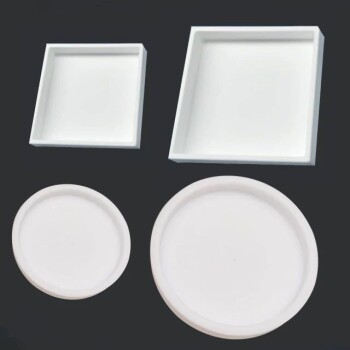
High Purity PTFE Trays Corrosion Resistant Laboratory Labware Customizable Square Round Fluoropolymer Trays

High Purity PTFE Trays Corrosion Resistant Laboratory Labware Customizable Square Round Fluoropolymer Trays

Premium high-purity PTFE trays offer exceptional chemical resistance and low background interference. Fully customizable in square or round configurations, these durable trays ensure contamination-free sample handling for demanding industrial, pharmaceutical, and trace analysis laboratory applications.

Customizable PTFE Reaction Vessel with Electric Stirring Paddle and Buchner Funnel Vacuum Filtration System

Customizable PTFE Reaction Vessel with Electric Stirring Paddle and Buchner Funnel Vacuum Filtration System

High-performance customizable PTFE reaction vessel system featuring integrated electric stirring paddles and Buchner funnel vacuum filtration components designed for demanding laboratory environments requiring absolute chemical inertness, high-purity trace analysis, and bespoke engineering solutions for complex industrial applications.

High Purity Custom PTFE Solid Sampler for Laboratory Extraction and Chemical Analysis Polytetrafluoroethylene Sampling Probe with Customizable Length

High Purity Custom PTFE Solid Sampler for Laboratory Extraction and Chemical Analysis Polytetrafluoroethylene Sampling Probe with Customizable Length

Optimize laboratory sampling with our custom PTFE solid samplers designed for high-purity extraction. These chemically inert probes prevent sample loss and contamination in pharmaceutical and industrial analysis ensuring precise results for sensitive testing protocols across all sectors.

High Purity Corrosion Resistant PTFE Acid Reflux Cleaning System for Laboratory Trace Analysis

High Purity Corrosion Resistant PTFE Acid Reflux Cleaning System for Laboratory Trace Analysis

Optimize your laboratory efficiency with this high-purity PTFE acid reflux cleaning system. Precision engineered for superior airtightness and absolute chemical inertness, our customizable unit ensures contaminant-free cleaning for trace analysis across all demanding industrial and research environments. Expertly manufactured solution.

Custom PTFE Petri Dish 30mm Corrosion Resistant Low Background Non Leaching Laboratory Ware

Custom PTFE Petri Dish 30mm Corrosion Resistant Low Background Non Leaching Laboratory Ware

High-purity custom PTFE petri dish with 30mm diameter features exceptional corrosion resistance and low background levels. Ideal for trace analysis and membrane casting, this non-leaching labware ensures contamination-free results across global laboratory facilities.

Custom PTFE Acid Resistant Support Rack for PFA Hydrogen Absorption Systems Multi Hole Configurations

Custom PTFE Acid Resistant Support Rack for PFA Hydrogen Absorption Systems Multi Hole Configurations

Optimize laboratory safety and precision with our custom PTFE support racks. Specifically engineered for PFA hydrogen absorption units, these acid-resistant frames provide superior stability and chemical inertness for demanding industrial chemical processing and trace analysis workflows in modern facilities worldwide.

Custom Polytetrafluoroethylene PTFE Petri Dishes 60mm Corrosion Resistant Low Background Labware

Custom Polytetrafluoroethylene PTFE Petri Dishes 60mm Corrosion Resistant Low Background Labware

High-purity custom PTFE petri dishes engineered for trace analysis and corrosive environments. Features a 60mm diameter, zero leaching, and exceptional chemical inertness to ensure absolute sample integrity in highly demanding laboratory and industrial research applications.

Custom PTFE Teflon Parts Manufacturer PTFE Cleaning Rack

Custom PTFE Teflon Parts Manufacturer PTFE Cleaning Rack

High-purity PTFE flower baskets for labs & semiconductor use. Chemical-resistant, -180°C to +250°C, custom sizes available. Contact KINTEK today!

Custom PTFE Petri Dishes Corrosion Resistant High Purity Low Background Labware

Custom PTFE Petri Dishes Corrosion Resistant High Purity Low Background Labware

High-purity custom PTFE petri dishes designed for trace analysis and membrane casting. These vessels offer exceptional chemical resistance, zero leaching, and a non-stick surface, ensuring the highest integrity for sensitive laboratory processes and demanding industrial applications.


Leave Your Message