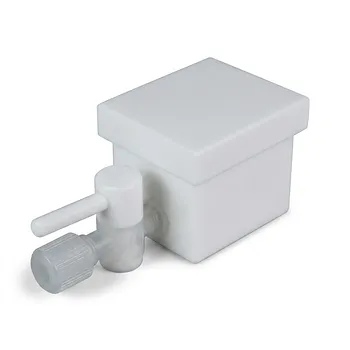
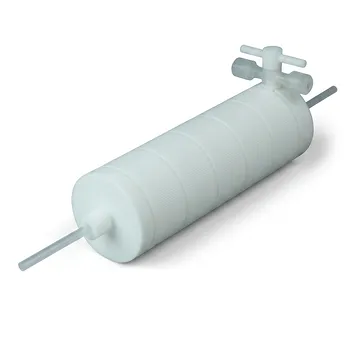
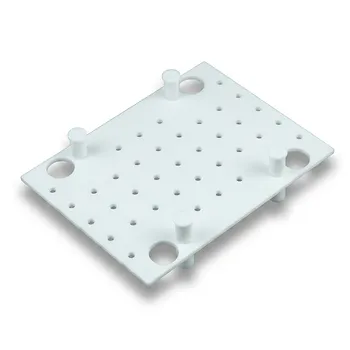
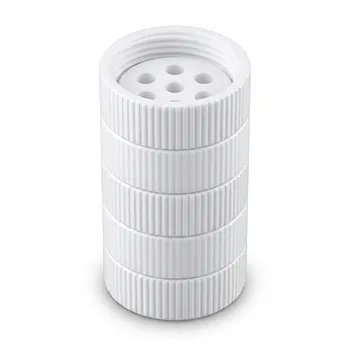
PTFE is preferred when friction, chemical compatibility, and clean operation matter more than structural stiffness. Its static coefficient of friction is approximately 0.1, far below polyamide 66 or nylon 66 at about 0.50, polycarbonate at 0.51, and melt-processible fluoropolymers such as PFA and FEP at 0.2. This low friction, combined with self-lubricating behavior, high elongation, and good impact resistance, helps valve seats, seals, fittings, and fluid-transfer components move smoothly without sticking or contaminating the fluid path.
PTFE is an exceptional sliding and sealing material, but not a high-strength structural plastic. Its value comes from its unusually low friction, chemical resistance, and stable performance across a broad temperature range, while its relatively low stiffness, hardness, and tensile strength require appropriate mechanical design.
Why PTFE Works Well in Fluid Control
Low Friction Reduces Sticking
PTFE's low coefficient of friction reduces resistance between mating surfaces in valve seats, stopcocks, fittings, pump seals, and sliding components.
Its static and dynamic friction behavior is also relatively similar, which helps reduce stick-slip motion. In precision equipment, that supports smoother movement from rest to operation instead of an abrupt release or jerky motion.
Self-Lubricating Operation Protects Fluid Paths
PTFE can operate with little or no external lubricant. This is important in laboratory and process equipment where hydrocarbon greases could contaminate transferred liquids or interfere with chemical processes.
Removing the need for grease also simplifies maintenance and reduces the risk of lubricant migration into valves, tubing, fittings, or sealed fluid paths.
Lower Wear Supports Longer Service Life
Low friction reduces mechanical resistance and limits wear at contacting surfaces. It can also reduce the amount of particulate debris generated as components move against one another.
This is valuable in custom-machined fluid-handling apparatuses, where valve binding, seal wear, or debris can compromise both reliability and cleanliness.
Chemical and Temperature Performance Add Practical Value
PTFE remains useful over a broad temperature range of approximately -73°C to 204°C. Its low-friction performance and chemical resistance make it suitable for demanding environments where many conventional plastics, lubricants, or elastomers may be less reliable.
The combination is important: low friction alone does not make a material suitable for fluid control if it swells, degrades, or contaminates the process fluid.
How PTFE's Mechanical Properties Compare
PTFE Is Soft and Relatively Flexible
PTFE has a tensile modulus of approximately 0.3–0.8 GPa, a Rockwell hardness around D50–55, and a tensile strength of roughly 10–40 MPa.
These values reflect a material that is relatively soft, not very stiff, and not highly resistant to deformation compared with many rigid engineering plastics. PTFE is therefore usually selected for sliding, sealing, and chemically exposed functions rather than as the primary load-bearing structure.
High Elongation Helps It Accommodate Movement
PTFE's elongation at break is approximately 300–550%, with a commonly cited value near 400%.
This high elongation allows the material to tolerate deformation and movement without fracturing easily. In seals and valve components, that compliance can help maintain contact across mating surfaces, although excessive deformation must still be controlled through geometry and support.
Impact Resistance Is a Relative Strength
PTFE provides good impact resistance, with a notched Izod impact strength reported around 160–188 J/m.
That helps it withstand handling and mechanical shocks better than its low stiffness might suggest. However, impact resistance should not be confused with high hardness or high load-bearing capacity; PTFE can resist impact while still deforming under sustained pressure.
Friction Is Where PTFE Clearly Leads
PTFE's static coefficient of friction is approximately 0.1, while its dynamic coefficient is also extremely low and commonly reported within a broader range of about 0.05–0.2, depending on test conditions and formulation.
For comparison, the primary reference reports approximate static coefficients of 0.50 for nylon 66, 0.51 for polycarbonate, 0.2 for PFA and FEP, and 0.4 for ETFE. These comparisons explain why PTFE is often favored when smooth movement and resistance to sticking are the dominant requirements.
Why the Trade-Off Matters in Valve Design
Low Strength Does Not Mean Poor Suitability
A valve seat or seal does not necessarily need the stiffness or tensile strength of a structural component. Its key functions may be to conform to a mating surface, resist chemicals, maintain low friction, and avoid contaminating the fluid.
PTFE performs those functions well, provided the component is designed to manage deformation and mechanical loading.
Structural Support May Be Necessary
Because PTFE is relatively soft and has a low modulus, unsupported parts can creep, deform, or lose dimensional accuracy under sustained pressure or load.
Designers may need to limit unsupported spans, use suitable backing or containment, and account for temperature and pressure effects. The exact solution depends on the component geometry, operating conditions, and PTFE formulation.
Friction and Wear Depend on Conditions
The quoted friction values are useful for comparison, but actual performance depends on surface finish, contact pressure, speed, temperature, counterface material, and the presence of chemicals or particles.
A PTFE grade optimized for low friction may not provide the same wear behavior as a filled or reinforced formulation. Material selection should therefore use application-specific test data when service life is critical.
Understanding the Trade-Offs
PTFE's Main Limitations
PTFE's low hardness and stiffness make it less suitable than rigid engineering plastics for highly loaded structural parts, precision components that must hold tight dimensions under load, or applications requiring strong resistance to indentation.
Its tensile strength is also modest compared with many engineering plastics. A PTFE component can therefore be chemically durable and mechanically functional while still requiring careful support.
Other Plastics May Be Better for Structural Work
Nylon 66 and polycarbonate have much higher friction coefficients than PTFE in the cited comparison, but their greater rigidity can make them more appropriate for structural housings, load-bearing parts, and dimensionally stable mechanical components.
The correct choice is not the plastic with the best single property. It is the material whose combination of friction, stiffness, strength, chemical resistance, temperature capability, and wear behavior matches the application.
Lubrication Is Not Always a Substitute
Adding an external lubricant may reduce friction in some systems, but it can introduce contamination, chemical incompatibility, maintenance requirements, or fluid-path risk.
PTFE's advantage is that its low-friction behavior is inherent in the material, making clean, lubricant-free operation practical in many fluid-control designs.
Making the Right Choice for Your Goal
Choose based on the function the component must perform, not on friction coefficient alone.
- If your primary focus is low-friction valve movement: PTFE is usually the strongest candidate because its friction is substantially lower than that of nylon 66, polycarbonate, PFA, FEP, and ETFE in the cited comparisons.
- If your primary focus is clean fluid handling: PTFE's self-lubricating, anti-adhesive surface can avoid hydrocarbon greases and reduce particulate generation in seals, fittings, stopcocks, and transfer valves.
- If your primary focus is chemical and temperature resistance: PTFE provides useful low-friction performance across approximately -73°C to 204°C, subject to the specific application and grade.
- If your primary focus is stiffness, hardness, or load-bearing strength: Consider a more rigid engineering plastic, or use PTFE in a supported sealing or sliding role rather than as the main structural component.
- If your primary focus is long wear life: Evaluate the PTFE formulation, contact pressure, speed, surface finish, temperature, and counterface material instead of relying on generic material data.
PTFE is most effective when its exceptional sliding and chemical properties are deliberately paired with a design that compensates for its relatively low mechanical strength and stiffness.
Summary Table:
| Property | PTFE | PFA/FEP | Nylon 66 | Polycarbonate |
|---|---|---|---|---|
| Static Coefficient of Friction | ~0.1 | 0.2 | 0.50 | 0.51 |
| Tensile Strength (MPa) | 10-40 | 20-30 (typical) | 80-90 | 60-70 |
| Elongation at Break (%) | 300-550 | 300-400 | 50-100 | 100-150 |
| Rockwell Hardness | D50-55 | D50-55 (similar) | R120 (approx.) | R118 (approx.) |
| Notched Izod Impact (J/m) | 160-188 | 200+ (approx.) | 40-60 | 600-900 |
| Temperature Range (°C) | -73 to 204 | -200 to 260 | -40 to 120 | -40 to 120 |
Note: Values are approximate and can vary with specific grades and testing conditions.
Looking for high-performance PTFE/PFA components for your fluid control systems? At KINTEK, we specialize in custom machining and standard labware made from PTFE and PFA, ensuring low friction, chemical purity, and reliability. Whether you need valve seats, seals, fittings, or complete bespoke assemblies, our expertise in fluoropolymers and end-to-end CNC machining delivers precision parts that meet your exact requirements. Enhance your lab's efficiency and product quality – contact us today to discuss your project and get a tailored solution!
Related Products
- Custom PTFE Filtration System Acid Resistant High Purity Semiconductor Grade Chemical Processing Filter
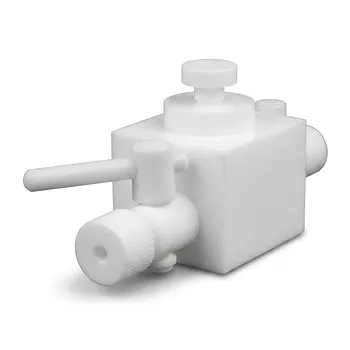
- High Corrosion Resistant PTFE Faucet Polytetrafluoroethylene Valve for Chemical Storage Drums and Fluid Transfer Systems Customizable Industrial Grade
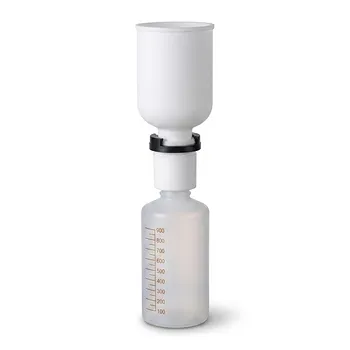
- PTFE PFA Vacuum Filtration System Corrosion Resistant Customizable Shatterproof Laboratory Device
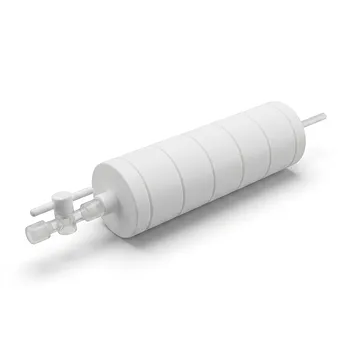
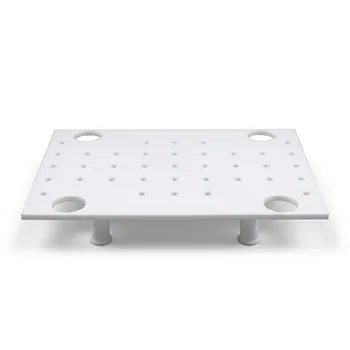
- PTFE Corrosion Resistant Filter with PFA Valve Connections and Integrated Sieve Plate
- High Temperature Chemical Resistant 50ml PTFE Syringe Customized Teflon Injector with Threaded Seal for Trace Analysis
People Also Ask
- What makes PTFE filtration systems advantageous for industrial and scientific use? Unmatched Chemical & Thermal Stability
- What sizes and pore options are available for PTFE filters? Choose the Right Filter for Your Application
- What steps are involved in selecting the proper PTFE filter? A 4-Step Guide to Optimal Filtration
- How does the hydrophobicity of PTFE filters benefit their use? Ensure Uninterrupted Gas Flow and Solvent Filtration
- What temperature resistance do PTFE filters offer? Unmatched Thermal Stability from -200°C to +260°C