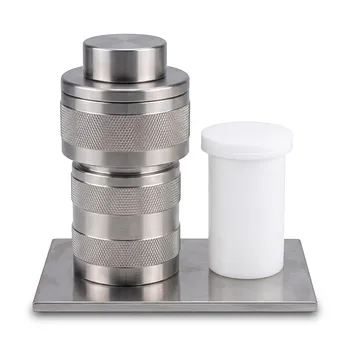
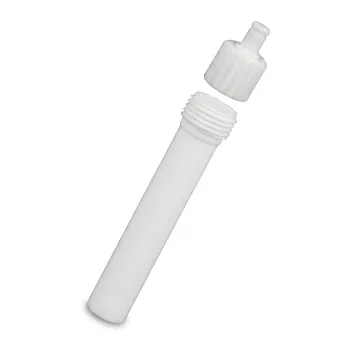
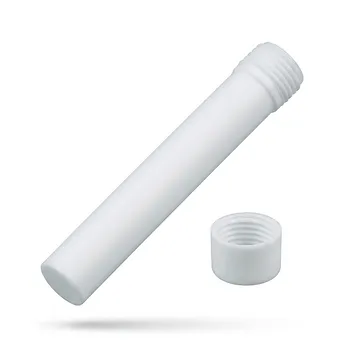
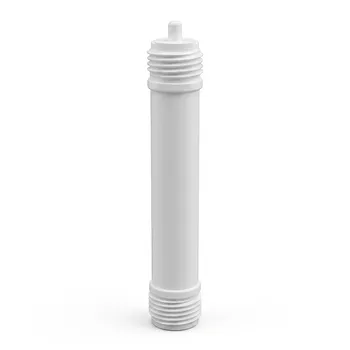
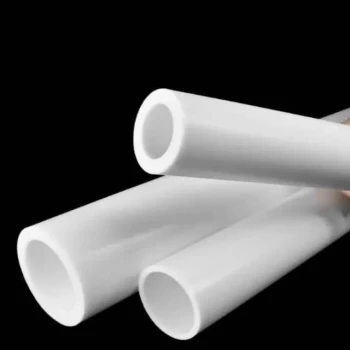
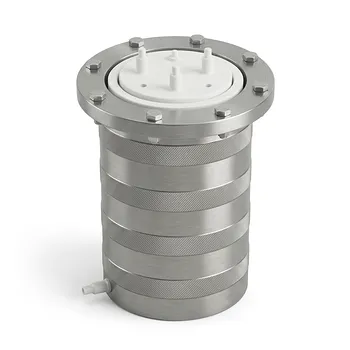
High-performance Polytetrafluoroethylene (PTFE) is used for autoclave liners because it provides a chemically inert barrier that survives the aggressive hydrothermal environments required for thin-film growth. This material prevents highly corrosive alkaline solutions, such as potassium hydroxide (KOH), from attacking the metal autoclave body while ensuring that no metallic impurities contaminate the ferroelectric film.
Core Takeaway: PTFE liners are essential for maintaining the high purity and electrical performance of lead-based ferroelectric films by isolating reactive precursor solutions from the metal autoclave walls under high-temperature and high-pressure conditions.
Mitigating Chemical Corrosion in Aggressive Environments
Resistance to Strong Alkaline Precursors
The synthesis of lead-based ferroelectric films often requires highly alkaline environments, utilizing strong bases like KOH or NaOH at high concentrations. PTFE is exceptionally resistant to chemical attack, allowing it to contain these "hungry" solutions without degrading or reacting.
Protection of the Metal Pressure Vessel
Without a liner, the reactive salts of lead, zirconium, and titanium would directly contact the stainless steel or alloy walls of the autoclave. PTFE acts as a sacrificial but durable shield, preventing the corrosion of the structural metal body and extending the lifespan of the equipment.
Ensuring Material Purity and Electrical Performance
Elimination of Metal Ion Leaching
At the high temperatures and pressures of hydrothermal synthesis (often reaching 200°C), metal ions from the autoclave walls (such as Iron, Chromium, or Nickel) can leach into the solution. PTFE isolation ensures these impurities do not enter the reaction system, where they would otherwise disrupt the delicate stoichiometry of the film.
Stability of Ferroelectric Properties
Compositional gradient films are highly sensitive to their chemical environment; even trace amounts of foreign metal ions can cause leakage currents or domain pinning. By using a high-purity PTFE liner, researchers can guarantee the electrical performance stability and reproducibility of the epitaxial thin films.
Thermal and Mechanical Resilience
Withstanding Hydrothermal Conditions
Hydrothermal synthesis relies on the combination of heat and pressure to drive crystal growth from solution. High-performance PTFE maintains its structural integrity and chemical inertness even when subjected to the prolonged high-temperature cycles required for epitaxy.
Facilitating Clean Recovery
The non-stick nature of PTFE prevents the precursors and synthesized films from adhering strongly to the container walls. This characteristic allows for a higher yield of high-quality material and makes the cleaning process between batches more efficient and less likely to introduce cross-contamination.
Understanding the Trade-offs and Limitations
Temperature Ceiling
While PTFE is remarkably stable, it has a defined thermal limit, typically around 250°C to 260°C. Exceeding these temperatures can lead to the mechanical softening of the liner or the release of toxic fluorinated vapors, potentially compromising the experiment.
Thermal Expansion and Sealing
PTFE has a high coefficient of thermal expansion, meaning it expands significantly more than the metal autoclave housing when heated. If the liner is not properly designed or "broken in," this expansion can lead to deformation or difficulty in sealing, which may result in pressure leaks during the synthesis process.
How to Apply This to Your Project
Making the Right Choice for Your Goal
- If your primary focus is Maximum Phase Purity: Always use a high-purity PTFE liner to prevent the introduction of transition metal impurities that disrupt the crystal lattice.
- If your primary focus is High-Temperature Synthesis (>250°C): Consider alternative liner materials like PFA or gold-plated vessels, as standard PTFE may begin to deform or lose its seal.
- If your primary focus is Reproducibility: Ensure the PTFE liner is thoroughly leached in acid between runs to remove any residual lead or zirconium salts trapped in the surface pores.
Ultimately, the PTFE liner serves as the critical "cleanroom" environment within the autoclave, enabling the precise chemical control necessary for high-performance ferroelectric devices.
Summary Table:
| Feature | Benefit | Impact on Ferroelectric Films |
|---|---|---|
| Chemical Inertness | Resists aggressive KOH/NaOH solutions | Prevents liner degradation and chemical interference |
| Metal Isolation | Blocks leaching of Fe, Cr, and Ni | Ensures stoichiometry and prevents electrical leakage |
| Non-stick Surface | Facilitates clean recovery and high yield | Minimizes cross-contamination and simplifies cleaning |
| Thermal Resilience | Operates safely up to 250°C | Maintains structural integrity during hydrothermal growth |
| High Purity | Zero metallic contamination | Optimizes electrical performance and domain stability |
Elevate your research with KINTEK’s high-performance fluoropolymer solutions. From everyday basic labware like beakers, crucibles, and centrifuge tubes to advanced hydrothermal synthesis liners and custom electrochemical cells, we provide the high-purity PTFE and PFA components your sensitive thin-film processes demand.
Whether you need general consumables like O-rings and stirring bars or complex, non-standard machined parts, our end-to-end custom CNC fabrication ensures absolute precision. Ready to optimize your lab's performance and ensure material purity? Contact KINTEK today to discover how our bespoke laboratory setups and high-volume fluoropolymer manufacturing can bring unmatched chemical resistance to your projects.
References
- Ruian Zhang, Gaorong Han. Compositionally-graded ferroelectric thin films by solution epitaxy produce excellent dielectric stability. DOI: 10.1038/s41467-024-55411-7
This article is also based on technical information from Kintek Knowledge Base .
Related Products
- Custom TFM Reaction Vessel with Stainless Steel Jacket and PTFE Inner Cup for High Corrosion Resistance
- PTFE Lined High Pressure Digestion Vessel 50ml High Temperature Hydrothermal Synthesis Tank
- High Purity PTFE Microwave Digestion Vessel Replacement Liner for Acid Sample Preparation and Trace Analysis
- High Purity TFM Microwave Digestion Vessels PTFE Acid Evaporation Liners Domestic GT-400 Equivalent Laboratory Reaction Containers
- High Purity PTFE Microwave Digestion Vessel for Soil and Food Analysis Acid Resistant Fluoropolymer Sample Preparation Liners
People Also Ask
- Why is a Polytetrafluoroethylene (PTFE) lined reaction vessel an ideal choice for preparing PtNPs/FeSAC tandem catalysts?
- Why are high-performance pressure-resistant reaction vessels required for oxygen-assisted hydrothermal conversion at 150 °C?
- Why are high-quality fluoropolymer-lined reaction vessels required for alk-Ti3C2Tx MXene? Ensure Purity & HF Resistance
- Why are PTFE-lined reaction vessels necessary for forced degradation studies? Ensure high-purity results and accuracy.
- How do magnetic stirring and reaction vessels impact MOF-derived carbon quality? Optimize Your Composite Performance