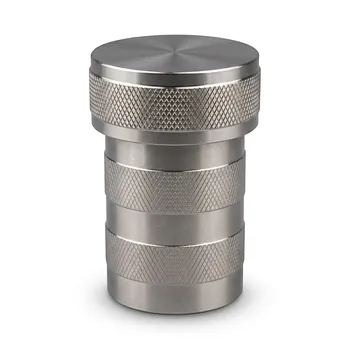
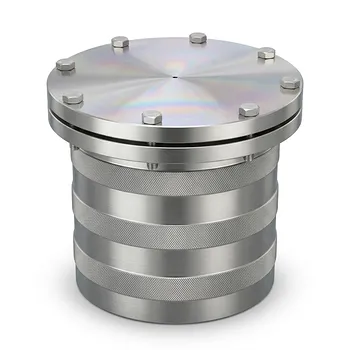
The Teflon-lined hydrothermal synthesis autoclave is essential because it creates a sealed, high-pressure environment that allows TiO2 precursors to crystallize directly onto the turmeric leaf biochar surface. This specific setup facilitates reactions at temperatures near 200°C, where water acts as a supercritical or near-critical fluid to drive the hydrolysis and uniform deposition of nanoparticles.
A Teflon-lined autoclave provides the necessary thermal and chemical stability to manage corrosive precursors under high pressure. This environment ensures the high crystallinity of TiO2 and the structural integrity of the biochar, resulting in a high-performance composite material.
The Role of High-Pressure Thermal Environments
Facilitating Molecular Rearrangement
The autoclave creates a closed system where pressure exceeds atmospheric levels, allowing precursor molecules to interact at the atomic level. This high-energy environment is necessary for the dehydration, polymerization, and carbonization of organic precursors like turmeric leaves.
Driving Hydrolysis and Crystallization
Under these subcritical conditions, titanium precursors undergo hydrolysis and recrystallization. The intense heat and pressure accelerate chemical reaction kinetics, ensuring that TiO2 forms a regular morphology with high crystallinity.
Creating Strong Interfacial Bonds
The uniform reaction field within the autoclave enables the formation of strong chemical bonds between the TiO2 nanoparticles and the biochar support. This prevents the particles from leaching and ensures the stability of the hybrid photocatalyst during use.
The Critical Function of the Teflon (PTFE) Liner
Preventing Metallic Corrosion
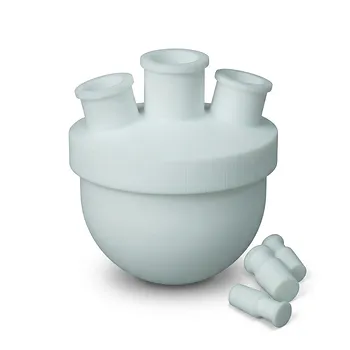
Precursors used in TiO2 synthesis are often acidic or aggressive, which can severely corrode the stainless steel walls of a standard autoclave. The Polytetrafluoroethylene (PTFE) liner acts as a chemically inert barrier that protects the outer metal vessel from damage.
Ensuring Chemical Purity
By preventing the reaction liquid from contacting the metal walls, the Teflon liner eliminates the risk of metal ion impurities leaching into the sample. This is vital for maintaining the electronic properties of the TiO2/biochar composite.
Providing a Non-Stick Reaction Surface
The smooth, non-stick surface of the Teflon liner allows for a more consistent recovery of the synthesized composite. It prevents the biochar and TiO2 from adhering to the vessel walls, ensuring uniform deposition and higher yields of the final material.
Understanding the Trade-offs and Limitations
Temperature Constraints
While Teflon is highly inert, it has a thermal limit, typically around 220°C to 240°C. Exceeding these temperatures can cause the liner to deform or release toxic vapors, which limits the synthesis to subcritical water conditions.
Pressure Risks and Safety
Because the reaction occurs in a sealed environment, autogenous pressure builds up rapidly as temperature increases. Users must strictly adhere to filling degree limits (usually 60-80%) to prevent over-pressurization and potential vessel failure.
Cooling Rates and Morphology
The thickness of the Teflon liner and the stainless steel shell creates significant thermal lag. Rapid cooling is difficult, which can affect the final crystal size and morphology of the TiO2 nanoparticles if not carefully monitored.
How to Apply This to Your Project
When synthesizing turmeric leaf biochar and TiO2 composites, your choice of equipment and parameters will dictate the efficiency of the final photocatalyst.
- If your primary focus is high crystallinity: Maintain the reaction at 200°C for an extended duration to allow for complete crystal growth and structural organization.
- If your primary focus is preventing contamination: Always inspect the Teflon liner for cracks or discoloration before use to ensure no metal ions from the outer shell interfere with the composite.
- If your primary focus is uniform dispersion: Ensure the precursor solution is thoroughly homogenized before sealing the autoclave to promote even deposition across the biochar support.
Selecting the right autoclave setup ensures that your composite material achieves the precise chemical structure and purity required for advanced technical applications.
Summary Table:
| Feature | Function | Benefit |
|---|---|---|
| PTFE Liner | Chemical Inertness | Prevents corrosion and metal ion contamination |
| Sealed Vessel | Autogenous Pressure | Enables subcritical water reactions for crystallization |
| Thermal Stability | Up to 240°C | Ideal for hydrolysis and organic carbonization |
| Non-Stick Surface | Smooth Interface | Ensures uniform deposition and easy sample recovery |
Optimize Your Advanced Material Synthesis with KINTEK
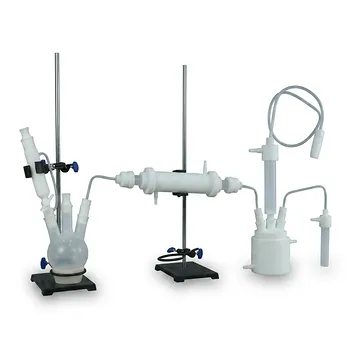
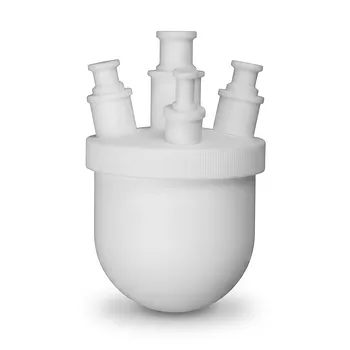
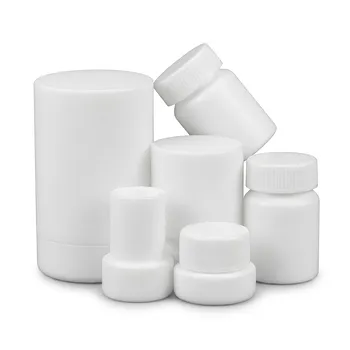
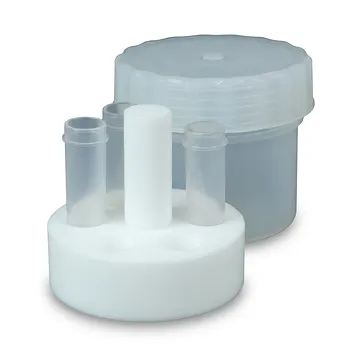
Achieve unmatched purity and performance in your lab with KINTEK’s specialized fluoropolymer solutions. From everyday PFA labware (beakers, tubes, and bottles) and fluid transfer components (tubing, valves) to advanced reaction apparatus like our custom PTFE hydrothermal synthesis liners and electrochemical cells, we provide everything needed for high-stakes research.
Our end-to-end custom CNC fabrication ensures that whether you require standard consumables or bespoke, non-standard machined parts, your equipment will withstand the most aggressive chemical environments. Contact us today to discuss your project requirements and see how our absolute focus on high-performance PTFE and PFA materials can enhance your laboratory’s efficiency and results.
References
- Raveena Malkari Katika, Ramesh Naidu Mandapati. Hydrothermal Synthesis and Photocatalytic Efficiency of Turmeric Leaves Biochar/TiO2 Composite for Photooxidation of Congo Red Dye. DOI: 10.3311/ppch.39484
This article is also based on technical information from Kintek Knowledge Base .
Related Products
- High Temperature Corrosion Resistant Hydrothermal Synthesis Reactor with TFM Inner Liner and Straight Cylinder Design
- PTFE Lined High Pressure Digestion Vessel 50ml High Temperature Hydrothermal Synthesis Tank
- Custom TFM Reaction Vessel with Stainless Steel Jacket and PTFE Inner Cup for High Corrosion Resistance
- High Temperature PTFE Reaction Flask 1000ml Single Neck Round and Flat Bottom Laboratory Bottle
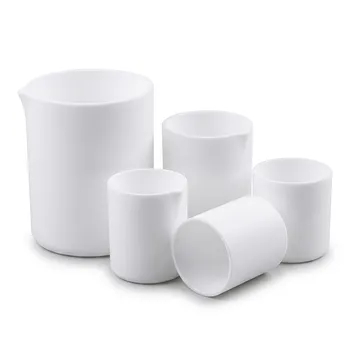
- Large Scale PTFE Beakers and Flasks for High Temperature Corrosion Resistant Laboratory Applications with Custom CNC Fabrication
People Also Ask
- What is the role of a corrosion-resistant reactor in the synthesis of lignin-based carbon dots? Ensure Maximum Purity
- What are the technical advantages of using hydrothermal synthesis reactors for advanced electronic & optical nanomaterials?
- How does a hydrothermal synthesis reactor facilitate the production of crystalline materials with tailored morphologies? Precision Crystal Growth
- Why is the sealing reliability of a hydrothermal synthesis reactor critical for 24-hour cycles? Ensure Nano-Precision
- What role do hydrothermal synthesis reactors play in CQD preparation? Achieve High-Purity Nanomaterial Synthesis