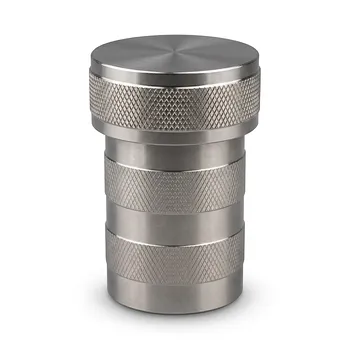
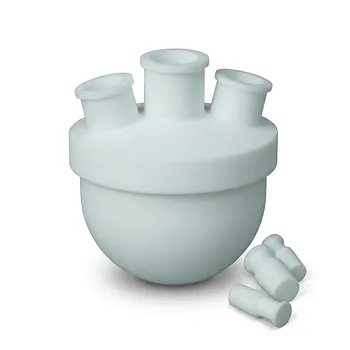
The Teflon-lined hydrothermal synthesis autoclave is the industry standard for preparing Copper Oxide (O) and Cobalt Ferrite/Carbon Nanotube (CT) composites. It provides a sealed, high-pressure, and high-temperature environment that enables the subcritical reactions necessary for precise crystal growth and molecular rearrangement. Without the Polytetrafluoroethylene (PTFE) liner, corrosive precursors would destroy the reactor shell and contaminate the final nanomaterials with metallic impurities.
A Teflon-lined autoclave enables the synthesis of high-purity CuO and CT composites by providing a chemically inert, high-pressure environment. This setup facilitates controlled crystallization and morphology while protecting the structural integrity of the equipment.
Harnessing Subcritical Environments for Synthesis
Accelerating Reaction Kinetics
The sealed autoclave environment allows water and solvents to reach temperatures well above their boiling points, creating subcritical or near-critical conditions. These conditions significantly accelerate chemical reaction kinetics, enabling the dehydration, polymerization, and carbonization processes required for composite materials.
Facilitating Precise Crystal Growth
Under high pressure, precursors undergo thorough molecular rearrangement, which is essential for forming regular morphologies like nanosheets or peony-like structures. This environment ensures that Copper Oxide (CuO) nanoparticles achieve high specific surface areas, a critical factor for their performance in catalytic and electronic applications.
Enabling Uniform Composite Integration
For CT composites, the hydrothermal method ensures the uniform deposition of metal oxides onto the Carbon Nanotube (CNT) supports. The pressurized environment forces precursors into the complex architecture of the nanotubes, facilitating the formation of robust heterojunction structures.
The Protective and Functional Benefits of PTFE
Corrosion Resistance Against Aggressive Reagents
Synthesis of CuO and CT composites often involves strong alkaline solutions (like KOH) or acidic precursors that would rapidly erode a standard metal vessel. The PTFE liner offers exceptional chemical inertness, acting as an impenetrable barrier that protects the external stainless steel shell from corrosive attack.
Ensuring Chemical Purity
The high-purity Teflon liner has an extremely low impurity leaching rate, which is vital for maintaining the integrity of the reaction. By preventing the reaction liquid from interacting with the metal walls, the liner ensures that no extraneous metal ions contaminate the CuO or CT composites during long-duration heating.
Non-Stick Surface for Morphology Control
PTFE’s anti-adhesion properties prevent highly active precursors from sticking to the container walls during crystallization. This ensures that the entire batch of material experiences uniform growth conditions, resulting in well-defined single-crystal structures and reproducible material properties.
Understanding the Trade-offs and Limitations
Temperature Constraints of PTFE
While PTFE is chemically resilient, it has a definite thermal ceiling, typically around 200°C to 240°C. Exceeding these temperatures can cause the liner to soften or deform, potentially leading to seal failure or safety hazards during high-pressure runs.
Pressure Safety and Slow Cooling
Hydrothermal reactions generate significant internal pressure that must be carefully monitored to prevent vessel rupture. Furthermore, these autoclaves require slow, controlled cooling periods to maintain the desired crystal morphology and prevent the PTFE liner from shrinking away from the metal shell.
Applying This Equipment to Your Material Goals
The choice of hydrothermal synthesis parameters depends heavily on the specific characteristics you require for your final composite.
- If your primary focus is Morphology Control (Nanosheets/Needles): Utilize the PTFE liner's non-stick properties and maintain precise temperature holds to allow for slow, ordered crystallization.
- If your primary focus is High Purity and Catalyst Performance: Leverage the chemical inertness of the Teflon to prevent metal ion leaching from the autoclave walls, ensuring your CuO or CT composite remains uncontaminated.
- If your primary focus is Material Uniformity on Supports (CNTs): Maximize the pressure capabilities of the autoclave to ensure precursors are forced into the support structure for a stable heterojunction.
By effectively utilizing a Teflon-lined autoclave, you transform volatile chemical precursors into highly structured, high-performance nanomaterials within a safe and controlled environment.
Summary Table:
| Feature | Benefit for CuO/CT Synthesis | Core Value |
|---|---|---|
| PTFE (Teflon) Liner | Prevents metallic contamination from the reactor shell | High Chemical Purity |
| Sealed Environment | Creates subcritical conditions for accelerated kinetics | Rapid Synthesis |
| Corrosion Resistance | Withstands strong alkaline (KOH) or acidic precursors | Equipment Longevity |
| High Pressure | Forces metal oxides into CNT support structures | Uniform Integration |
| Non-stick Surface | Prevents precursor adhesion to container walls | Morphology Control |
Elevate Your Material Synthesis with KINTEK Precision
Precise control over crystal morphology and chemical purity is non-negotiable in advanced nanomaterial research. KINTEK specializes in high-performance fluoropolymer solutions designed to withstand the most demanding hydrothermal environments.
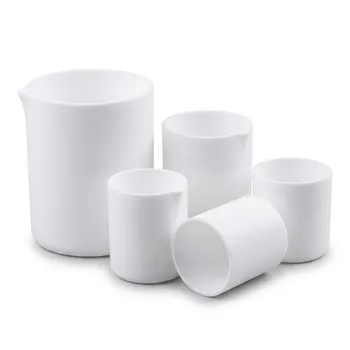
From everyday basic labware (beakers, measuring cylinders, and reagent bottles) to advanced hydrothermal synthesis liners, microwave digestion vessels, and custom electrochemical cells, we provide the tools you need for reproducible results. Whether you require standard consumables like O-rings and stirring bars or bespoke laboratory setups crafted through our end-to-end custom CNC fabrication, KINTEK maintains an absolute focus on PTFE and PFA excellence.
Ready to optimize your synthesis process? Contact us today to discuss your custom fabrication needs or to explore our comprehensive range of fluoropolymer labware. Let us help you achieve absolute purity and performance in every batch.
References
- Davis Varghese, M. Victor Antony Raj. Synergistic design of CuO/CoFe₂O₄/MWCNTs ternary nanocomposite for enhanced photocatalytic degradation of tetracycline under visible light. DOI: 10.1038/s41598-024-82926-2
This article is also based on technical information from Kintek Knowledge Base .
Related Products
- High Temperature Corrosion Resistant Hydrothermal Synthesis Reactor with TFM Inner Liner and Straight Cylinder Design
- PTFE Lined High Pressure Digestion Vessel 50ml High Temperature Hydrothermal Synthesis Tank
- Custom TFM Reaction Vessel with Stainless Steel Jacket and PTFE Inner Cup for High Corrosion Resistance
- High Temperature PTFE Reaction Flask 1000ml Single Neck Round and Flat Bottom Laboratory Bottle
- Large Scale PTFE Beakers and Flasks for High Temperature Corrosion Resistant Laboratory Applications with Custom CNC Fabrication
People Also Ask
- What is the role of a corrosion-resistant reactor in the synthesis of lignin-based carbon dots? Ensure Maximum Purity
- What are the technical advantages of using hydrothermal synthesis reactors for advanced electronic & optical nanomaterials?
- How does a hydrothermal synthesis reactor facilitate the production of crystalline materials with tailored morphologies? Precision Crystal Growth
- Why is the sealing reliability of a hydrothermal synthesis reactor critical for 24-hour cycles? Ensure Nano-Precision
- What role do hydrothermal synthesis reactors play in CQD preparation? Achieve High-Purity Nanomaterial Synthesis