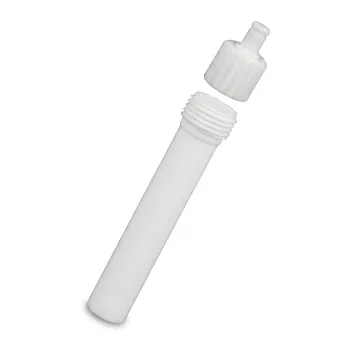
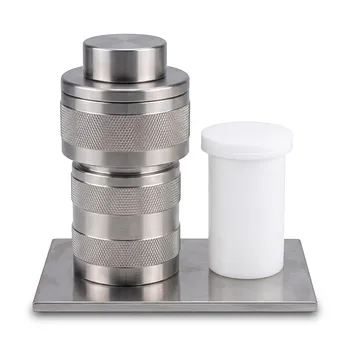
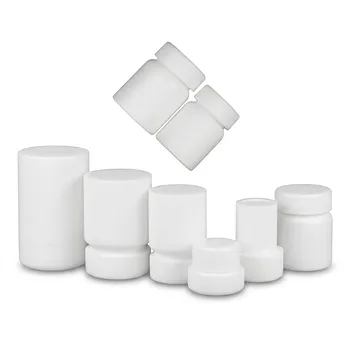
The necessity of a Teflon-lined autoclave in the synthesis of Titanium Dioxide (TiO2) nanosheets is driven by the extreme corrosivity of hydrofluoric acid (HF) and the requirement for high-purity crystallization. Under the high-temperature (180°C) and high-pressure conditions of solvothermal synthesis, HF would rapidly corrode a standard stainless steel vessel, leading to equipment failure and sample contamination. The Teflon (PTFE) liner serves as a chemically inert barrier that protects the outer pressure vessel while ensuring the titanium precursor transforms into nanosheets without the interference of metal ions.
Core Takeaway: A Teflon liner is mandatory because it provides the unique combination of chemical immunity to hydrofluoric acid and the ability to maintain a sterile reaction environment under high autogenous pressure. This dual role prevents the structural degradation of the autoclave and the contamination of the TiO2 nanostructures.
The Corrosive Challenge of Hydrofluoric Acid (HF)
Extreme Reactivity with Metallic Surfaces
Hydrofluoric acid is uniquely aggressive toward metals, including the chromium-oxide layer that typically protects stainless steel. At the elevated temperatures required for solvothermal synthesis, HF reacts with the iron, nickel, and chromium in the autoclave walls to form metal fluorides. This reaction would not only destroy the expensive autoclave but also introduce unwanted elements into the reaction mixture.
Acceleration Under Temperature and Pressure
Solvothermal synthesis typically occurs at temperatures around 180°C and under significant autogenous pressure. These conditions drastically increase the kinetic energy of the HF molecules, making the acid far more reactive than it is at room temperature. The Teflon liner is one of the few materials capable of maintaining its structural integrity and chemical inertness under these specific "near-critical" conditions.
Preserving Chemical Purity and Doping Precision
Avoiding Metal Ion Contamination
The properties of TiO2 nanosheets, such as their photocatalytic activity and electronic structure, are highly sensitive to impurities. If HF were allowed to contact the steel vessel, metal ions would leach into the solution and incorporate themselves into the TiO2 crystal lattice. This would result in "unintentional doping," which could nullify the desired semiconductor properties of the nanosheets.
Facilitating Controlled Fluorine Doping
In many TiO2 nanosheet syntheses, HF is not just a solvent but a capping agent and a source for fluorine doping. To achieve precise control over the morphology and electronic tuning of the nanosheets, the chemical environment must be strictly regulated. The Teflon liner ensures that the only chemicals participating in the reaction are those intentionally added by the researcher.
Structural Synergy of the Autoclave Design
The Role of the Stainless Steel Shell
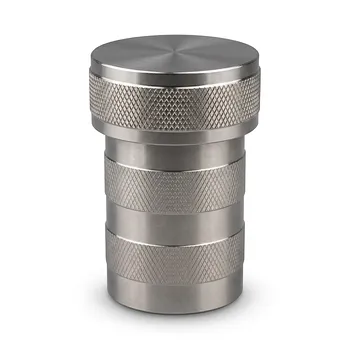
While Teflon is chemically resistant, it lacks the mechanical strength to withstand the high pressures generated during solvothermal heating. The stainless steel outer body provides the necessary "skeleton" to contain the pressure safely. The design creates a hybrid system where the steel provides the strength and the Teflon provides the chemical shield.
Thermal Stability of PTFE
Polytetrafluoroethylene (PTFE), or Teflon, remains stable up to approximately 250°C, making it ideal for the 180°C–200°C range common in TiO2 synthesis. It prevents the highly active titanium precursors from adhering to the container walls, which is essential for the uniform growth of nanostructures. This anti-adhesion property ensures that the maximum yield of nanosheets is recovered after the reaction.
Understanding the Trade-offs and Limitations
Temperature Constraints
The primary limitation of Teflon-lined autoclaves is the thermal ceiling of the PTFE material. If the reaction temperature exceeds 250°C–260°C, the liner can soften, deform, or even release toxic vapors, potentially leading to a pressure seal failure. For synthesis requiring higher temperatures, researchers must switch to more expensive PPL (Polyphenylene polymers) or metallic alloys like Hastelloy.
Thermal Expansion Mismatch
Teflon has a much higher coefficient of thermal expansion than stainless steel. During heating, the liner expands more than the shell, which can lead to "creeping" or deformation over many cycles. If a liner is not properly sized or cooled too quickly, it can crack or lose its seal, exposing the steel body to the acidic reaction fluid.
Ensuring Success in Solvothermal Synthesis
How to Apply This to Your Project
- If your primary focus is material purity: Always inspect the Teflon liner for discoloration or pitting before use, as these are signs of previous contamination that can leach into your TiO2 sample.
- If your primary focus is equipment longevity: Ensure the autoclave is cooled slowly to room temperature to prevent the Teflon liner from warping due to rapid thermal contraction.
- If your primary focus is safety: Never exceed the maximum fill volume (typically 60-80%) specified for the liner to allow for the expansion of the HF solution and prevent over-pressurization.
By utilizing the chemical immunity of Teflon within the mechanical strength of a steel autoclave, researchers can safely harness the power of HF to create high-performance TiO2 nanosheets.
Summary Table:
| Feature | Benefit in TiO2/HF Solvothermal Synthesis |
|---|---|
| Chemical Inertness | Resists aggressive HF; prevents corrosion of the stainless steel outer shell. |
| High-Purity Barrier | Eliminates metal ion leaching to ensure precise doping and semiconductor properties. |
| Thermal Stability | Maintains integrity up to 250°C, ideal for standard 180°C reaction conditions. |
| Anti-Adhesion | Prevents TiO2 precursors from sticking to walls, maximizing nanosheet yield. |
| Hybrid Design | Combines Teflon's chemical resistance with steel's mechanical pressure strength. |
Elevate Your Research with KINTEK’s High-Performance Fluoropolymers
When working with aggressive reagents like hydrofluoric acid, the integrity of your labware determines the success of your synthesis. KINTEK specializes in high-performance PTFE and PFA laboratory supplies, offering unparalleled chemical immunity and purity for the most demanding environments.
From everyday essentials like beakers, digestion tubes, and high-purity trace analysis instruments to advanced hydrothermal synthesis liners, microwave digestion vessels, and custom microchannel reactors, we provide the tools you need to prevent contamination and equipment failure. Our capabilities include:
- Comprehensive Labware: Reagent bottles, centrifuge tubes, filters, and fluid transfer components (tubing, valves, fittings).
- Advanced Apparatus: Custom electrochemical cells, battery testing fixtures, and condensation/reflux devices.
- Bespoke Fabrication: End-to-end custom CNC fabrication for non-standard machined parts and specialized laboratory setups.
Don’t compromise your material purity. Trust KINTEK for precision-engineered fluoropolymer solutions tailored to your specific research needs.
Contact KINTEK Today for a Custom Quote
References
- Ying Yuan, Xue Yang. Regioselective Electrocatalytic Urea Synthesis via Spin‐Polarized PdCu/TiO <sub>2‐x</sub> With Oxygen Vacancy Engineering. DOI: 10.1002/cbh2.70027
This article is also based on technical information from Kintek Knowledge Base .
Related Products
- Custom TFM Reaction Vessel with Stainless Steel Jacket and PTFE Inner Cup for High Corrosion Resistance
- High Temperature Corrosion Resistant Hydrothermal Synthesis Reactor with TFM Inner Liner and Straight Cylinder Design
- High Purity PTFE Microwave Digestion Vessel Replacement Liner for Acid Sample Preparation and Trace Analysis
- PTFE Lined High Pressure Digestion Vessel 50ml High Temperature Hydrothermal Synthesis Tank
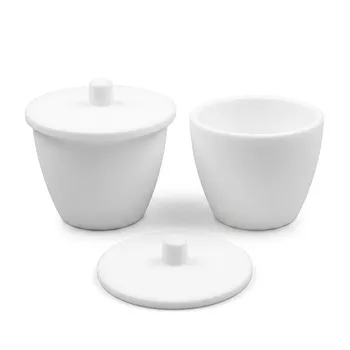
- High Purity Corrosion Resistant Teflon Crucible Low Background Laboratory PTFE Vessel for Trace Analysis and Acid Digestion
People Also Ask
- Why is a Polytetrafluoroethylene (PTFE) lined reaction vessel an ideal choice for preparing PtNPs/FeSAC tandem catalysts?
- Why are high-performance pressure-resistant reaction vessels required for oxygen-assisted hydrothermal conversion at 150 °C?
- How do magnetic stirring and reaction vessels impact MOF-derived carbon quality? Optimize Your Composite Performance
- Why are high-quality fluoropolymer-lined reaction vessels required for alk-Ti3C2Tx MXene? Ensure Purity & HF Resistance
- Why are PTFE-lined reaction vessels necessary for forced degradation studies? Ensure high-purity results and accuracy.