The silver/silver chloride (Ag/AgCl) reference electrode is the essential "fixed point" in electrochemical testing, providing a highly stable and reproducible potential baseline. Without this constant benchmark, it is impossible to accurately define the voltage window of a supercapacitor material, leading to significant errors in calculating specific capacitance, energy density, and power density. It effectively isolates the working electrode's behavior from potential fluctuations in the rest of the system.
Core Takeaway: The Ag/AgCl electrode acts as an unwavering reference point that allows researchers to precisely measure the electrical potential of a working electrode. Its stability is the foundation for distinguishing between different energy storage mechanisms and ensuring the accuracy of all performance-related calculations.
Precise Control of the Potential Window
Defining Redox Boundaries
Supercapacitor materials, particularly those exhibiting pseudocapacitance, operate within specific voltage ranges where redox reactions occur. The Ag/AgCl electrode allows researchers to monitor these behaviors—such as the transition of ZnSe/rGO or Bi2MoO6—within precise windows like 0.0 V to 0.6 V or -0.2 V to 0.3 V.
Identifying Energy Storage Mechanisms
Accurate potential monitoring is critical for distinguishing between Faradaic pseudocapacitance and battery-type charge storage. By providing a stable benchmark, the electrode enables the clear identification of redox peaks during Cyclic Voltammetry (CV) and Galvanostatic Charge-Discharge (GCD) testing.
Calculating Kinetic Parameters
To understand how fast a supercapacitor can charge or discharge, researchers must calculate diffusion coefficients. The high-precision voltage control offered by an Ag/AgCl reference is mandatory for these mathematical models to remain valid and physically meaningful.
Ensuring Data Accuracy and Integrity
Eliminating System Interference
In a three-electrode system, the Ag/AgCl reference electrode ensures that the measured potential reflects only the working electrode. It eliminates interference caused by the polarization of the counter electrode, which would otherwise skew the results and lead to "false" performance metrics.
Validating Specific Capacitance
Specific capacitance is derived directly from the change in potential over time or voltage. If the reference potential drifts even slightly, the resulting capacitance values will be inaccurate, making it impossible to compare different materials or batches reliably.
Benchmarking Catalyst Activity
For composite electrodes involved in hybrid processes like the hydrogen evolution reaction (HER), the Ag/AgCl electrode serves as a scientific benchmark. It allows for the precise measurement of overpotentials, which is the primary metric for evaluating the efficiency of various catalysts.
Stability Across Diverse Environments
Performance in Alkaline Media
Many high-performance supercapacitors use strong alkaline electrolytes, which can be chemically aggressive. Saturated Ag/AgCl electrodes maintain a reproducible potential even in these harsh conditions, providing a reliable baseline for materials like molybdenum disulfide or nickel oxide.
Resilience in Chloride-Rich Environments
The Ag/AgCl electrode is naturally suited for chloride-containing environments, such as simulated seawater. This makes it the primary choice for testing the long-term corrosion resistance and electrochemical stability of protective coatings and energy storage devices in marine conditions.
Maintaining Comparability Over Time
Because the potential remains constant, data collected over different time intervals or during long-term cycling remains comparable. This allows researchers to accurately track the "evolution" of a material's performance without wondering if the testing equipment itself has shifted.
Understanding the Trade-offs
Electrolyte Contamination
While the Ag/AgCl electrode is stable, there is a risk of chloride ions leaking into the electrolyte through the porous frit. In chloride-sensitive systems, this can poison the working electrode or alter the chemical environment, potentially skewing the results you are trying to measure.
Temperature Sensitivity
The potential of an Ag/AgCl electrode is temperature-dependent. If testing conditions fluctuate significantly in temperature, the "fixed" reference point will shift, necessitating thermal compensation to maintain the high level of precision required for supercapacitor analysis.
Maintenance Requirements
To remain a "gold standard" reference, the internal filling solution (usually saturated KCl) must be maintained. Drying out or contamination of the internal solution leads to potential drift, which can go unnoticed and result in a series of flawed experiments.
How to Apply This to Your Research
Accurate electrochemical evaluation depends on choosing and maintaining the right reference electrode for your specific material and electrolyte.
- If your primary focus is high-precision pseudocapacitance analysis: Ensure your Ag/AgCl electrode is properly saturated and calibrated before every major CV or GCD run to capture subtle redox peaks.
- If your primary focus is testing in alkaline or saline electrolytes: Utilize the Ag/AgCl electrode's inherent stability in these environments, but monitor for chloride leakage that might interfere with your material's surface chemistry.
- If your primary focus is calculating diffusion and kinetics: Use a three-electrode setup with an Ag/AgCl reference to isolate the working electrode's potential, ensuring your mathematical derivations are based on pure data.
By treating the Ag/AgCl electrode as a precision instrument rather than a passive component, you ensure your supercapacitor performance data is both accurate and internationally comparable.
Summary Table:
| Key Function | Impact on Supercapacitor Research |
|---|---|
| Fixed Potential Baseline | Provides an unwavering benchmark for accurate voltage window definition. |
| Redox Identification | Allows precise detection of pseudocapacitive behavior and battery-type storage. |
| System Isolation | Eliminates counter electrode interference, ensuring data reflects only the working material. |
| Chemical Stability | Maintains reproducible results in harsh alkaline or chloride-rich marine environments. |
| Kinetic Accuracy | Essential for the valid calculation of diffusion coefficients and power density. |
Elevate Your Electrochemical Research with KINTEK
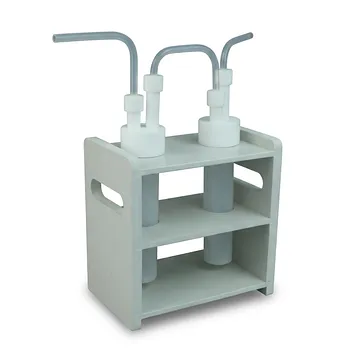
Precise supercapacitor evaluation requires more than just a stable reference; it demands high-performance, contamination-free environments. KINTEK provides a comprehensive suite of laboratory supplies specifically engineered for advanced research. From everyday basics like beakers, measuring cylinders, and reagent bottles to high-purity trace analysis instruments, centrifuge tubes, and digestion vessels, we cover every stage of your workflow.
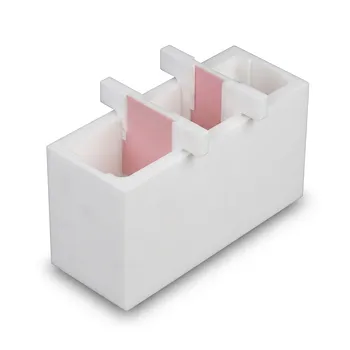
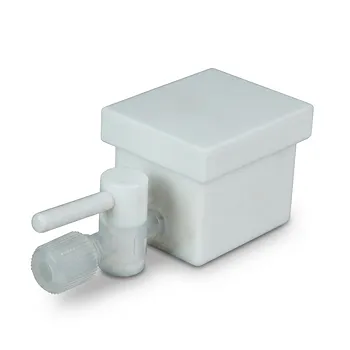
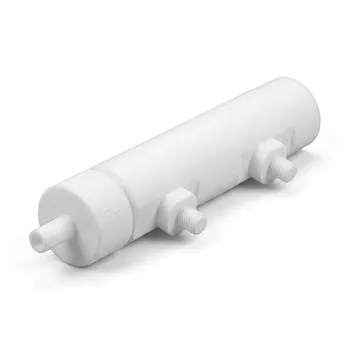
Our expertise extends to specialized fluid transfer components—including tubing, fittings, and valves—and essential sample prep tools like filters, pipettes, and spatulas. For advanced energy storage testing, we manufacture standard and custom electrochemical cells, battery testing fixtures, and electrode accessories, as well as hydrothermal synthesis liners crafted from premium PTFE and PFA.
Whether you need standard consumables like stirring bars and O-rings or complex, custom CNC-fabricated non-standard parts, KINTEK’s absolute focus on high-performance fluoropolymers ensures maximum durability and chemical resistance for your lab.
Ready to optimize your testing setup? Contact KINTEK today to discuss your custom laboratory needs!
References
- Sana Ullah Asif, Farooq Ahmad. Design of Ni-modified ZnSe nanostructures embedded in rGO for efficient supercapacitor electrodes. DOI: 10.1039/d5ra05161d
This article is also based on technical information from Kintek Knowledge Base .
Related Products
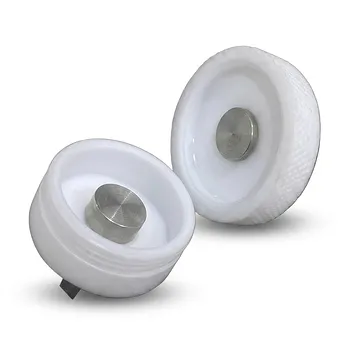
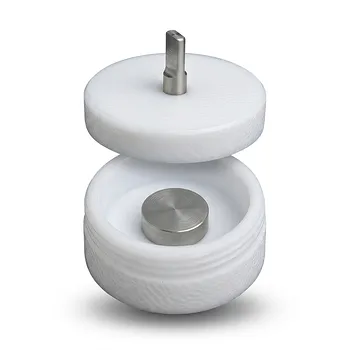
- Corrosion Resistant PTFE Coin Cell Battery Testing Clamps and Acid Proof Custom Fluoropolymer Battery Fixtures
- Acid Resistant PTFE Button Cell Battery Test Fixture Customizable Machining High Purity Electrochemical Testing Clamp
- Customizable PTFE Scrapers and Shovels for Demanding Applications
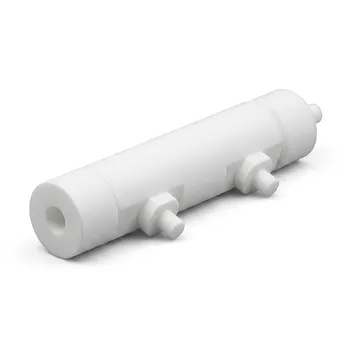
- Custom PTFE Electrolytic Cell Corrosion Resistant Low Background Reaction Vessel with Inlet Outlet Ports
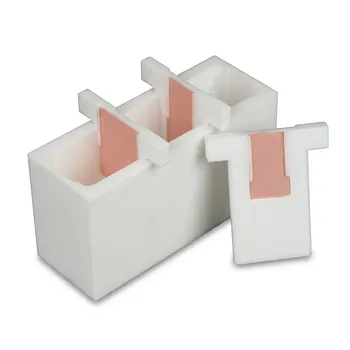
- White PTFE Electrolytic Cell with Movable Slider and Insulated Lid for Fluorine Corrosion Resistance
People Also Ask
- What is the thermal operating range for PTFE battery clamps in electrochemical research? Stability from -200°C to +260°C
- What are the primary functions and material compositions of PTFE battery clamps? Ensure Precision & Chemical Resistance
- How do coin cell testing fixtures evaluate ZIF-derived LCO cycling stability? Ensure Battery Research Precision
- What are the electrical insulation and signal integrity advantages of using PTFE battery clamps? Ensure Data Accuracy
- How does the chemical inertness of PTFE benefit laboratory-scale battery testing? Ensure high-purity research results.