The Ag/AgCl reference electrode is preferred for 240-hour immersion tests because it provides exceptional potential stability and a constant baseline in chloride-rich environments. This stability ensures that electrochemical data collected over long intervals—such as 10 days of continuous immersion—accurately reflect the actual degradation or protection of a coating rather than shifts in the measurement equipment itself.
Core Takeaway: The Ag/AgCl electrode acts as an unwavering "scientific anchor," allowing researchers to distinguish between the evolving performance of a material and the potential drift of the testing system during long-term exposure.
The Criticality of Potential Stability
Maintaining a Constant Baseline
In a 240-hour corrosion test, the primary goal is to monitor how a material, such as a Layered Double Hydroxide (LDH) coating, evolves over time.
If the reference potential shifts during these ten days, the resulting corrosion potential and impedance data become incomparable across different time intervals.
The Ag/AgCl electrode prevents this by providing a highly stable and reproducible potential reference, ensuring that every measurement is indexed to the same known standard.
Accuracy in Long-Duration Monitoring
Long-term monitoring requires a reference that can withstand continuous contact with the electrolyte without significant degradation.
The Ag/AgCl electrode is inherently robust, making it ideal for tracking the barrier performance evolution of protective coatings during extended immersion.
Without this stability, it would be impossible to precisely calculate the redox behavior or the protective capacity of a sample as it interacts with its environment.
Chemical and Environmental Compatibility
Performance in Chloride-Rich Media
Since many corrosion tests utilize simulated seawater, the presence of chloride ions is a defining factor of the environment.
The Ag/AgCl electrode is chemically "at home" in these environments because its internal chemistry relies on the silver/silver chloride equilibrium.
This compatibility minimizes junction potential issues and ensures the electrode remains a reliable benchmark even when submerged in aggressive saline solutions.
Resilience in Alkaline Conditions
Beyond seawater, these electrodes maintain their integrity even in strong alkaline electrolyte environments.
This versatility is crucial for testing materials that might generate local pH changes or for evaluating catalysts where hydrogen evolution reaction (HER) overpotentials must be measured precisely.
By remaining stable across various pH levels, the Ag/AgCl electrode allows for the accurate analysis of pseudocapacitive energy storage and charge storage mechanisms.
Understanding the Trade-offs
Susceptibility to Thermal Drift
The most significant limitation of the Ag/AgCl electrode is its sensitivity to temperature fluctuations, which can cause the electrode potential to drift.
In high-temperature testing, a jacketed salt bridge is often required to keep the electrode at room temperature while the test solution remains hot.
Failure to manage temperature can lead to thermal damage or inaccurate readings that mask the true electrochemical behavior of the working electrode.
Contamination and Maintenance
If the internal electrolyte of the Ag/AgCl electrode becomes contaminated by the test solution, its potential will change.
Regular maintenance, such as ensuring the saturated solution is fresh and the porous frit is unclogged, is non-negotiable for 240-hour tests.
If the electrode is ignored for the duration of the 10-day test without verification, the researcher risks collecting a vast amount of erroneous data.
Applying This to Your Research Project
Recommendations for Effective Implementation
- If your primary focus is seawater corrosion: Use a silver/silver chloride electrode to ensure the highest level of stability in chloride-containing environments.
- If your primary focus is high-temperature testing: Always utilize a jacketed salt bridge with a cooling medium to prevent thermal drift of the reference potential.
- If your primary focus is long-term (240h+) monitoring: Perform a quick "drift check" against a second reference electrode before and after the test to confirm the baseline remained constant.
- If your primary focus is precise redox windows: Ensure the electrode is properly saturated to provide the precision necessary for calculating specific capacitance or diffusion coefficients.
By prioritizing the stability of your reference point, you ensure that your long-term data captures the true narrative of material degradation rather than the limitations of your hardware.
Summary Table:
| Key Feature | Advantage for 240-Hour Tests | Primary Application |
|---|---|---|
| Potential Stability | Maintains a constant baseline for 10+ days | Long-term coating degradation tracking |
| Media Compatibility | Native silver/silver chloride equilibrium | Seawater & chloride-rich corrosion tests |
| Chemical Resilience | Stable in strong alkaline environments | HER overpotential & catalyst evaluation |
| Data Accuracy | Minimizes measurement drift/noise | Precise redox & capacitance monitoring |
Elevate Your Electrochemical Research with KINTEK Precision
Long-term corrosion studies demand hardware that remains unwavering under pressure. KINTEK provides a comprehensive range of high-performance laboratory supplies crafted from premium PTFE and PFA, specifically designed to withstand the aggressive environments of 240-hour immersion tests.
From essential standard and custom electrochemical cells and electrode accessories to high-purity trace analysis instruments, KINTEK is your partner in precision. Our catalog spans from basic labware (beakers, reagent bottles, and digestion tubes) to advanced components like hydrothermal synthesis liners, microwave digestion vessels, and bespoke fluid transfer systems.
Why choose KINTEK?
- Unmatched Material Expertise: Absolute focus on high-performance fluoropolymers for extreme chemical resistance.
- Custom CNC Fabrication: We deliver everything from complex non-standard machined parts to high-volume standard orders.
- End-to-End Support: We help you build the perfect laboratory setup for reliable, drift-free data.
Ensure your research reflects true material performance, not equipment limitations. Contact KINTEK today to discuss your project requirements!
References
- Mohammad Aadil, Mosab Kaseem. Dual-functional coatings with hydrophobic and anti-corrosive properties on Mg alloys via PEO and CoFe-LDH/myristic acid modification. DOI: 10.1007/s42114-025-01388-w
This article is also based on technical information from Kintek Knowledge Base .
Related Products
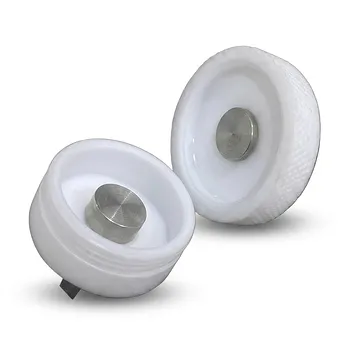
- Corrosion Resistant PTFE Coin Cell Battery Testing Clamps and Acid Proof Custom Fluoropolymer Battery Fixtures
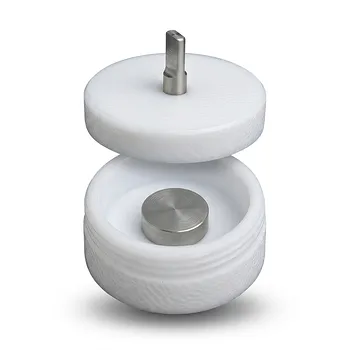
- Acid Resistant PTFE Button Cell Battery Test Fixture Customizable Machining High Purity Electrochemical Testing Clamp
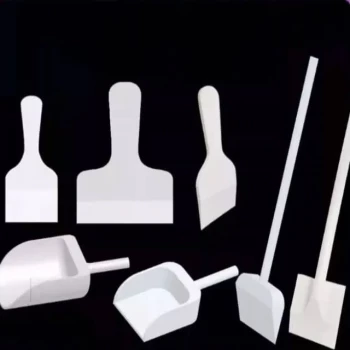
- Customizable PTFE Scrapers and Shovels for Demanding Applications
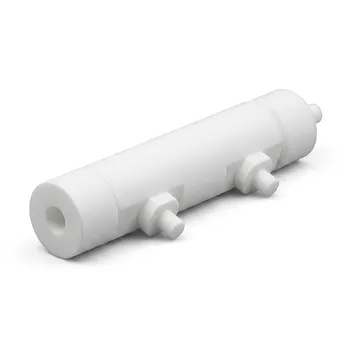
- Custom PTFE Electrolytic Cell Corrosion Resistant Low Background Reaction Vessel with Inlet Outlet Ports
- White PTFE Electrolytic Cell with Movable Slider and Insulated Lid for Fluorine Corrosion Resistance
People Also Ask
- What is the thermal operating range for PTFE battery clamps in electrochemical research? Stability from -200°C to +260°C
- What are the primary functions and material compositions of PTFE battery clamps? Ensure Precision & Chemical Resistance
- How do coin cell testing fixtures evaluate ZIF-derived LCO cycling stability? Ensure Battery Research Precision
- What are the electrical insulation and signal integrity advantages of using PTFE battery clamps? Ensure Data Accuracy
- How does the chemical inertness of PTFE benefit laboratory-scale battery testing? Ensure high-purity research results.