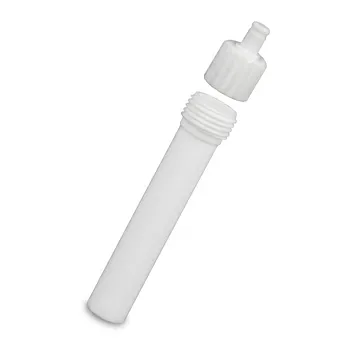
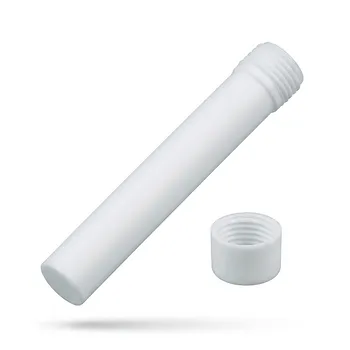
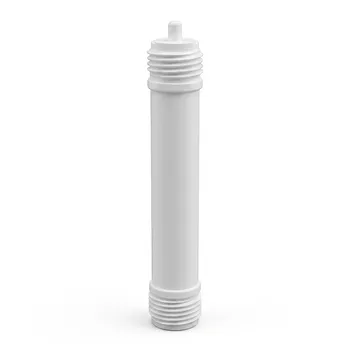
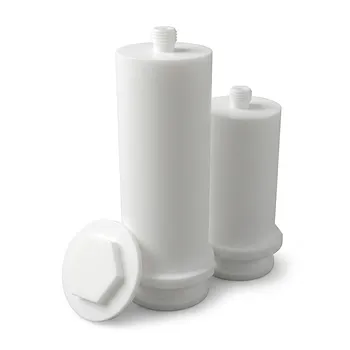
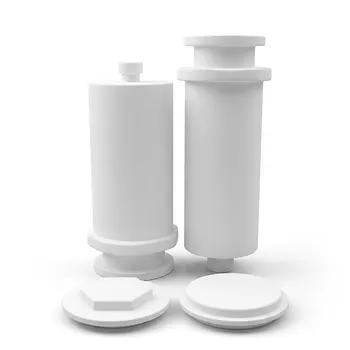
A Polytetrafluoroethylene (PTFE) liner is the indispensable chemical barrier required to facilitate high-purity hydrothermal synthesis. It provides the necessary resistance to the aggressive acidic or alkaline environments used to create manganese dioxide ($MnO_2$), while simultaneously protecting the structural integrity of the high-pressure autoclave.
Core Takeaway: The PTFE liner ensures that the synthesis of $MnO_2$ cathode materials occurs in a chemically inert environment, preventing metallic contamination from the reactor walls and allowing for the controlled crystallization of high-purity nanostructures.
Protecting the Structural Integrity of the Reactor
Mitigation of Acidic and Oxidative Corrosion
Hydrothermal synthesis of $MnO_2$ often involves strong acids or high-oxidizing reaction systems. The PTFE liner acts as a primary shield, preventing these corrosive reagents from directly contacting the stainless steel outer shell of the pressure vessel.
Extension of Equipment Lifespan
By isolating the reaction medium, the liner prevents the pitting and degradation of the metal autoclave. This isolation is critical for maintaining the safety and pressure-bearing capabilities of the vessel over repeated high-temperature cycles.
Ensuring Material Purity and Phase Control
Prevention of Metallic Contamination
Without a liner, metal ions from the stainless steel vessel could leach into the reaction solution. The chemical inertness of PTFE ensures that no foreign metallic impurities are introduced, which is vital for maintaining the electrochemical performance of the $MnO_2$ cathode.
Facilitating Controlled Crystallization
The stable environment provided by the liner allows for the uniform crystallization of $MnO_2$ onto substrates like carbon nanotubes. This precision is necessary for the transition from an amorphous state to highly crystalline structures, such as the birnessite phase or alpha-$MnO_2$.
Support for Diverse Chemical Media
PTFE is resistant not only to acids but also to concentrated sodium hydroxide (NaOH) and various organic solvents. This versatility allows researchers to explore different synthesis routes and redox reactions at temperatures typically ranging from 120°C to 150°C.
Optimizing Product Recovery and Maintenance
Non-Stick Surface for Maximum Yield
The low friction coefficient and non-stick properties of PTFE are essential for the complete collection of precipitates. This ensures that the synthesized $MnO_2$ powders or nanocomposites do not adhere to the vessel walls, maximizing the experimental yield.
Simplified Cleaning Protocols
Post-reaction maintenance is significantly easier due to the surface properties of PTFE. The liner can be cleaned and decontaminated quickly, ensuring that subsequent batches are not compromised by residual materials from previous experiments.
Understanding the Trade-offs and Limitations
Temperature Constraints
While PTFE is highly stable, it has a functional upper temperature limit, typically around 220°C to 250°C. Exceeding these temperatures can lead to mechanical deformation (creep) or the release of toxic vapors, necessitating the use of PPL (polyphenylene polymers) liners for higher-temperature applications.
Pressure Sensitivity and "Creep"
Under high pressure and temperature, PTFE can experience "cold flow" or permanent deformation. It is essential to ensure the liner is properly seated within the stainless steel jacket to prevent the material from extruding into the threads of the autoclave.
How to Optimize Your Synthesis Process
Selection Criteria for Hydrothermal Success
- If your primary focus is maximizing product purity: Ensure the PTFE liner is high-purity grade and undergoes a thorough acid-wash cycle between experiments to remove trace ions.
- If your primary focus is synthesizing specific nanostructures: Use a liner that fits perfectly within the autoclave to ensure uniform heat distribution, which is critical for controlled crystal growth.
- If your primary focus is long-term safety: Regularly inspect the liner for discoloration, cracks, or significant deformation, replacing it immediately if any structural compromises are detected.
By maintaining a pristine chemical environment and protecting the mechanical vessel, the PTFE liner serves as the foundation for successful $MnO_2$ cathode development.
Summary Table:
| Feature | Benefit for MnO2 Synthesis |
|---|---|
| Chemical Inertness | Prevents metallic leaching and ensures high-purity MnO2 nanostructures. |
| Corrosion Resistance | Protects the stainless steel autoclave from aggressive acids and oxidants. |
| Non-Stick Surface | Enhances product recovery yield and simplifies post-reaction cleaning. |
| Thermal Stability | Maintains integrity during crystallization processes up to 250°C. |
| Low Friction | Prevents mechanical bonding between the sample and the reactor walls. |
Elevate Your Synthesis Precision with KINTEK
Achieving high-purity results in hydrothermal synthesis requires labware that can withstand the toughest chemical environments. KINTEK specializes in high-performance fluoropolymer solutions, offering an exhaustive range of PTFE and PFA products designed for excellence.
From everyday basic labware like beakers, crucibles, and digestion tubes to advanced components like hydrothermal synthesis liners, microwave digestion vessels, and custom electrochemical cells, we provide the tools you need for trace analysis and complex reactions. Whether you require high-volume standard consumables (O-rings, seal tapes, and filters) or bespoke laboratory setups through our end-to-end custom CNC fabrication, KINTEK delivers unmatched reliability.
Protect your equipment and ensure material purity—contact us today to discuss your custom fluoropolymer requirements!
References
- Keliang Wang, Qi Hua Fan. Multifunctional zinc silicate coating layer for high-performance aqueous zinc-ion batteries. DOI: 10.20517/energymater.2024.51
This article is also based on technical information from Kintek Knowledge Base .
Related Products
- High Purity PTFE Microwave Digestion Vessel Replacement Liner for Acid Sample Preparation and Trace Analysis
- High Purity TFM Microwave Digestion Vessels PTFE Acid Evaporation Liners Domestic GT-400 Equivalent Laboratory Reaction Containers
- High Purity PTFE Microwave Digestion Vessel for Soil and Food Analysis Acid Resistant Fluoropolymer Sample Preparation Liners
- Custom TFM Reaction Vessel with Stainless Steel Jacket and PTFE Inner Cup for High Corrosion Resistance
- PTFE Lined High Pressure Digestion Vessel 50ml High Temperature Hydrothermal Synthesis Tank
People Also Ask
- How does the dielectric property of PTFE benefit microwave-assisted digestion? Unlock Rapid and Uniform Sample Heating
- What are the advantages of using microwave digestion vessels for environmental analysis? Boost speed and sample accuracy.
- What safety features are commonly integrated into microwave digestion vessels? Ensuring High-Pressure Laboratory Safety
- What are the advantages of using microwave digestion vessels? Optimize EG@MO synthesis with superior thermal control.
- How do microwave digestion vessels support pharmaceutical elemental impurity testing? Achieve Precise USP Compliance