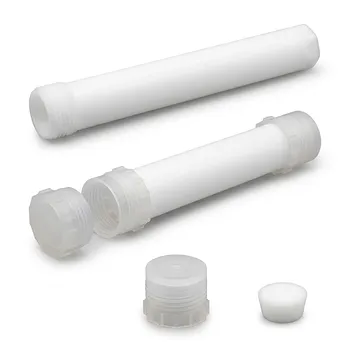
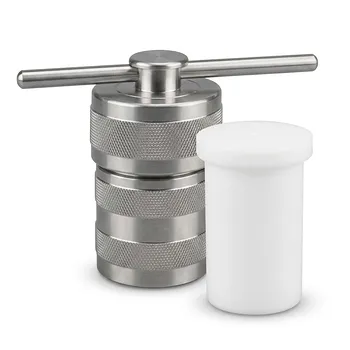
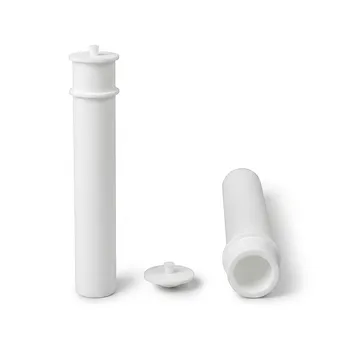
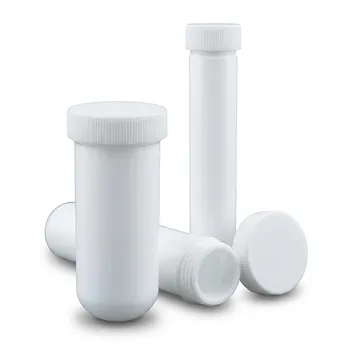
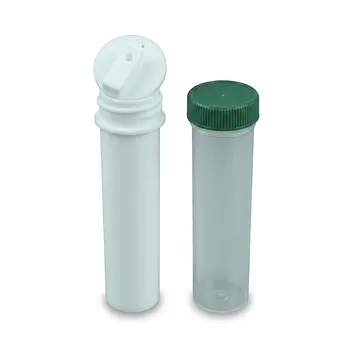
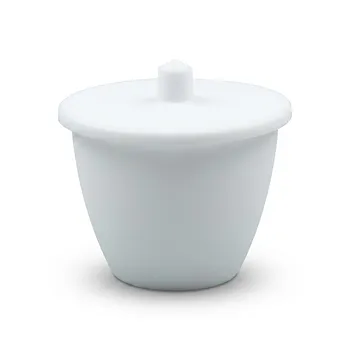
PTFE’s dielectric transparency is the foundational mechanism that enables efficient microwave-assisted digestion. By acting as an "invisible" conduit for electromagnetic energy at the standard 2.45 GHz frequency, PTFE allows microwave radiation to pass through vessel walls without significant absorption. This ensures that energy is focused entirely on the internal polar solvent-acid mixture, resulting in rapid, uniform, and volumetric heating that far exceeds the speed of conventional conductive methods.
Core Takeaway: PTFE (Polytetrafluoroethylene) facilitates microwave digestion by being microwave-transparent, allowing for direct and uniform heating of samples. This property, combined with its extreme chemical inertness and pressure resistance, ensures fast mineralization while maintaining a contamination-free environment for trace element analysis.
The Mechanism of Volumetric Heating
Microwave Transparency at 2.45 GHz
At the standard laboratory frequency of 2.45 GHz, PTFE exhibits a very low dielectric loss factor. This means the material does not interact with the oscillating electromagnetic field, allowing the waves to penetrate the vessel walls with minimal energy loss.
Direct Energy Transfer
Because the vessel itself does not absorb the radiation, the energy is deposited directly into the polar acid reagents and the sample. This avoids the "thermal lag" associated with traditional hotplates, where the container must be heated first before transferring energy to the contents.
Uniform Volumetric Heating
Microwave energy initiates heating throughout the entire volume of the liquid simultaneously rather than relying on slow convection currents. This volumetric heating leads to a more homogenous temperature profile, reducing the risk of localized "hot spots" and ensuring consistent reaction kinetics.
Enhancing Analytical Precision
Chemical Inertness and Trace Metal Purity
PTFE is chosen for its exceptional resistance to strong oxidizing agents like nitric acid, hydrofluoric acid, and aqua regia. Its molecular structure is highly stable, ensuring that the vessel does not leach metallic impurities into the sample, which is critical for the precise quantification of trace elements like arsenic and antimony.
Prevention of Sample Adsorption
The material features unique anti-adhesion properties that prevent target elements from sticking to the tube walls. This characteristic significantly improves the recovery rate of the digestion process and ensures that the results are reproducible across multiple sample runs.
Resistance to Permeation
Advanced fluoropolymers like TFM (modified PTFE) offer high resistance to molecular permeation. This ensures that volatile elements and acid vapors remain contained within the vessel, preventing cross-contamination and protecting the internal components of the microwave system.
Structural Integrity Under Extreme Conditions
High-Pressure Tolerance
Microwave digestion relies on a "closed-vessel" system to raise the boiling point of acids. PTFE liners are engineered to maintain their structural integrity under internal pressures that can reach up to 200 bar, facilitating the decomposition of complex matrices like soil and biological tissues.
Thermal Stability
Digestion often requires temperatures high enough to fully mineralize organic matter. PTFE possesses the thermal stability necessary to withstand these high-energy environments without deforming or degrading, even when exposed to concentrated acids at elevated temperatures.
Understanding the Trade-offs
Temperature Limitations
While PTFE is thermally stable, it has a lower maximum operating temperature compared to quartz or ceramic materials. Exceeding its thermal threshold can lead to vessel deformation or "venting," which may result in the loss of volatile analytes.
Memory Effects
Despite its anti-adhesion properties, PTFE can occasionally suffer from "memory effects" if samples with extremely high concentrations of certain elements are processed. This requires rigorous cleaning protocols, often involving "blank" acid digestions, to ensure the vessel is fully decontaminated for the next use.
How to Apply This to Your Project
When selecting or using PTFE vessels for microwave digestion, consider your specific analytical goals to maximize the benefits of the material's properties.
- If your primary focus is high-throughput efficiency: Utilize PTFE’s transparency to run rapid heating cycles, as the direct energy transfer significantly reduces mineralization time compared to open-vessel methods.
- If your primary focus is trace element analysis (e.g., ICP-MS): Leverage the low trace metal background of PTFE by using high-purity acids, ensuring that your detection limits are not compromised by vessel leaching.
- If your primary focus is difficult matrices (e.g., soil or ores): Ensure your PTFE vessels are rated for high-pressure operation (up to 200 bar) to allow for the use of hydrofluoric acid and high temperatures required for complete dissolution.
Understanding the synergy between PTFE's dielectric transparency and its chemical resilience allows you to achieve faster, cleaner, and more complete sample mineralizations.
Summary Table:
| Key Property | Benefit to Digestion | Analytical Outcome |
|---|---|---|
| Dielectric Transparency | Minimal energy loss; direct heating | Rapid, uniform volumetric heating |
| Chemical Inertness | Resistant to HF, HNO3, & Aqua Regia | Contamination-free trace analysis |
| Non-stick Surface | Prevents sample adsorption | High recovery rates & reproducibility |
| Pressure Resistance | Maintains integrity up to 200 bar | Efficient mineralization of complex matrices |
Elevate your laboratory's analytical precision with KINTEK’s premium fluoropolymer solutions. From everyday basic labware like beakers, crucibles, and digestion tubes to advanced custom-machined microwave digestion vessels and electrochemical cells, we provide everything you need. Our end-to-end CNC fabrication ensures you receive high-performance PTFE and PFA components tailored to your exact specifications. Contact KINTEK today to discuss your custom project or high-volume needs and experience the ultimate in chemical resistance and thermal stability!
Related Products
- High Purity PTFE Microwave Digestion Vessel for Soil and Food Analysis Acid Resistant Fluoropolymer Sample Preparation Liners
- Custom High Purity PTFE Microwave Digestion Vessels and Graphite Block Compatible Acid Evaporation Tanks for Trace Metal Analysis
- High Purity PTFE Microwave Digestion Vessels for 44 Position Systems Trace Analysis Acid Digestion and Evaporation
- High Performance PTFE Microwave Digestion Vessel Replacement Bespoke Fluoropolymer Acid Digestion Tank Intelligent Sample Preparation Labware
- High Purity PTFE Microwave Digestion Vessel Replacement Liner for Acid Sample Preparation and Trace Analysis
People Also Ask
- What are the advantages of using microwave digestion vessels? Optimize EG@MO synthesis with superior thermal control.
- What safety features are commonly integrated into microwave digestion vessels? Ensuring High-Pressure Laboratory Safety
- What are the advantages of using microwave digestion vessels for environmental analysis? Boost speed and sample accuracy.
- How do microwave digestion vessels support pharmaceutical elemental impurity testing? Achieve Precise USP Compliance
- What is the primary function of microwave digestion vessels? High-Precision Sample Prep for Trace Analysis