TFE polymerization requires stringent thermal management because it releases an exceptionally large amount of heat. Converting tetrafluoroethylene into solid PTFE releases approximately 41.12 kcal/mol (172.0 kJ/mol), substantially more than the heat released by polymerization of vinyl chloride or styrene. If that heat is not removed continuously, localized hot spots can develop and trigger thermal runaway, violent deflagration, or explosive decomposition of unreacted TFE.
The central risk is not simply that the reaction becomes hotter. Uncontrolled heat can create local conditions in which TFE polymerization accelerates and unreacted TFE decomposes explosively into carbon and carbon tetrafluoride. Reliable PTFE synthesis therefore depends on rapid heat removal, uniform temperature control, and purpose-built pressure equipment.
Why TFE Polymerization Is Thermally Hazardous
The Reaction Releases Unusually High Heat
TFE polymerization is an exceptionally exothermic free-radical addition reaction. Its heat release of approximately 172.0 kJ/mol is high enough that even a moderate rate increase can generate a substantial thermal load inside the reactor.
For comparison, vinyl chloride polymerization releases roughly 23–26 kcal/mol, while styrene releases approximately 16.7 kcal/mol. TFE therefore presents a significantly greater heat-management challenge than many conventional polymerization systems.
Heat Accelerates the Reaction
As the reaction temperature rises, the rate of free-radical polymerization can increase. A faster reaction generates heat more quickly, which can produce a self-reinforcing cycle:
- Polymerization releases heat.
- The reactor temperature increases.
- The reaction rate rises.
- Additional heat is released faster than it can be removed.
This feedback can produce thermal runaway unless the reactor has sufficient cooling capacity and the reaction is carefully controlled.
Local Hot Spots Matter
The most dangerous condition may be a localized hot spot rather than a large increase in the average reactor temperature. Poor mixing, limited heat transfer, or uneven initiator distribution can allow one region to become significantly hotter than the surrounding reaction mixture.
A temperature sensor may indicate an acceptable bulk temperature while a small, poorly cooled region approaches hazardous conditions. Thermal management must therefore promote uniform heat distribution and rapid removal throughout the vessel.
How Uncontrolled Heat Creates a Decomposition Risk
Unreacted TFE Can Decompose Violently
TFE is not only a reactive monomer; under sufficiently severe thermal conditions, unreacted TFE can undergo explosive decomposition. This decomposition can produce carbon and carbon tetrafluoride.
That side reaction creates a distinct hazard from ordinary polymerization. The process must prevent hot spots from reaching conditions that initiate decomposition in the remaining TFE gas.
Pressure Increases the Consequences
Aqueous TFE polymerization is conducted in a pressurized autoclave, commonly at approximately 0.7–2.8 MPa and at temperatures around 40–80°C. These conditions are necessary for the process, but they also mean that an uncontrolled reaction occurs inside a pressurized system.
A sudden heat release or decomposition event can rapidly increase pressure. The reactor therefore requires pressure-rated construction, engineered relief systems, and controls capable of responding before the reaction exceeds safe operating limits.
Cooling Must Be Continuous
Thermal management cannot be treated as an occasional adjustment. Heat must be removed continuously while the reaction proceeds, because the polymerization heat is generated throughout the reaction volume.
Specialized reaction vessels are designed to provide effective heat transfer and prevent accumulation of thermal energy. Cooling capacity must also account for operating conditions, reactor scale, agitation, initiator concentration, and the expected polymerization rate.
Why Temperature Control Also Affects PTFE Quality
Molecular Weight Depends on Reaction Conditions
Temperature influences the balance between radical initiation, propagation, and termination. If the temperature fluctuates substantially, the polymerization rate and chain-growth behavior can change.
Consistent thermal conditions therefore help maintain a predictable molecular weight distribution, which is important for PTFE's mechanical performance, chemical inertness, and processing behavior.
Initiator Concentration and Heat Release Are Linked
Water-soluble initiators such as peroxydisulfates, organic peroxides, or reduction-activation systems generate the radicals that start polymerization. Increasing initiator activity can increase the reaction rate and, consequently, the rate of heat generation.
Initiator concentration must therefore be controlled together with temperature and cooling capacity. A formulation that is acceptable at one scale or cooling rate may be unsafe at another.
Additives Can Change Reaction Behavior
Dispersion processes may use highly halogenated surfactants, including fully fluorinated acids. These additives must be selected and controlled carefully because unsuitable additives can inhibit polymerization or promote chain transfer, leading to lower-molecular-weight material.
Thermal control is part of this broader process discipline. Temperature, pressure, initiator concentration, additive chemistry, and mixing all influence both safety and the properties of the resulting PTFE.
Understanding the Trade-offs
More Cooling Improves Safety but Adds Complexity
A reactor with high heat-removal capacity provides greater protection against temperature excursions. However, it requires specialized vessel construction, larger or more capable cooling systems, reliable instrumentation, and careful scale-up.
The design objective is not merely to maximize cooling. It is to ensure that heat can be removed faster than it is generated under credible operating conditions.
Higher Reaction Rates Can Reduce Process Time
Faster polymerization may increase productivity, but it also increases instantaneous heat generation. If cooling and mixing do not scale accordingly, a faster process can reduce the margin between normal operation and runaway conditions.
Process intensity must therefore be limited by the reactor's ability to control heat, not only by the desired production rate.
Average Temperature Is an Incomplete Safety Measure
Monitoring bulk temperature alone can miss local hot spots. Temperature measurement should be supported by appropriate agitation, reactor geometry, pressure monitoring, controlled initiator addition, and safeguards that respond to abnormal trends.
The key engineering concern is the complete thermal profile of the reaction system, including regions where heat transfer or mixing may be weaker.
Making the Right Choice for Your Goal
Successful TFE polymerization requires treating thermal control as both a process-quality requirement and a major safety function.
- If your primary focus is process safety: Use a purpose-built, pressure-rated autoclave with continuous heat removal, effective mixing, temperature and pressure monitoring, and engineered responses to abnormal conditions.
- If your primary focus is consistent PTFE quality: Maintain stable temperature, pressure, initiator concentration, and additive conditions so the polymerization rate and molecular weight remain predictable.
- If your primary focus is scale-up: Confirm that heat-transfer and mixing performance scale with the reaction's heat-generation rate rather than assuming laboratory cooling behavior will remain adequate.
- If your primary focus is preventing decomposition: Design specifically to eliminate local hot spots and prevent unreacted TFE from reaching conditions that can initiate explosive decomposition.
By controlling heat at every stage, manufacturers can keep TFE polymerization within its intended operating window and produce PTFE safely and consistently.
Summary Table:
| Aspect | Importance |
|---|---|
| Heat Release | ~172 kJ/mol, highest among common monomers, requires efficient removal. |
| Thermal Runaway | Uncontrolled heat accelerates reaction, leading to dangerous escalation. |
| Local Hot Spots | Can trigger decomposition even if bulk temp is normal; need uniform cooling. |
| Decomposition Risk | Unreacted TFE can explosively decompose into carbon and CF4. |
| Pressure | High-pressure operation increases hazard; requires robust equipment and relief systems. |
| Product Quality | Stable temp ensures consistent molecular weight and performance. |
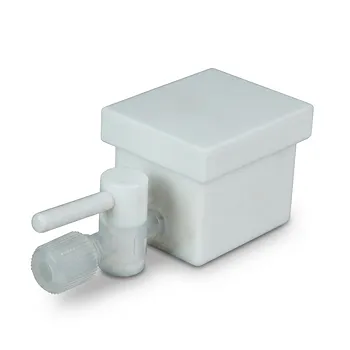
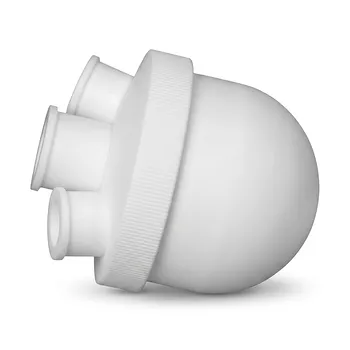
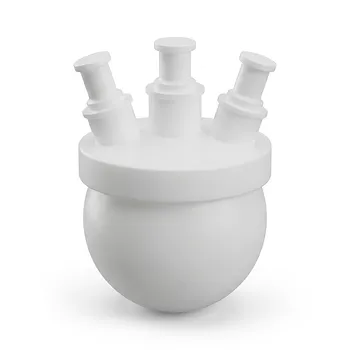
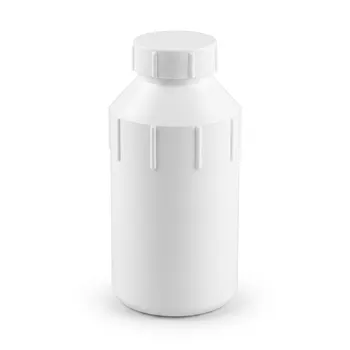
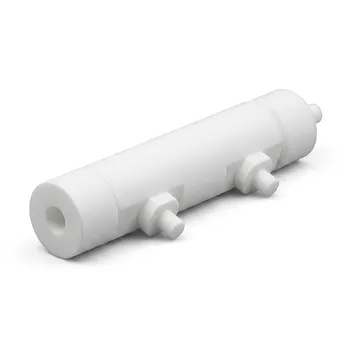
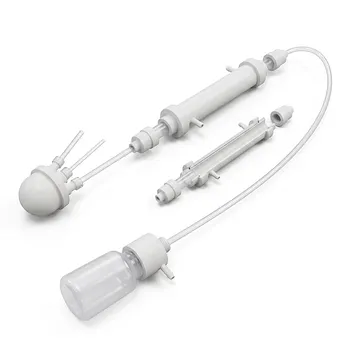
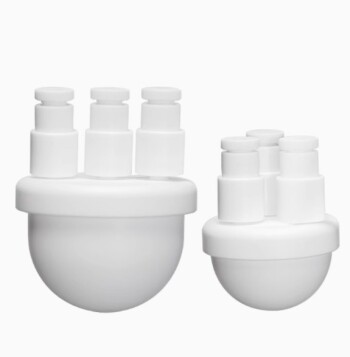
Optimize your TFE polymerization safety and efficiency with KINTEK's high-performance PTFE and PFA labware, including reaction vessels, custom electrochemical cells, and microwave digestion vessels. Our fluoropolymer expertise helps you manage thermal challenges. Contact us today for tailored solutions.
Related Products
- High Performance Customizable PTFE Reaction Vessel and Corrosion Resistant Polytetrafluoroethylene Flask for Chemical Laboratory Use
- High Purity Large Capacity PTFE Flask Custom Multi Neck Chemical Reaction Vessel for Corrosive Laboratory Synthesis and Industrial Processing
- High Purity Custom PTFE Reaction Cell Electrolytic Tank for Semiconductor and Polysilicon Industrial Applications
- Custom PTFE Petri Dishes Corrosion Resistant High Purity Low Background Labware
- Custom PTFE Petri Dish 30mm Corrosion Resistant Low Background Non Leaching Laboratory Ware
People Also Ask
- What are the key steps for structural integrity in molded PTFE lab reaction vessels? Master fine powder processing.
- Why is a PTFE reaction vessel required for Ti3C2Tx MXene synthesis? Ensure Safe HF Etching & High Purity
- Why are fluoroplastic (PTFE) reaction vessels recommended for Methylene Blue (MB) adsorption kinetic experiments?
- Ion Activation Reaction Vessel Requirements: Why PTFE is Critical for Membrane Performance
- How do perfluorinated solvent environments influence the selection of reaction vessels and fluid handling components in nonaqueous emulsion polymerizations? Choose fluoropolymer materials.