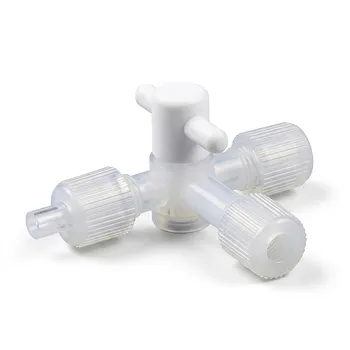
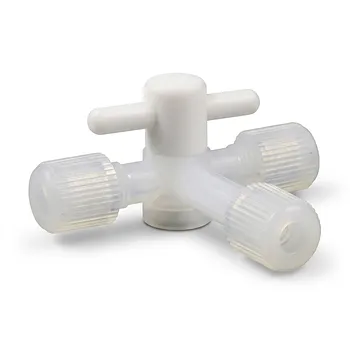
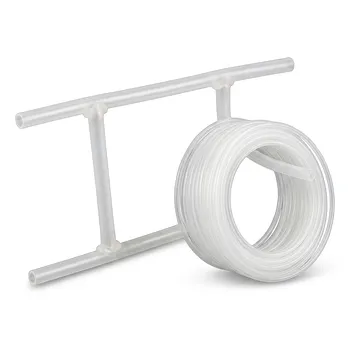
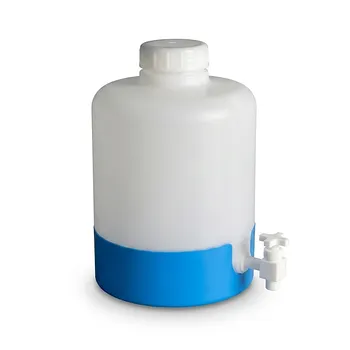
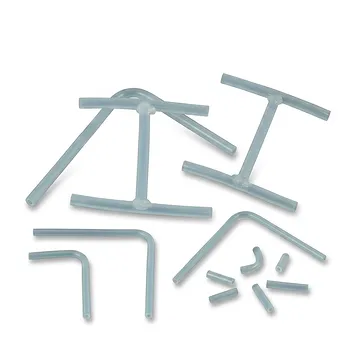
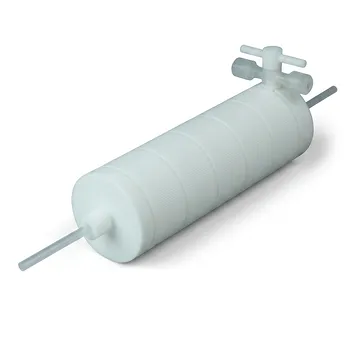
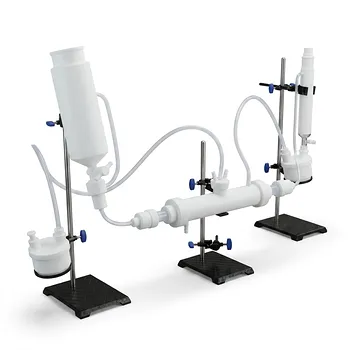
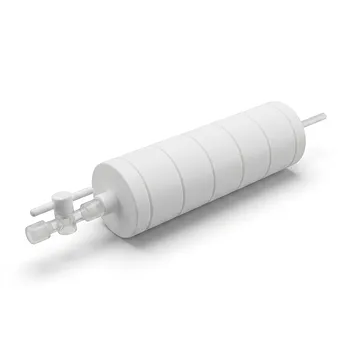
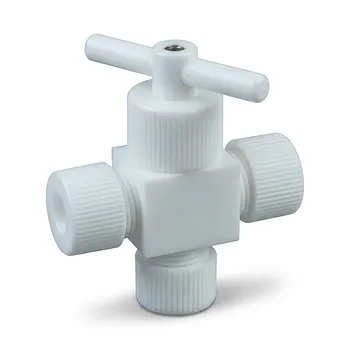
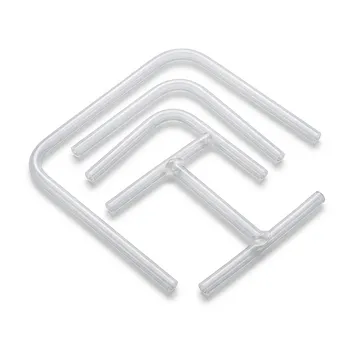
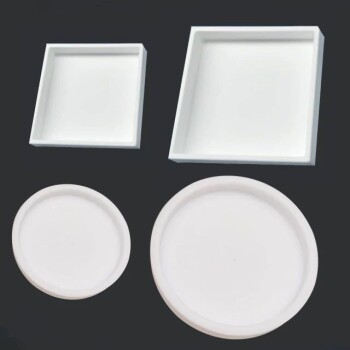
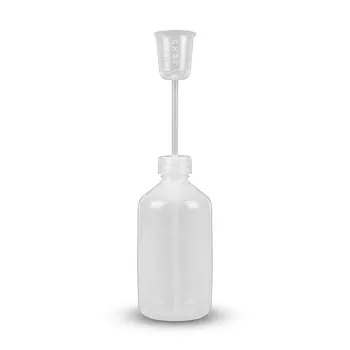
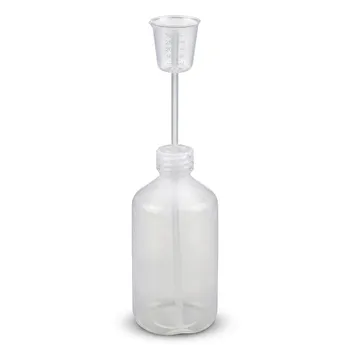
Dye-sensitized solar cells (DSSCs) rely on a delicate chemical balance to convert light into electricity. PTFE and PFA are used for fluid transfer because they are chemically inert to the corrosive iodine/triiodide redox couples and polar solvents used in electrolytes. These high-performance fluoropolymers prevent material degradation and ensure the long-term sealing integrity required for the cell to function.
Core Takeaway: PTFE and PFA are essential in DSSC manufacturing because they provide absolute resistance to corrosive electrolytes while preventing the leaching of impurities that would otherwise poison the cell's catalysts and degrade performance.
The Corrosive Nature of DSSC Electrolytes
Handling the Iodine/Triiodide Redox Couple
The electrolyte in a DSSC typically contains an iodine/triiodide redox couple, which is highly corrosive to standard metals and many plastics. PTFE and PFA possess exceptional chemical inertness, allowing them to transport these reactive chemicals without undergoing structural breakdown or corrosion.
Compatibility with Highly Polar Solvents
DSSCs often utilize aggressive polar solvents to maintain the solubility of lithium salts and other components. Unlike standard tubing, fluoropolymers are virtually unaffected by these solvents, ensuring that the fluid transfer system does not swell, soften, or fail during the injection process.
Preventing Contamination and Ensuring Device Longevity
Eliminating Material Leaching
In electrochemical systems, even trace amounts of impurities can "poison" the electrocatalysts or the dye itself, significantly reducing efficiency. PTFE and PFA are high-purity materials that do not leach plasticizers or metal ions into the electrolyte, preserving the chemical integrity of the solar cell.
Maintaining Sealing Integrity in Microscopic Gaps
Electrolytes must be injected into the microscopic gaps of the sandwich-like DSSC structure, requiring precise and reliable fluidic connections. The anti-permeability of these fluoropolymers ensures that the electrolyte remains contained and that atmospheric moisture or oxygen cannot seep into the system during the filling process.
Physical and Surface Advantages
Low Surface Energy and Fluid Flow
PTFE and PFA have extremely low surface energy, which prevents the adhesion of gas bubbles and residues within the tubing. This characteristic is vital for minimizing ohmic noise and maintaining stable fluidic conductivity during the delicate injection process.
Thermal and Electrical Insulation
DSSC manufacturing may involve temperature fluctuations; PTFE can withstand temperatures up to 500°F (260°C) without losing its mechanical properties. Additionally, its excellent electrical insulation ensures that the fluid transfer components do not interfere with the electrical characteristics of the electrochemical setup.
Understanding the Trade-offs
Mechanical Limitations and "Cold Flow"
While chemically superior, PTFE is susceptible to "creep" or "cold flow," meaning it can slowly deform under constant mechanical pressure. Engineers must use specialized fittings or PFA (which offers better melt-processability and mechanical clarity) to ensure connections remain tight over time.
Cost and Assembly Precision
Fluoropolymer components are significantly more expensive than standard polymers like PVC or polyethylene. Furthermore, because these materials are very "slick," assembly requires specific high-purity fittings to prevent the tubing from slipping under pressure.
How to Apply This to Your Project
Making the Right Choice for Your Goal
To ensure the best results when handling DSSC electrolytes, consider your specific operational requirements:
- If your primary focus is absolute chemical purity: Use high-purity PFA tubing and fittings to eliminate the risk of leaching and ensure the highest possible cell efficiency.
- If your primary focus is high-temperature stability: Select PTFE for components that will be exposed to heat during the sealing or assembly phases of the solar cell.
- If your primary focus is visual monitoring of the injection: Choose PFA over PTFE, as PFA is translucent and allows for the visual verification of fluid flow and the detection of trapped air bubbles.
Selecting the correct fluoropolymer ensures that the fluidic system becomes a reliable foundation for experimental accuracy and long-term device stability.
Summary Table:
| Feature | PTFE (Polytetrafluoroethylene) | PFA (Perfluoroalkoxy) |
|---|---|---|
| Chemical Resistance | Extreme resistance to iodine/triiodide couples | Virtually inert to all polar solvents |
| Purity & Leaching | High purity; prevents catalyst poisoning | Ultra-high purity; zero leaching of ions |
| Visibility | Opaque; best for thermal stability | Translucent; allows visual fluid monitoring |
| Mechanical Properties | Susceptible to "cold flow"/creep | Better melt-processability and flexibility |
| Temperature Limit | Stable up to 260°C (500°F) | Stable up to 260°C (500°F) |
Precision-Engineered Fluoropolymers for Advanced Electrochemical Research
At KINTEK, we understand that the success of your dye-sensitized solar cells (DSSC) depends on absolute chemical purity and system integrity. We specialize in manufacturing high-performance laboratory supplies crafted exclusively from PTFE and PFA to meet the most demanding research standards.
From everyday basic labware like beakers, crucibles, and centrifuge tubes to comprehensive fluid transfer components including precision tubing, fittings, and valves, our product range is designed for total chemical inertness. We also provide advanced reaction apparatus, including standard or custom electrochemical cells, battery testing fixtures, and hydrothermal synthesis liners. Backed by end-to-end custom CNC fabrication, KINTEK is equipped to deliver everything from complex non-standard machined parts to high-volume orders.
Ensure your electrolytes remain pure and your solar cell performance stays optimized. Contact us today to discuss how our bespoke fluoropolymer solutions can support your next breakthrough!
References
- Rukhsar Bi Neamat Momin, Prof. R. B. Kale. Hydrothermal Synthesis of Low-Cost TiO2: Annealing-Driven Mixed Phase for Enhanced DSSC Performance. DOI: 10.64643/ijirtv12i3-184136-457
This article is also based on technical information from Kintek Knowledge Base .
Related Products
- Corrosion Resistant High Purity PFA Valve and Weldable Transparent Tubing for Semiconductor Fluid Transfer
- High Purity PFA Valves and Weldable Corrosion Resistant Transparent Tubing for Semiconductor Sensor Manufacturing Fluid Transfer
- Corrosion Resistant PFA Tubing 1/4 Inch Custom Molded Welded Fluid Transfer Components
- High Corrosion Resistant PTFE Faucet Polytetrafluoroethylene Valve for Chemical Storage Drums and Fluid Transfer Systems Customizable Industrial Grade
- High Performance PFA Coiled Spring Tubing and Custom PTFE Fabrication Services with Welded Fittings and Precision Bent Components
People Also Ask
- Why are high-purity PFA fluid transfer components preferred for battery electrolytes? Ensure Purity & Data Accuracy
- How do high-precision PFA fluid transfer components, such as tubing and fittings, affect the results of continuous-flow synthesis?
- How do PFA fluid transfer components contribute to chemical research precision? Achieve high-purity results today.
- What role do PFA tubing and valves play in high-precision laboratory fluid transfer systems? Ensure Ultra-Pure Results
- What advantages do PTFE and PFA tubing offer for organic solvents? Superior chemical resistance, purity, and high-temperature stability.