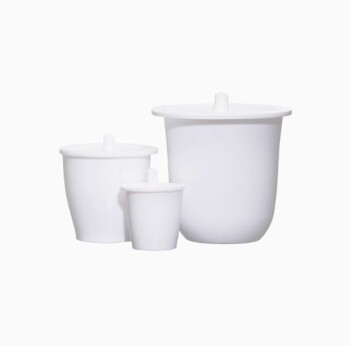
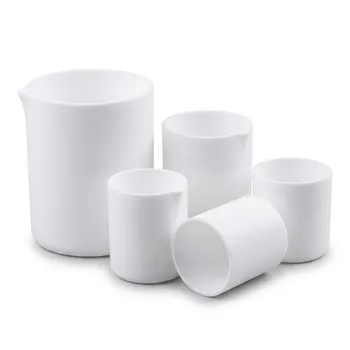
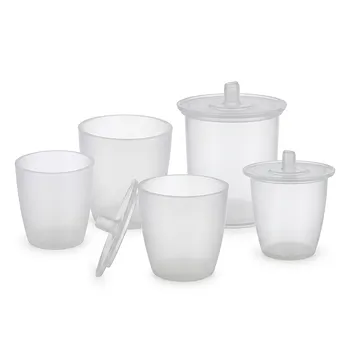
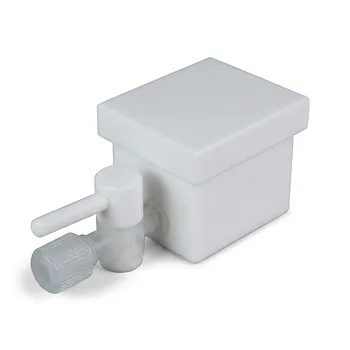
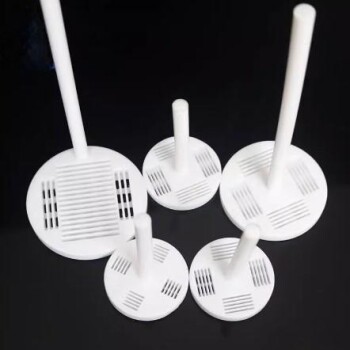
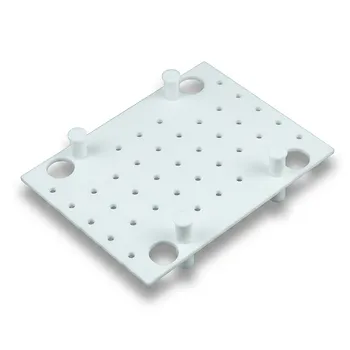
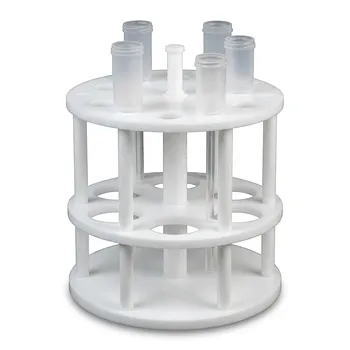
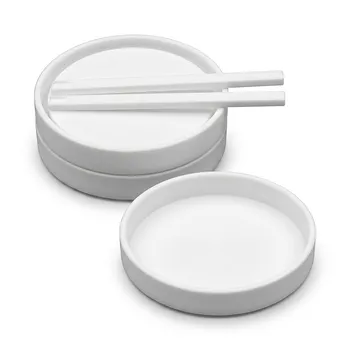
PTFE laboratory consumables are the definitive choice for high-end chemical synthesis because they provide a nearly inert environment that prevents sample contamination. By resisting corrosion from virtually all strong acids, bases, and organic solvents, PTFE ensures that the labware does not leach metal ions or impurities into the reaction, maintaining the absolute purity required for sensitive experimental data.
PTFE (polytetrafluoroethylene) acts as a critical safeguard in the laboratory, enabling researchers to conduct reactions under extreme conditions without the risk of material degradation or chemical interference. Its primary value lies in its unique combination of chemical "silence" and physical resilience.
Ensuring High-Purity Reaction Environments
Near-Absolute Chemical Inertness
The primary role of PTFE is to remain non-reactive in the presence of aggressive reagents. Unlike standard glass or lower-grade plastics, PTFE does not interact with strong acids like aqua regia or nitric acid, which are common in high-end synthesis.
Elimination of Trace Contamination
In fine chemical and nanomaterial synthesis, even microscopic leaching can ruin an entire batch. PTFE consumables prevent the migration of metal ions and organic leachables into the solution, ensuring that the final product's chemical signature remains untainted.
Consistency in Trace Analysis
For laboratories performing high-purity trace analysis, PTFE is essential for data reliability. Because the material does not absorb or release substances, it provides a "blank slate" environment, allowing for the precise measurement of parts-per-billion (ppb) concentrations.
Protecting Equipment and Enhancing Recovery
Guarding Against Corrosive Erosion
In hydrothermal and solvothermal synthesis, PTFE liners act as a sacrificial but durable barrier. They protect the external stainless steel autoclave shells from the corrosive effects of high-temperature acidic or basic media.
Facilitating Sample Recovery
The non-stick surface of PTFE is a functional advantage during the collection of synthesized products. It prevents viscous drug candidates or precious nanomaterials from adhering to the container walls, significantly improving experimental yield.
Streamlining Post-Experimental Cleaning
The low surface energy of PTFE makes cleaning straightforward and effective. This reduces the risk of cross-contamination between different experimental runs, which is a common failure point in high-precision synthesis.
Understanding the Trade-offs
Temperature and Pressure Limitations
While PTFE is thermally stable, it has specific upper-temperature limits (typically around 250°C to 260°C). Exceeding these limits can cause the material to soften or undergo "creep," which may lead to vessel deformation or seal failure in high-pressure environments.
Material Porosity and Memory Effects
Although highly resistant, PTFE is slightly more porous than high-quality PFA or glass. In extremely sensitive applications involving volatile organics, there is a minor risk of "memory effects" where trace amounts of a previous reagent are trapped within the polymer matrix if not cleaned rigorously.
Cost and Transparency
PTFE is opaque and more expensive than standard borosilicate glass. The lack of transparency means researchers cannot visually monitor reaction progress, such as color changes or precipitation, without opening the vessel or using specialized sensors.
How to Apply This to Your Project
When selecting PTFE consumables for your laboratory, your choice should be dictated by the specific demands of your synthesis process and the sensitivity of your final product.
- If your primary focus is hydrothermal crystal growth: Use high-quality PTFE liners to protect your autoclaves and provide the chemically neutral environment required for undisturbed crystal formation.
- If your primary focus is trace metal analysis: Prioritize high-purity PTFE or PFA bottles and vials to ensure that no background metal ions interfere with your detection limits.
- If your primary focus is pharmaceutical formulation: Utilize PTFE-coated stirring bars and beakers to maximize the yield of viscous compounds and ensure easy sterilization between batches.
By leveraging the chemical stability and non-stick properties of PTFE, you move from a reactive to a controlled synthesis environment, ensuring that your results are a product of your chemistry, not your equipment.
Summary Table:
| Key Role | Primary Benefit | Application in Synthesis |
|---|---|---|
| Chemical Inertness | Prevents leaching and sample contamination | Handling aqua regia, nitric acid, and organic solvents |
| Non-Stick Surface | Maximizes yield and simplifies cleaning | Recovery of viscous drugs and precious nanomaterials |
| Corrosion Resistance | Protects hardware from degradation | Liners for hydrothermal and solvothermal autoclaves |
| Physical Resilience | Reliable performance in extreme conditions | Consistent trace analysis at ppb concentrations |
Elevate Your Synthesis with KINTEK’s High-Performance Fluoropolymers
Don't let equipment leaching or material degradation compromise your high-end research. KINTEK specializes in delivering the absolute chemical 'silence' and resilience required for sensitive experimental data.
From everyday basic labware like PTFE beakers, digestion tubes, and reagent bottles to advanced reaction apparatus such as hydrothermal synthesis liners, electrochemical cells, and microwave digestion vessels, we provide the industry's most comprehensive range of fluoropolymer solutions.
Why choose KINTEK?
- Precision Fabrication: End-to-end custom CNC machining for complex, non-standard parts and bespoke laboratory setups.
- Full Product Lifecycle: We supply everything from fluid transfer components (tubing, valves, fittings) to sample prep tools (filters, pipettes, tweezers).
- Material Focus: An exclusive and absolute focus on high-performance PTFE and PFA ensures maximum purity for trace analysis.
Ready to optimize your yields and ensure the absolute purity of your chemical signatures? Contact us today to discuss your project or request a quote.
References
- Chiayee Salih Ajaj. Green Synthesis of Carbon Quantum Dots with Good Photoluminescence Properties from <i>Prosopis farcta</i> and Their Applications as Fe <sup>3+</sup> Ion Detectors and Optical Nanothermometers. DOI: 10.1002/slct.202405433
This article is also based on technical information from Kintek Knowledge Base .
Related Products
- Customizable PTFE Crucibles for Laboratory and Industrial Applications
- Corrosion Resistant PTFE Laboratory Material Scoop for Biopharmaceutical Use Non Stick Easy Clean Fluoropolymer Shovel
- Large Scale PTFE Beakers and Flasks for High Temperature Corrosion Resistant Laboratory Applications with Custom CNC Fabrication
- Custom PTFE Petri Dish 30mm Corrosion Resistant Low Background Non Leaching Laboratory Ware
- High Purity PFA Crucible and Corrosion Resistant PTFE Beaker for Trace Analysis and Custom Laboratory Applications
People Also Ask
- What advantages do PTFE's surface properties provide for lab tools? Optimize Sample Recovery and Tool Longevity
- Why is ambient temperature control critical when machining or measuring high-precision custom PTFE laboratory components? Learn the key to accurate dimensions.
- Why was ammonium perfluorooctanoate replaced in fluoropolymer manufacturing, and how does this affect the purity of modern PTFE laboratory products?
- What molecular characteristics provide PTFE laboratory tools with ultra-low surface energy and anti-stick properties for fluid transfer? Discover the science behind PTFE's non-stick performance.
- How is Teflon used in laboratory settings? Essential for Chemical Resistance and Purity