PTFE’s low surface energy and chemical resistance arise from the same molecular design: a carbon backbone densely shielded by fluorine atoms. The strong carbon-carbon and carbon-fluorine bonds, combined with fluorine’s size and electronegativity, protect the chain from chemical attack while presenting a chemically stable, weakly interacting outer surface. This combination makes PTFE non-wetting, non-stick, highly inert, and well suited to high-purity fluid handling.
The key insight is that PTFE’s fluorinated molecular sheath both protects the polymer and limits its interaction with process fluids. As a result, PTFE resists corrosion, minimizes adsorption and contamination, and supports reliable transfer of high-purity chemicals and analytical samples.
How PTFE’s Molecular Structure Creates Its Properties
A carbon backbone protected by fluorine
PTFE consists of a linear carbon backbone in which hydrogen atoms are replaced by fluorine. The backbone contains strong carbon-carbon bonds, while the surrounding fluorine atoms form a dense, continuous sheath around the chain.
The fluorine sheath limits access to the carbon backbone, which is more chemically vulnerable than the exterior fluorinated surface. This structural shielding is the primary reason PTFE withstands most acids, bases, solvents, and reactive process chemicals.
Strong carbon-fluorine bonds
The carbon-fluorine bond is highly strong and polarized because fluorine is extremely electronegative. Its bond energy is approximately 552 kJ/mol, while the carbon-carbon bonds in the backbone are approximately 607 kJ/mol.
The strength and stability of these bonds make the polymer difficult for chemicals to attack or break down under ordinary processing conditions. PTFE therefore remains essentially insoluble in most common solvents and resistant to dissolution by strong acids and bases.
Fluorine’s physical size and molecular coverage
Fluorine atoms are large enough to form an effective protective layer around the carbon chain. This sheath acts like molecular armor, reducing direct contact between the polymer backbone and surrounding fluids.
The result is a dense, non-porous, chemically stable surface with very limited opportunity for chemical penetration, absorption, or reaction.
Why PTFE Has Such Low Surface Energy
Weak interaction with liquids
PTFE has a critical surface tension of approximately 18 dynes/cm, with reported solid surface energy near 19.1 mJ/m² at room temperature. These values are exceptionally low compared with many conventional polymers.
A low-energy surface does not readily attract or spread liquids. Fluids tend to bead rather than wet the surface, which explains PTFE’s familiar non-stick and non-wetting behavior.
Molecular symmetry reduces surface attraction
The C-F bonds are individually polarized, but the relatively symmetrical arrangement of fluorine around the carbon backbone reduces the net molecular polarity exposed at the surface. PTFE therefore has limited ability to form strong attractive interactions with many liquids.
Its low polarizability and weak dispersion and induction interactions further reduce the forces that cause fluid molecules to adhere to the surface.
Limited hydrogen bonding and adsorption
PTFE does not provide the usual chemical groups needed for strong hydrogen bonding with many fluids. It also lacks side branches and reactive functional groups that could create specific binding sites for analytes or process chemicals.
This helps prevent active ingredients, trace compounds, and organic molecules from adhering to or partitioning into PTFE surfaces.
Why This Matters in High-Purity Fluid Handling
Minimal chemical contamination
PTFE’s chemical inertness allows it to contact a broad range of aggressive or high-value fluids without readily reacting with them. Properly manufactured PTFE components generally do not contribute significant extractables or reaction products under their intended operating conditions.
This is valuable in trace analysis, semiconductor processing, pharmaceutical work, and laboratory reagent handling, where small contamination levels can affect results or product quality.
Reduced fluid retention
Because PTFE has low surface energy, fluids are less likely to spread across and cling to tubing, fittings, vessels, and containers. Less residual liquid remains on the internal surface after draining or transfer.
Reduced retention improves sample recovery and decreases the amount of material carried into a subsequent process stream.
Lower cross-contamination risk
The combination of low adhesion and a non-porous structure makes PTFE easier to rinse and clean thoroughly. Residues are less likely to become trapped in the material or remain strongly bonded to its surface.
This reduces carryover between samples and is especially important when handling trace-level analytes or chemically incompatible reagents.
Low friction supports smooth transfer
PTFE also has an exceptionally low coefficient of friction, with reported values ranging from approximately 0.05 to 0.8, depending on the test conditions, formulation, surface, and measurement method. Some evaluations report dynamic values near 0.04.
In fluid-handling components, this low friction helps reduce mechanical resistance and limits the tendency of deposits or particulates to remain attached to the surface.
How the Properties Work Together
Protection and non-wetting are linked
The same fluorinated exterior that shields PTFE from chemical attack also creates its low-energy surface. Chemical resistance and non-stick behavior are therefore not independent features; both follow from the structure of the fluorinated chain.
The surface is stable enough to resist reaction but does not offer strong attractive sites for most fluid molecules.
Purity depends on more than the polymer
PTFE’s molecular properties make it intrinsically well suited to high-purity handling, but the final purity of a component also depends on manufacturing, cleaning, additives, fillers, seals, packaging, and service history.
A PTFE tube or vessel can only provide high-purity performance when the complete fluid path is produced and qualified for the intended application.
Understanding the Trade-offs
Chemical resistance is not universal
PTFE is highly resistant to most chemicals, but it is not completely inert under every condition. Certain highly reactive substances, including elemental fluorine and molten or highly reactive alkali metals, can attack fluorinated polymers.
Compatibility must therefore be evaluated against the specific chemical, concentration, temperature, pressure, and exposure time.
Low surface energy does not eliminate all contamination
PTFE minimizes adsorption and retention, but it cannot guarantee zero carryover. Surface damage, particulate deposition, manufacturing residues, and contamination introduced through fittings or adjacent materials can still affect a process.
Cleaning and validation remain necessary for critical high-purity applications.
Mechanical properties require consideration
PTFE has a high melting point of approximately 342°C (648°F) and strong electrical insulating properties, but it is not mechanically strong in every operating condition. It can exhibit creep, relatively low strength, and limited abrasion resistance.
Pressure, temperature, dimensional stability, and reinforcement requirements should be assessed before selecting PTFE for a fluid-handling component.
How to Apply This to Your Project
PTFE is most appropriate when the application depends on chemical inertness, low adsorption, and reliable sample recovery.
- If your primary focus is chemical compatibility: Select PTFE because its strong C-F bonds and fluorine sheath protect the polymer from most acids, bases, solvents, and reactive process fluids.
- If your primary focus is high-purity processing: Use PTFE components with appropriate manufacturing and cleanliness controls, because low extractables and non-porous surfaces help minimize contamination and carryover.
- If your primary focus is analytical sample recovery: Take advantage of PTFE’s low surface energy to reduce wetting, fluid retention, adsorption, and residue accumulation.
- If your primary focus is low-friction fluid transfer: Consider PTFE for tubing, fittings, and related components, while verifying pressure, temperature, creep, and abrasion requirements.
PTFE’s molecular architecture makes it valuable wherever a fluid-contact surface must remain chemically stable, weakly adhesive, and exceptionally clean.
Summary Table:
| Property | Molecular Basis | Benefit for High-Purity Fluid Handling |
|---|---|---|
| Chemical Resistance | Strong C-C and C-F bonds; fluorine sheath shields carbon backbone | Withstands acids, bases, solvents, and reactive chemicals; low extractables |
| Low Surface Energy | Low polarizability; symmetric C-F arrangement; weak intermolecular forces | Non-wetting, non-stick; fluids bead; reduces adhesion and retention |
| High Purity | Non-porous, chemically inert surface; lacks reactive sites | Minimizes contamination and adsorption; easy to rinse; reduces carryover |
Ensure your high-purity fluid handling systems meet the strictest standards. KINTEK's PTFE and PFA labware, tubing, and custom parts are designed for superior chemical resistance and low extractables, protecting your trace analysis and process integrity. From standard beakers to complex electrochemical cells, our end-to-end CNC machining delivers precision components for any application. Contact us today to discuss your requirements and experience the KINTEK advantage — Get in touch.
Related Products
- Custom PTFE Filtration System Acid Resistant High Purity Semiconductor Grade Chemical Processing Filter
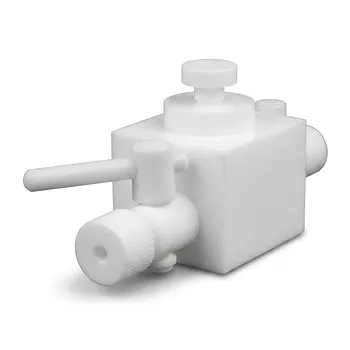
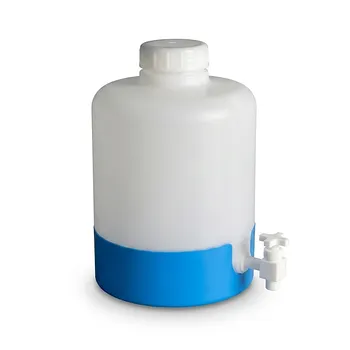
- High Corrosion Resistant PTFE Faucet Polytetrafluoroethylene Valve for Chemical Storage Drums and Fluid Transfer Systems Customizable Industrial Grade
- PTFE PFA Vacuum Filtration System Corrosion Resistant Customizable Shatterproof Laboratory Device
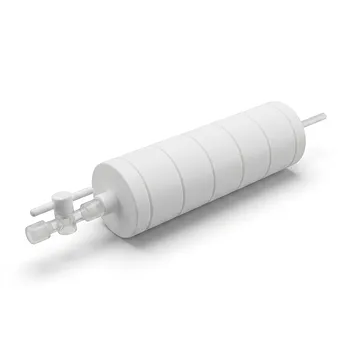
- PTFE Corrosion Resistant Filter with PFA Valve Connections and Integrated Sieve Plate
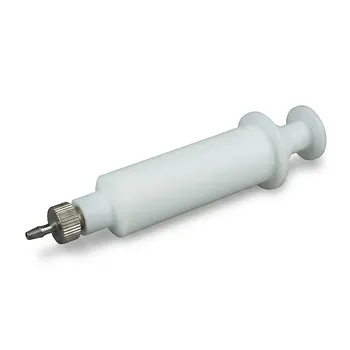
- High Temperature Chemical Resistant 50ml PTFE Syringe Customized Teflon Injector with Threaded Seal for Trace Analysis
People Also Ask
- What makes PTFE filtration systems advantageous for industrial and scientific use? Unmatched Chemical & Thermal Stability
- What sizes and pore options are available for PTFE filters? Choose the Right Filter for Your Application
- What steps are involved in selecting the proper PTFE filter? A 4-Step Guide to Optimal Filtration
- How does the hydrophobicity of PTFE filters benefit their use? Ensure Uninterrupted Gas Flow and Solvent Filtration
- What temperature resistance do PTFE filters offer? Unmatched Thermal Stability from -200°C to +260°C